Understanding currency Worksheets for Ages 4-8
5 filtered results
-
From - To
Explore our "Understanding Currency Worksheets" designed specifically for children ages 4-8! These engaging and interactive worksheets introduce young learners to the concept of money, helping them recognize coins and bills while developing essential math skills. With fun exercises and colorful visuals, kids will enjoy activities that anchor their understanding of currency through counting, matching, and basic addition. Each worksheet is carefully crafted to cater to varying skill levels, ensuring every child grasps the fundamentals of money. Spark your child's curiosity and confidence in financial literacy today by incorporating these valuable resources into their learning journey. Perfect for classroom or home use!
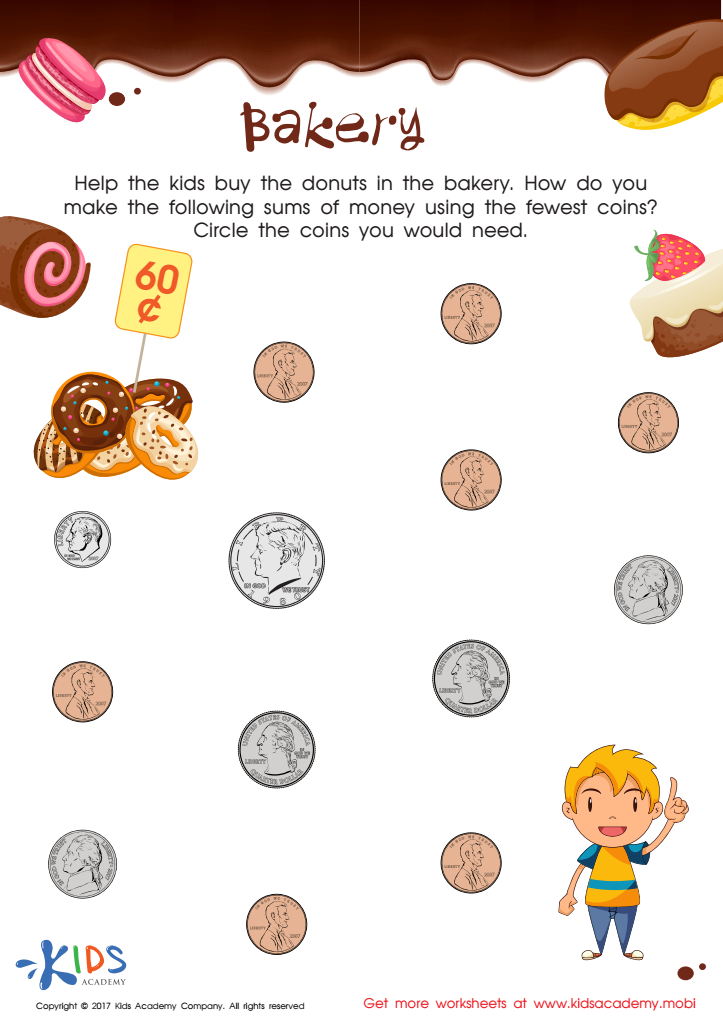
Counting Coins Worksheet
 Assign to My Students
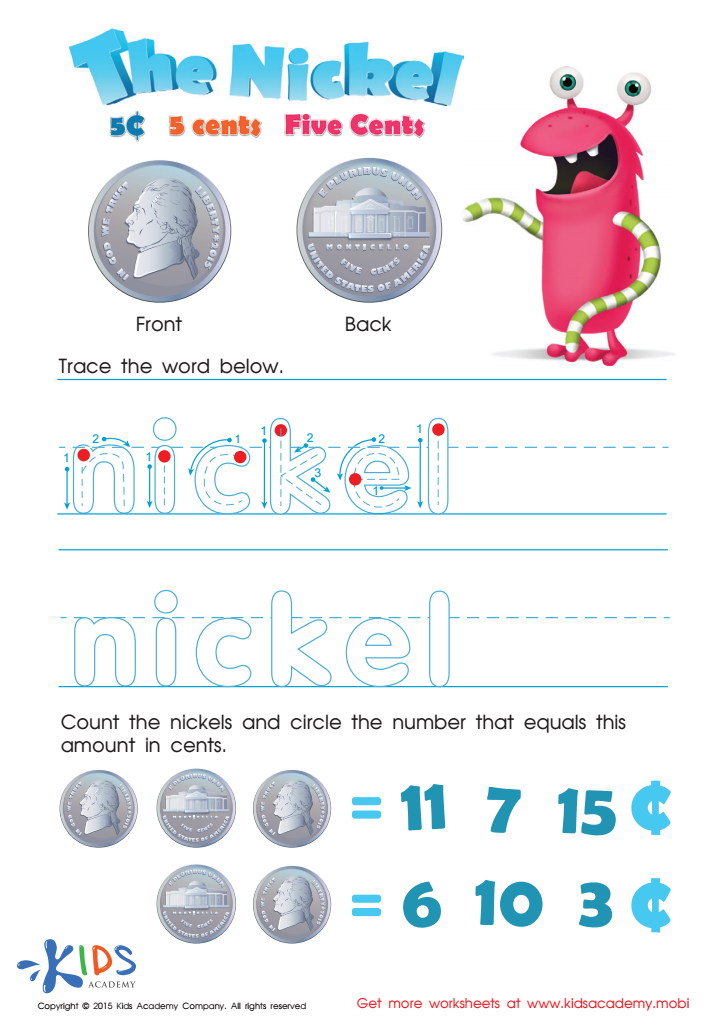
Five Cents or the Nickel Money Worksheet
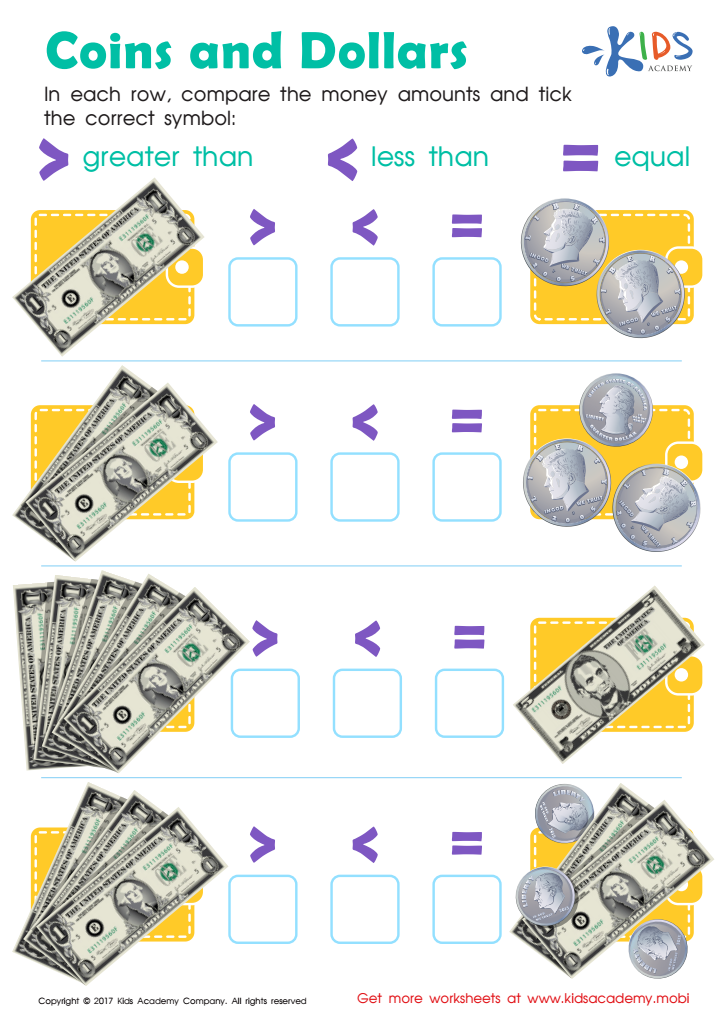
Money: Coins Dollars Printable
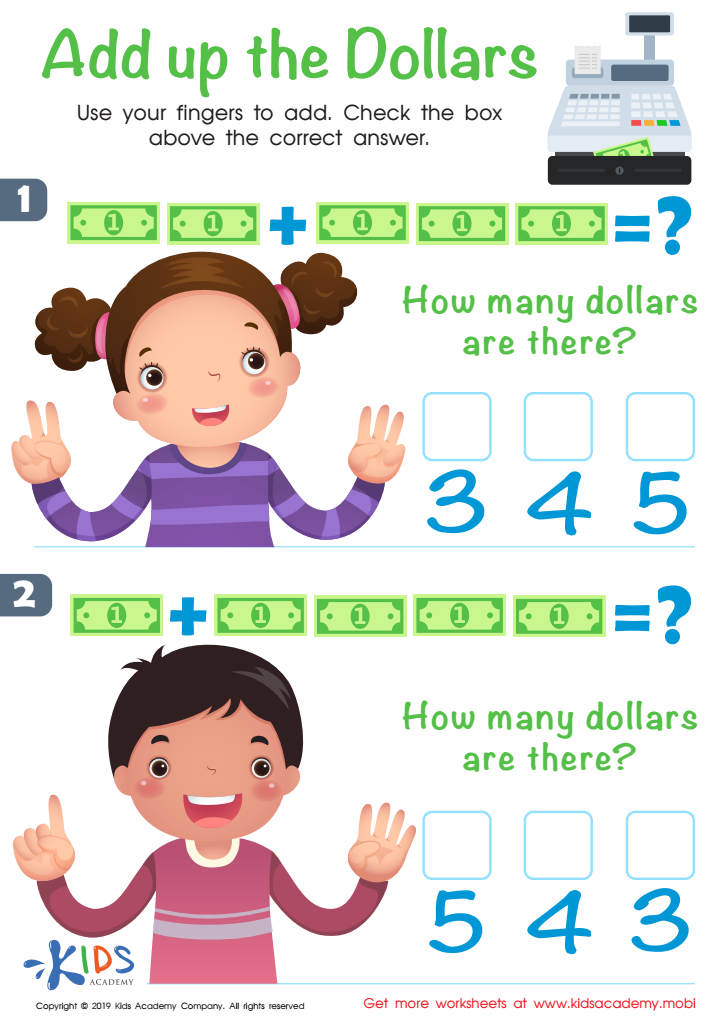
Add up the Dollars Worksheet






%20(1).jpg)

Understanding currency is an essential skill for children aged 4-8, and parents and teachers should prioritize this learning for several reasons. First, early exposure to currency helps children grasp basic math concepts, including addition, subtraction, and counting. When kids handle money, they gain practical experience that enhances their numeracy skills and lays a foundation for future financial literacy.
Second, learning about currency fosters responsibility and decision-making. Children begin to appreciate the value of money, helping them understand the importance of saving, spending wisely, and making informed choices about their resources. Through play, such as shopping in pretend stores, children can practice managing budgets and making purchases, which deepens their understanding of economic principles.
Furthermore, teaching children about currency can spark discussions about diverse cultures and histories related to money, promoting global awareness. As children learn to recognize different coins, bills, and what they represent, they also develop a broader understanding of community and sharing.
Ultimately, equipping young learners with knowledge about currency not only prepares them for everyday transactions but also helps form essential life skills, encouraging them to become confident, informed decision-makers in their future financial lives. This foundational understanding enriches their overall educational experience.








