Understanding equations Worksheets for Ages 4-8
8 filtered results
-
From - To
Explore our engaging "Understanding Equations Worksheets" designed specifically for children aged 4-8. These worksheets provide a fun and interactive way for young learners to grasp fundamental mathematical concepts and develop critical problem-solving skills. With a variety of exercises, children will practice identifying and solving simple equations, enhancing their number sense and logical reasoning abilities. Our visually appealing worksheets incorporate colorful illustrations that captivate interest while making learning enjoyable. Whether at home or in the classroom, these resources are perfect for fostering a strong foundation in mathematics and preparing students for future success. Get started today with our easy-to-use printable worksheets!
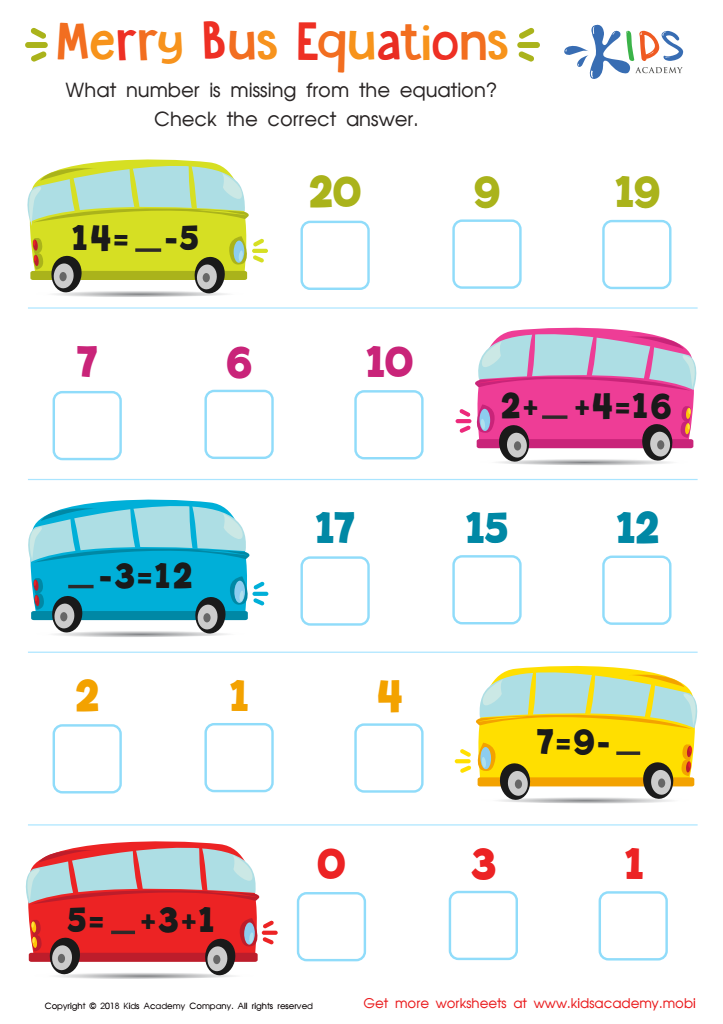
Merry Bus Equations Worksheet
 Assign to My Students
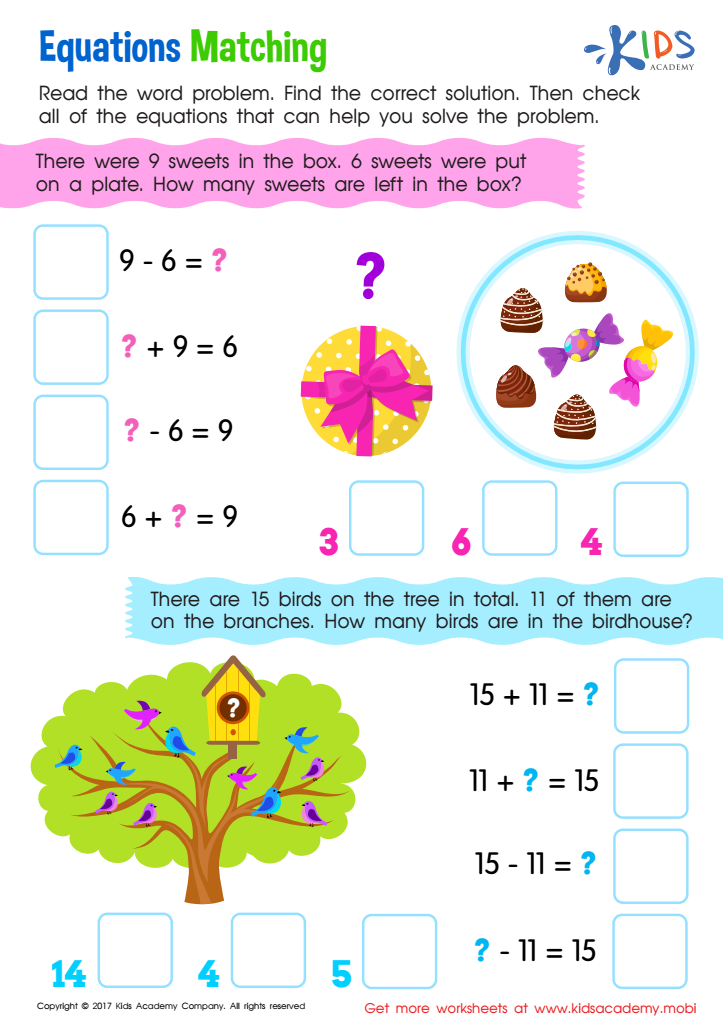
Equations Matching Word Problems Worksheet
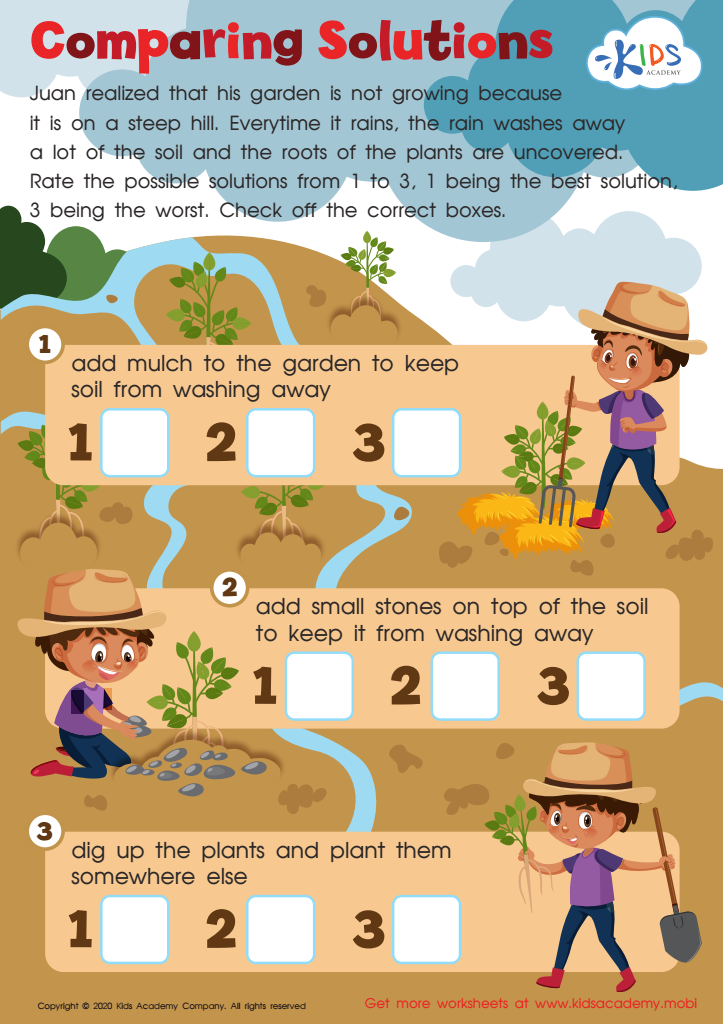
Comparing Solutions Worksheet
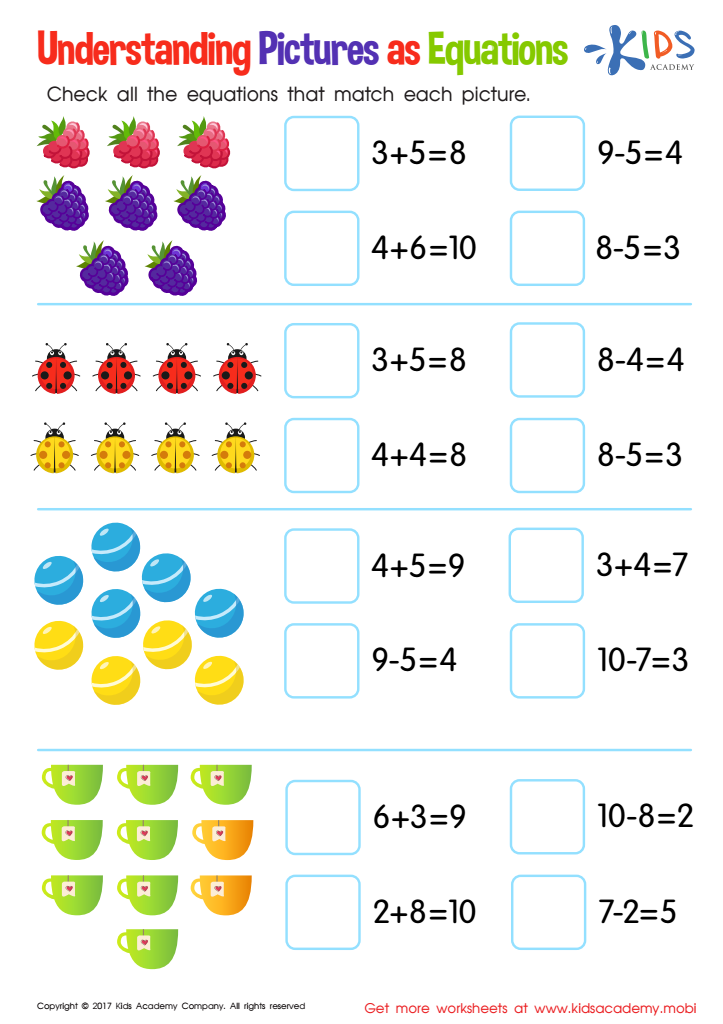
Understanding Pictures as Equations Worksheet
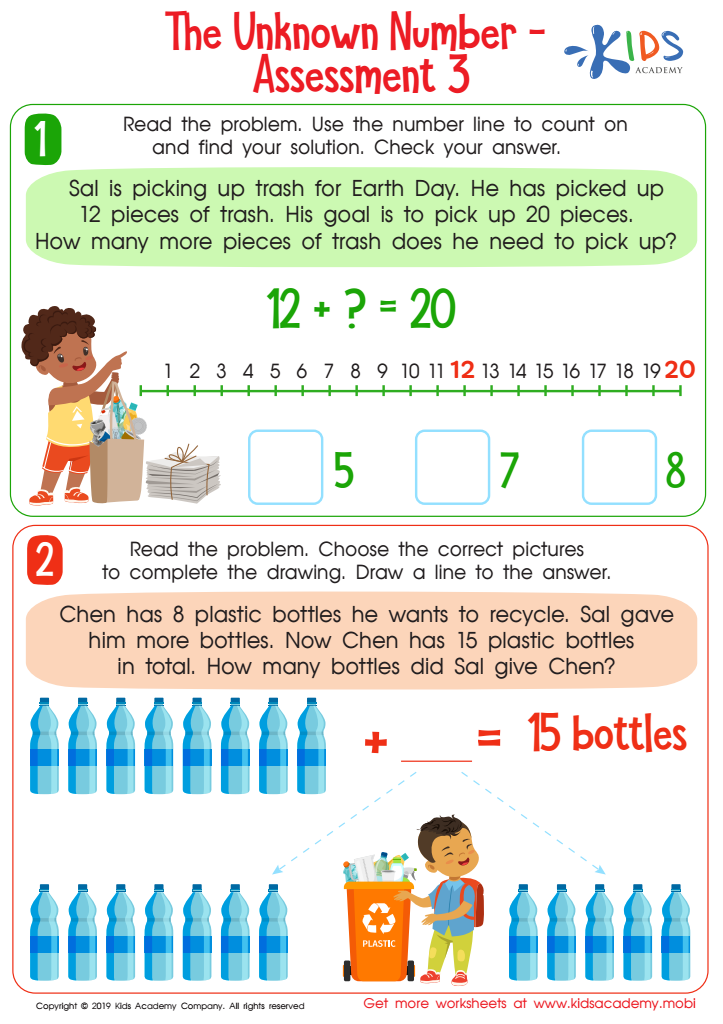
The Unknown Number - Assessment 3 Worksheet
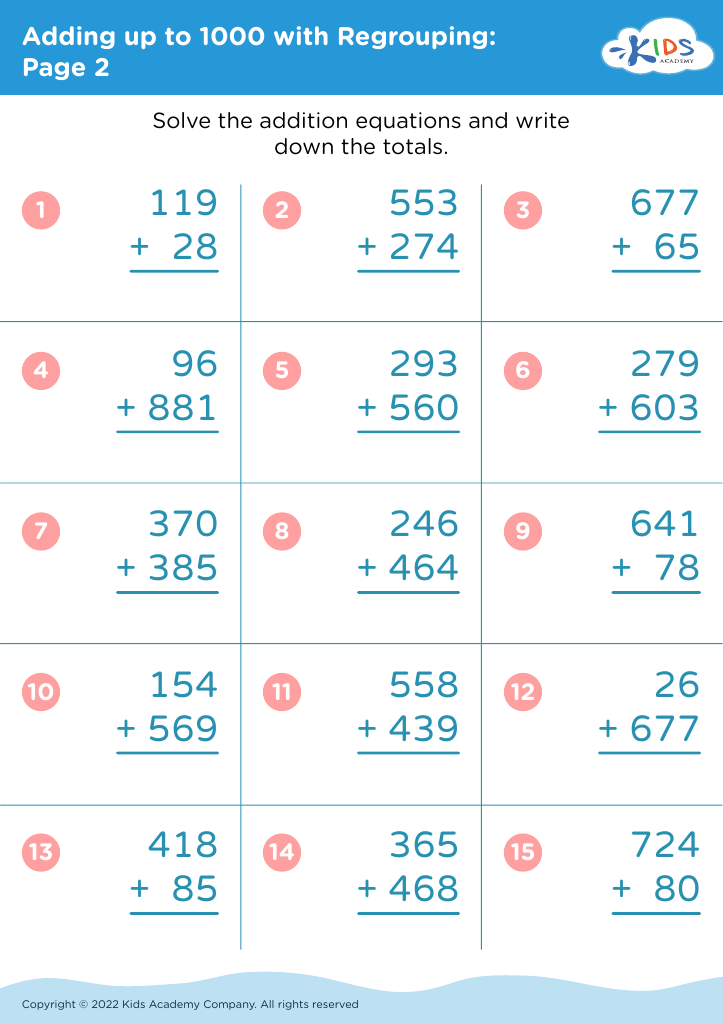
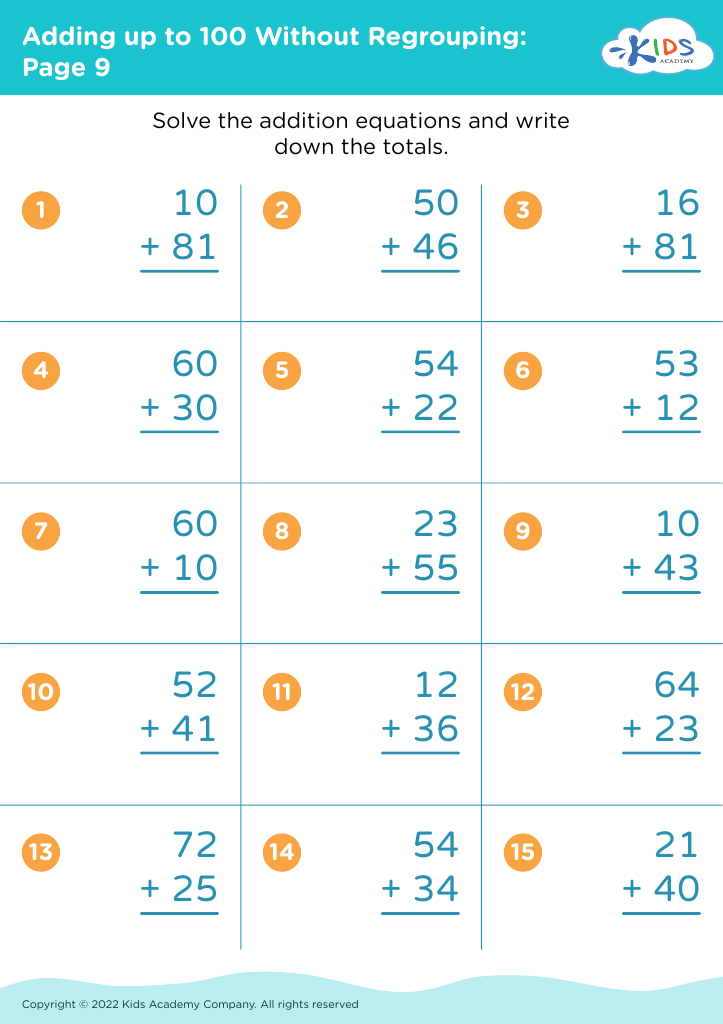





.jpg)

Understanding equations is crucial for children aged 4-8, as this foundational skill lays the groundwork for their mathematical development. At this early stage, children are naturally curious and eager to make sense of the world around them, and grasping equations helps them learn how to express relationships between numbers and quantities. This skill teaches them to think critically and develop problem-solving abilities, which are essential not only in mathematics but across various subjects.
Moreover, learning about equations fosters a sense of logical reasoning. Children begin to see patterns and connections, transitioning from concrete thinking to abstract thought. For parents and teachers, nurturing this understanding can lead to greater confidence in their students' mathematical abilities, ensuring they remain engaged and interested in learning as they progress through educational stages.
Additionally, a strong grasp of equations foundational to mathematical concepts like addition, subtraction, and ultimately algebra prepares children for future academic success. Parents and teachers who prioritize early mathematical literacy equip children with tools they need for lifelong learning and functional everyday skills, promoting higher achievement and nurturing positive attitudes toward mathematics in their students. In the long run, this creates a knowledgeable generation capable of tackling complex problems with confidence.








