Understanding length Worksheets for Ages 4-8
3 filtered results
-
From - To
Explore our comprehensive collection of "Understanding Length Worksheets" designed specifically for children aged 4-8. These engaging and interactive worksheets help young learners grasp the concept of length through fun activities and colorful visuals. Students will measure, compare, and differentiate various lengths, fostering critical thinking and problem-solving skills. Tailored for early grade educators and parents, our worksheets provide essential practice to build confidence in measurement concepts. Whether for classroom use or at-home learning, our resources make understanding length an enjoyable experience for your child. Download today to spark curiosity and support your little one's mathematical journey!
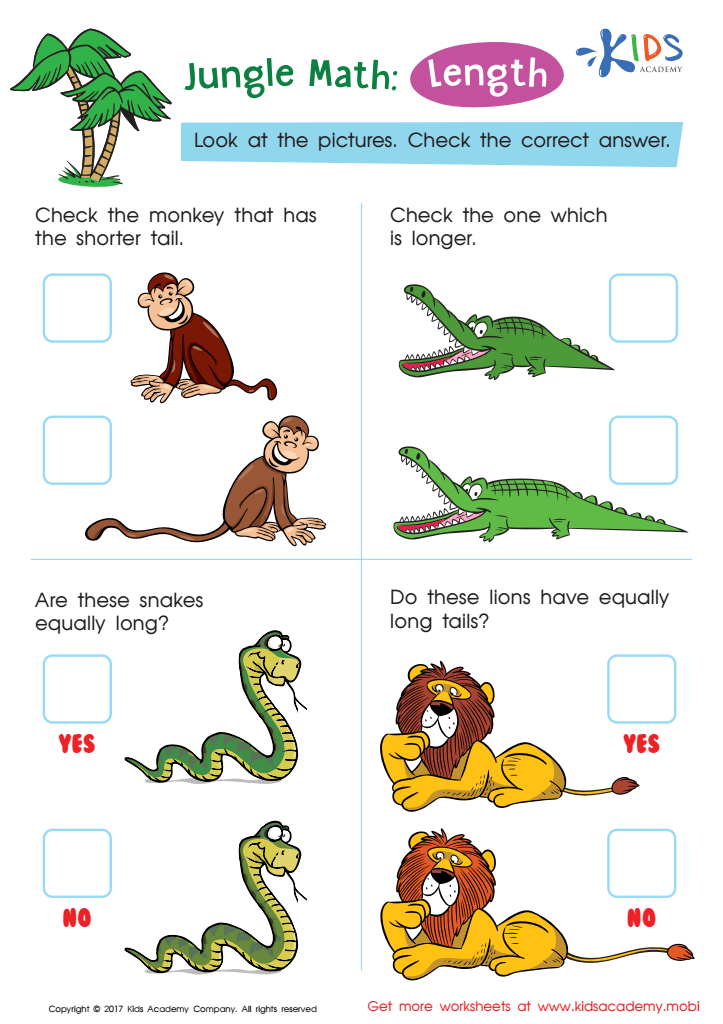
Which One Is Longer - Length Worksheet
 Assign to My Students
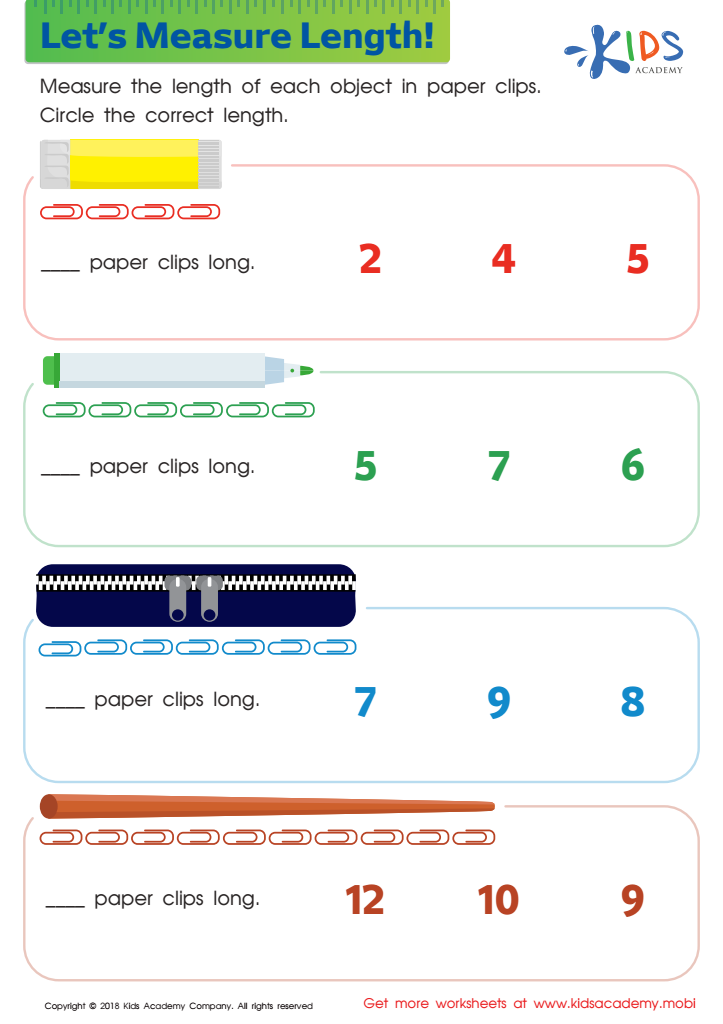
Lets Measure Length Worksheet
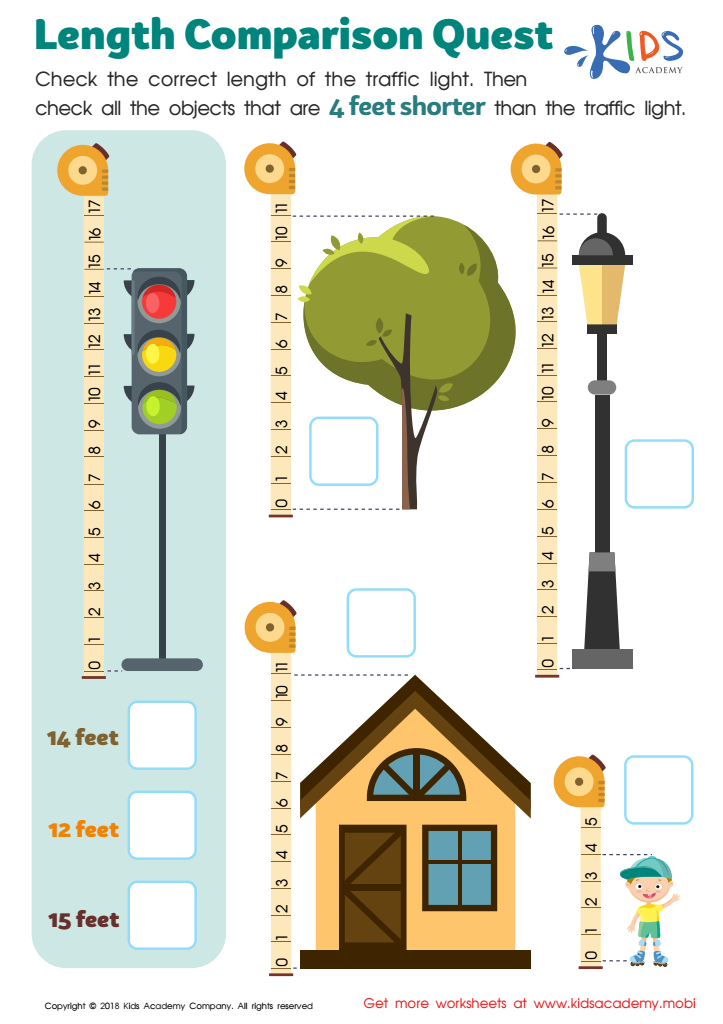
Length Comparison Quest Worksheet




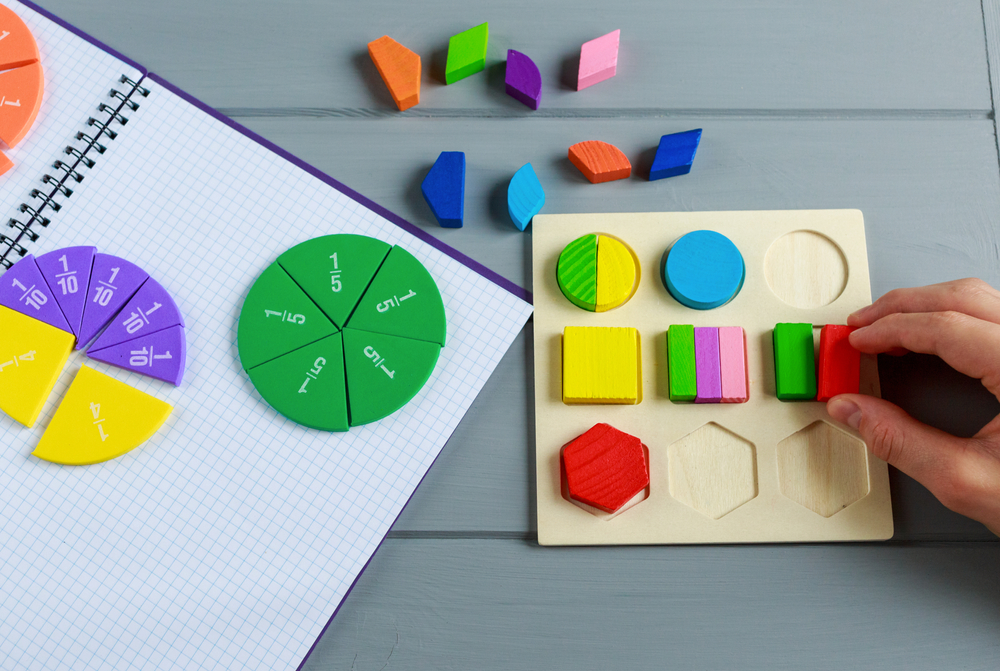



Understanding length is a fundamental concept for children aged 4-8, and both parents and teachers should prioritize it for several reasons. Firstly, grasping the idea of length helps children develop essential measurement skills that are utilized in everyday life, from cooking to crafting. Engaging with measuring tools like rulers, tape measures, or non-standard units (like blocks or hands) enhances their spatial awareness, a skill that is crucial for success in math and science.
Additionally, learning about length fosters critical thinking as children compare, contrast, and categorize objects based on size. This exploration encourages curiosity and problem-solving since they must conceptualize and demonstrate an understanding of longer and shorter measurements.
Moreover, mastering length also enriches language skills. As children discuss and describe lengths, they expand their vocabulary and improve communication abilities. Inclusive activities, such as measuring toys, measuring their own heights, or even estimating distances during play, can also enhance parent-child interaction and strengthen the learning bond.
Overall, understanding length goes beyond mathematics; it equips children with the necessary life skills, nurtures cognitive development, and prepares them for more complex concepts in the future. Thus, fostering this understanding is crucial for parents and teachers alike.








