Understanding measurement Worksheets for Ages 4-8
3 filtered results
-
From - To
Explore our engaging Understanding Measurement Worksheets designed for children ages 4-8! These printable resources help young learners grasp essential measurement concepts through fun and interactive activities. Each worksheet focuses on foundational skills like length, weight, capacity, and time, fostering an early love for math. Ideal for classroom use or at-home learning, these worksheets encourage hands-on exploration with colorful designs and relatable examples. By integrating real-world applications, children will develop critical thinking and problem-solving abilities while improving their measurement skills. Discover a variety of worksheets tailored to match your child's developmental stage and enhance their learning journey today!
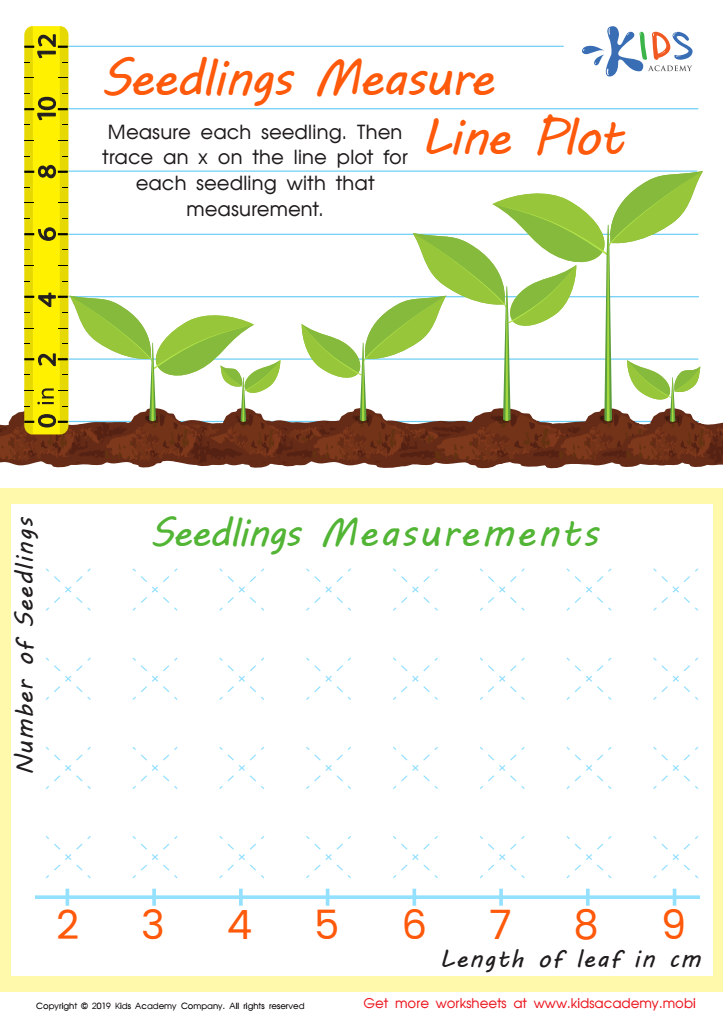
Seedling Measure Line Plot Worksheet
 Assign to My Students
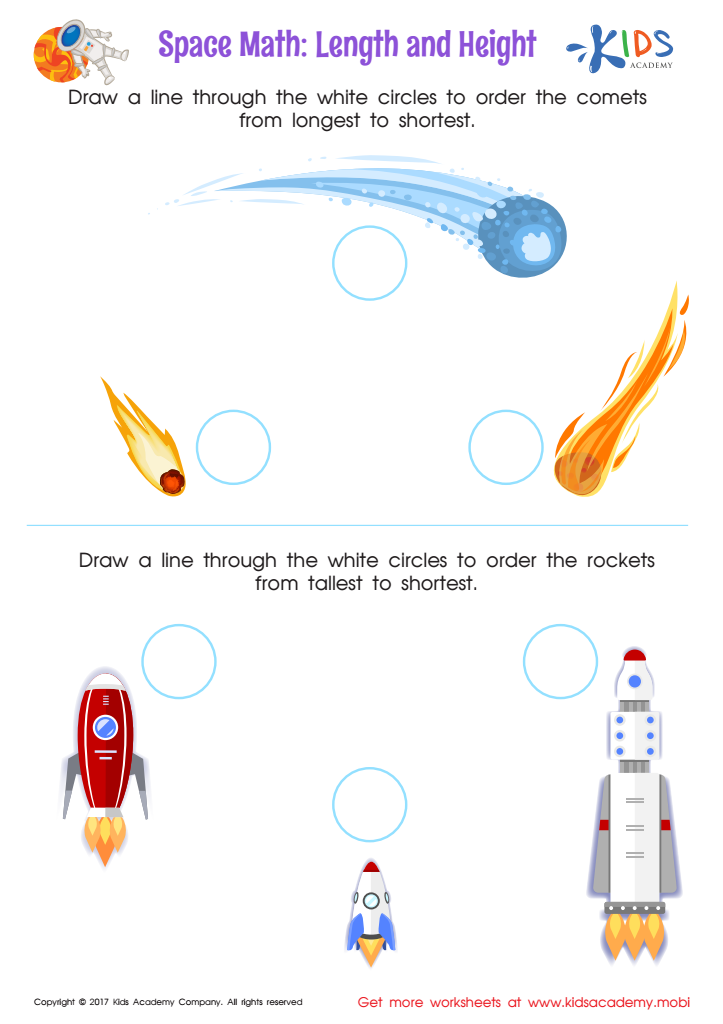
Space Math Worksheet






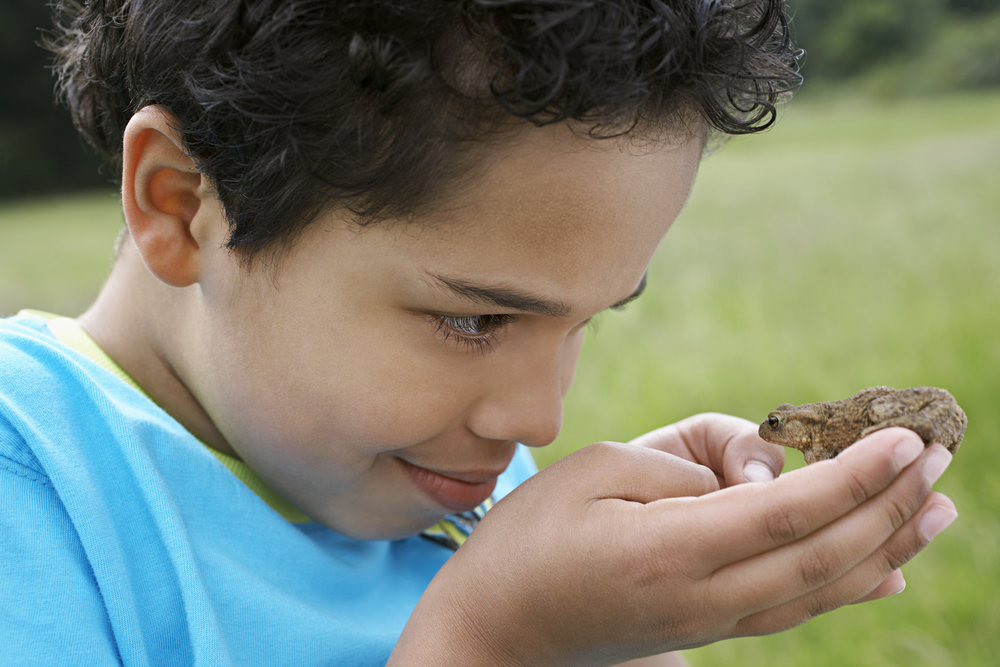
Understanding measurement is crucial for children aged 4-8 as it lays the foundation for essential life skills and critical thinking. During these formative years, children are naturally curious about the world around them. Measurement helps them make sense of quantities, sizes, and distances, fostering better spatial understanding. By engaging with concepts such as length, weight, and volume, children learn to compare and contrast objects, enhancing their observational and analytical skills.
Moreover, measurement is a practical application of mathematics, making early math education more relevant and enjoyable. Teaching children measurement promotes cognitive development, as they must apply rules and methods to solve problems in real-life scenarios. For example, cooking, crafting, or building projects inherently involve measuring and can transform abstract math concepts into tangible experiences.
Additionally, incorporating measurement into everyday activities encourages parents and teachers to participate in meaningful conversations with children, enhancing their language and communication skills. By learning measurement, children also build a sense of confidence and independence, laying the groundwork for academic success in later years. Therefore, inspiring an interest in measurement from an early age will not only benefit their mathematical understanding but also cultivate broader essential skills that will serve them throughout life.








