Understanding measurements Worksheets for Ages 4-8 - Page 2
28 filtered results
-
From - To
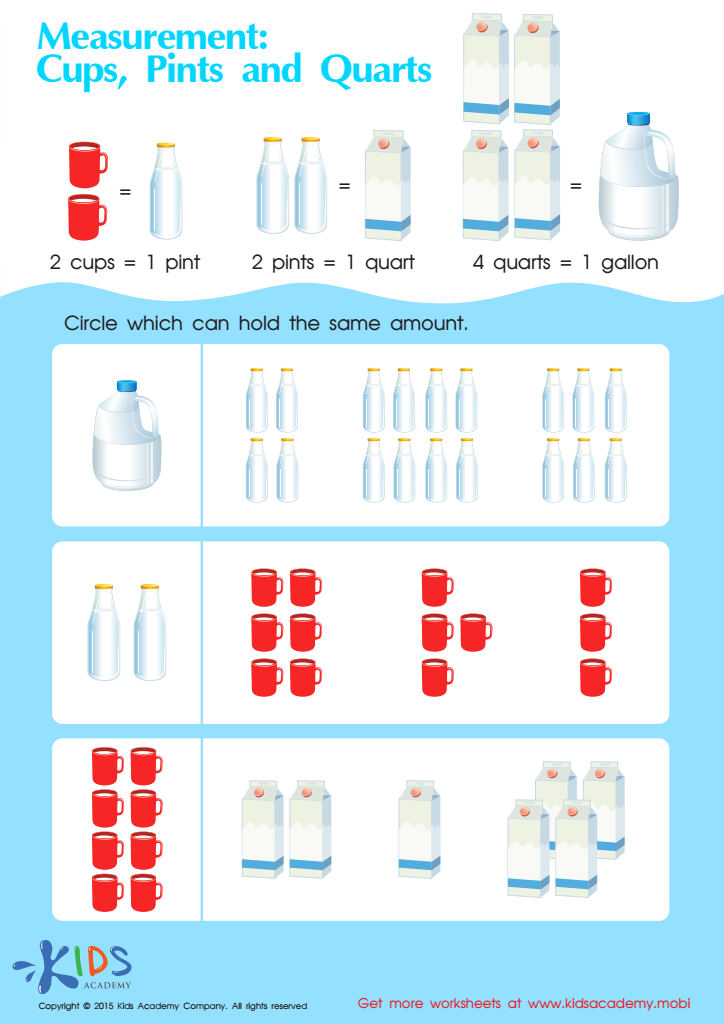
Cups, Pints and Quarts 2 Worksheet
 Assign to My Students
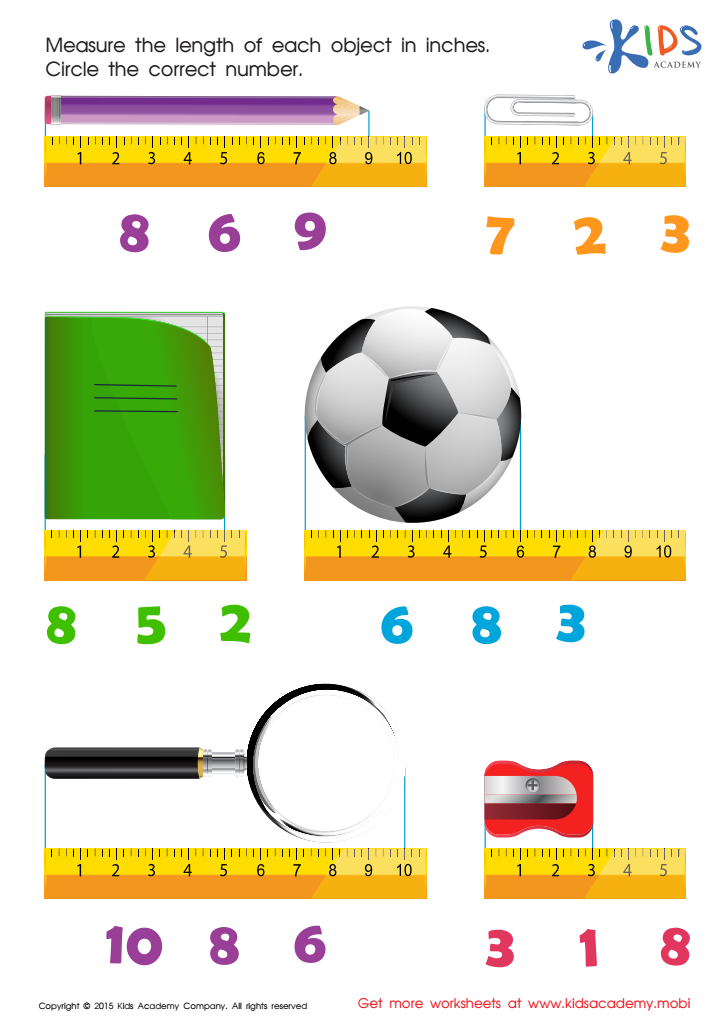
Learning measuring objects in inches Worksheet
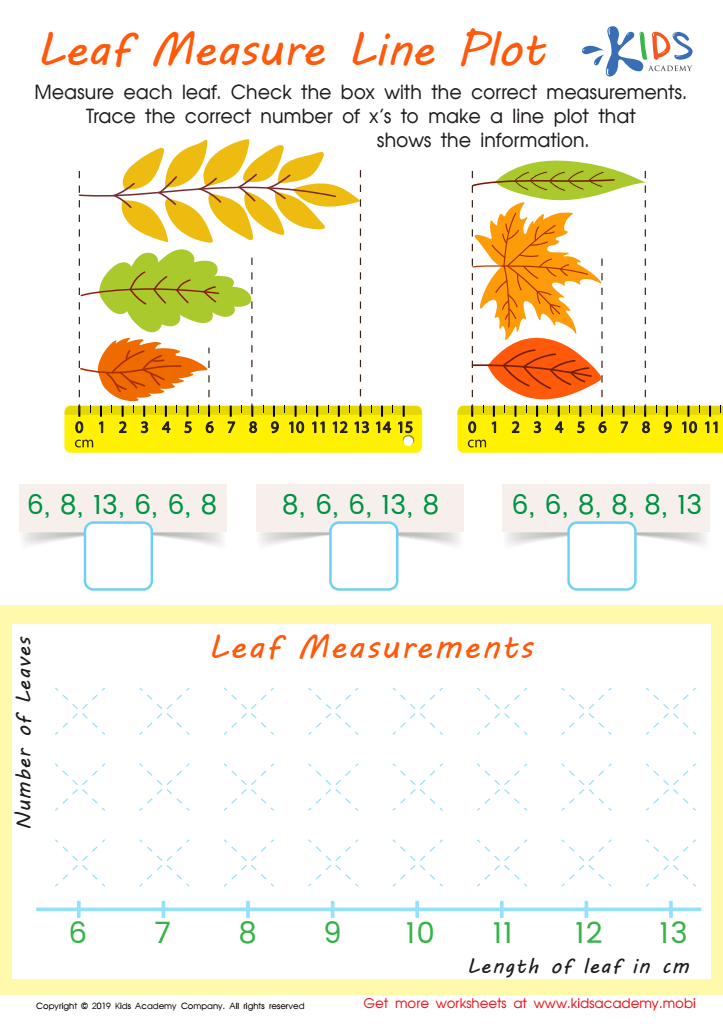
Leaf Measure Line Plot Worksheet







Understanding measurements is crucial for children ages 4-8, as it lays the foundation for various essential life skills and academic concepts. At this early age, children are naturally curious and engaging them in measurement activities helps harness this curiosity. Learning measurement supports cognitive development by enhancing critical thinking and problem-solving skills. For example, comparing lengths, weights, and volumes allows children to make observations, predictions, and comparisons, fostering analytical skills that are vital in both everyday scenarios and future academic pursuits.
Moreover, measurement is inherently linked to creativity and play. Activities such as baking, gardening, or building with blocks encourage children to measure ingredients, lengths, or areas, making learning enjoyable and interactive. Such hands-on experiences can make abstract concepts more tangible.
Additionally, understanding measurement promotes numerical literacy and lays the groundwork for future math learning, where concepts such as time, money, and geometry become increasingly relevant. Teachers and parents play a pivotal role in integrating measurement into daily activities, enriching children’s understanding and appreciation of math. Creating a supportive environment where measurement is part of conversations and activities results in confident learners who are well-prepared for the challenges ahead. Ultimately, their comfort with measurements can greatly influence academic success and everyday functioning.








