Understanding Perimeter Worksheets for Ages 4-8
3 filtered results
-
From - To
Unlock the joy of learning with our 'Understanding Perimeter Worksheets for Ages 4-8'! Specifically designed for young learners, these worksheets turn the concept of perimeter into a fun and engaging experience. Children will explore shapes, count sides, and discover how to measure boundaries, all through playful activities and colorful illustrations. Perfect for classroom or home use, our worksheets aim to build foundational math skills while fostering critical thinking. Start your child's educational journey with us, and watch as they confidently master perimeter calculation. Reinforce learning in an interactive way, making math both exciting and easy to understand.
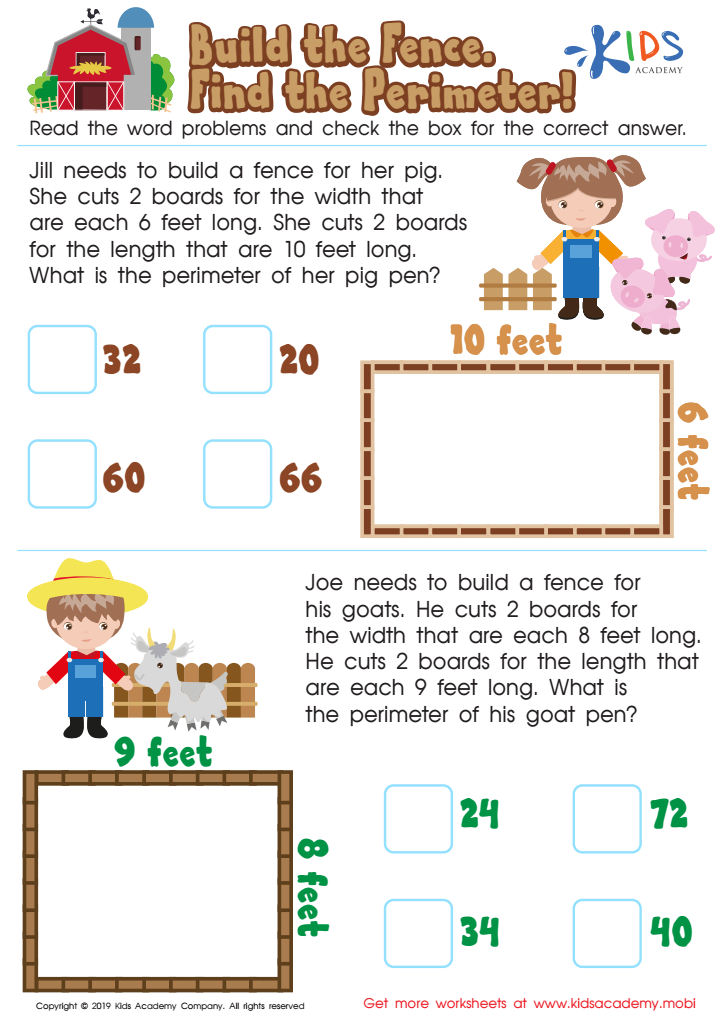
Build the Fence, Find the Perimeter Worksheet
 Assign to My Students
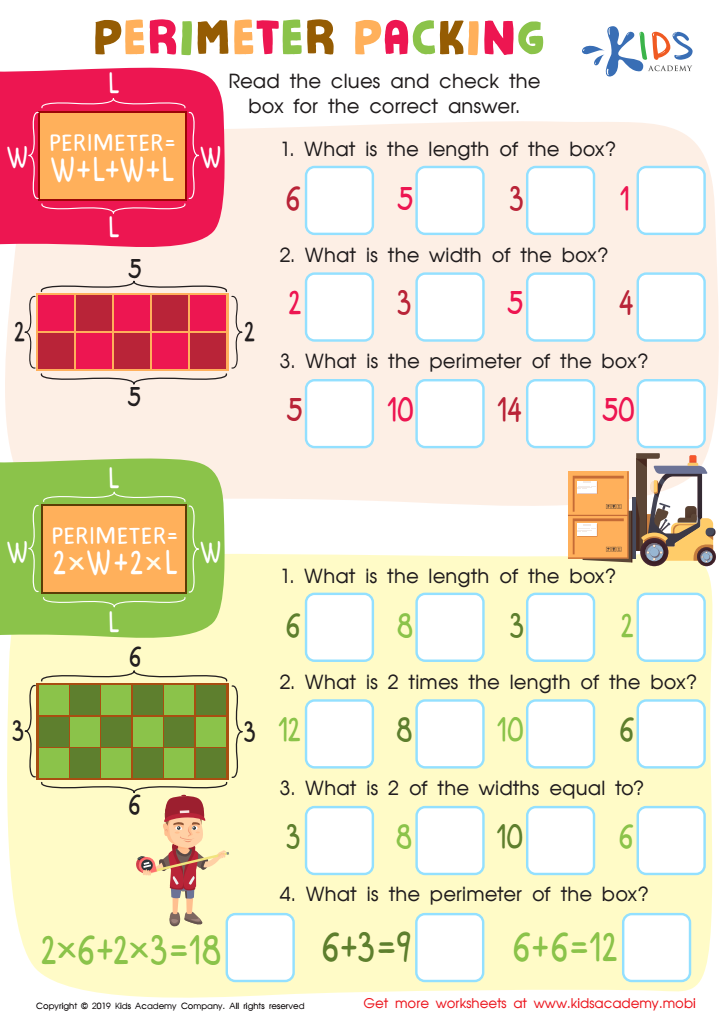
Perimeter Parking Worksheet
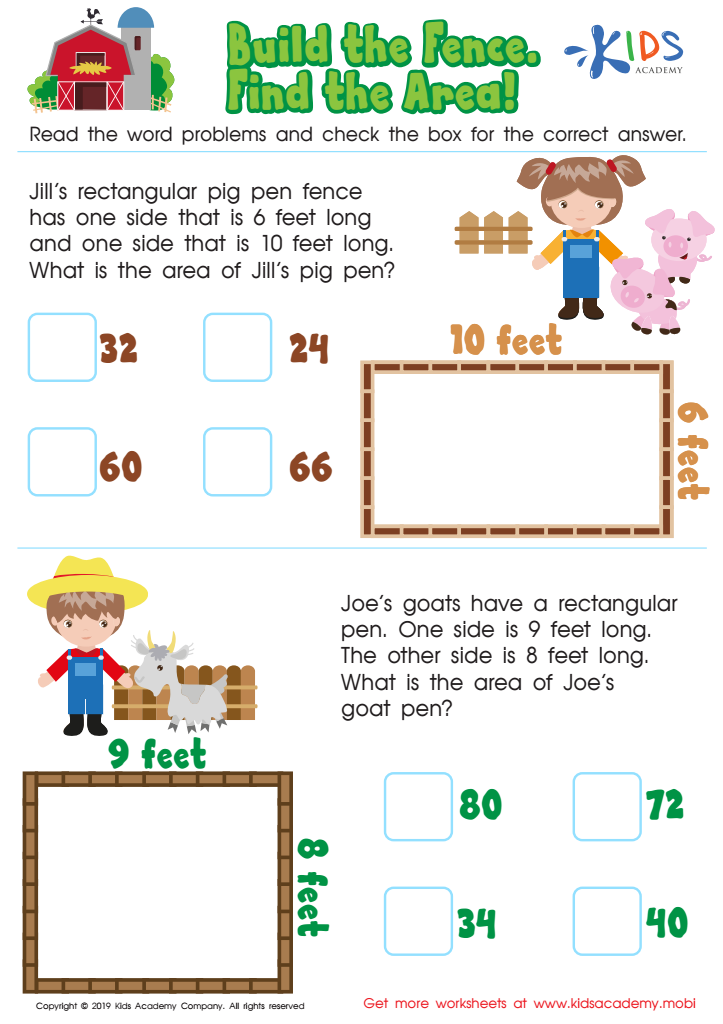
Build the Fence, Find the Area Worksheet



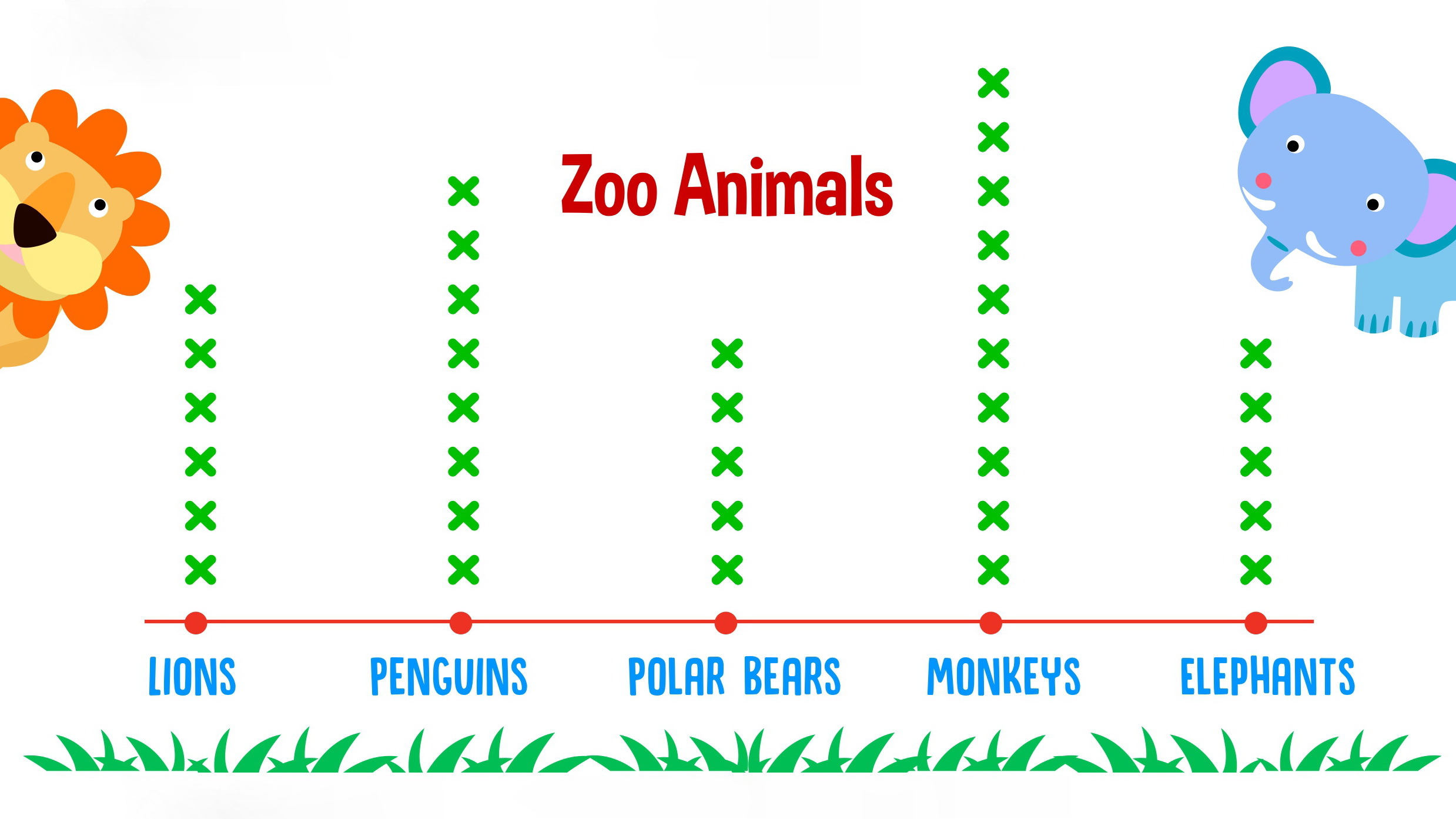


Understanding perimeter is a fundamental concept that forms a critical building block in a child’s mathematical development. For children aged 4-8, grasping the idea of perimeter fosters spatial awareness and geometric comprehension, skills that are essential both in academics and everyday life.
Firstly, learning about perimeter helps young children make concrete connections between numbers and physical spaces. It encourages them to count, measure, and compare lengths, reinforcing their number sense and understanding of measurement units. This early exposure sets a foundation for more complex math topics they will encounter later.
Secondly, understanding perimeter nurtures problem-solving and critical thinking skills. As children engage in activities that involve determining the boundary length of various shapes, they learn to strategize, plan, and execute a series of steps to reach a solution. This promotes perseverance and analytical thinking.
Moreover, the concept of perimeter is everywhere in real life. From decorating a room to planning a garden or even setting boundaries during play, children will utilize these skills regularly. By making these connections early, parents and teachers can empower children to see the value and application of math in the world around them.
In summary, prioritizing the understanding of perimeter for young children sets up a strong mathematical foundation, encourages key cognitive abilities, and highlights the real-world relevance of math.








