Understanding plurals Worksheets for Ages 4-8
7 filtered results
-
From - To
Explore our engaging "Understanding Plurals Worksheets" designed for children aged 4-8! These creative activities help young learners grasp the concept of plurals in a fun and interactive way. Our printable worksheets feature vibrant illustrations and simple exercises to reinforce learning, making it easy for kids to differentiate between singular and plural forms. With a variety of exercises, including matching, fill-in-the-blanks, and picture identification, your child will enjoy improving their vocabulary and language skills. Perfect for at-home learning or classroom use, these worksheets ensure a solid foundation in grammar while keeping learning enjoyable! Download your set today and watch your child's confidence grow.
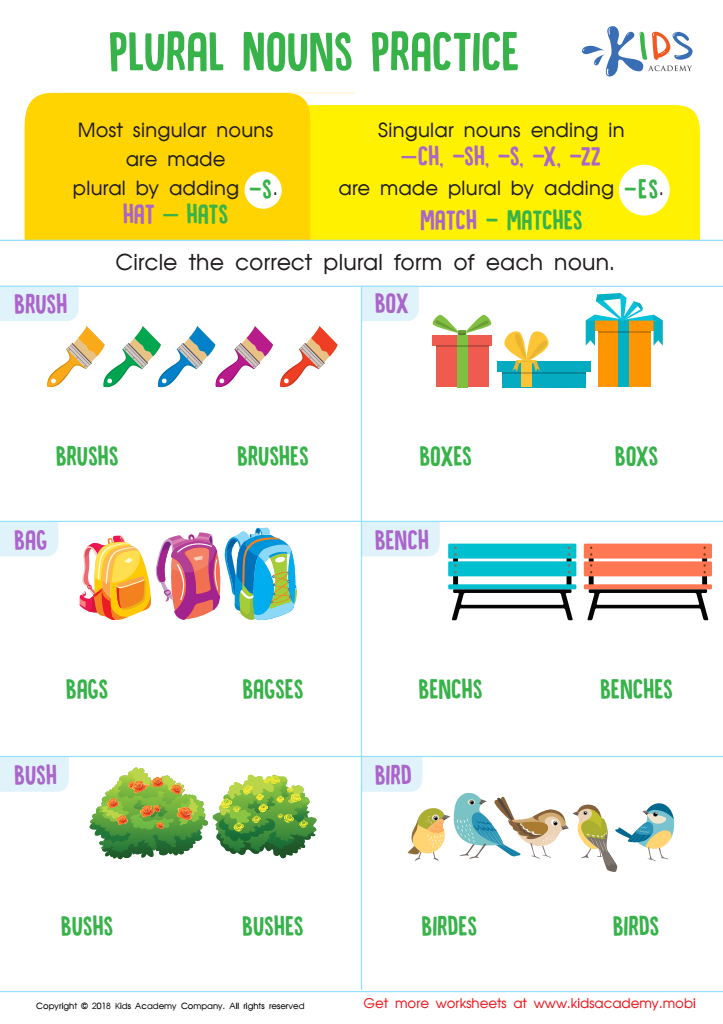
Plural Nouns Practice Worksheet
 Assign to My Students
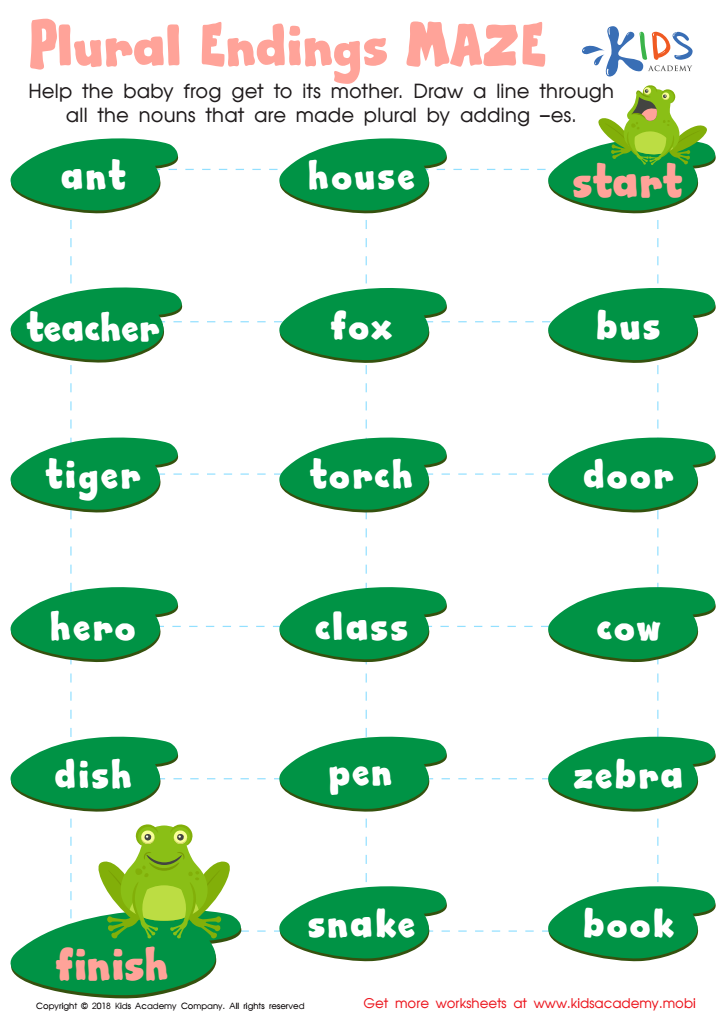
Plural Endings Maze Worksheet
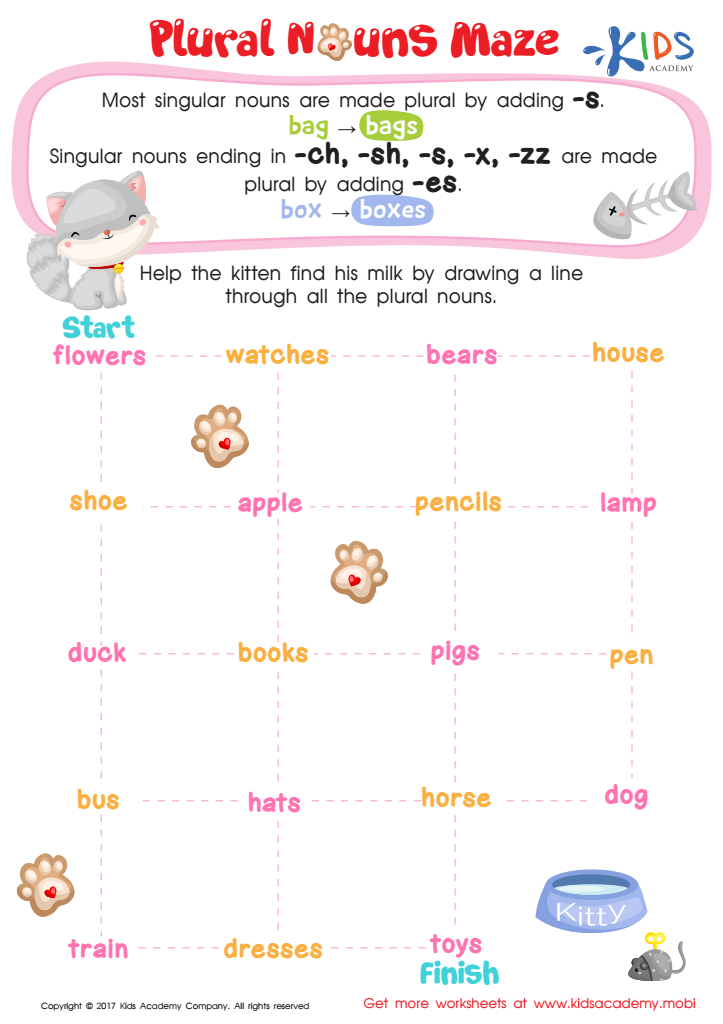
Plural Nouns Maze Worksheet
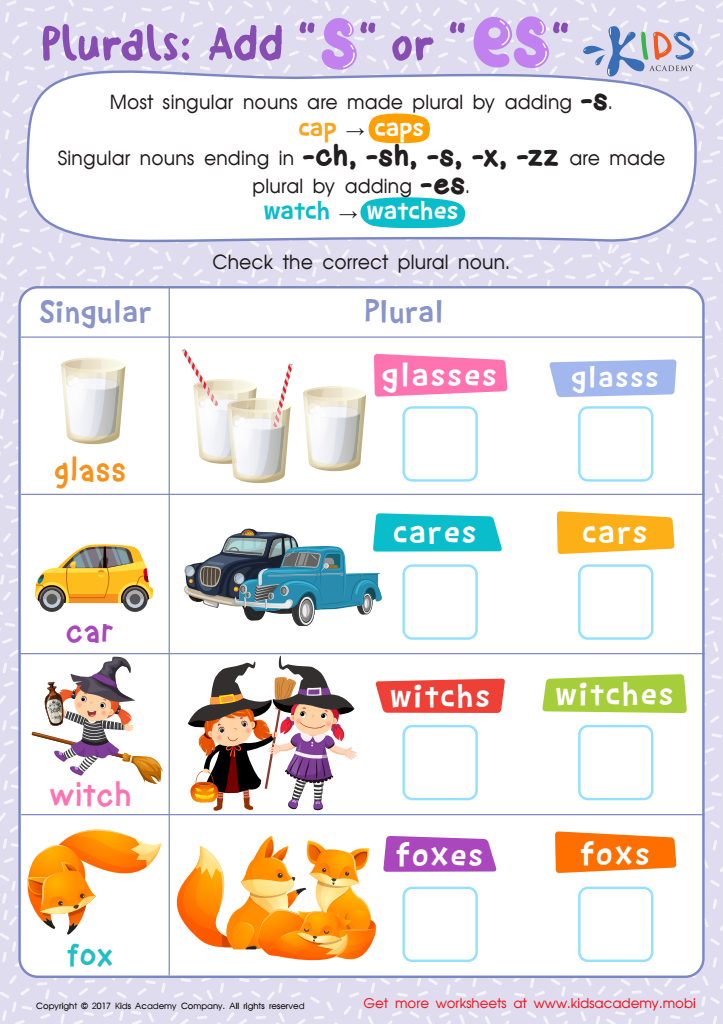
Plurals: "–es" or "–es"? Worksheet
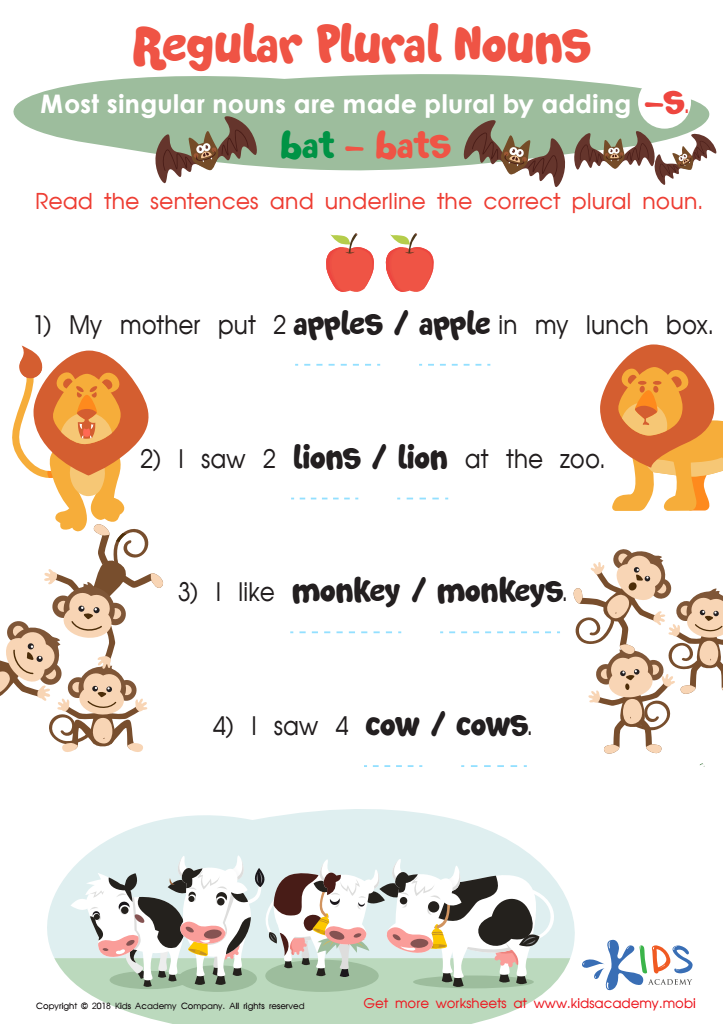
Regular Plural Nouns Worksheet
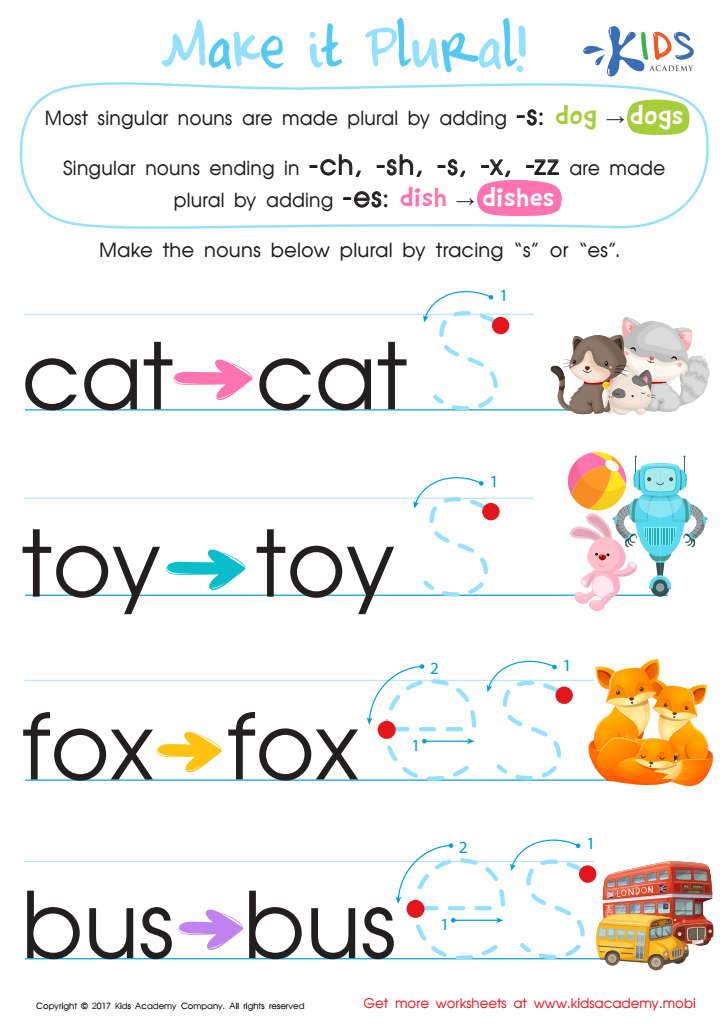
Make it Plural Worksheet





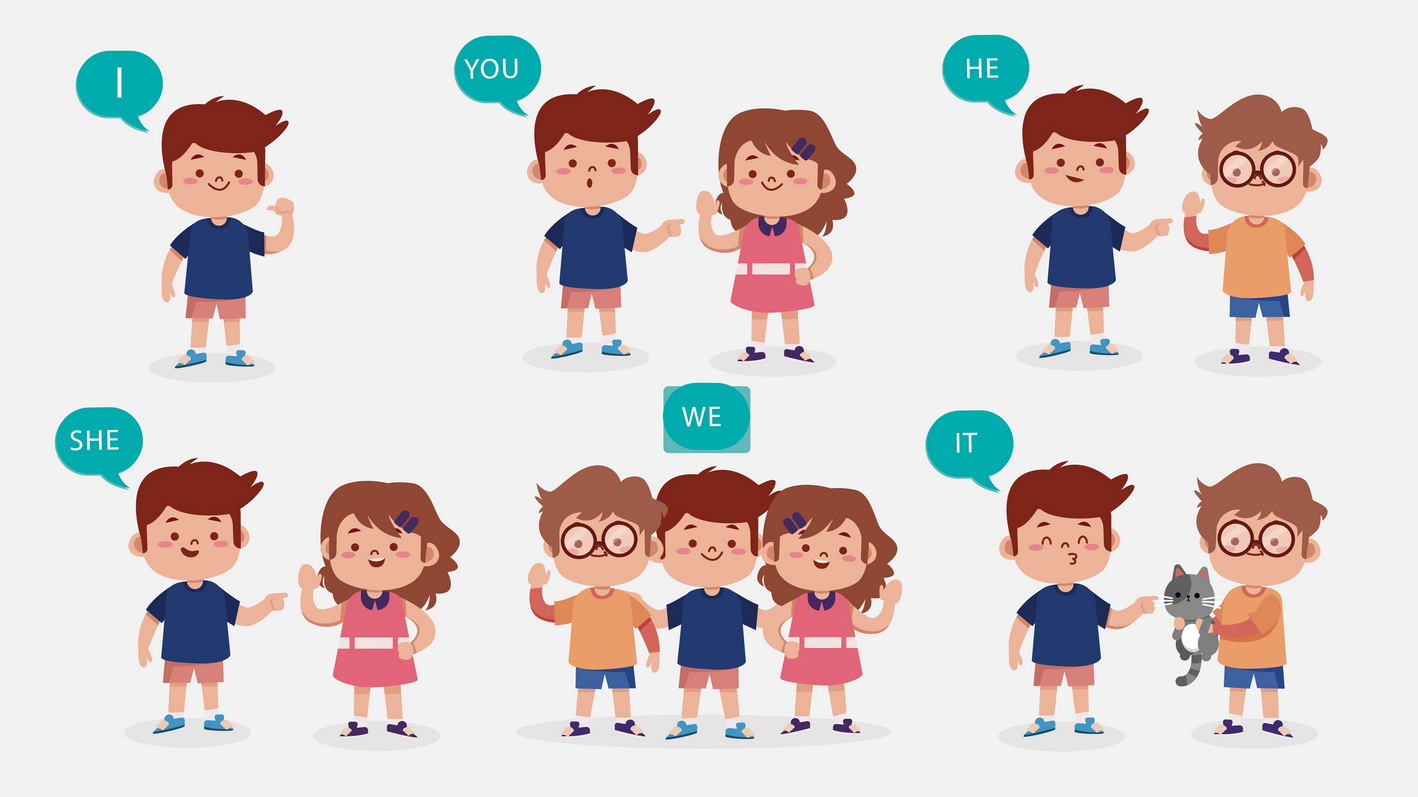

Understanding plurals is essential for children aged 4-8, as it forms a foundational aspect of language learning and communication. At this developmental stage, children are beginning to recognize and formulate sentences, expanding their vocabulary and grasp of grammar. Recognizing that adding an "s" or "es" to a word changes its meaning from singular to plural helps young learners make connections between quantity and expression, enriching their interaction with the world around them.
Parents and teachers play a critical role in this learning journey by integrating plural concepts into daily conversations, play activities, and literacy experiences. By emphasizing plurals, adults can enhance language skills, boost reading comprehension, and create a deeper understanding of storytelling by conveying the difference between one object and multiple objects. Additionally, mastering plurals fosters a child's confidence in language use, aiding them in articulating thoughts and observations clearly.
When children grasp the concept of plurals, they also develop foundational skills that will support their future learning in reading and writing, leading to better academic performance. Therefore, fostering a strong understanding of plurals at this early age not only improves language skills but also promotes overall cognitive and social development.








