
Understanding Rhymes Worksheets for Ages 4-8
4 filtered results
Difficulty Level
Grade
Age
-
From - To
Subject
Activity
Standards
Welcome to our "Understanding Rhymes Worksheets" page, designed specifically for children ages 4-8! Rhyming is a crucial early literacy skill that enhances vocabulary and phonemic awareness. Our engaging worksheets offer playful and interactive activities that make learning fun, encouraging children to identify, create, and complete rhymes. From bright illustrations to simple word pairs, these resources cater to various learning styles and help young learners develop confidence in their reading skills. Explore our comprehensive collection to support your child's journey in mastering the delightful world of rhymes, fostering a love for language that lasts a lifetime. Start the adventure of rhyme exploration today!
Favorites
With answer key
Interactive
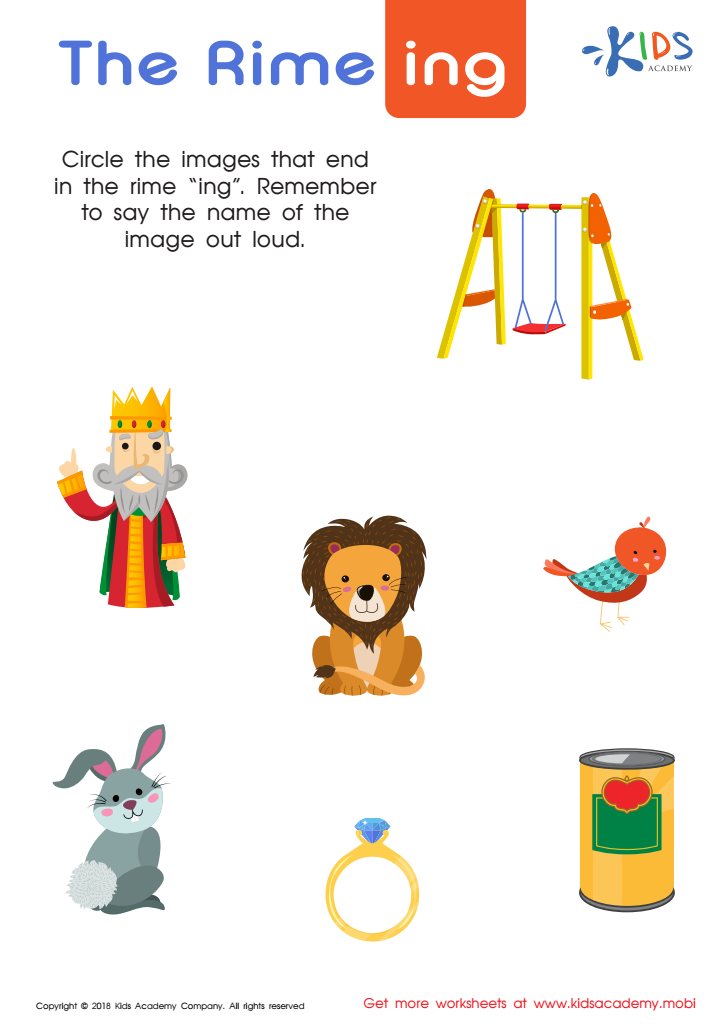
The Rime "ing" Worksheet
Teach children about word families and build their spelling and writing strategies with this colorful PDF worksheet. It features familiar pictures for children to name, encouraging them to circle those that end in "ing". This engaging activity will help develop reading skills in a fun way.
 Assign to My Students
The Rime "ing" Worksheet
Worksheet
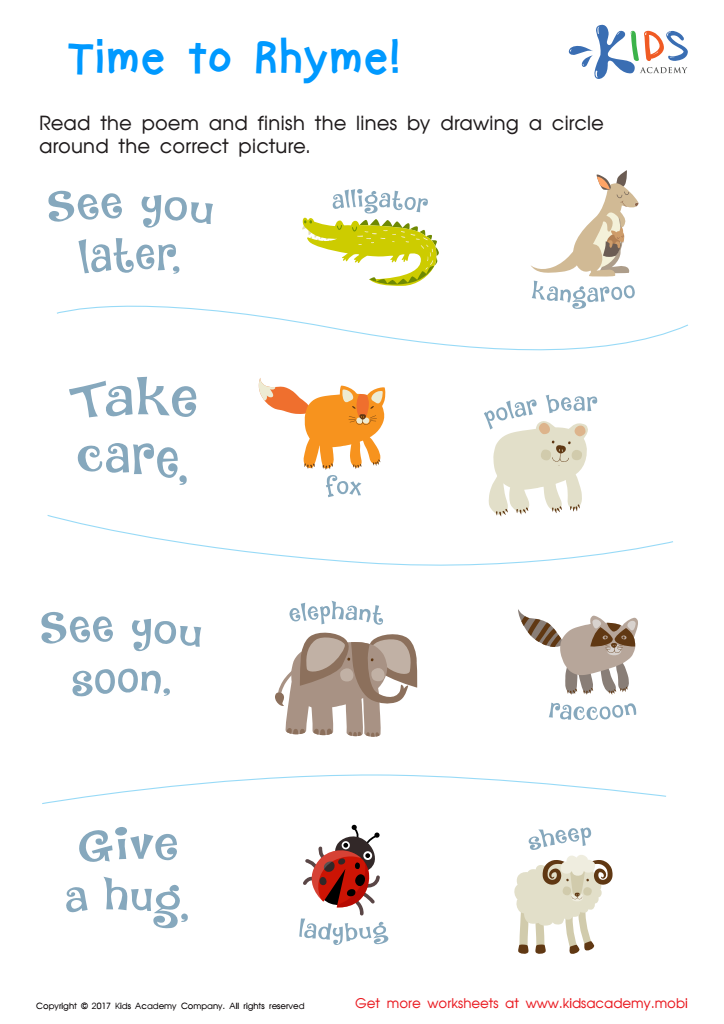
Time to Rhyme Rhyming Worksheet
This worksheet helps kids learn catchy sayings with rhymes, notice words and sounds that rhyme, and use problem solving to solve expressions. By using these expressions in everyday talk, kids gain the repetition needed to internalize the skills they've learned. Check out our nursery rhymes to further support them!
Time to Rhyme Rhyming Worksheet
Worksheet
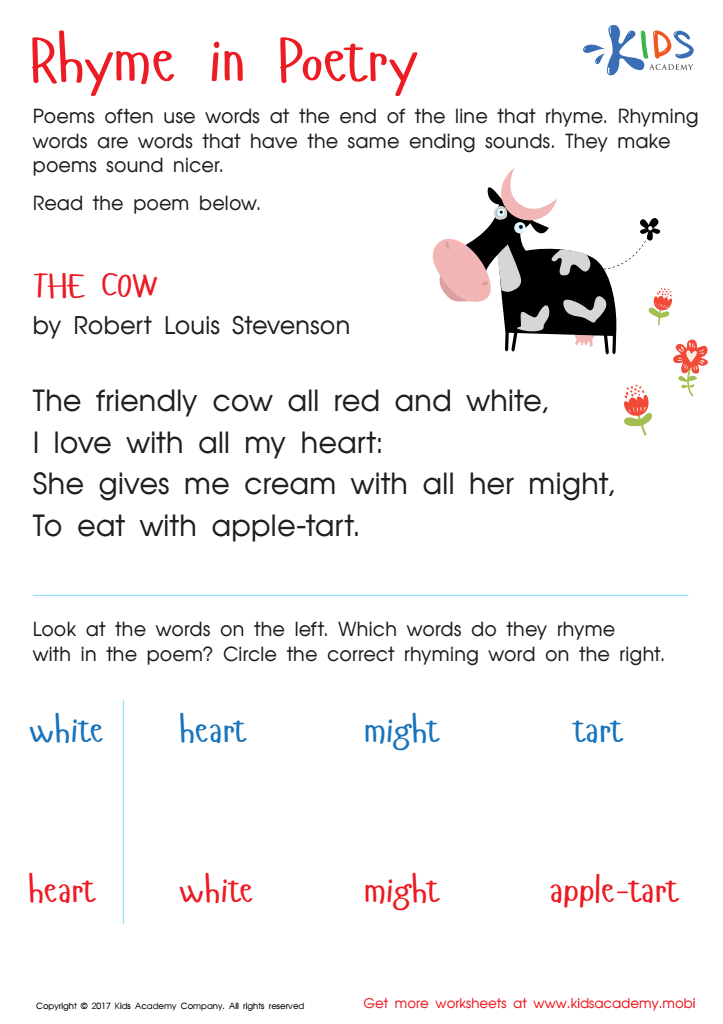
Rhyme In Poetry Worksheet
Introduce your child to poetic devices and help build their ear for poetry with Robert Louis Stevenson's adorable poem about a cow! Through this rhyming worksheet, your child will gain an appreciation for poetry and language.
Rhyme In Poetry Worksheet
Worksheet
Join Kids Academy for Free
Who is primarily going to use this learning content?







Understanding rhymes is crucial for children aged 4-8 because it plays a significant role in their early literacy development. Rhyming helps young learners develop phonemic awareness, which is the ability to hear, identify, and manipulate individual sounds in spoken words. This skill is foundational for reading, as it enables children to decode words and improve their spelling abilities.
Moreover, exposure to rhymes enhances vocabulary acquisition by introducing new words in a playful and memorable way. Children are more likely to grasp and retain vocabulary when it's set to a rhythmic pattern. Additionally, rhyming fosters auditory discrimination, aiding in the recognition of similar sounds, which is essential for effective communication and comprehension.
Engaging with rhymes also promotes creativity and language development. Children enjoy the playful nature of rhyming, encouraging a positive attitude towards reading and writing. Furthermore, rhymes can cultivate social skills and turn-taking in group activities, making learning a collaborative experience.
Ultimately, parents and teachers should prioritize understanding rhymes to lay a solid foundation for literacy, enhance language skills, and engage young learners in an enjoyable, enriching manner. Fostering a love for language at this age paves the way for lifelong readers and successful communicators.








