
Understanding sentence structure Worksheets for Ages 4-8
4 filtered results
Difficulty Level
Grade
Age
-
From - To
Subject
Activity
Standards
Unlock the exciting world of language with our "Understanding Sentence Structure Worksheets" designed for children ages 4-8! These engaging and interactive resources help young learners grasp the basics of constructing sentences, identifying parts of speech, and developing their writing skills. Featuring colorful illustrations and age-appropriate activities, our worksheets make learning about subject, verb, and object fun and accessible. Perfect for at-home practice or classroom use, these tools encourage creativity and critical thinking as children embark on the journey of becoming confident communicators. Explore our collection today and watch your child's language skills flourish!
Favorites
With answer key
Interactive
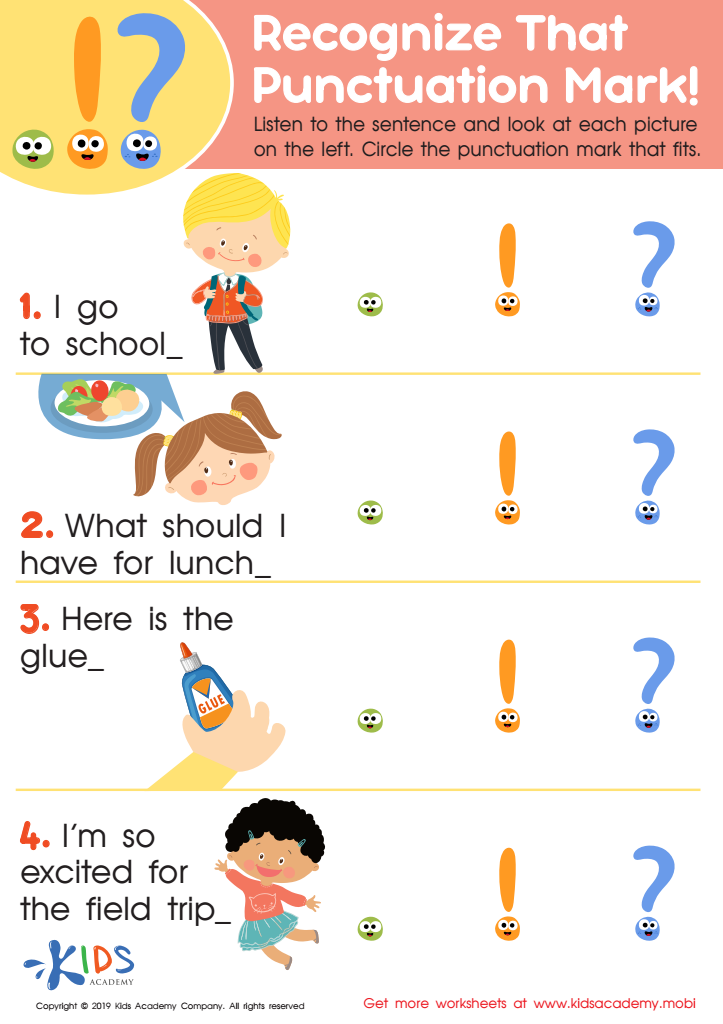
Recognize Punctuation Marks Worksheet
Before beginning the worksheet, ask your students to name punctuation marks they know and what they mean. Common punctuation marks are full stop, question mark and exclamation mark. Point out each one in the picture and read the sentences, helping them circle the right punctuation.
 Assign to My Students
Recognize Punctuation Marks Worksheet
Worksheet
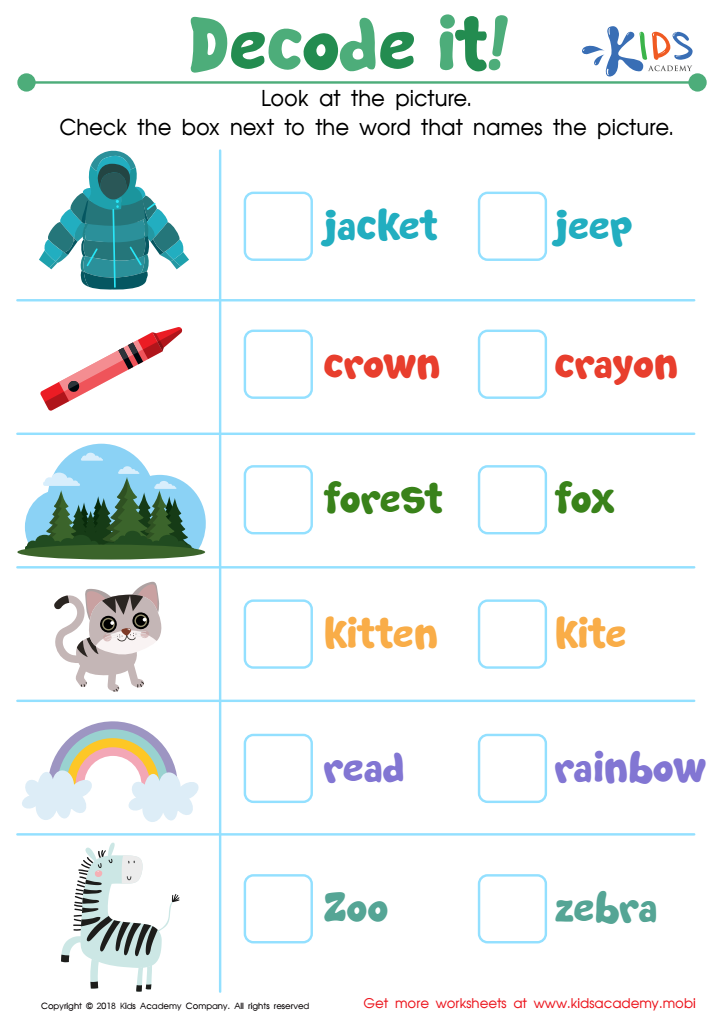
Reading: Decode It Worksheet
Look at the picture and circle the word that names it. This exercise helps kids practice picture cues and decoding words, with the same beginning sound. It builds their fluency and comprehension, giving them the skills to read unfamiliar words.
Reading: Decode It Worksheet
Worksheet
Sentence Structure Printable
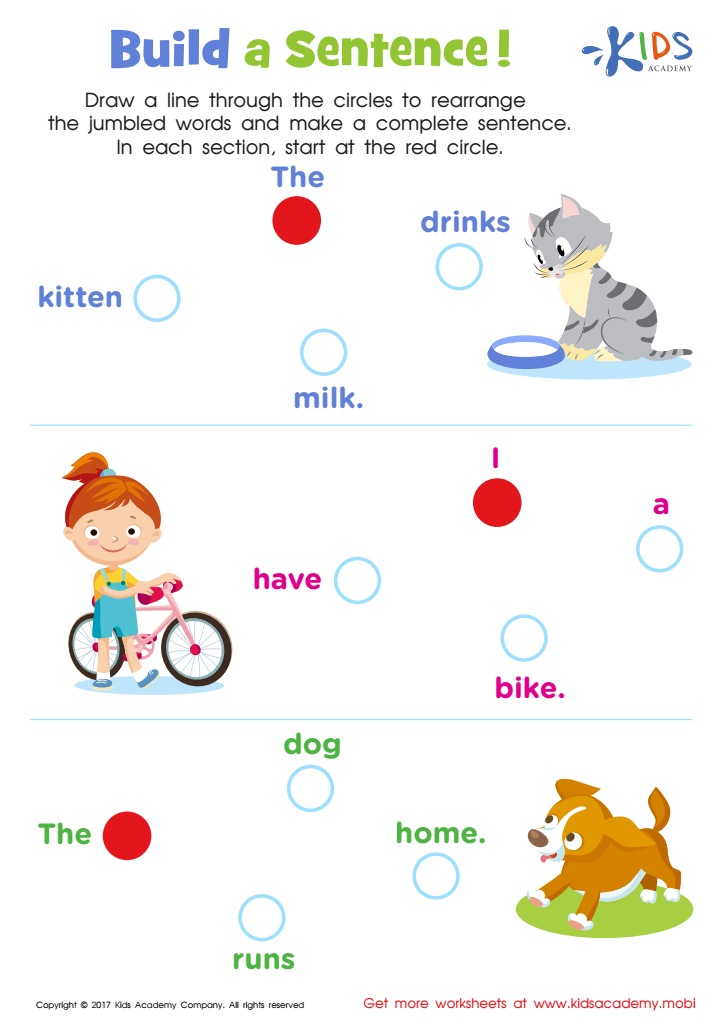
Let your child enjoy learning sentences with this fun PDF. It'll help build confidence in writing, plus foster a sense of accomplishment when sentences are correctly formed!
Sentence Structure Printable
Worksheet
Join Kids Academy for Free
Who is primarily going to use this learning content?



.jpg)



Understanding sentence structure is crucial for children aged 4-8 because it lays the foundation for effective communication and literacy. At this developmental stage, children are beginning to grasp the building blocks of language, and a solid understanding of sentence structure helps them articulate their thoughts clearly. By recognizing subjects, verbs, and objects, children can understand how sentences are formed, which enhances their reading comprehension skills.
Learning about sentence structure also aids in writing proficiency. As children experiment with crafting sentences, they improve their ability to express ideas creatively and coherently. This skill leads to greater confidence in both spoken and written communication, essential components for academic success. Moreover, understanding how sentences function helps children decode and make sense of the text, making reading a more enjoyable and rewarding experience.
For parents and teachers, fostering this understanding means providing children with tools for future learning. Encouraging exploration of sentence structure through playful activities, storytelling, and interactive discussions can ignite children's passion for language. In sum, prioritizing sentence structure is fundamental for cultivating effective communicators and confident learners, setting the stage for lifelong literacy development.








