Understanding sequence Worksheets for Ages 4-8
9 filtered results
-
From - To
Introduce your young learners to the concept of sequencing with our engaging "Understanding Sequence Worksheets for Ages 4-8." These colorful and interactive worksheets are expertly designed to help kids develop essential cognitive skills by arranging events and objects in the correct order. Starting with simple picture sequences and gradually incorporating more complex tasks, these activities promote critical thinking and comprehension. Perfect for both classroom and at-home practice, our worksheets support foundational skills that are crucial for reading, writing, and overall learning success. Boost your child's confidence and fun in learning by downloading our sequences today!
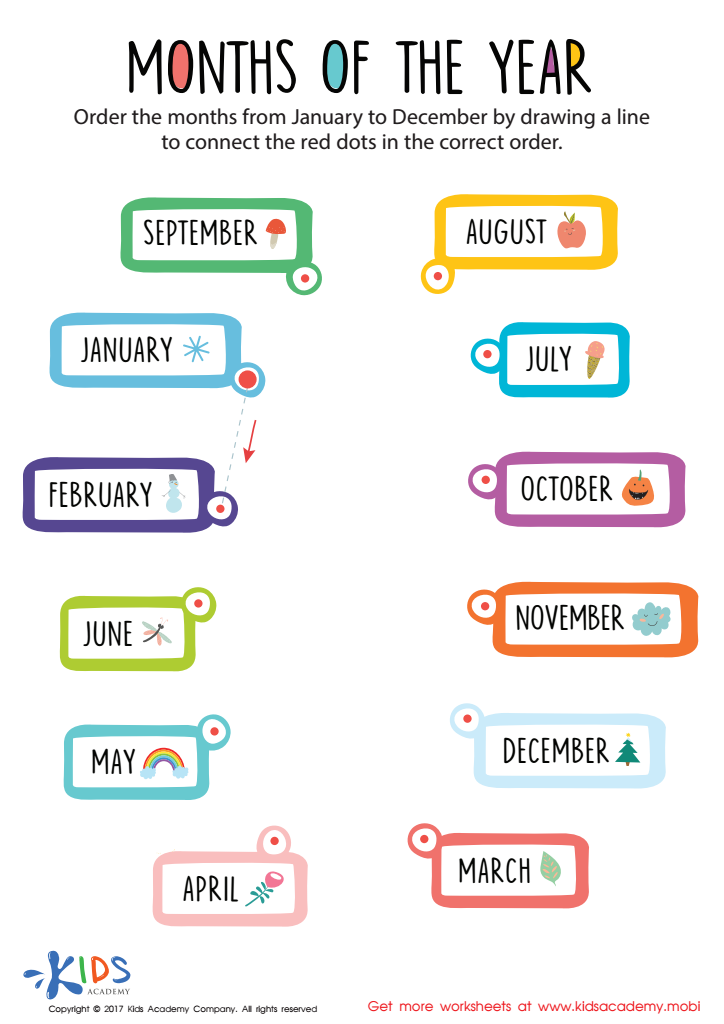
Months of the Year Worksheet
 Assign to My Students
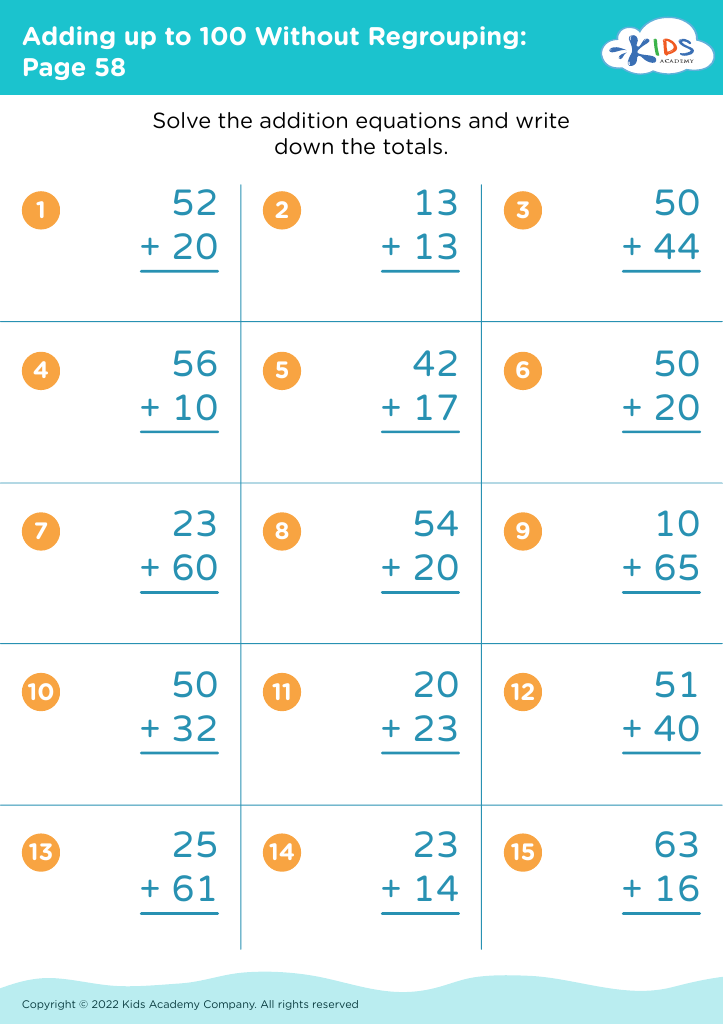
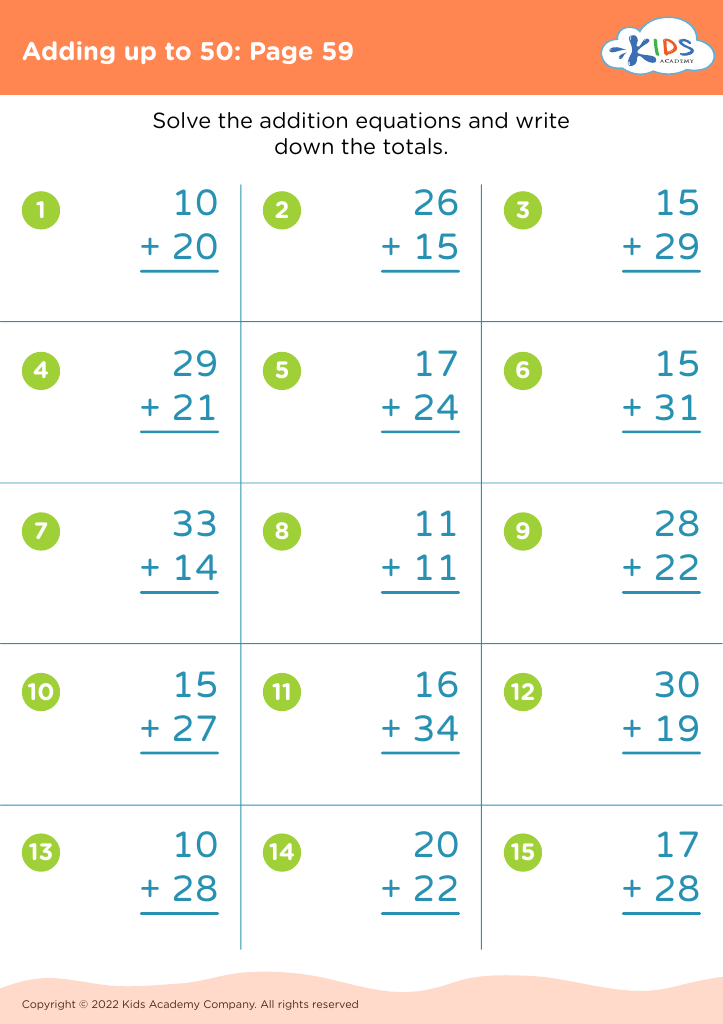
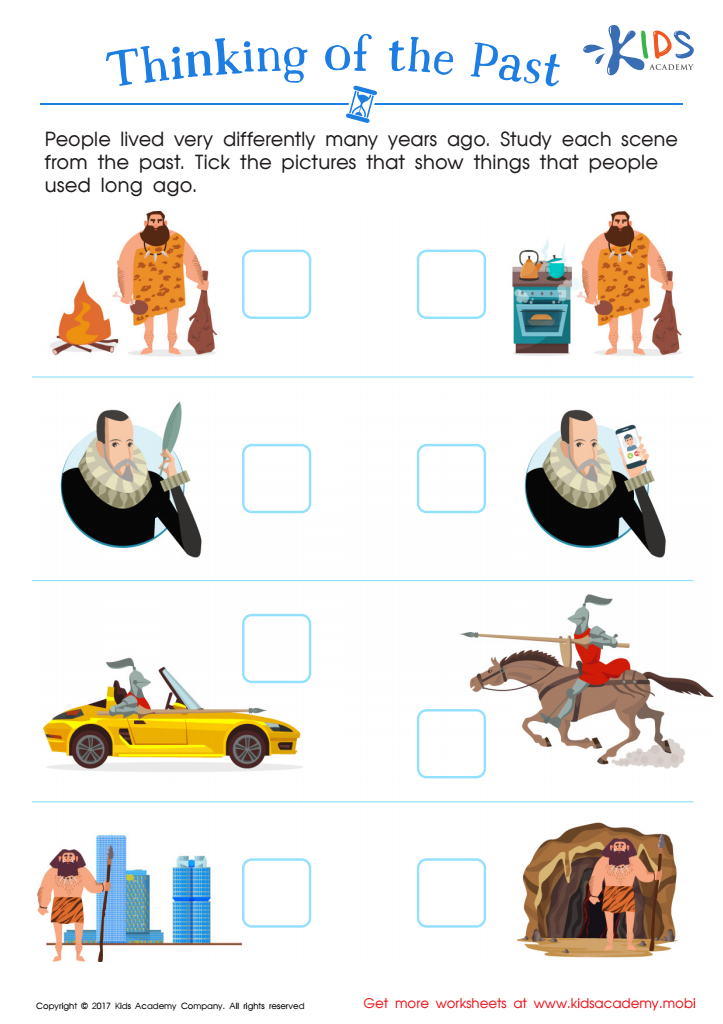
Thinking Past Printable
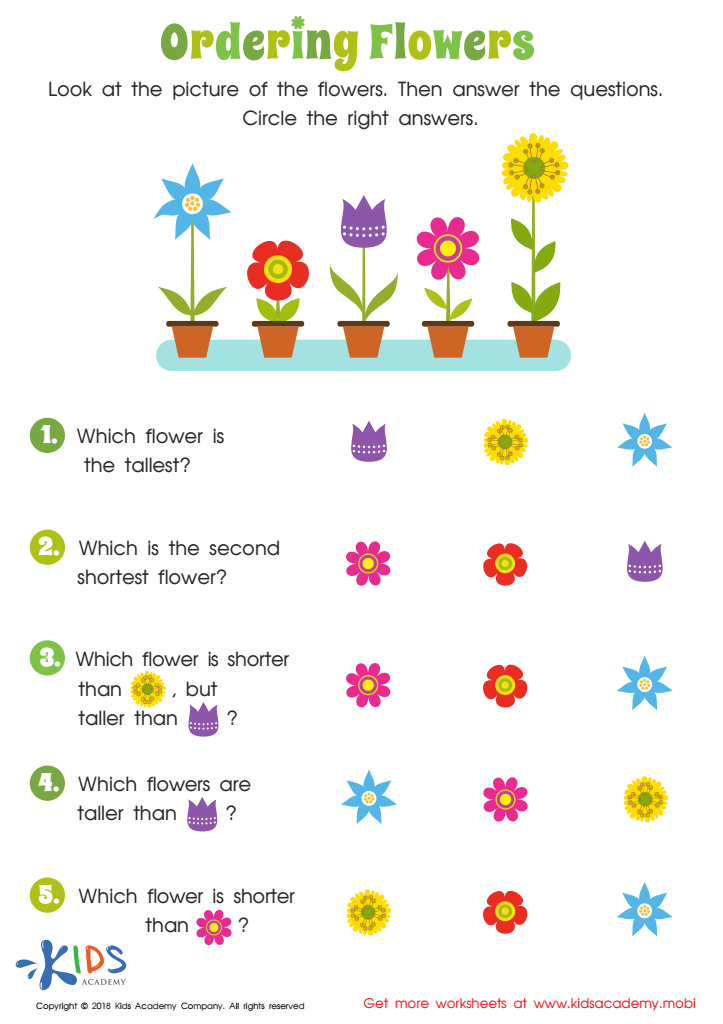
Ordering Flowers Worksheet
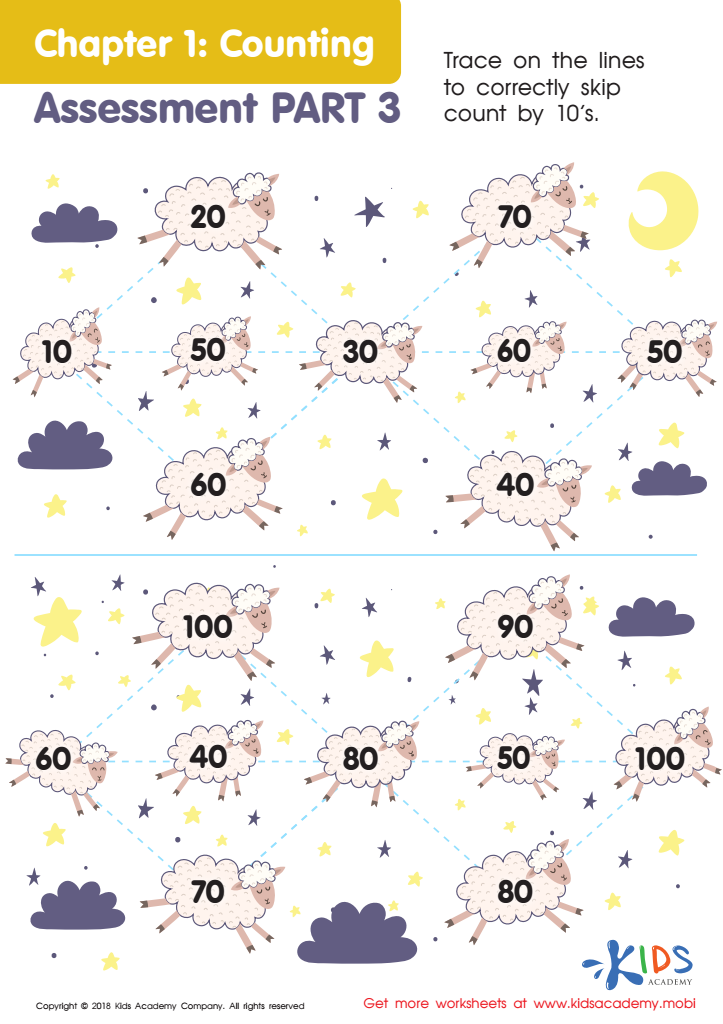
Counting: Assessment 3 Worksheet
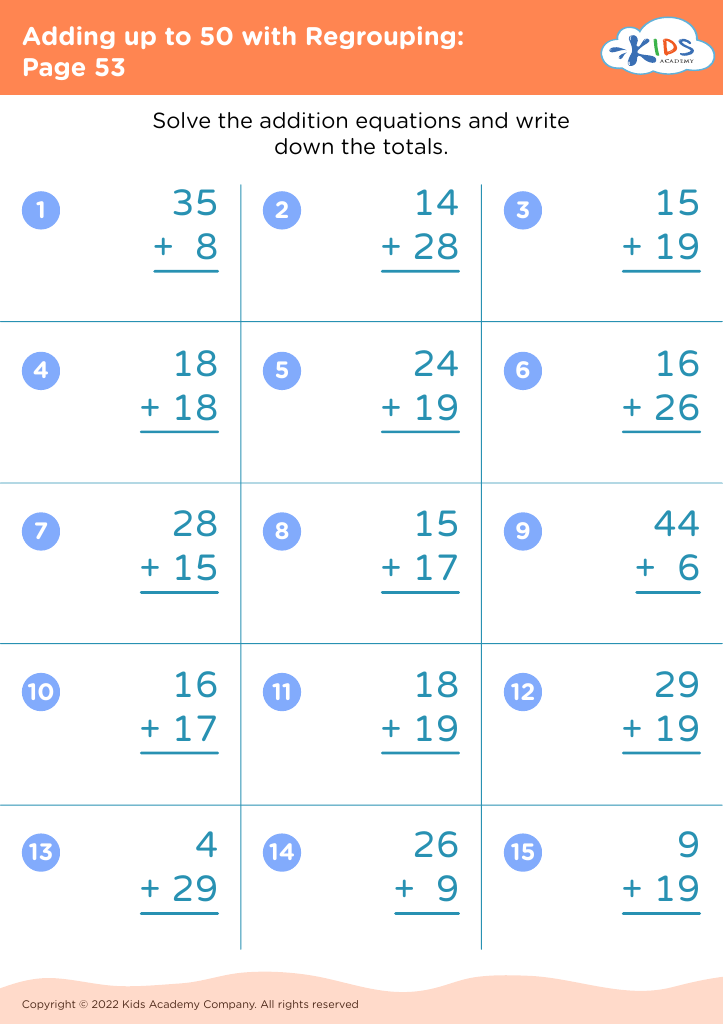
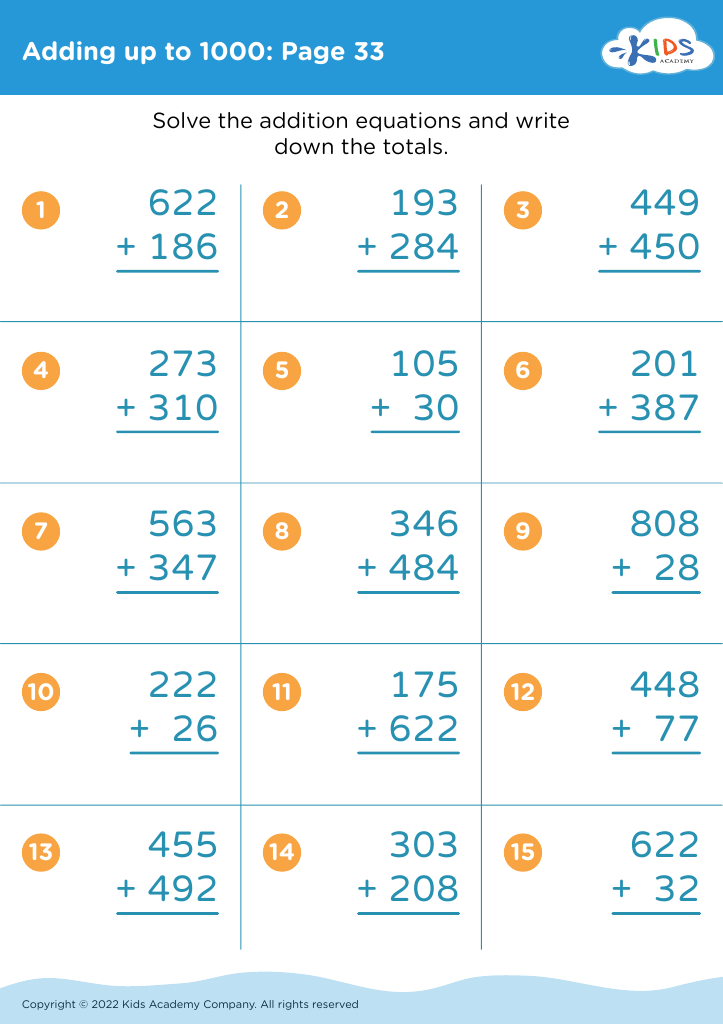








Understanding sequence is a foundational skill for young children, crucial for cognitive development and life skills. For children aged 4-8, mastering sequence—the ability to understand the order of events, steps in a process, or elements in a narrative—plays an essential role in various aspects of learning and daily functioning.
Firstly, sequencing aids in language development and comprehension. When children grasp the order of events in a story, they can retell stories accurately, predict outcomes, and understand cause-and-effect relationships. This not only enhances reading comprehension but also builds critical thinking skills.
Secondly, sequencing is integral to mathematical understanding. Simple tasks like counting, arranging numbers, and understanding time-related concepts (days, months) require a sense of sequence. It lays the groundwork for more complex mathematical operations and logical reasoning as children grow older.
Moreover, sequencing promotes planning and organizational skills essential for daily life. Whether it's following a routine at home, getting dressed, or completing a task independently, understanding the correct order of actions increases children’s self-sufficiency and confidence.
Parents and teachers who emphasize sequencing through activities like storytelling, puzzles, or cooking projects provide children with invaluable tools to interpret and interact with the world more effectively. Encouraging activities that develop this skill not only supports academic achievement but also fosters lifelong competency in critical thinking and problem-solving.








