Understanding skip-counting Worksheets for Ages 4-8
3 filtered results
-
From - To
Discover the joy of skip-counting with our engaging worksheets designed for children ages 4-8! Skip-counting is an essential math skill that lays the foundation for addition, multiplication, and number patterns. Our printable worksheets provide fun and interactive activities that help young learners practice counting by 2s, 5s, and 10s through vibrant illustrations and stimulating exercises. Children will develop their number sense while boosting their confidence in math. Ideal for homeschooling or supplementary classroom resources, our skip-counting worksheets make learning enjoyable and effective. Explore our collection and watch your child thrive in their mathematical understanding today!
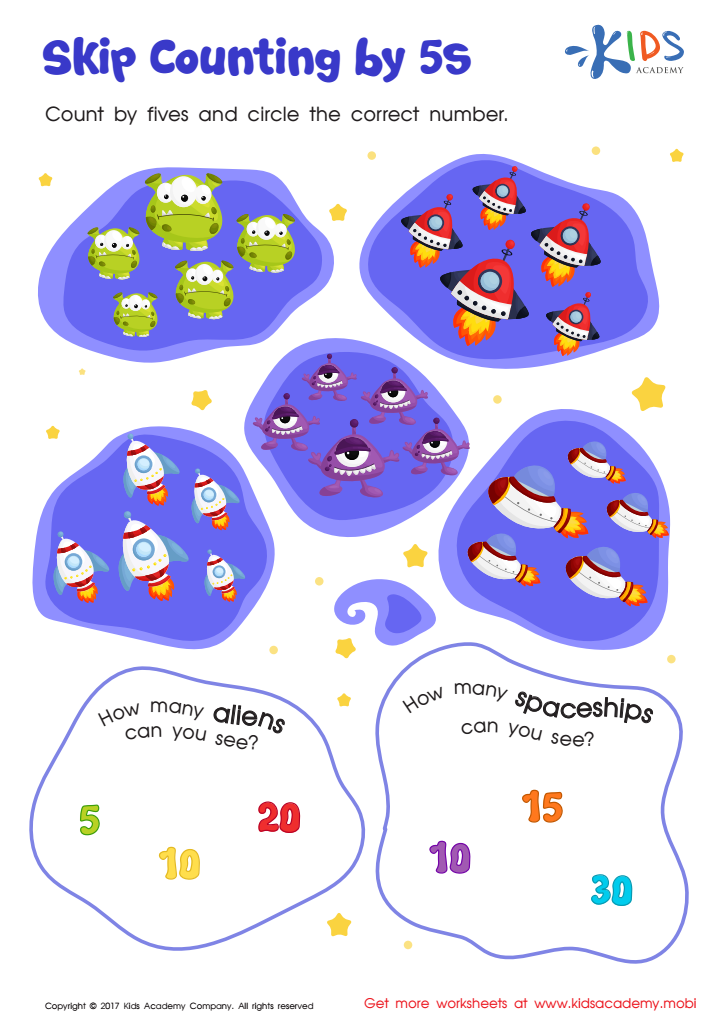
Skip Counting by 5s: Aliens and Spaceships Printable
 Assign to My Students
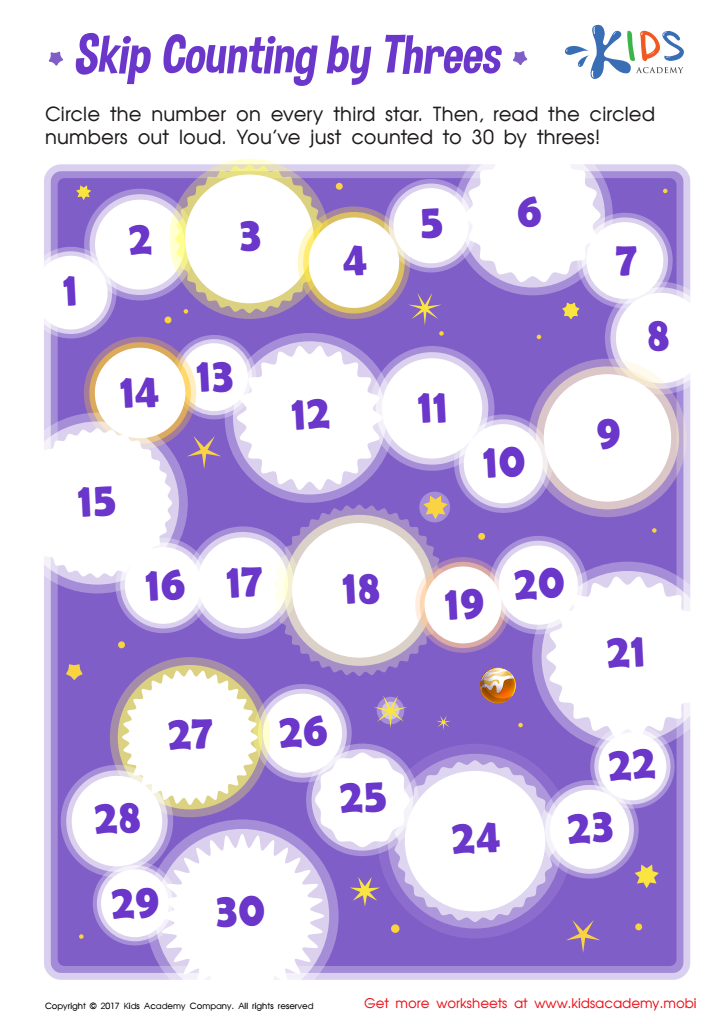
Skip Counting By Three Printable
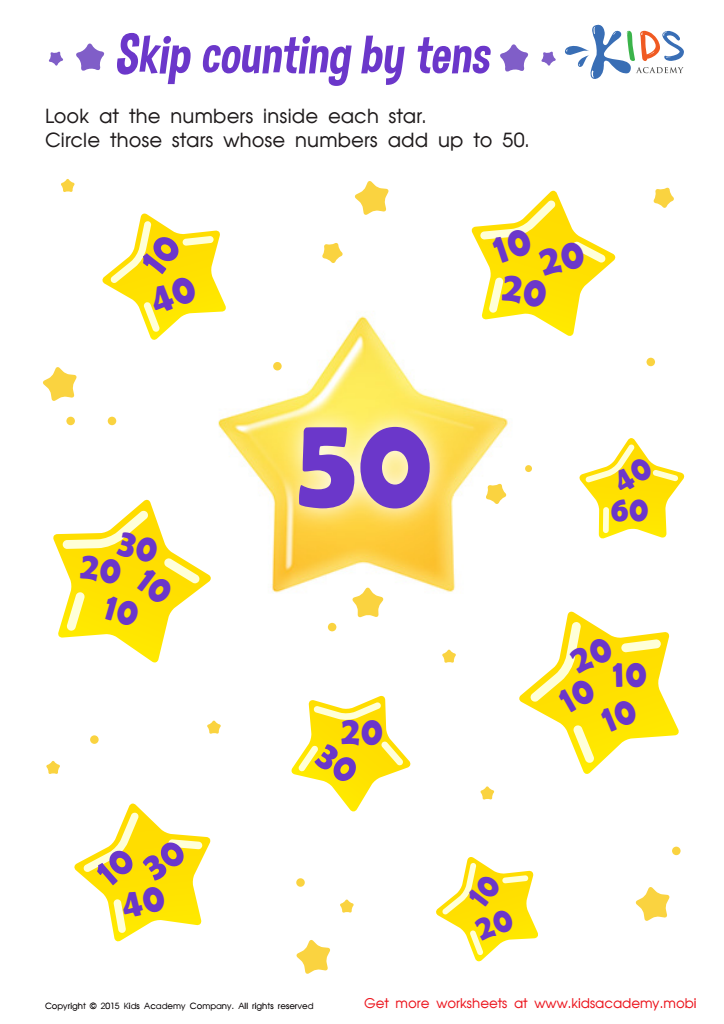
Learn Dozens: Skip Counting by Tens Printable







Understanding skip-counting is crucial for young learners aged 4-8 as it lays the foundation for their mathematical development. Skip-counting, which involves counting by twos, fives, tens, and so on, helps children grasp patterns in numbers, essential for more complex arithmetic operations. This skill not only enhances their ability to count efficiently but also prepares them for concepts such as addition, multiplication, and even patterns, reinforcing their numeracy skills.
For parents and teachers, encouraging skip-counting supports cognitive development. It fosters critical thinking by teaching children to recognize number patterns and relationships. Moreover, mastering skip-counting aids in building confidence in tackling math-related tasks, essential for academic success. Children who are proficient in skip-counting tend to transition more smoothly into higher-level math, equipping them to approach math with a positive mindset.
Additionally, skip-counting can be incorporated into various engaging activities and games, making learning fun and interactive. Emphasizing skip-counting also ensures that children develop a strong mathematical foundation, enabling them to connect the dots as they progress through their educational journey. Overall, understanding skip-counting can significantly impact a child's confidence, interest, and success in mathematics and beyond.








