
Underwater animal identification Worksheets for Ages 4-8
3 filtered results
Difficulty Level
Grade
Age
-
From - To
Subject
Activity
Standards
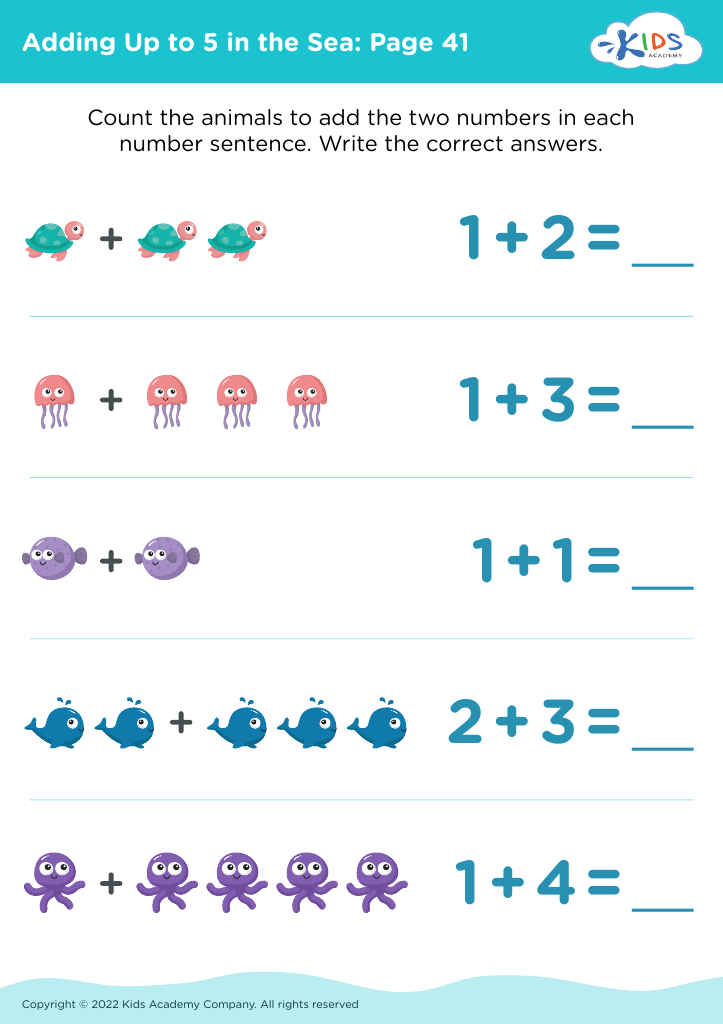
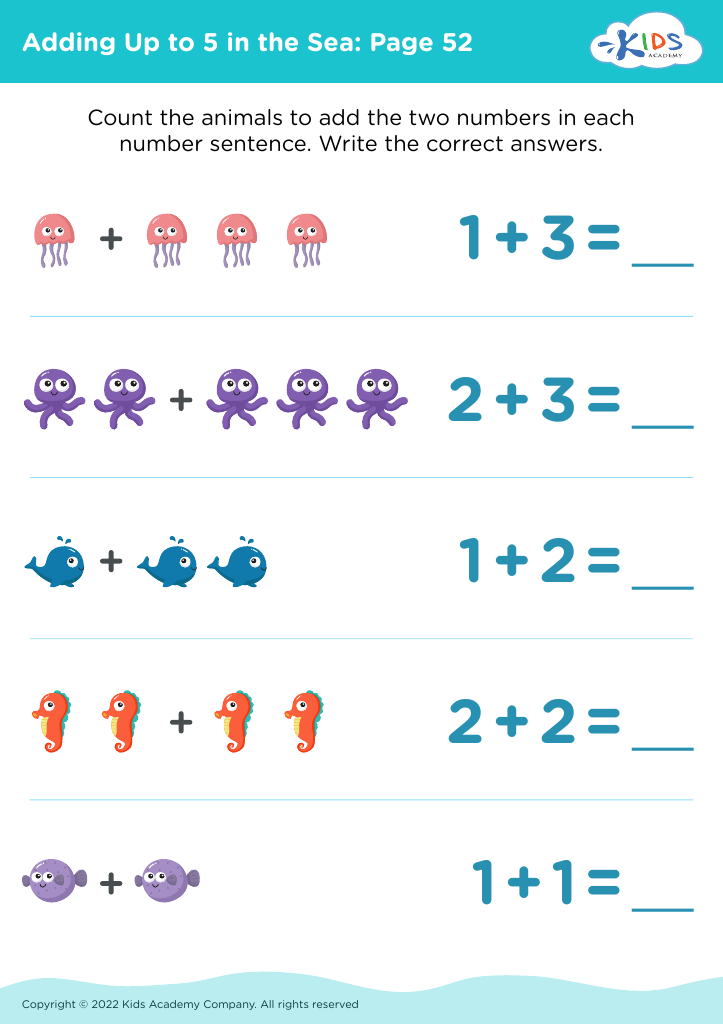
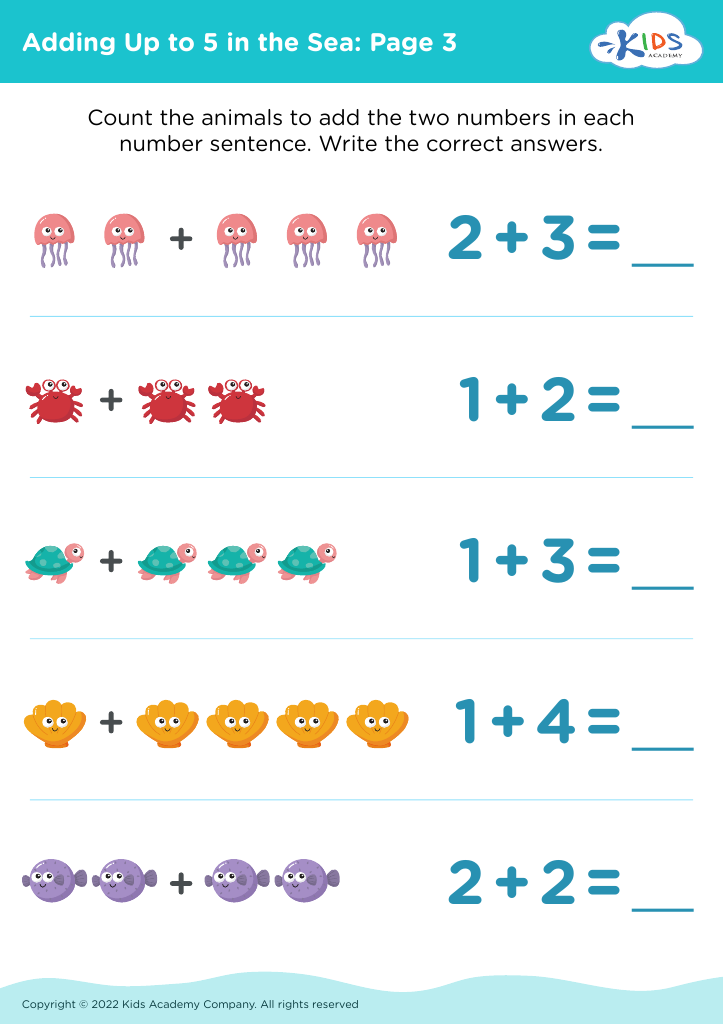
Discover the fun of learning with our Underwater Animal Identification Worksheets, designed specifically for kids aged 4-8! These engaging, printable worksheets help young learners explore the fascinating world beneath the waves while enhancing their knowledge of marine life. Each worksheet features vibrant images and guided activities to encourage observation and critical thinking skills. From colorful fish to majestic sea creatures, children will enjoy identifying various underwater animals as they build their vocabulary and expand their understanding of the ocean. Perfect for classrooms or home schooling, our worksheets are a great resource to inspire creativity and foster a love for marine biology!
Favorites
With answer key
Interactive
Join Kids Academy for Free
Who is primarily going to use this learning content?






%20(1).jpg)
Parents and teachers should care about underwater animal identification for kids aged 4-8 because it fosters curiosity and instills an early love for science and nature. Introducing young children to the diverse underwater ecosystem can stimulate their imaginations and enhance their observational skills. By learning to identify different marine animals, children gain a deeper understanding of biodiversity, ecology, and the importance of conservation efforts to protect these habitats.
Moreover, identifying underwater animals supports cognitive development. It introduces vocabulary and enhances language skills through the exploration of different species, while also encouraging critical thinking as they compare and contrast various animals. Incorporating hands-on activities, such as interactive games or visits to aquariums, keeps learners engaged and makes education fun.
Additionally, underwater animal identification promotes responsibility and stewardship for our planet. As they understand the impact of human activities on marine life, kids develop a sense of advocacy, learning the value of protecting these environments for future generations. Ultimately, the skills and knowledge acquired through this topic can inspire a lifelong commitment to environmental conservation, fostering responsible citizens who appreciate the wonders of the natural world.








