Visual discrimination Worksheets for Ages 4-8 - Page 2
28 filtered results
-
From - To
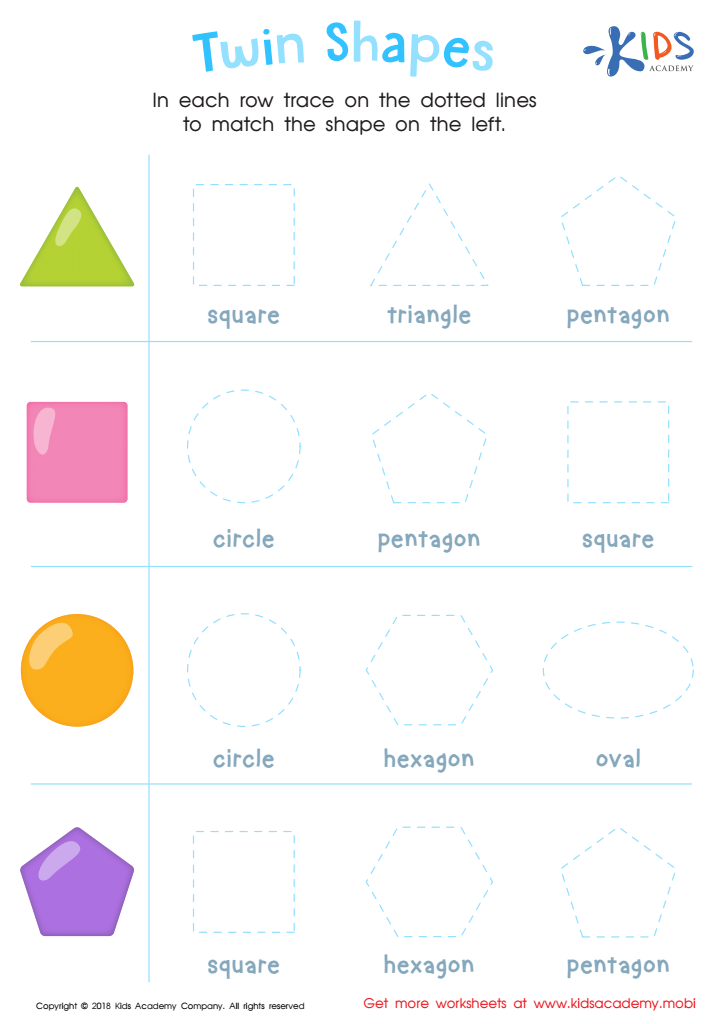
Twin Shapes Dot-to-Dot Worksheet
 Assign to My Students
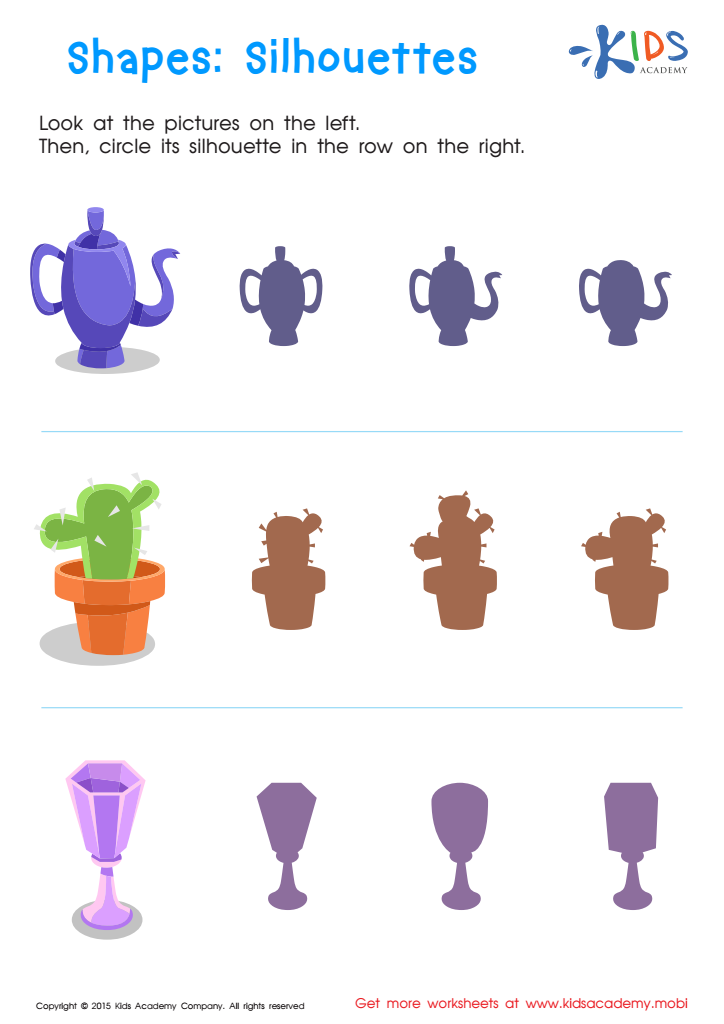
Silhouettes – Shapes Worksheet
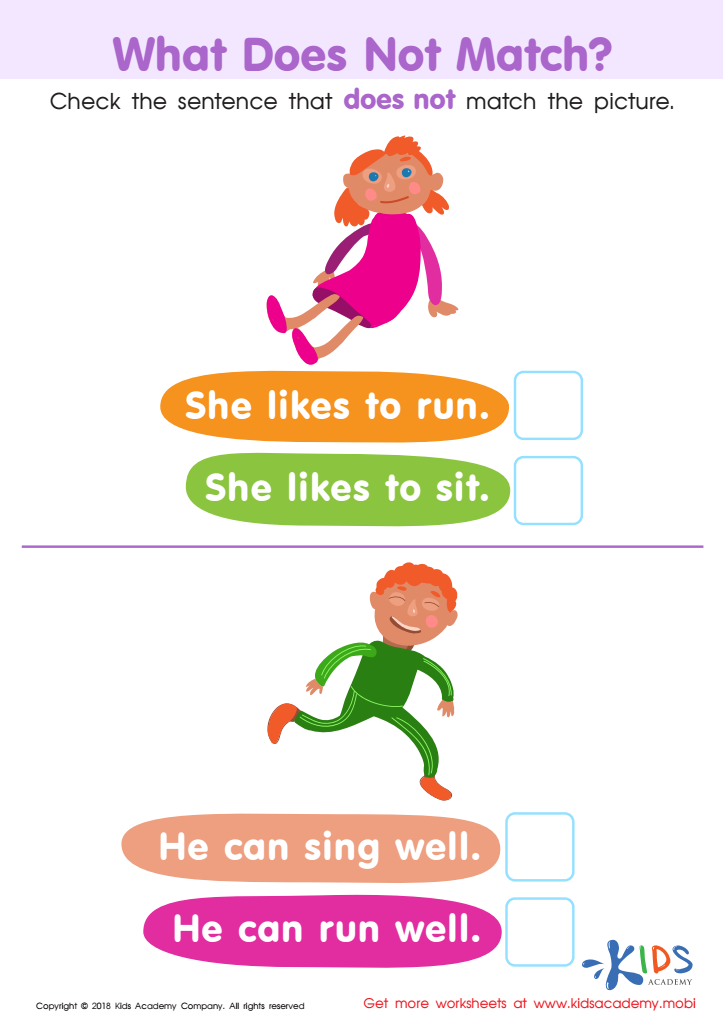
What Does Not Match? Worksheet








Visual discrimination is crucial for children aged 4-8 as it lays a foundational skill set essential for their academic and personal development. This cognitive ability allows children to distinguish between differences and similarities in shapes, patterns, symbols, and colors. Parents and teachers should care about this because it directly impacts early reading and writing skills. Recognizing letters that may look alike, such as "b" and "d," is a fundamental task facilitated by good visual discrimination. It also plays a vital role in mathematical abilities, where distinguishing between numbers and different mathematical symbols is essential for correct calculations and problem-solving.
Furthermore, visual discrimination supports attention to detail and improves overall concentration levels. It enriches exploration and understanding of the environment, which is critical for subjects like art and science, where noticing small differences can lead to great observations and learning moments.
Besides academic subjects, social functioning and safety are enhanced; children who can visually differentiate objects around them are more likely to navigate their environments safely. Therefore, parents and teachers should encourage activities that promote visual discrimination—such as sorting games, puzzles, and matching activities—as they foster keen observation skills and support holistic development, thereby setting children on a successful educational pathway.








