
Visual representation Worksheets for Ages 4-8
3 filtered results
Difficulty Level
Grade
Age
-
From - To
Subject
Activity
Standards
Unlock a world of creativity and learning with our Visual Representation Worksheets for Ages 4-8! Designed to enhance cognitive development and visual literacy, these engaging worksheets cover vibrant activities such as pattern recognition, sorting, and matching. Our carefully crafted materials are perfect for nurturing analytical skills, fostering problem-solving abilities, and encouraging imaginative expression. Ideal for both at-home and classroom use, these worksheets cater to various learning styles, ensuring every child can thrive. Discover the perfect blend of fun and education with our Visual Representation Worksheets and watch young minds flourish! Start exploring today and boost your child’s early learning journey.
Favorites
With answer key
Interactive
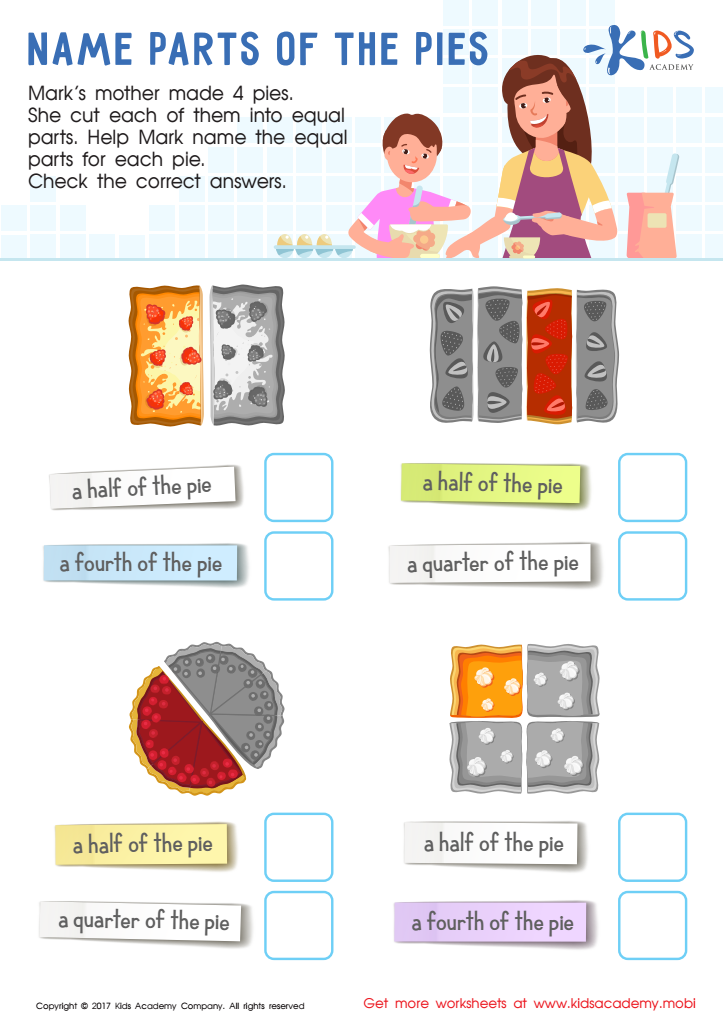
Name Parts of the Pies Worksheet
Mark and his mom are making pies. He's dividing them into equal parts and needs help to name them. Let your students aid him by checking the correct answer for each picture. Have them think of their own roles in the kitchen when they're done. How do they help their moms?
 Assign to My Students
Name Parts of the Pies Worksheet
Worksheet
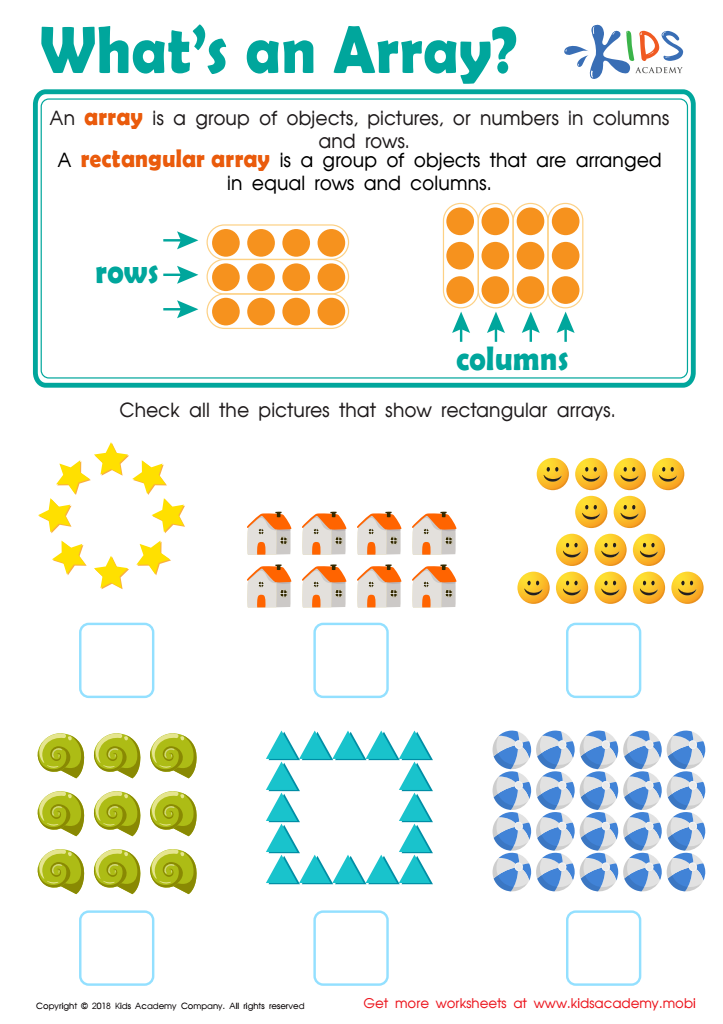
What's an Array? Worksheet
Explain to your child that an array is a group of objects, pictures, or numbers in columns and rows. Show them a rectangular array is a group of objects in equal rows and columns. Guide them to check the pictures in the worksheet to spot any rectangular arrays. Help them remember this concept.
What's an Array? Worksheet
Worksheet
Join Kids Academy for Free
Who is primarily going to use this learning content?








Visual representation plays a crucial role in the development of young children ages 4-8. At this stage, children's cognitive abilities and language skills are still growing, making visual aids an essential tool for learning and understanding complex concepts. Visual representations, like pictures, diagrams, and charts, can simplify and concretize abstract ideas, helping children grasp them more easily.
Additionally, visuals can engage multiple senses, making learning more dynamic and memorable. For example, vibrant images and captivating animations can hold a child's attention more effectively than verbal explanations alone. This engagement is crucial for fostering a love of learning and retaining information.
Visual aids also cater to diverse learning styles. Some children are primarily visual learners, and providing information in the form of images or pictograms can make a significant difference in their comprehension and retention. Even for children who excel with auditory or kinesthetic learning, combining visual elements can reinforce understanding and add variety to the learning experience.
Furthermore, early exposure to visual representations can enhance critical skills such as observation, comparison, and pattern recognition. By interpreting visual data, children also develop analytical thinking and problem-solving abilities, which are crucial for academic success.
In summary, visual representation is a vital tool for early education, enriching learning experiences and supporting cognitive and sensory development in young children.








