Vowel Recognition Worksheets for Ages 4-8 - Page 2
25 filtered results
-
From - To
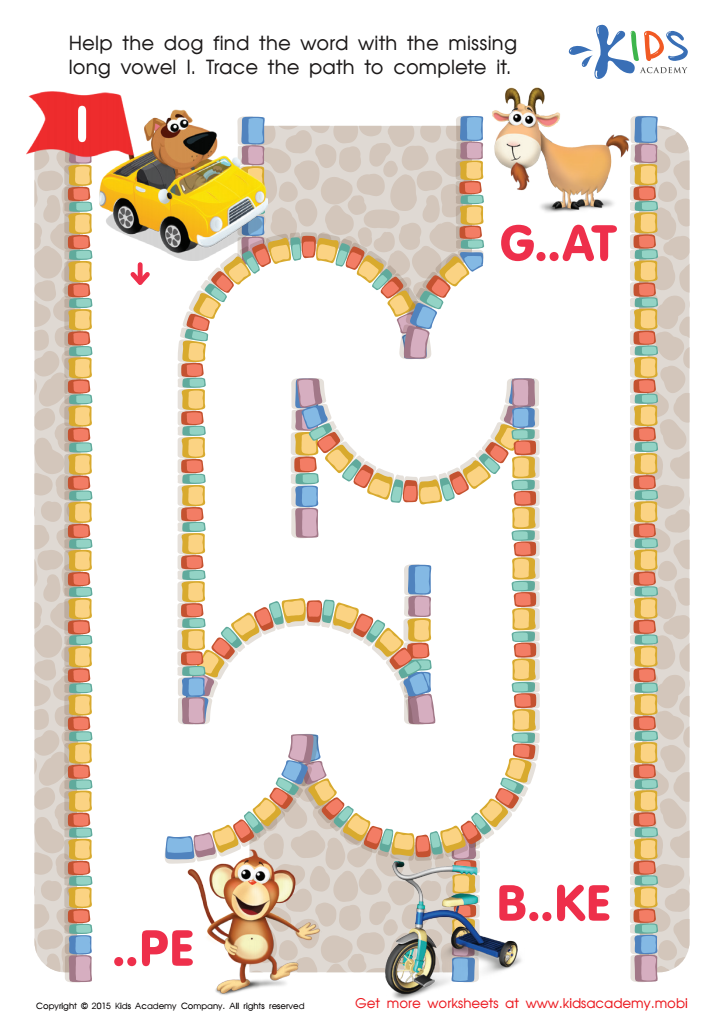
Long Vowel Sound I Worksheet
 Assign to My Students








Vowel recognition is a fundamental aspect of early literacy, which is critical for children ages 4-8 as they embark on their educational journeys. At this stage, children develop essential reading and writing skills that serve as the foundation for future academic success. Vowels, being the core of English phonetics, appear in every word, and understanding their sounds and roles allows children to decode words more effectively and build reading fluency.
Parents and teachers should focus on vowel recognition because it enhances phonemic awareness, which is the ability to hear and manipulate sounds in spoken language. This skill is crucial for spelling, word recognition, and overall reading comprehension. For instance, knowing the difference between short and long vowel sounds helps kids spell words correctly and understand subtle differences in word meanings and pronunciations.
Moreover, fostering strong vowel recognition skills early on promotes a child's confidence in reading and in tackling new vocabulary. It also supports the development of a robust phonics foundation, which is integral for mastering more complex reading and writing tasks later on. By prioritizing vowel recognition, parents and teachers can ensure that children are well-equipped with the tools they need to navigate the intricacies of the English language, thus setting them up for continued academic growth and success.








