Explore our engaging Weather Identification Worksheets designed specifically for children aged 4-8! These fun and interactive resources help young learners recognize various weather types, such as sunny, rainy, snowy, and windy conditions. Each worksheet combines vibrant illustrations with age-appropriate activities to enhance observation skills and build vocabulary. Perfect for home or classroom use, these worksheets encourage critical thinking and creativity while making learning about the weather enjoyable. Help your child discover the wonders of nature as they develop essential skills in a playful and educational way. Download our Weather Identification Worksheets today and watch your little scientists shine!
Check out this FREE "Weather identification" Trial Lesson for age 4-8!

Weather

Favorites
With answer key
Interactive
  • 4-8
  • Weather identification
Adding up to 100 with Regrouping: Page 37
Worksheet
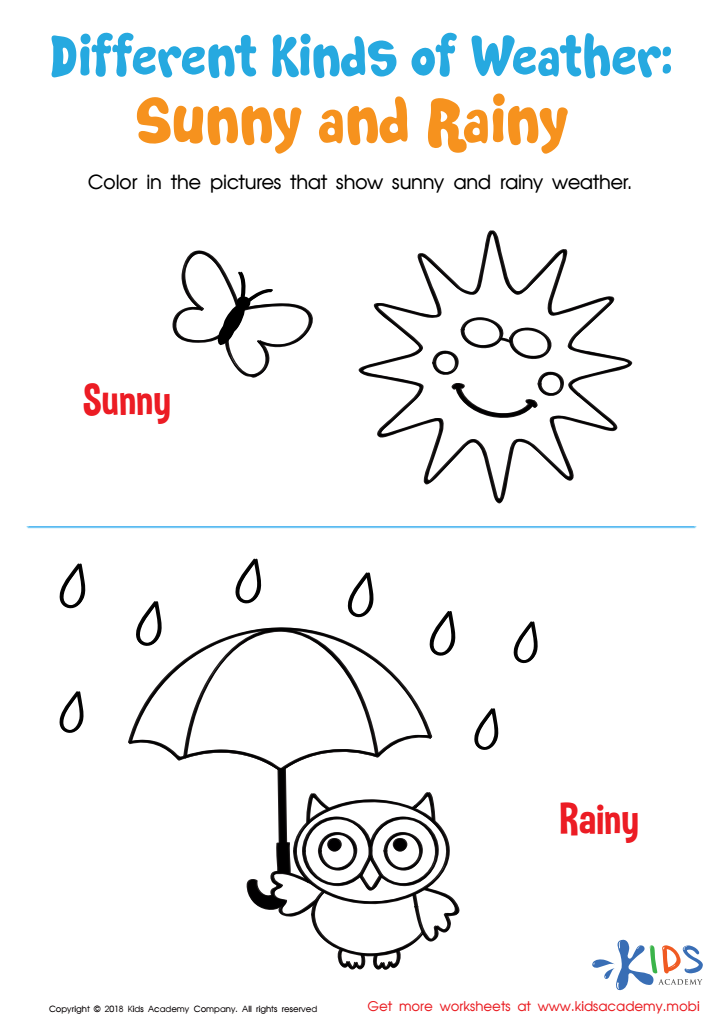
Different Kinds of Weather: Sunny and Rainy Worksheet

Different Kinds of Weather: Sunny and Rainy Worksheet

Kids will love coloring this fun worksheet that helps them learn about different types of weather. They'll hone their fine motor skills while reinforcing the cyclical nature of natural events. Download this free PDF to give kids a basic understanding of weather concepts and lay the groundwork for further learning.
Download (PDF)
Assign to My Students
Different Kinds of Weather: Sunny and Rainy Worksheet
Worksheet
Learn About the Weather Worksheet

About the Weather Printable

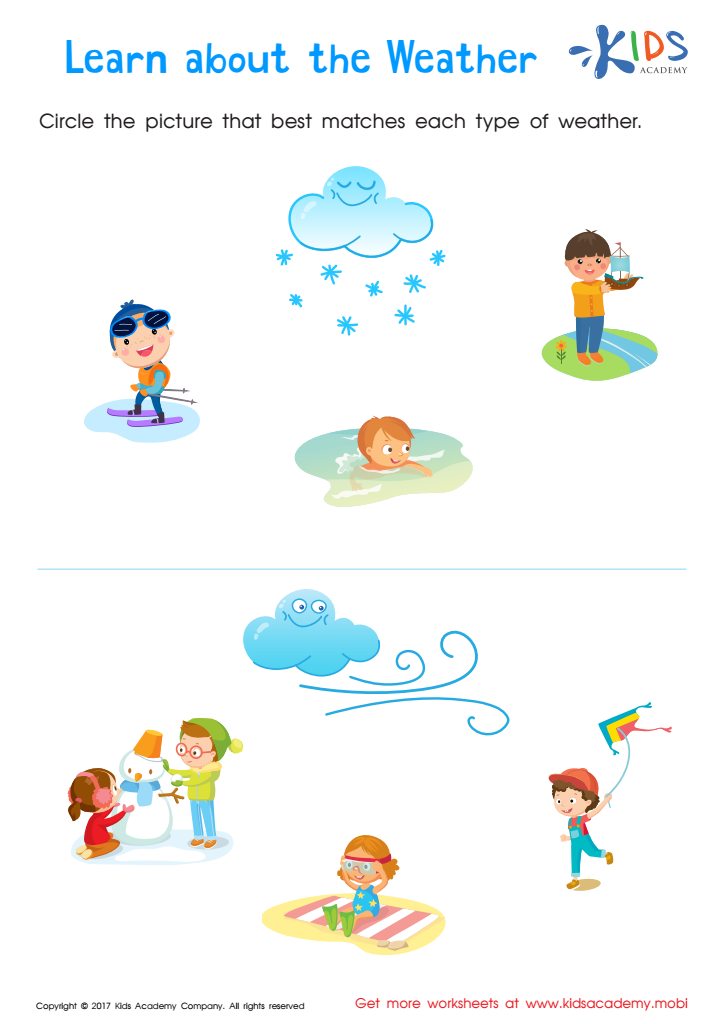
This worksheet is perfect for reinforcing knowledge about changing weather and activities that suit each season. Help your child use their life experiences to observe the weather and complete the worksheet. Fun and colorful, it's a great way to learn about weather and seasons. Let's get started!
About the Weather Printable
Worksheet
What's the Weather Like? Worksheet

What's the Weather Like? Worksheet

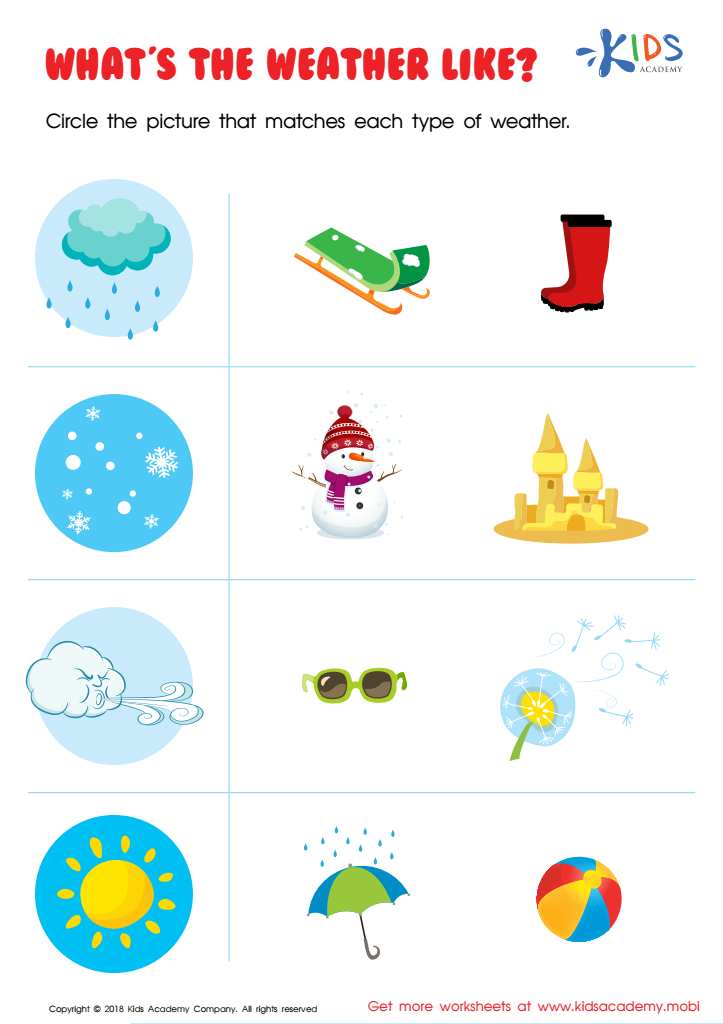
Help budding meteorologists practice matching weather to seasons with this PDF worksheet. Picture clues help identify seasons and fine motor skills are practiced circling the correct weather patterns. Bright and engaging characters make learning fun and reinforce weather knowledge.
What's the Weather Like? Worksheet
Worksheet
Counting Types of Weather Worksheet

Counting Types of Weather Worksheet

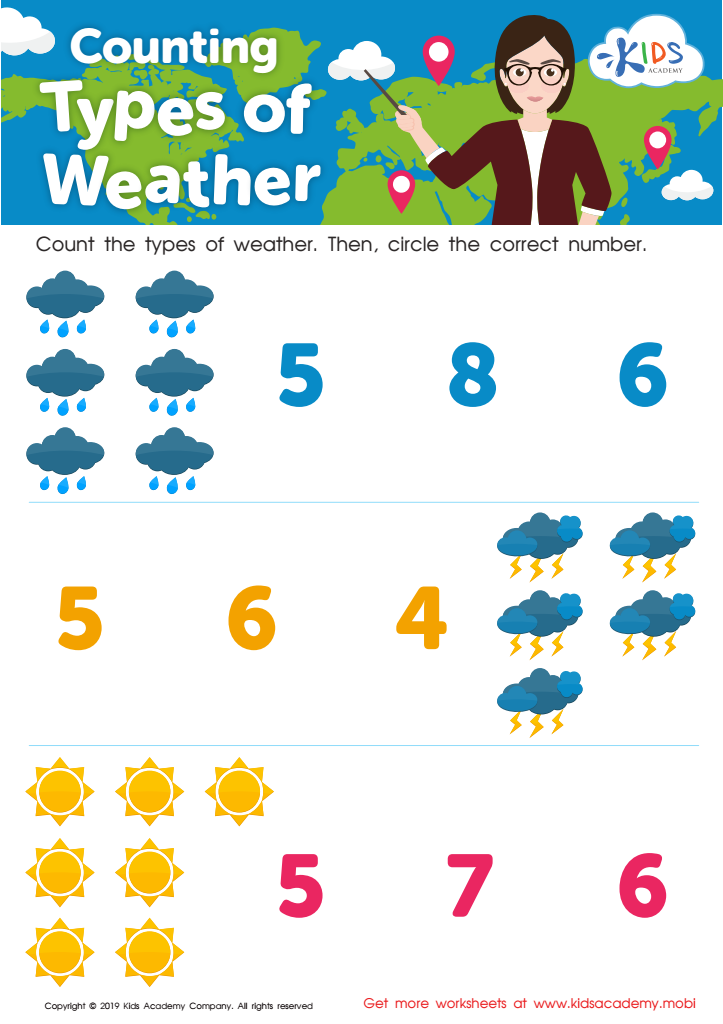
Have your students look outside and tell you the weather today. Get kindergartners thinking by asking them to name different types of weather. Point to each one in the picture and get them to tell you what it is. Then, have them count the types and circle the number.
Counting Types of Weather Worksheet
Worksheet
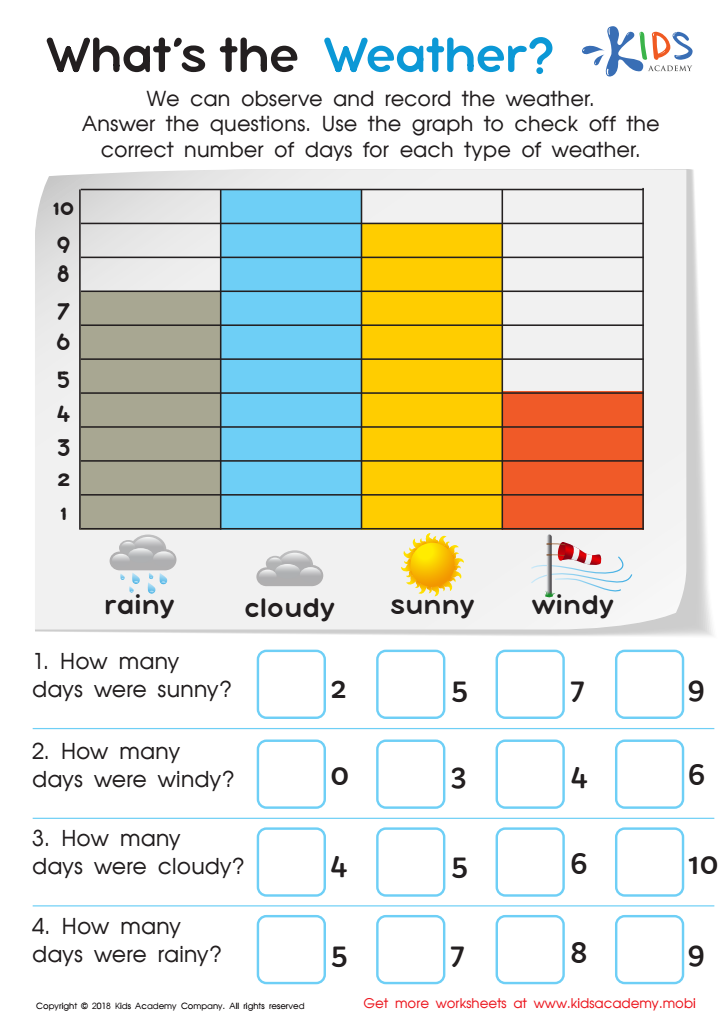
What's the Weather? Worksheet

What's the Weather? Worksheet

Check the weather outside. Help kids learn and practice science and math by tracking different types of days using this printable worksheet. Have them count bars next to weather types like cloudy, sunny, windy, and rainy. Answer the questions and take the lesson further by creating a bar graph to show the monthly weather.
What's the Weather? Worksheet
Worksheet
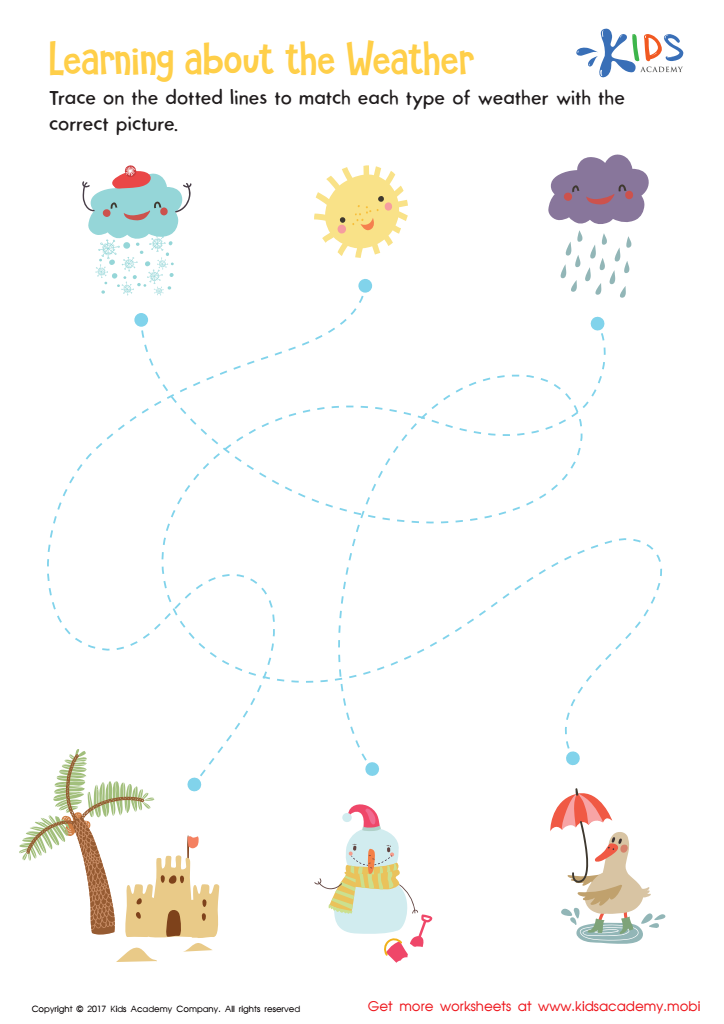
Weather Matching Worksheet

Learning About the Weather Worksheet

Learning About the Weather Worksheet
Worksheet


Weather identification is crucial for young children aged 4-8 for several reasons. First, it promotes observation skills, encouraging children to pay attention to their surroundings. By recognizing different weather conditions—such as sunny, rainy, or snowy—they become more aware of nature, fostering a sense of curiosity and wonder.

Second, understanding weather is an essential part of children's safety and well-being. By learning about various weather types, children can make informed decisions about appropriate clothing and activities. For instance, they will understand the importance of wearing boots on a rainy day or sunscreen on a sunny day.

Third, weather education ties into vital concepts such as seasons, environmental science, and the water cycle, enriching their knowledge across various subjects. It can be integrated into math and literacy activities, making learning more engaging and relevant.

Lastly, discussing weather patterns encourages conversations between parents and teachers, enhancing communication skills and strengthening relationships. In essence, teaching young children about weather identification equips them with practical life skills, enriches their educational experiences, and fosters their development as observant and informed individuals.