Word segmentation Worksheets for Ages 4-8
3 filtered results
-
From - To
Discover our engaging Word Segmentation Worksheets designed specifically for children ages 4-8. These printable activities help young learners develop essential phonemic awareness by breaking down words into individual sounds or syllables. Our worksheets feature colorful illustrations and interactive exercises, making learning fun and effective. Perfect for both classroom and home use, these resources cater to early readers, guiding them as they practice segmenting words through various engaging formats. Boost your child's reading skills and confidence with our easy-to-use worksheets, fostering a love for language and literacy from an early age. Start exploring word segmentation today for a strong educational foundation!
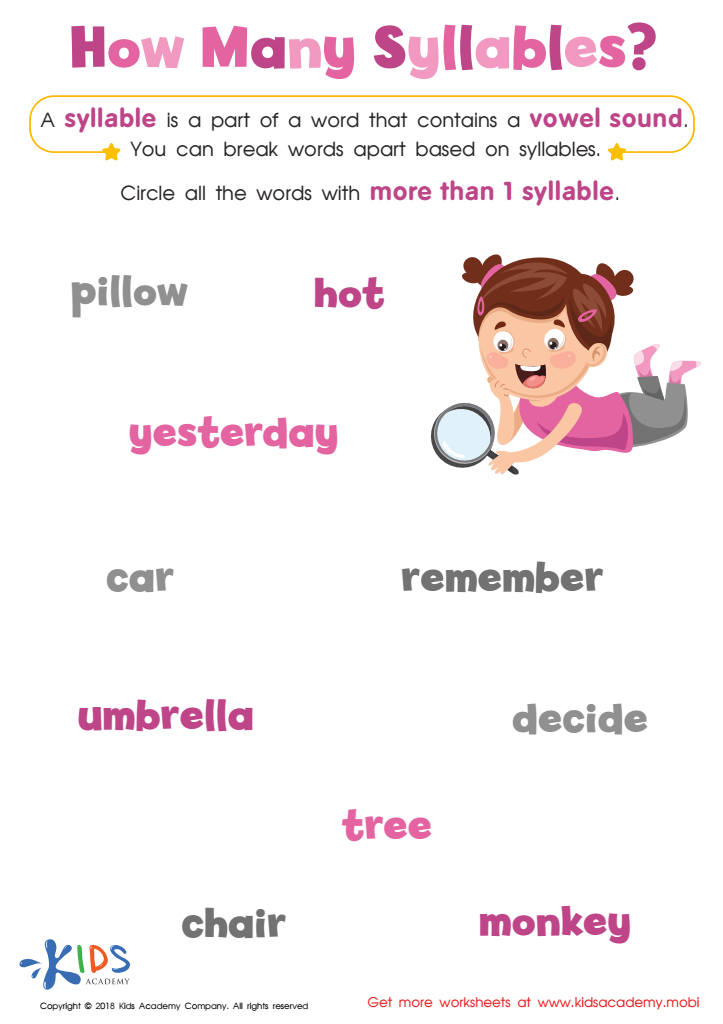
Reading: How Many Syllables Worksheet
 Assign to My Students
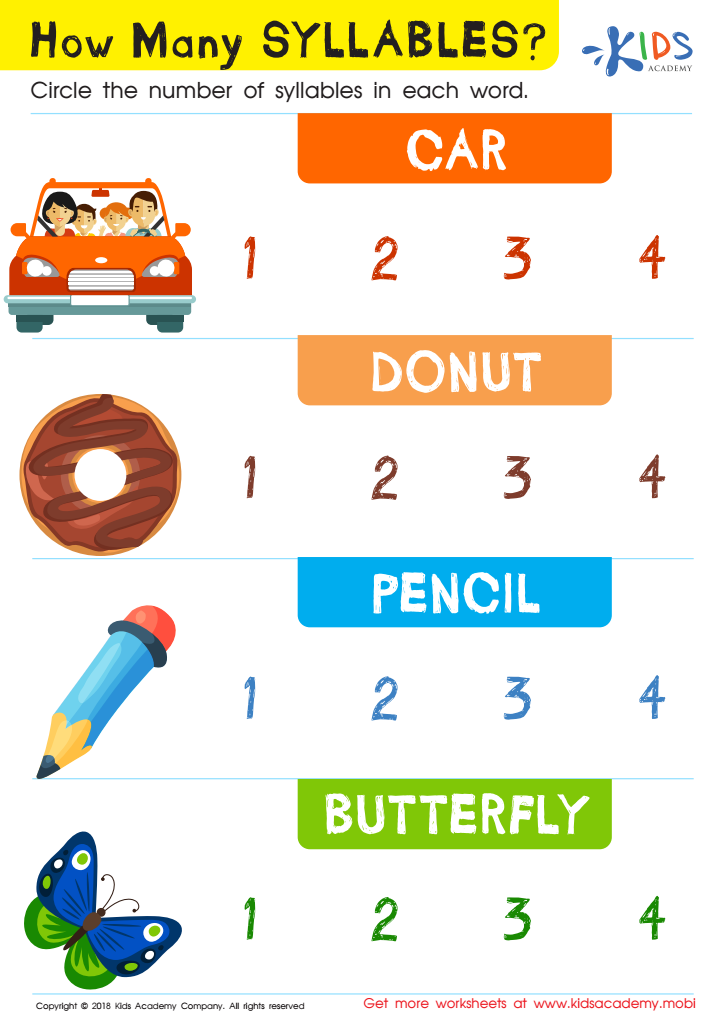
How Many Syllables? Worksheet
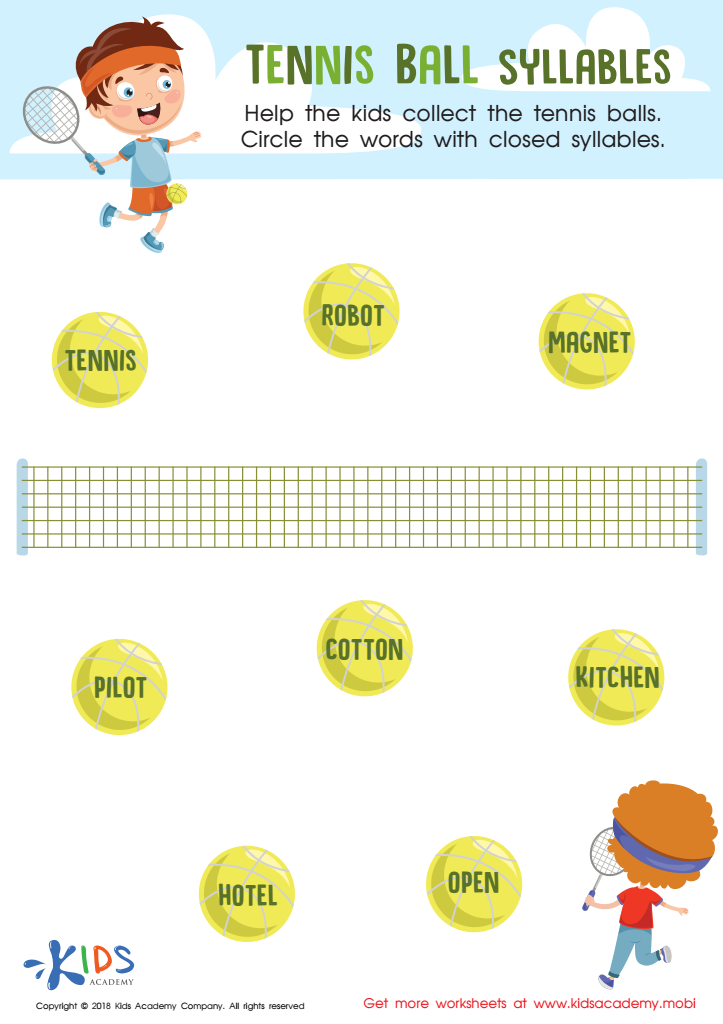
Tennis Ball Syllables Worksheet






.jpg)
Word segmentation, the ability to recognize and separate individual words in spoken language, is a critical skill for children aged 4-8, laying the foundation for literacy development. Parents and teachers should care about this because it directly influences reading readiness and language acquisition.
At this age, children are beginning to connect sounds with letters, and understanding word boundaries is vital for decoding words and fluently reading sentences. When children practice word segmentation, they learn to identify and isolate sounds, which helps develop phonemic awareness—a key predictor of reading success. This skill enables them to transfer their knowledge of spoken language into written form, facilitating smoother transitions from emergent readers to proficient ones.
Furthermore, strong word segmentation skills contribute to vocabulary development. As children learn to break down words, they become more adept at understanding meanings and making connections between words. This empowers them to express themselves more effectively and fosters a love for reading and learning.
Incorporating fun activities such as nursery rhymes, clapping syllables, or using physical objects to represent words can enhance these skills. Thus, supporting word segmentation is essential for equipping children with the tools they need for lifelong learning and communication.








