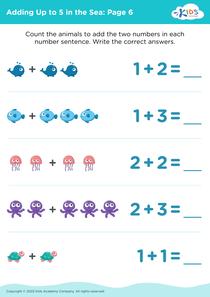
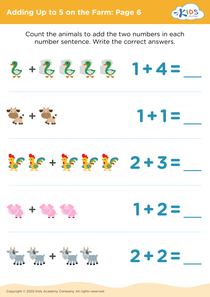
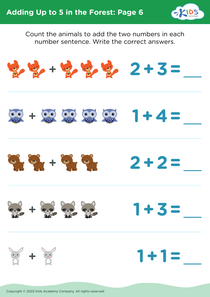
Visual Learning Adding at the Zoo Worksheets for Ages 4-8
9 filtered results
-
From - To
Explore the delightful world of "Adding at the Zoo" worksheets, designed for children ages 4-8! Ideal for visual learners, these engaging activities combine colorful zoo animal illustrations with simple addition problems to make math fun and intuitive. Each worksheet is crafted to strengthen math skills while fostering a love for learning. Kids will enjoy counting and adding alongside elephants, lions, and other zoo favorites. These visually stimulating worksheets build confidence and numeracy skills effectively, making math practice an adventurous treat! Perfect for home or classroom, spark curiosity and enhance early math abilities today.
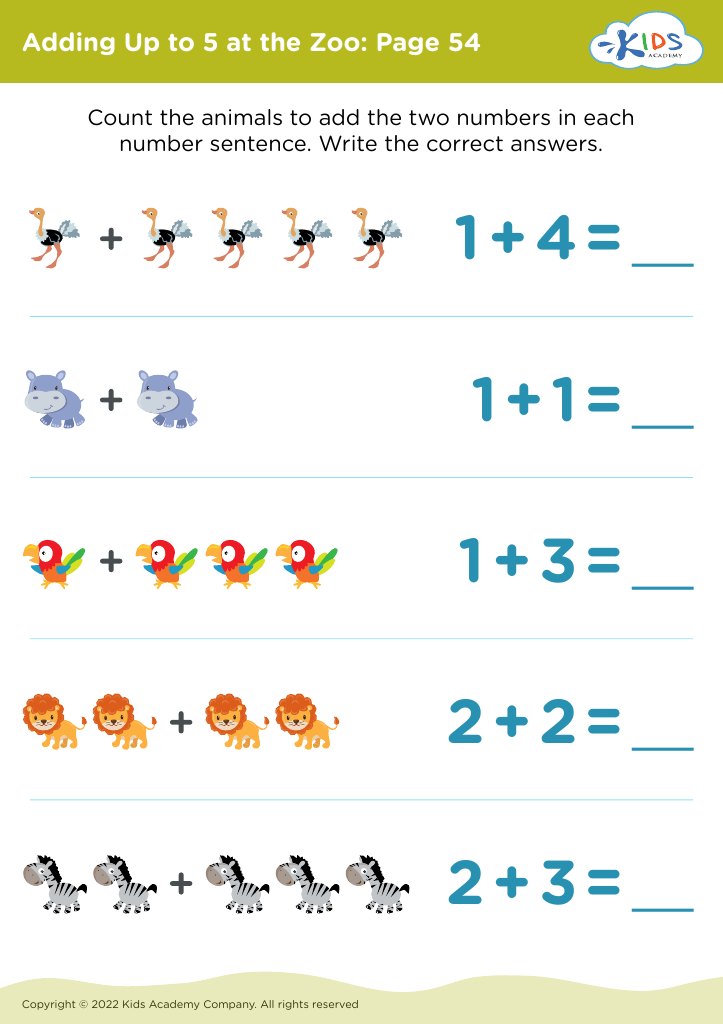
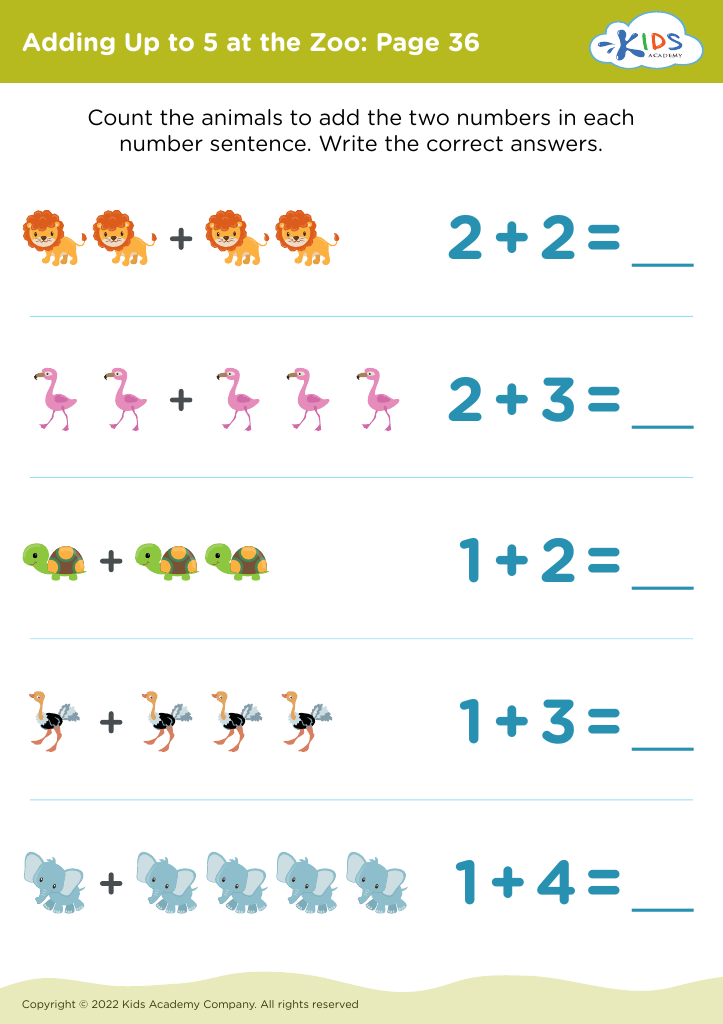
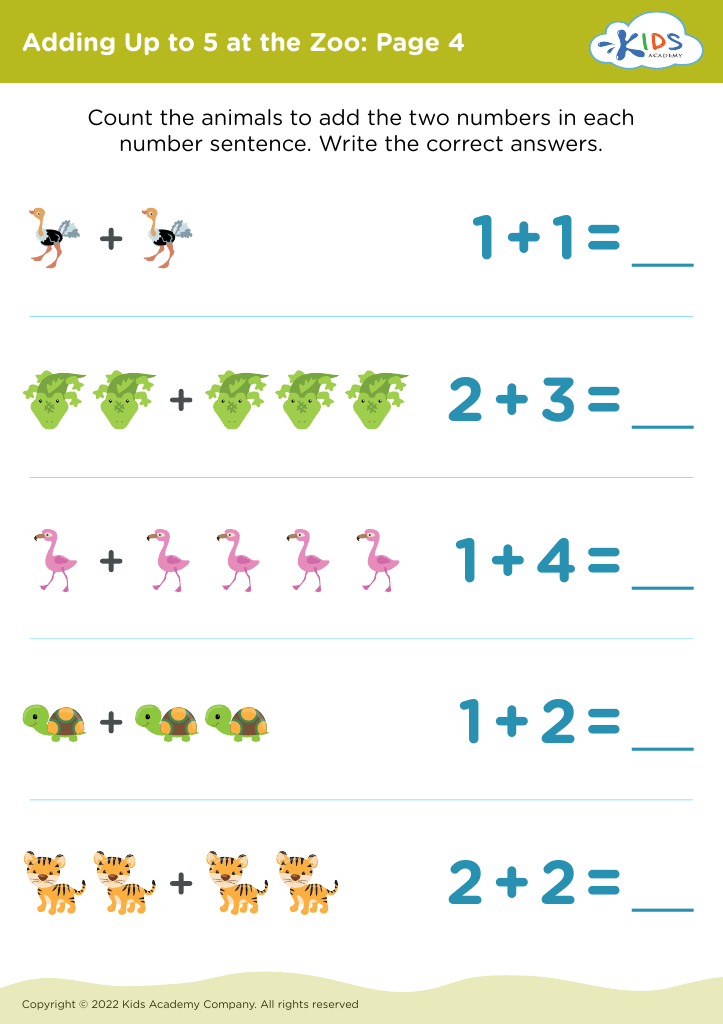
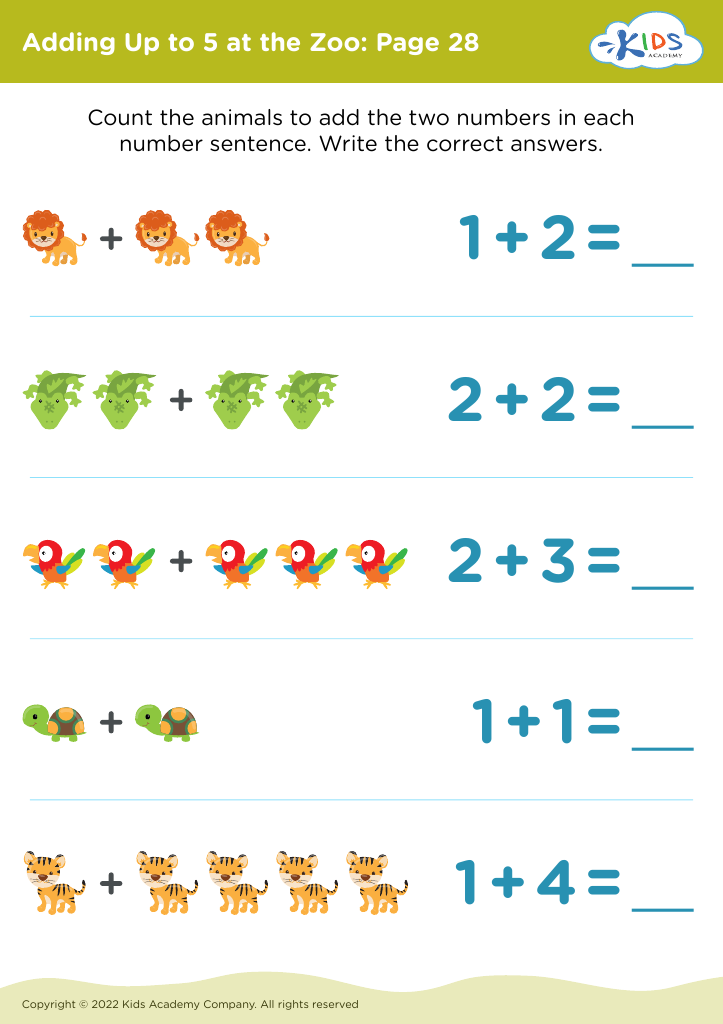
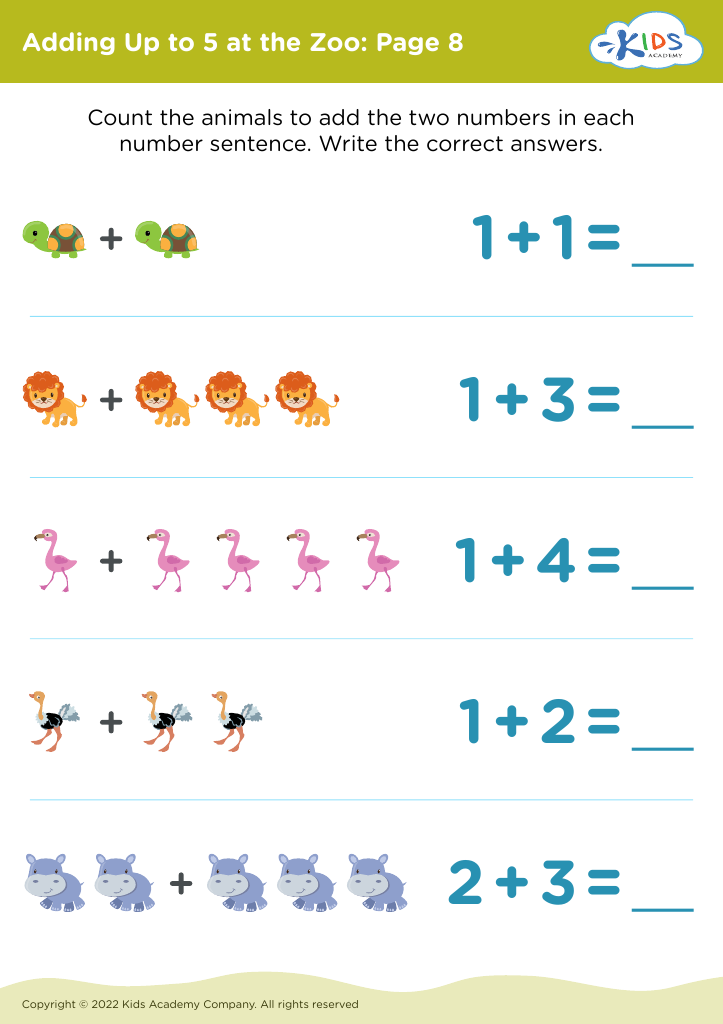
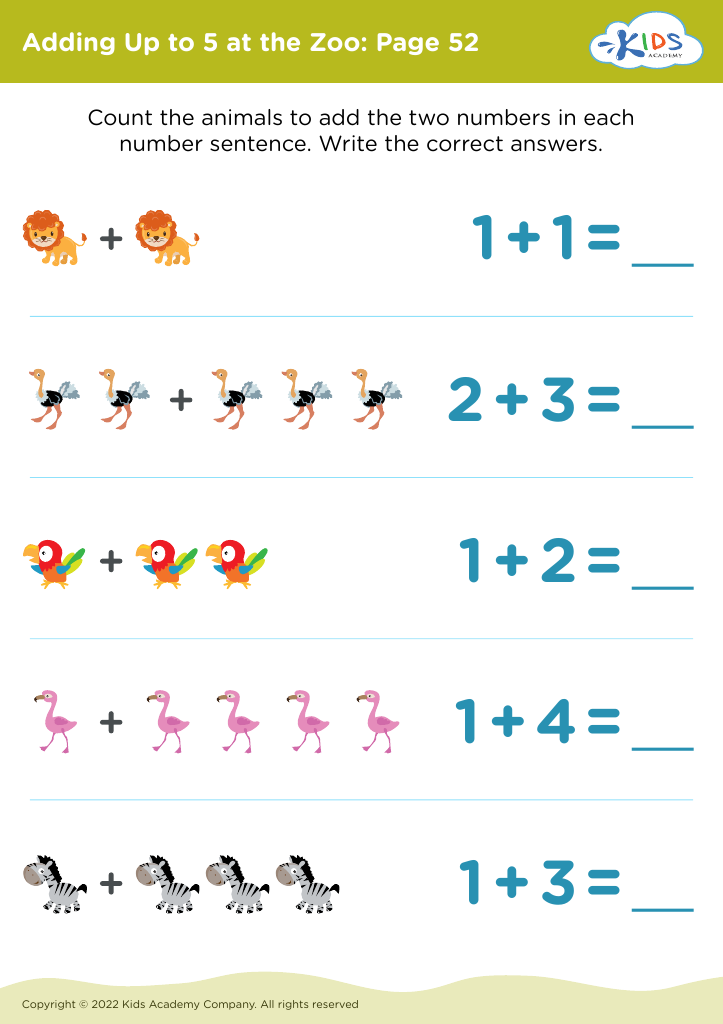
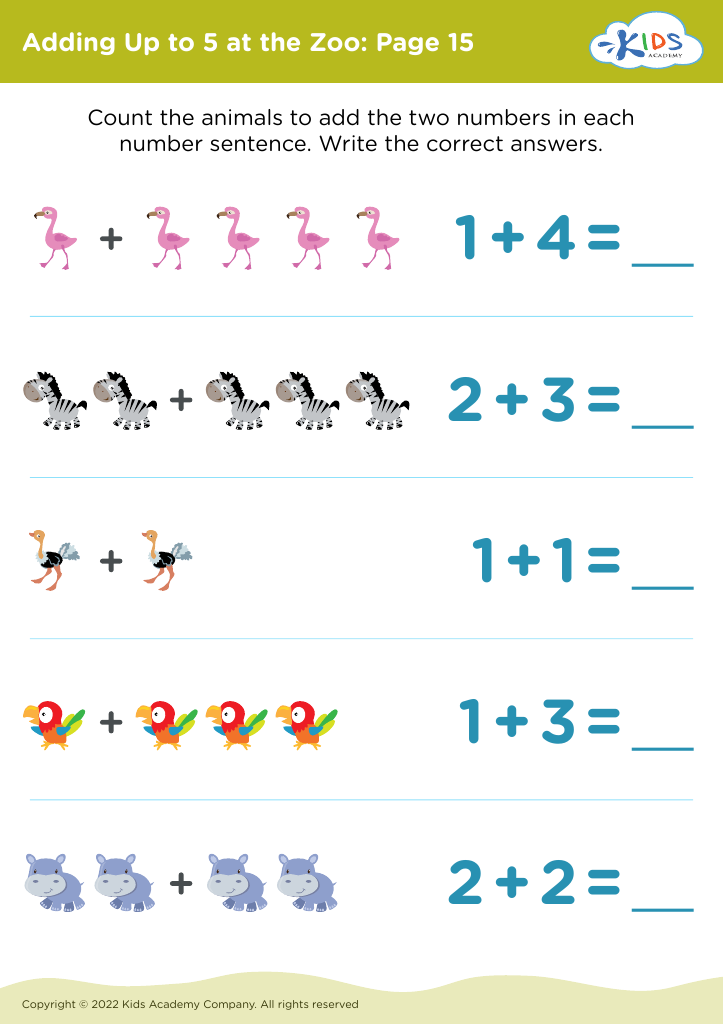
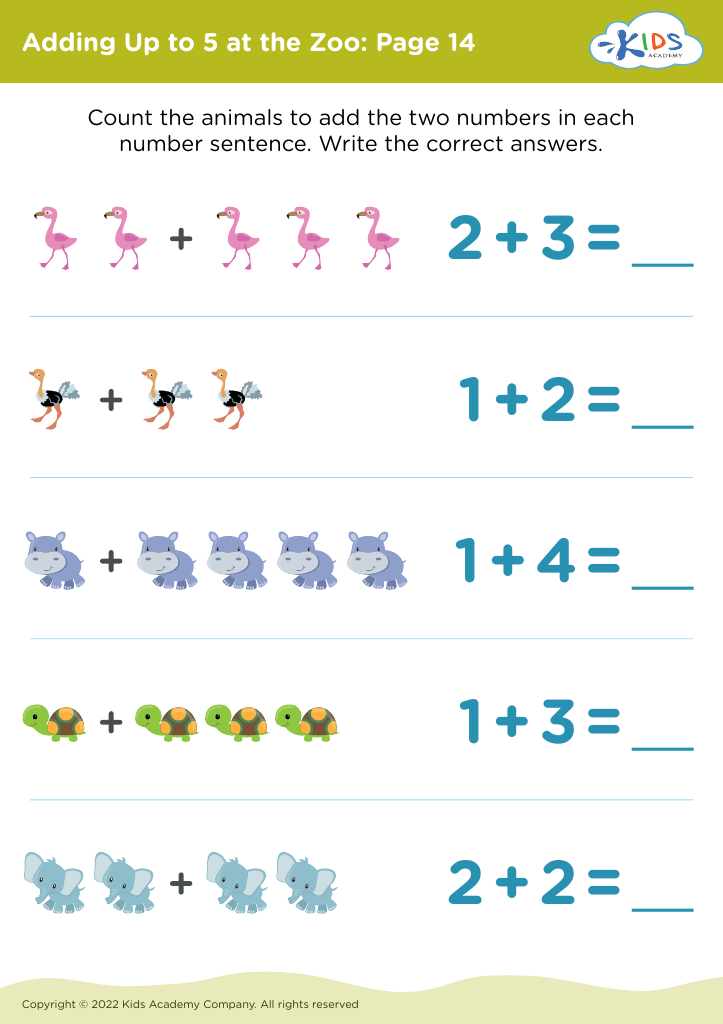
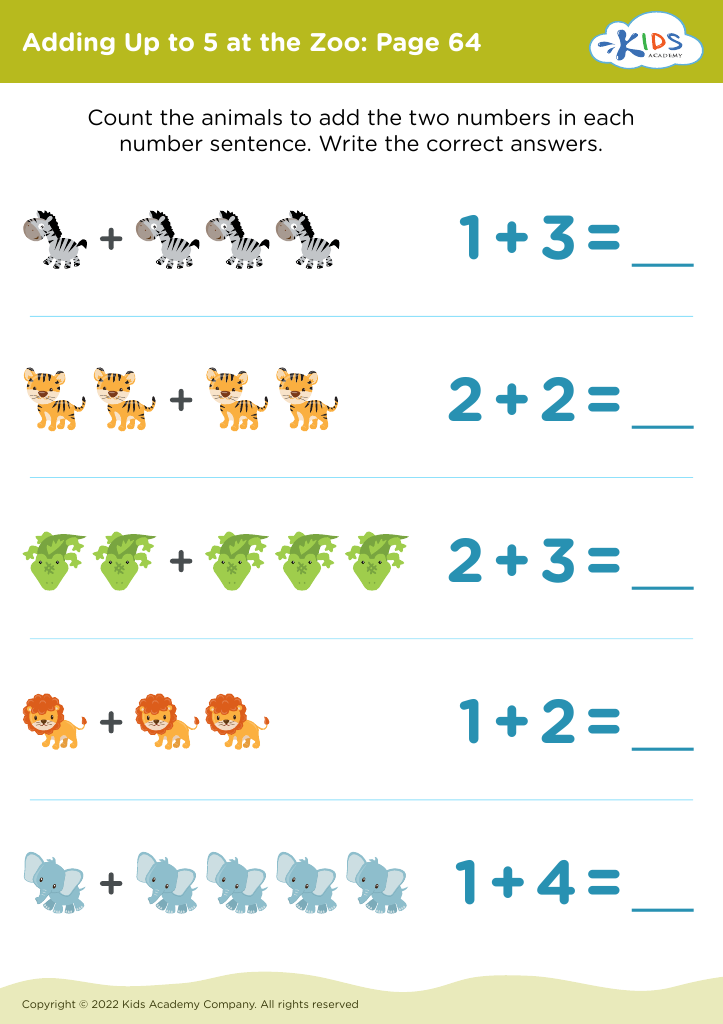



Visual Learning Adding at the Zoo is a highly effective educational tool for children ages 4-8, providing multiple benefits for both parents and teachers to care about. Firstly, it leverages the undeniable attraction that animals have for children, making math learning both fun and engaging. When children are excited about the subject matter, they are more likely to pay attention and retain information.
Secondly, incorporating visual elements significantly enhances understanding among young learners. At this age, children are primarily visual thinkers, and seeing animals combined with counting exercises helps them better grasp abstract mathematical concepts. This method of learning caters to various learning styles, ensuring that visual, kinesthetic, and even auditory learners can benefit.
Moreover, learning math in a zoo setting allows children to make connections between mathematical concepts and real-world scenarios. This relevance not only aids comprehension but also fosters a deeper interest in both math and the world around them. It helps children develop critical thinking skills and problem-solving abilities in a context they find exciting.
Lastly, tools like Visual Learning Adding at the Zoo offer a supportive environment for early developmental skills. These activities help improve memory, concentration, and fine motor skills, which are foundational for future academic success. Thus, investing in such educational approaches is not just about learning math but about nurturing well-rounded intellectual growth.