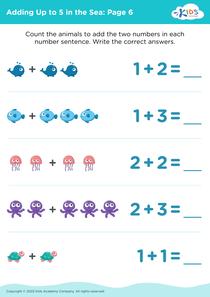
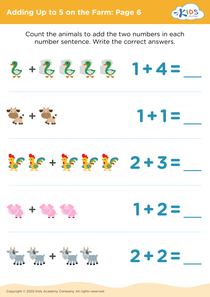
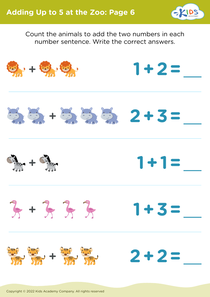
Adding in the Forest Worksheets for Ages 4-8 - Page 4
77 filtered results
-
From - To
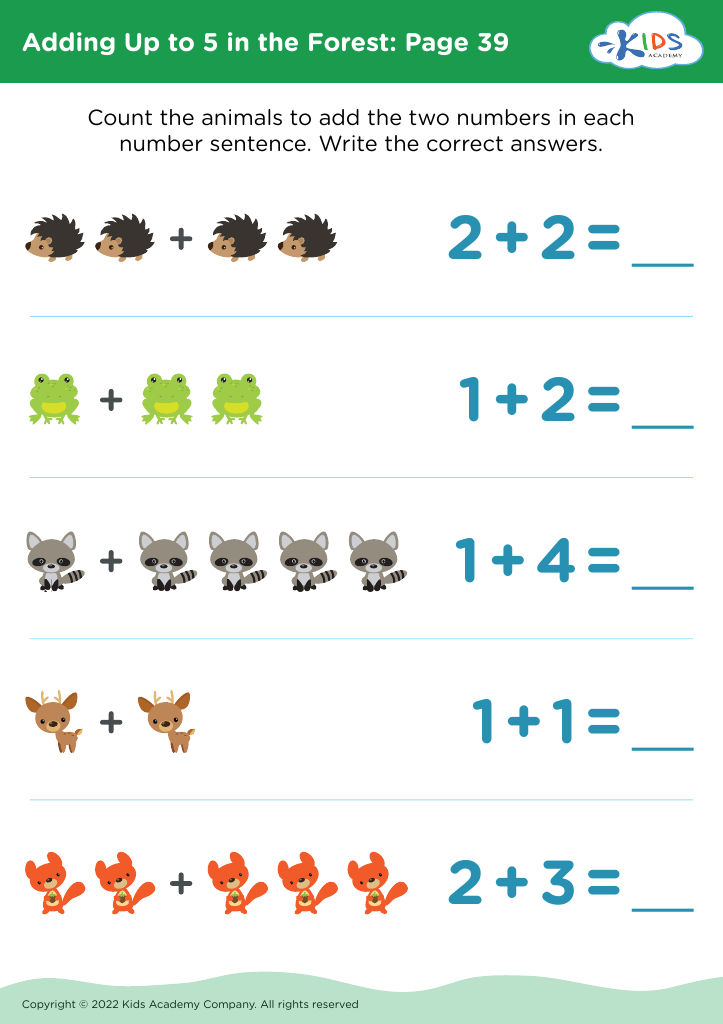
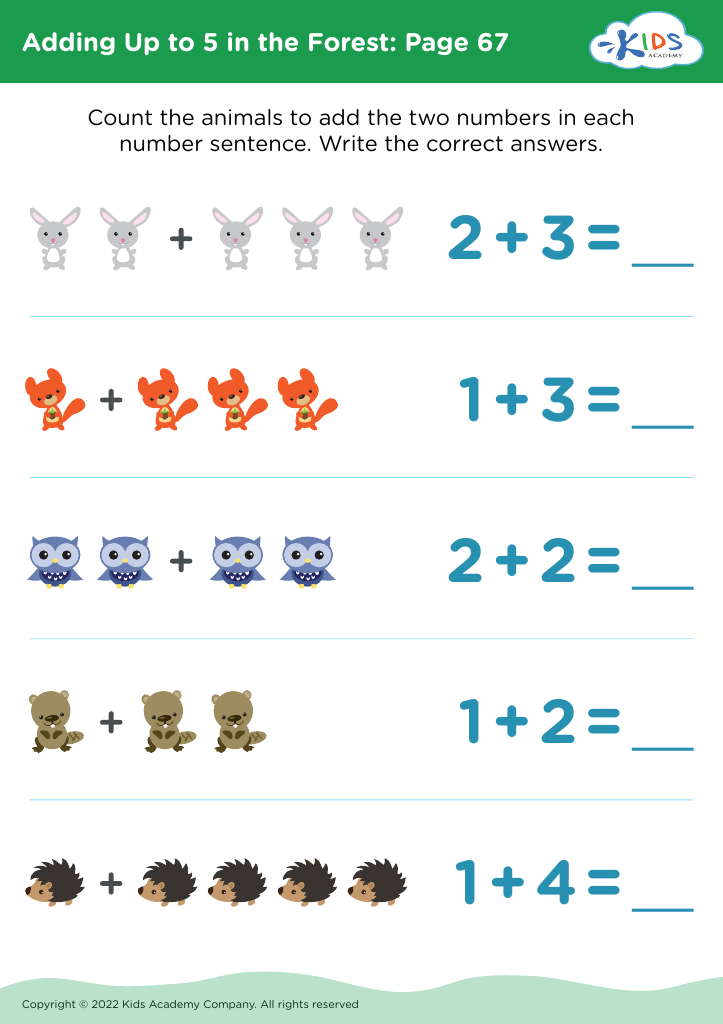
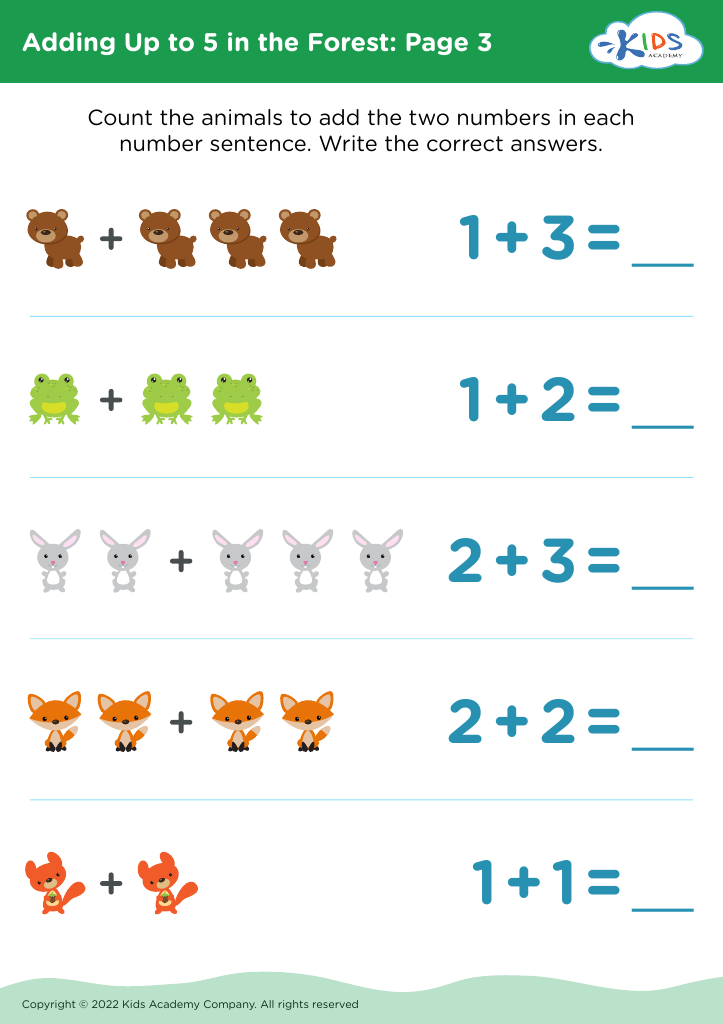
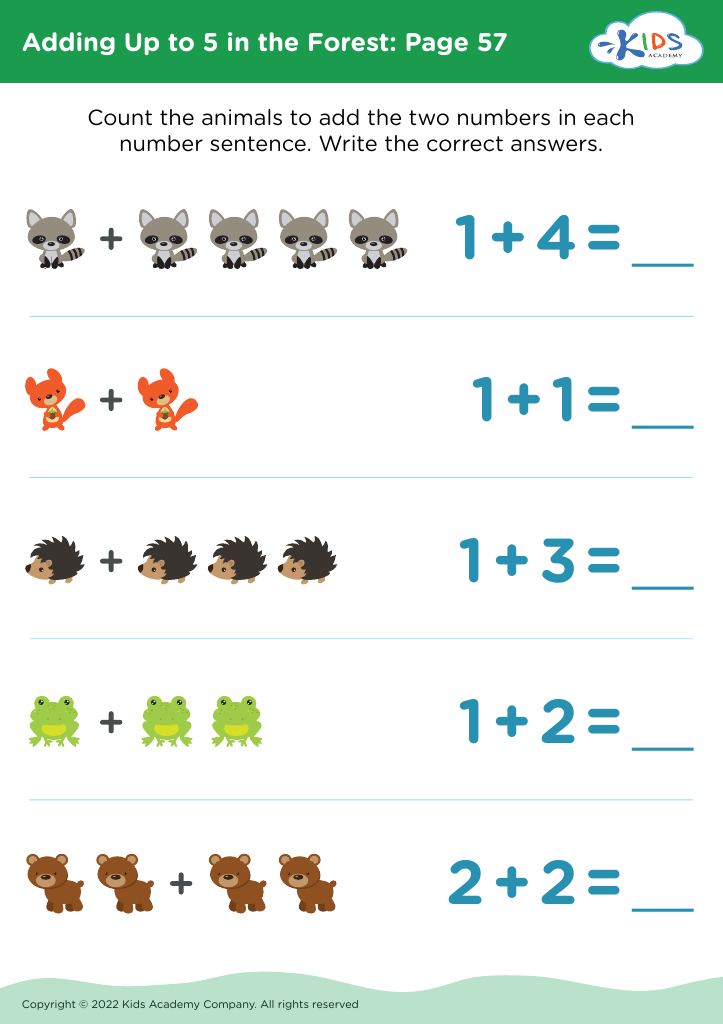
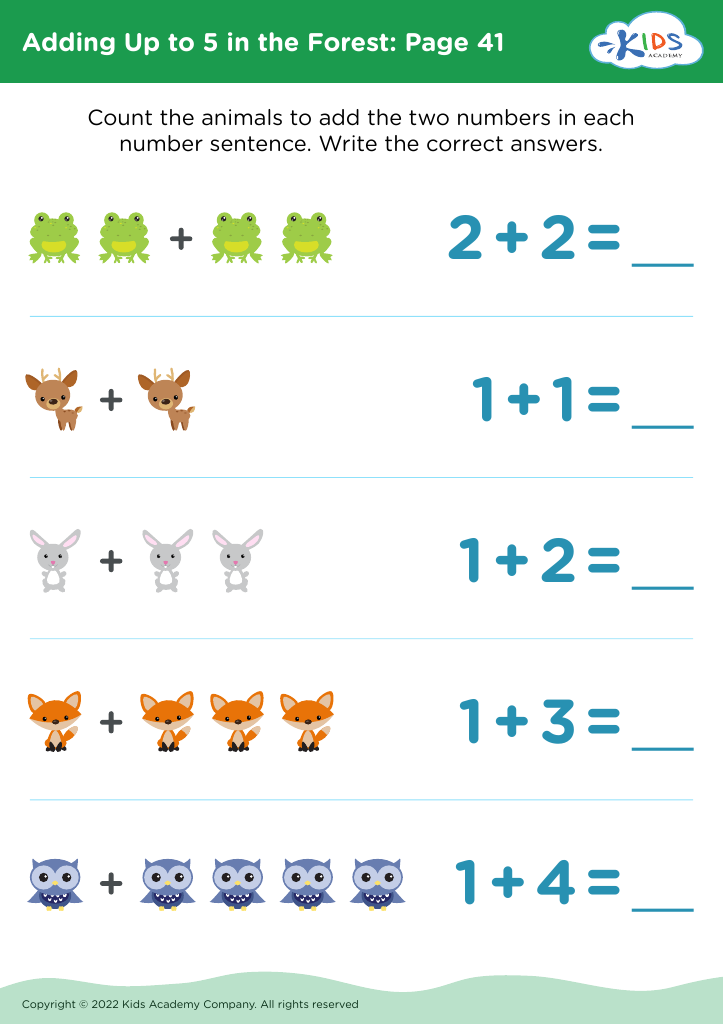




"Adding in the Forest" is an engaging educational resource designed specifically for children ages 4-8. It promotes foundational math skills through an enjoyable and relatable story set in a natural environment, which captivates young learners' imagination. Parents and teachers should care about this resource for several compelling reasons.
Firstly, it introduces the concept of addition in a fun and interactive way, helping to solidify basic mathematical concepts that are crucial for future learning. By using relatable scenarios involving animals and nature, it makes the learning process enjoyable, which can foster a lifelong love for math.
Secondly, it encourages critical thinking and problem-solving. As children interact with the story, they not only learn how to add but also practice these skills through engaging activities, reinforcing comprehension and retention.
Additionally, "Adding in the Forest" aligns with early childhood education goals by supporting multiple developmental areas, including social-emotional growth and language development. It also promotes fine motor skills through hands-on activities, reinforcing holistic development.
Lastly, it provides parents and teachers tools to create a collaborative learning environment, where the enjoyment of math transforms into a shared experience, fostering positive educational outcomes and a stronger bond between children and their caregivers.