Counting practice Adding on the Farm Worksheets for Ages 4-8 - Page 3
54 filtered results
-
From - To
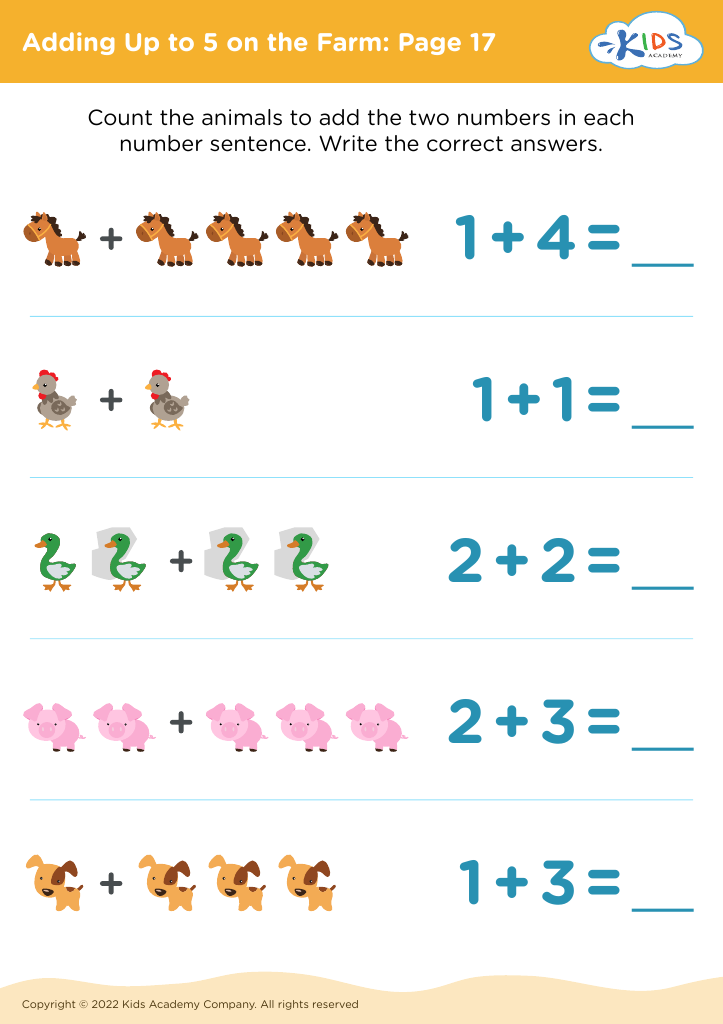
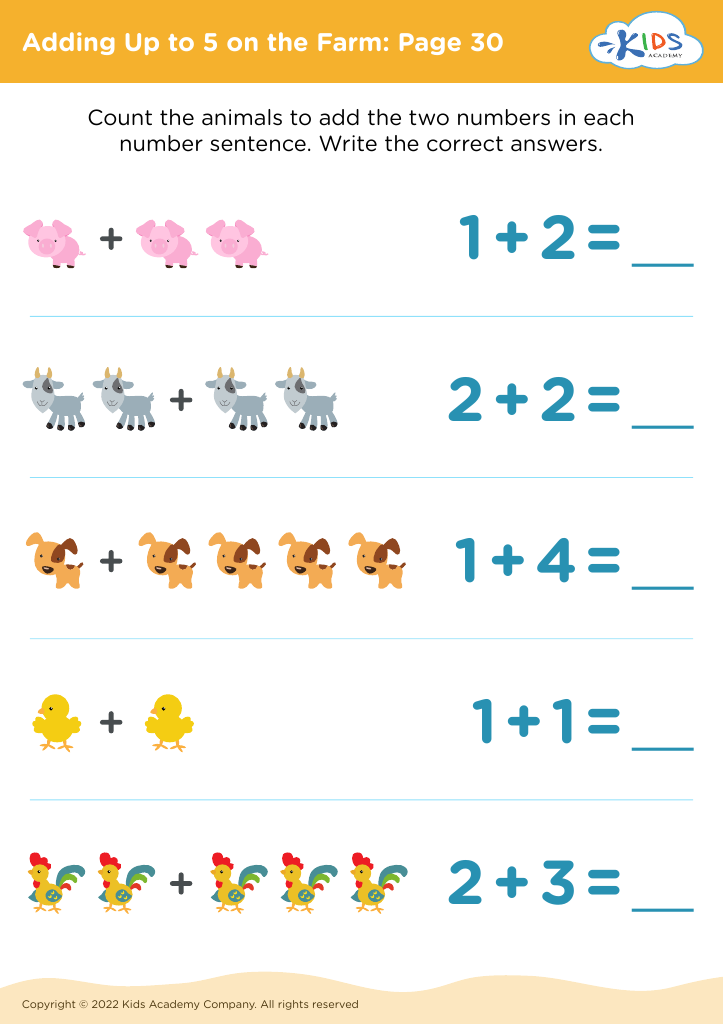
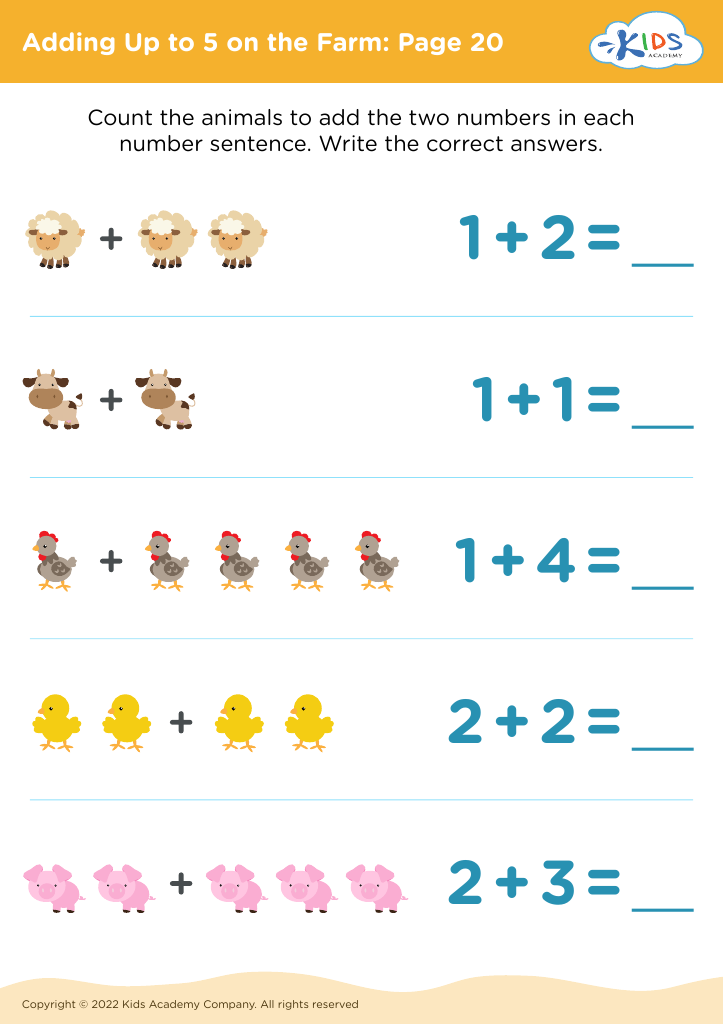
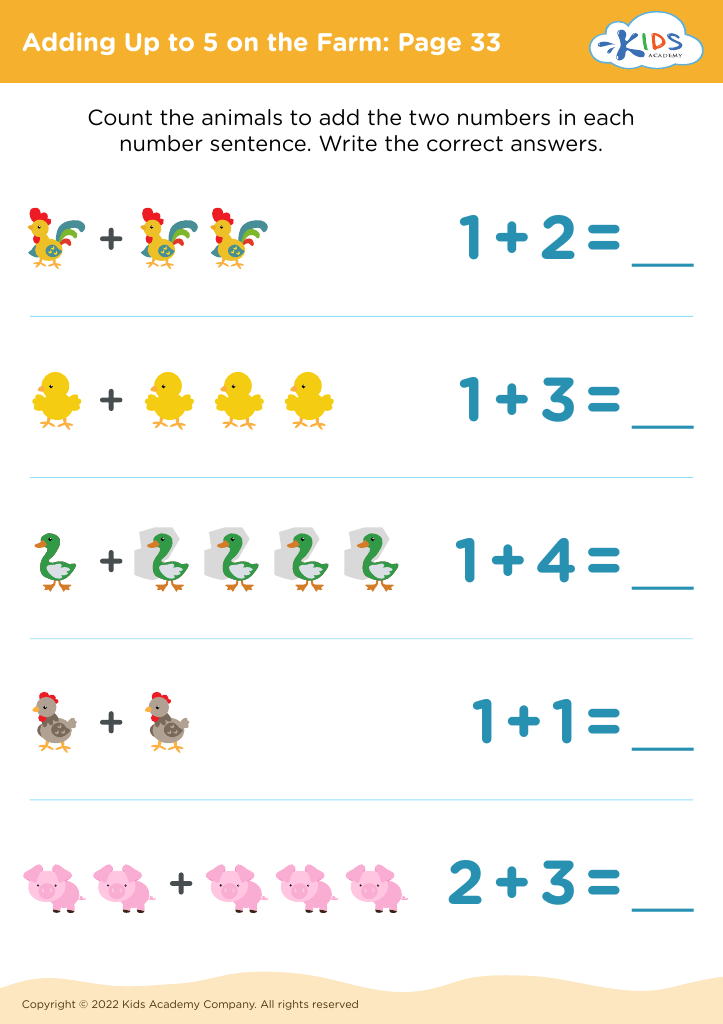
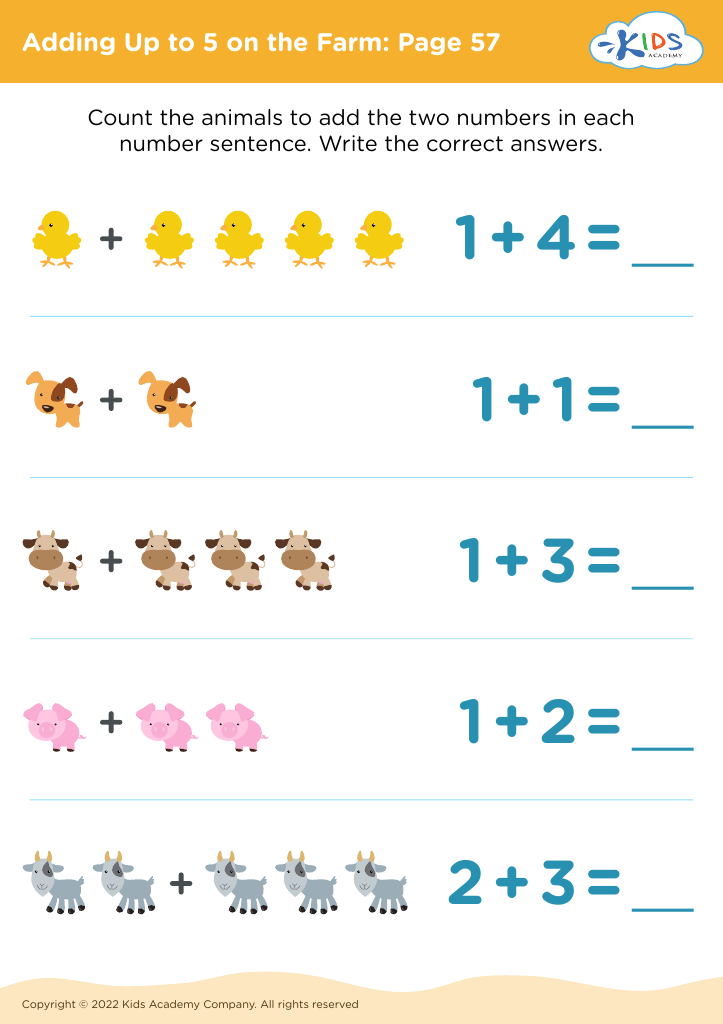
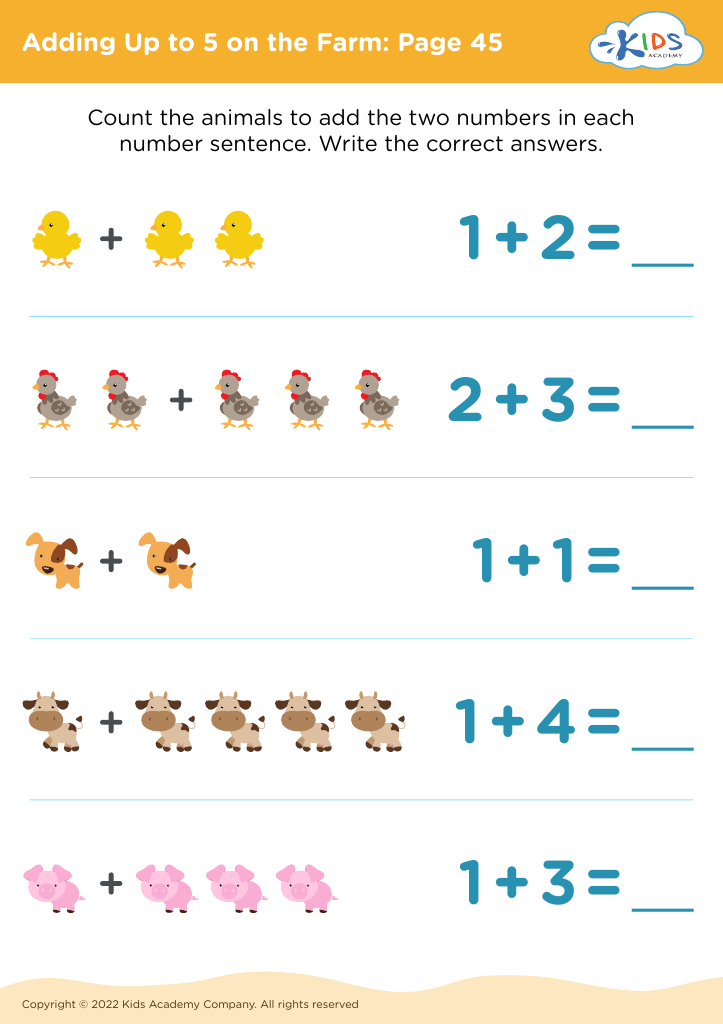



Counting practice through engaging activities, such as "Adding on the Farm," is essential for children aged 4-8 for several reasons. Firstly, it builds foundational math skills in a fun and interactive way, fostering a love for learning. By integrating counting with thematic concepts like farm animals, children can make real-world connections that enhance their understanding and retention of numbers.
In this age range, children develop cognitive abilities rapidly, and counting practices support their growth in critical thinking and problem-solving. "Adding on the Farm" encourages hands-on experiences, allowing children to manipulate objects (like counting animals) that solidify their comprehension of addition and subtraction in practical contexts.
Additionally, such activities promote social skills when done collaboratively in groups or pairs, encouraging communication and teamwork. Parents and teachers should prioritize these exercises, as they not only strengthen mathematical understanding but also enhance language development through counting songs, games, and storytelling.
Moreover, early success in math can instill confidence, paving the way for a positive attitude toward future learning experiences. Ultimately, nurturing these skills lays the groundwork for academic achievement and lifelong math competence, making it a vital focus in early education.