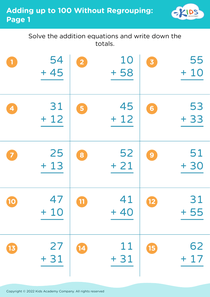
Fine Motor Skills Adding up to 100 with Regrouping Worksheets for Ages 4-8
3 filtered results
-
From - To
Boost your child's fine motor skills with our engaging "Adding up to 100 with Regrouping Worksheets" designed for kids ages 4-8! These worksheets offer a fun and educational way for young learners to practice addition with regrouping while enhancing their hand-eye coordination. Each sheet features vibrant, kid-friendly designs that make math practice exciting. Perfect for supplementary home learning or classroom activities, these worksheets help children build confidence and proficiency in arithmetic. Printed on high-quality paper, they're suitable for coloring and tracing, further aiding fine motor development. Let learning and fun come together with our dynamic worksheets!
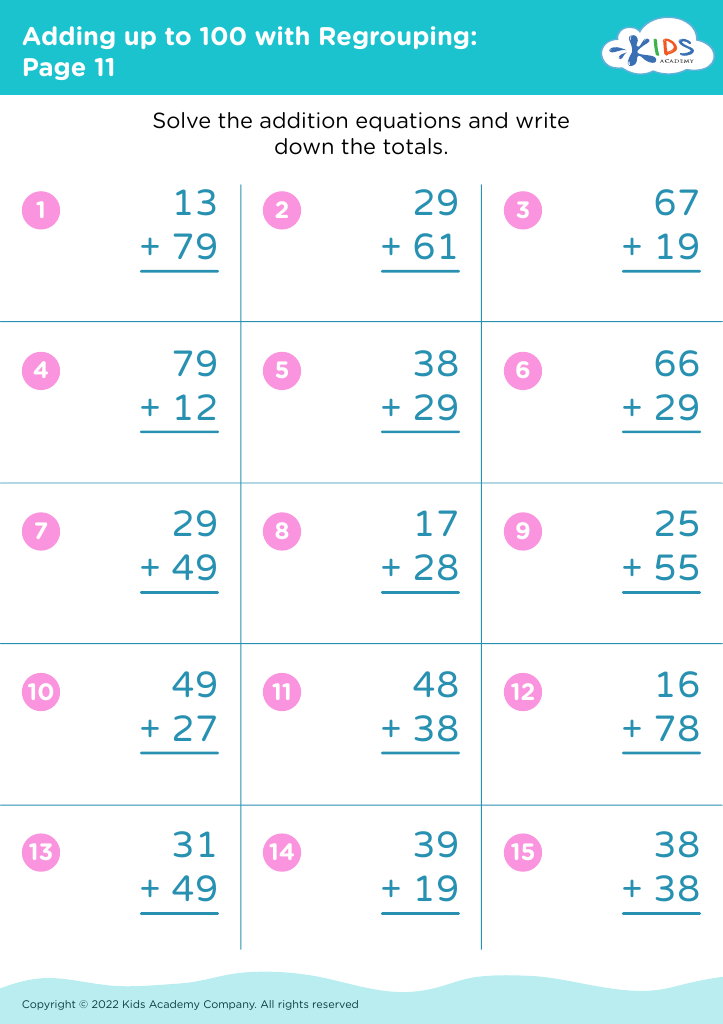
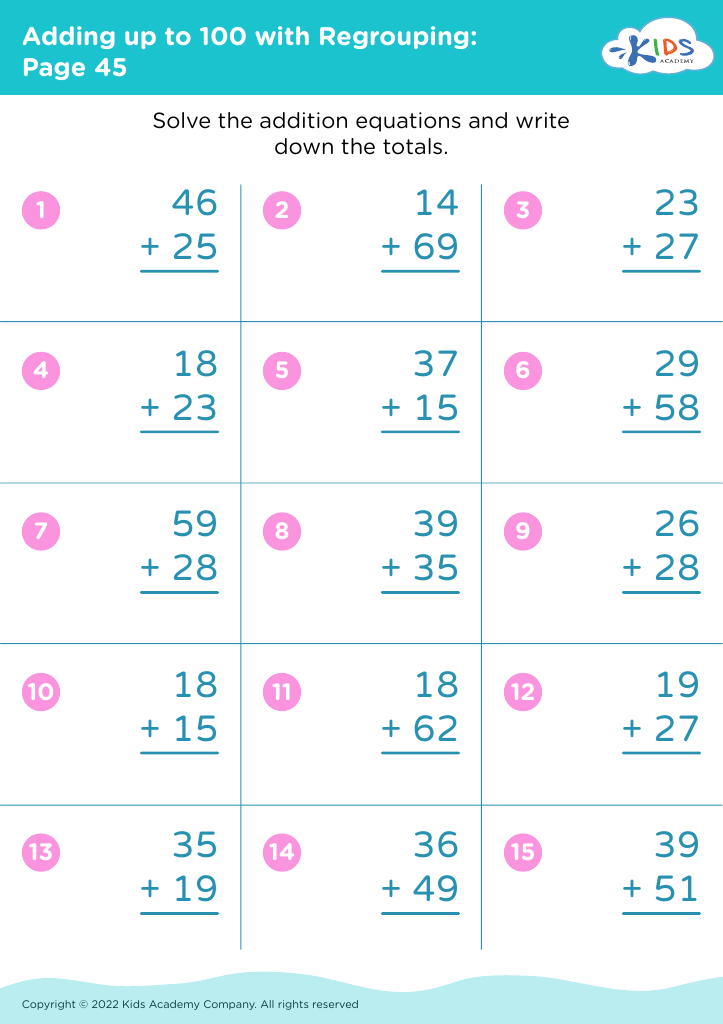
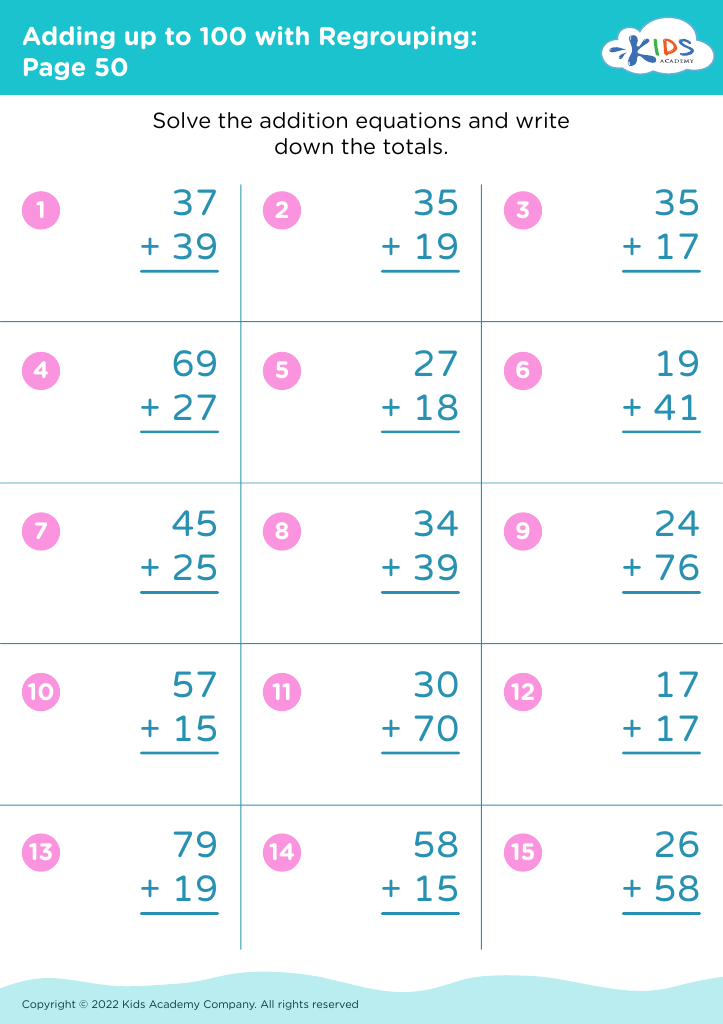




Parents and teachers should place a strong emphasis on fine motor skills and their role in adding up to 100 with regrouping for children aged 4-8 because these skills form the foundational building blocks for future academic success and everyday functioning. Fine motor skills involve the coordination of small muscles in the hands and fingers, enabling children to perform essential tasks like writing, buttoning clothes, and using utensils. For young learners, mastering addition up to 100 with regrouping not only strengthens their arithmetic competencies, but also develops these motor skills finely.
Engaging in activities that enhance fine motor skills helps children build dexterity, precision, and control, which are crucial for efficient handwriting and smooth academic progression. When children work on adding numbers with regrouping, they often use manipulatives, number lines, or write out problems. This varied engagement stimulates cognitive development, enhances understanding of mathematical concepts, and reinforces hand-eye coordination.
Additionally, promoting such skills early on encourages a positive attitude toward learning, increases confidence, and ensures that children develop a solid foundation for more complex mathematical concepts in the future. Investing time in both fine motor skill activities and math integration therefore ensures a balanced and comprehensive approach to a child’s early education, setting them up for long-term success both in school and in daily life tasks.