Number Recognition Adding up to 100 with Regrouping Worksheets for Ages 4-8
12 filtered results
-
From - To
Explore our engaging "Number Recognition Adding up to 100 with Regrouping Worksheets," designed specifically for children ages 4 to 8. These fun and interactive worksheets work as a fantastic tool to help young learners develop essential number recognition skills while mastering addition with regrouping. Each worksheet provides various exercises that encourage children to identify numbers, visualize concepts of tens and units, and practice adding seamlessly. With colorful illustrations and easy-to-follow instructions, parents and educators can enhance their math lessons and ensure a strong foundation in mathematics. Get ready to boost your child's confidence in numbers while making learning enjoyable!
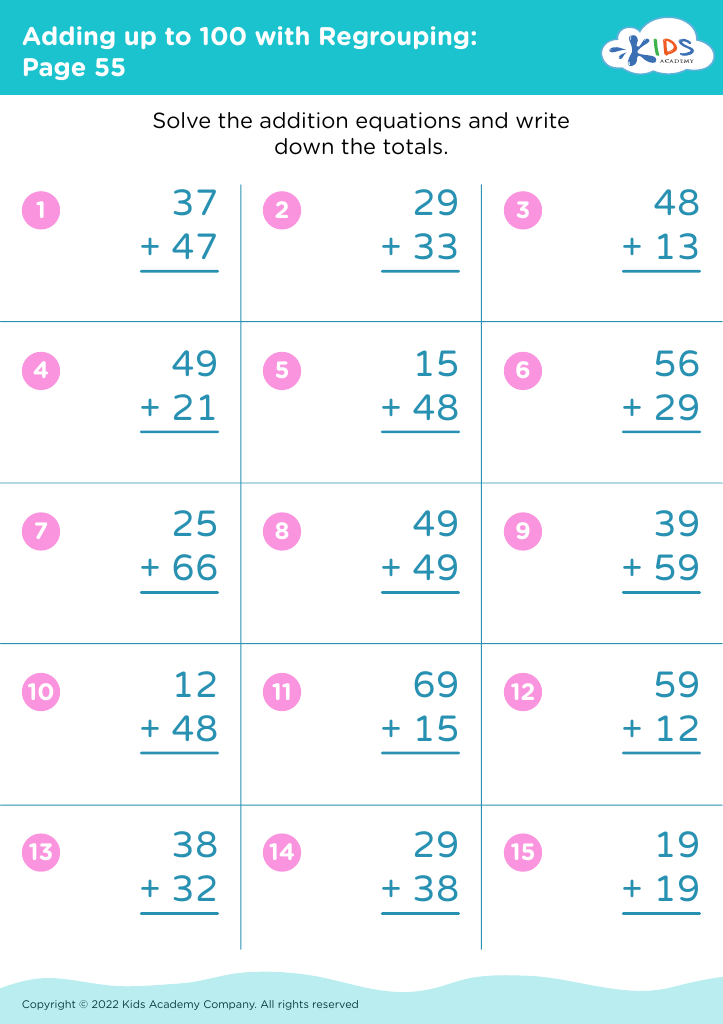
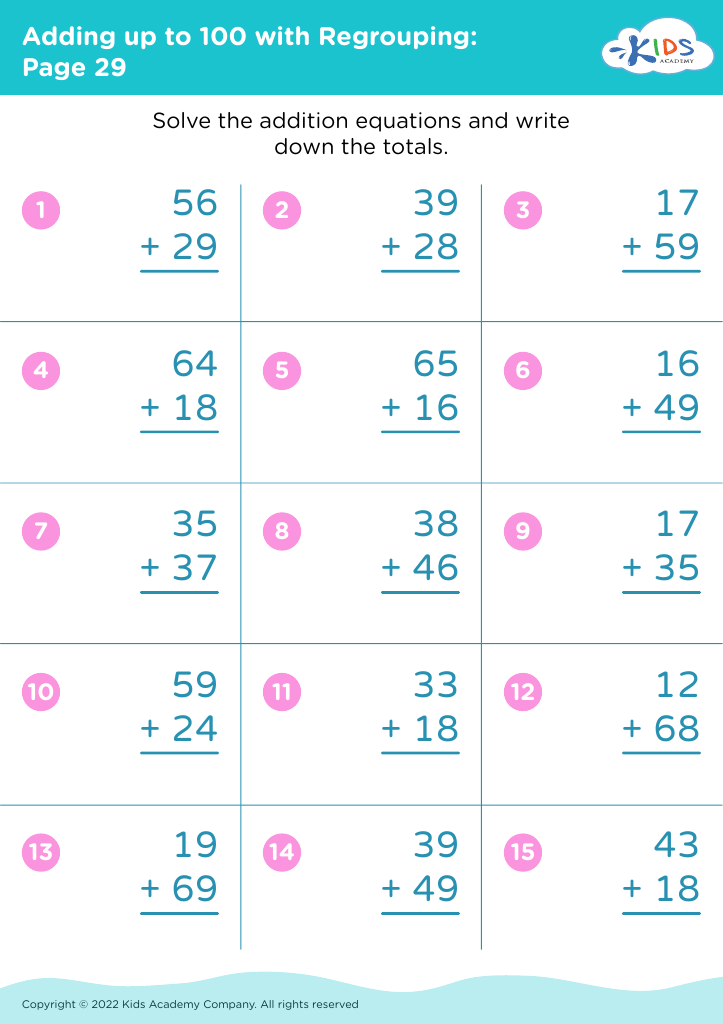
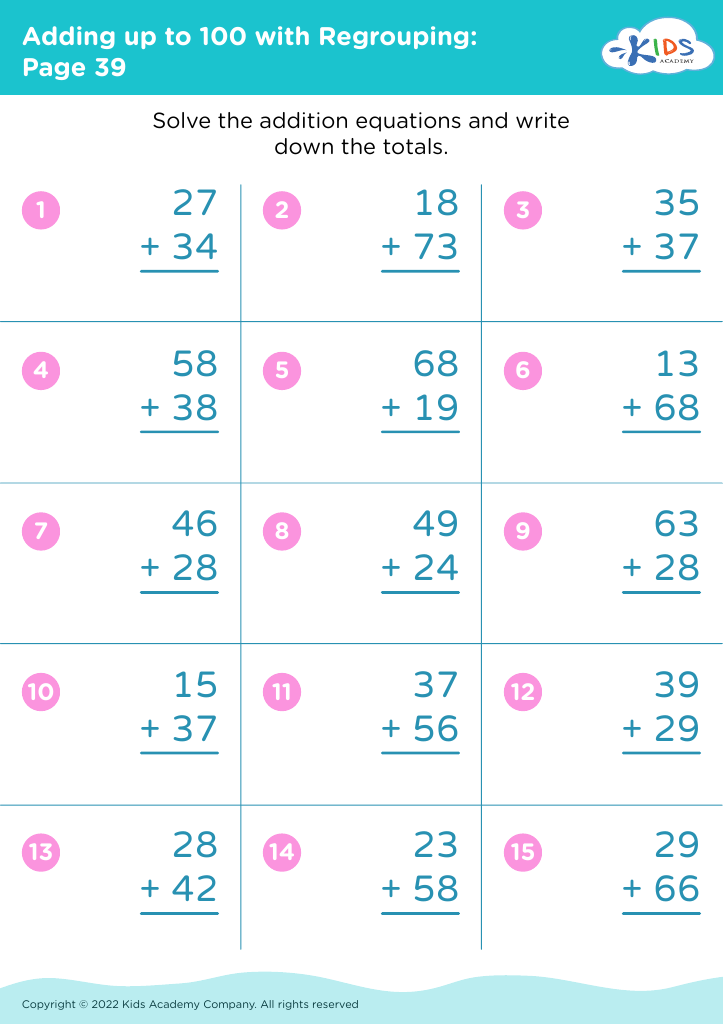
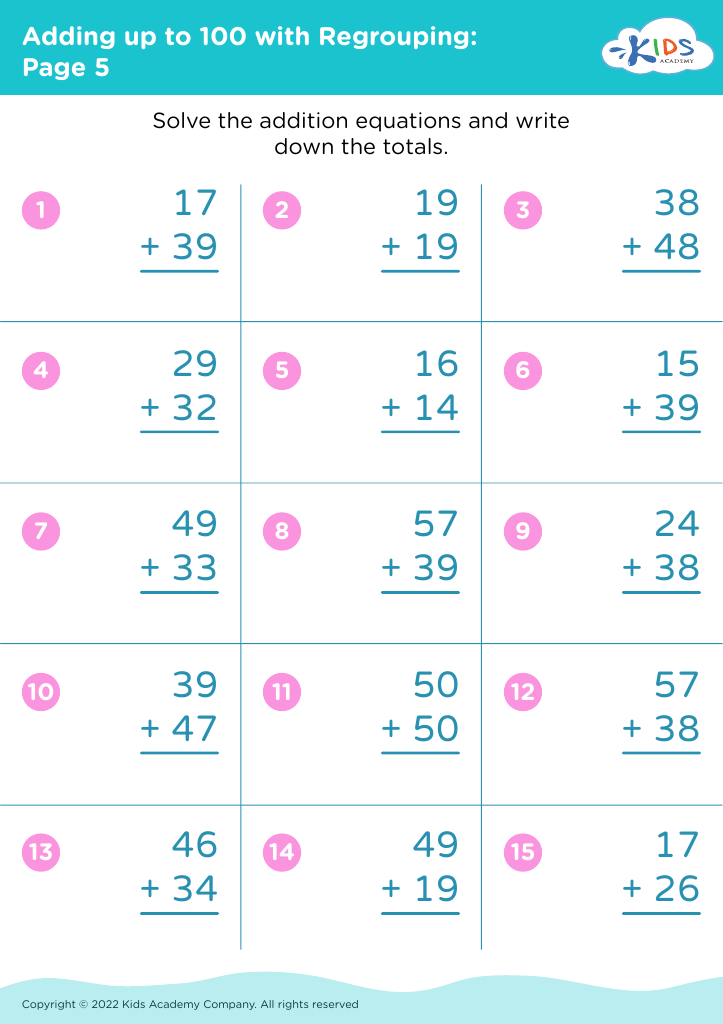
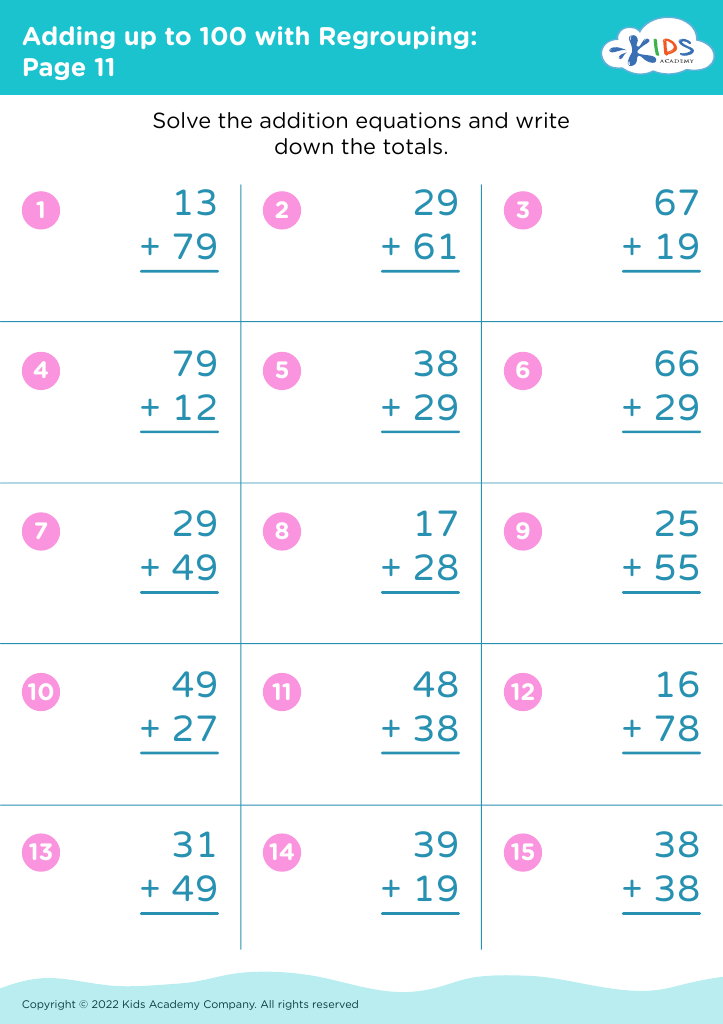
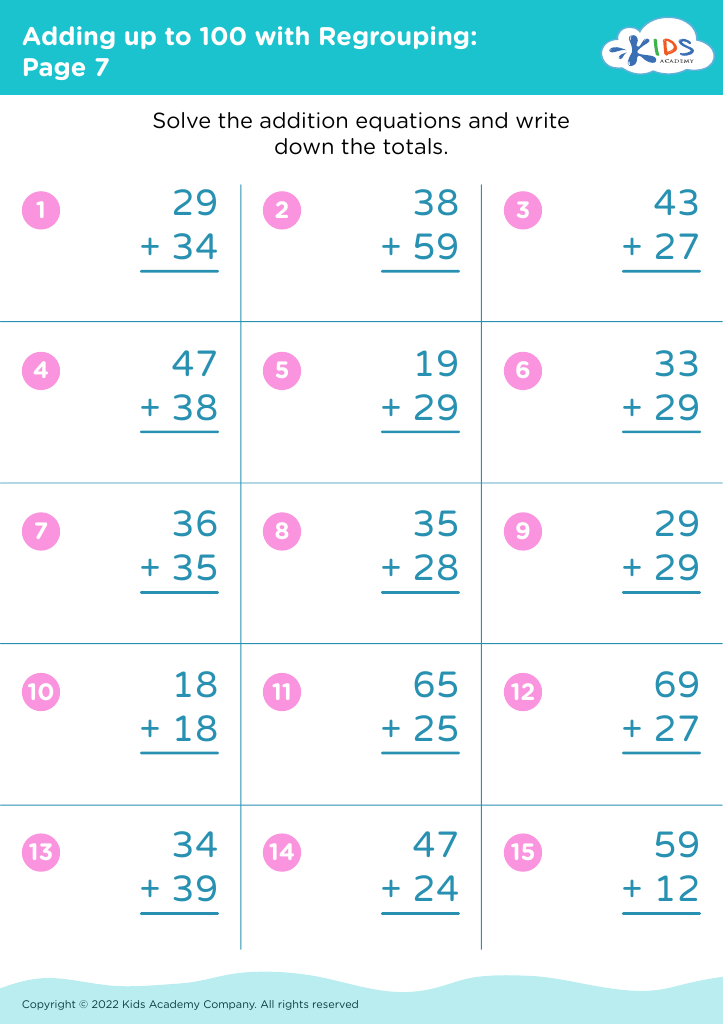
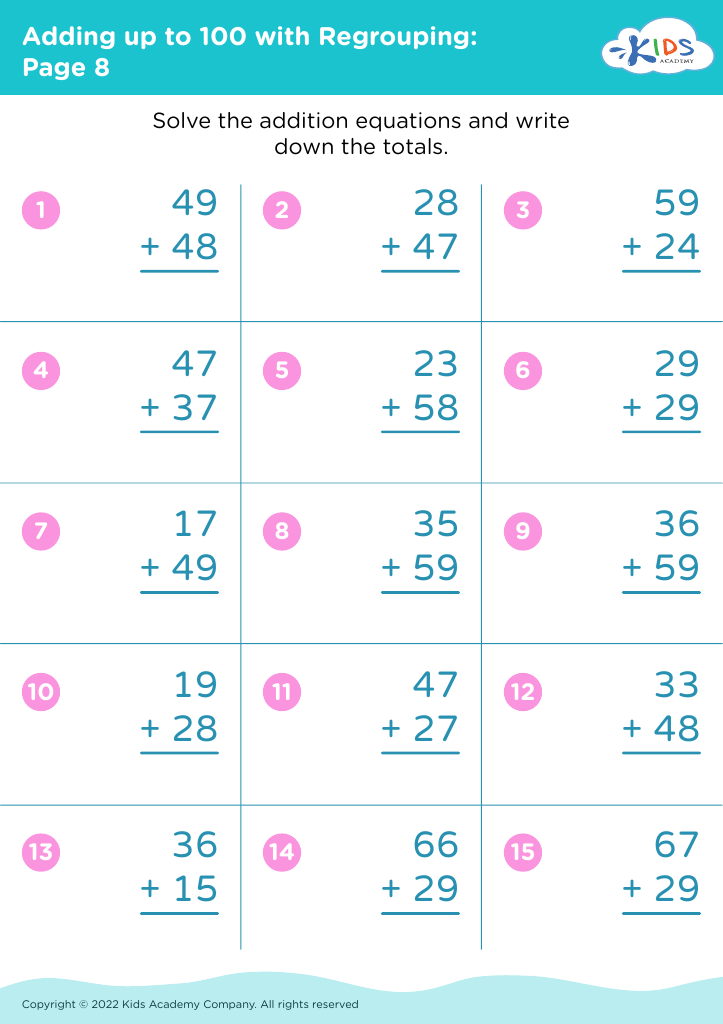
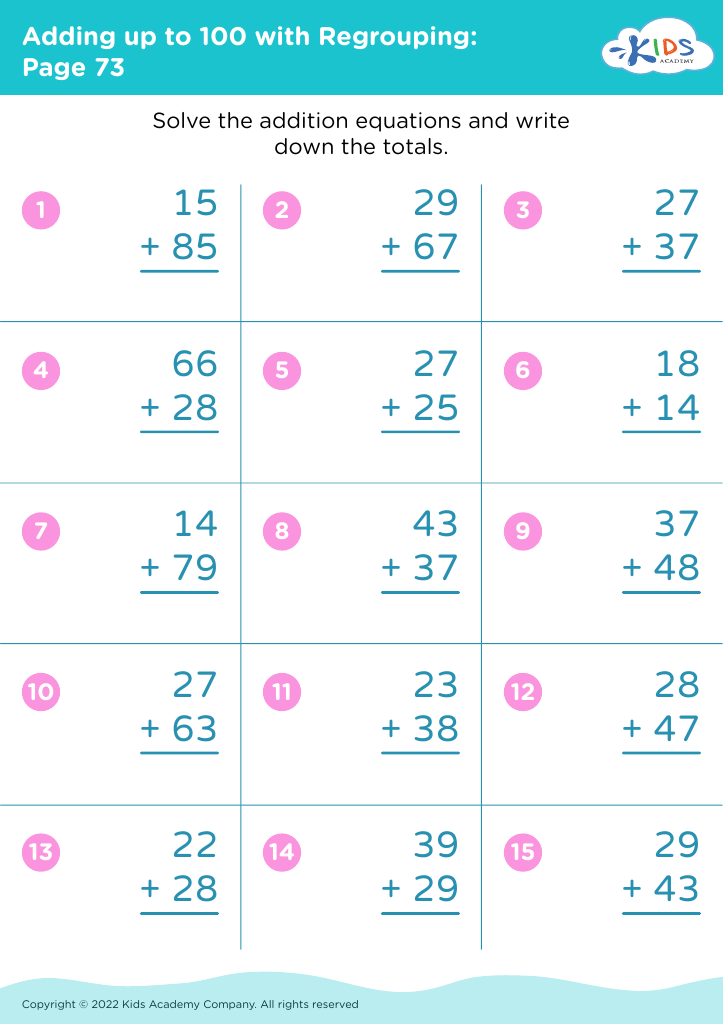
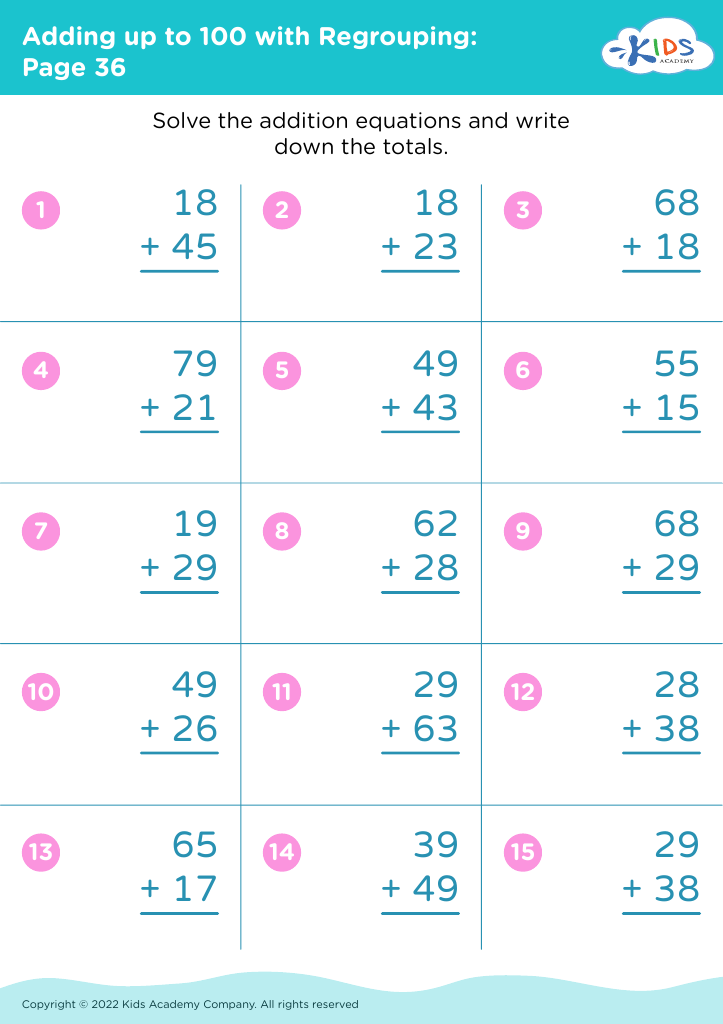
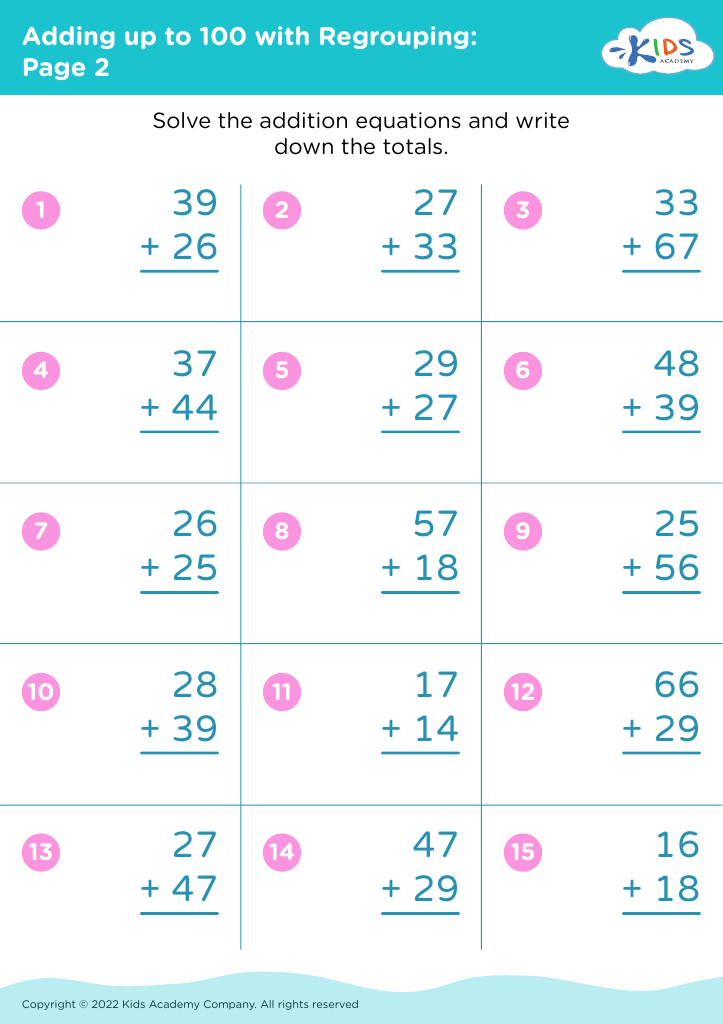
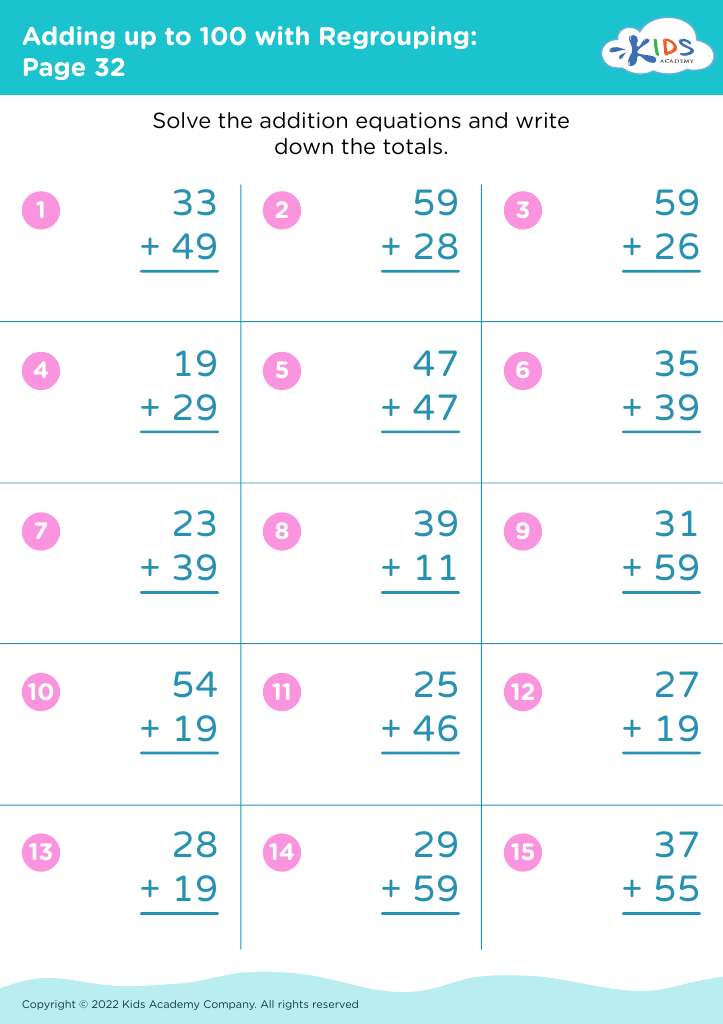
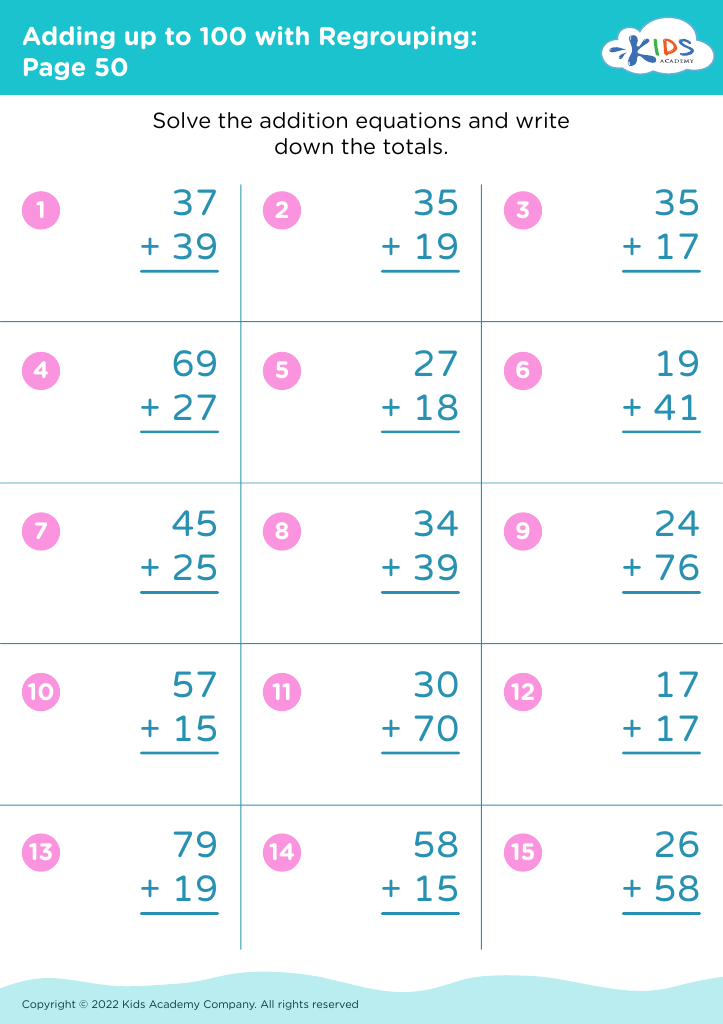




Number recognition, particularly the skill of adding up to 100 with regrouping, is crucial for children aged 4-8 as it lays the foundation for future mathematical understanding. This skill goes beyond mere memorization; it fosters critical thinking and problem-solving abilities.
When children recognize numbers and understand how to combine them through regrouping, they engage in more sophisticated reasoning. They develop an understanding of place value, enabling them to manage larger numbers seamlessly. This cognitive process is vital as it prepares children to tackle more complex math concepts in later years.
Additionally, number recognition and addition skills enhance children's confidence in mathematics, a subject often regarded with anxiety. When parents and teachers emphasize these skills, they encourage a positive attitude towards learning and resilience in overcoming challenges.
Furthermore, foundational mathematical skills contribute significantly to overall academic success. Children who are proficient in basic arithmetic are more likely to excel in other subjects, creating well-rounded learners. By investing time and resources into enhancing number recognition and addition, parents and teachers equip children with essential tools that promote lifelong learning. This support can spark a love for math, ultimately shaping their educational journey in meaningful ways.