Understanding fractions Adding up to 100 Without Regrouping Worksheets for Ages 4-8
19 filtered results
-
From - To
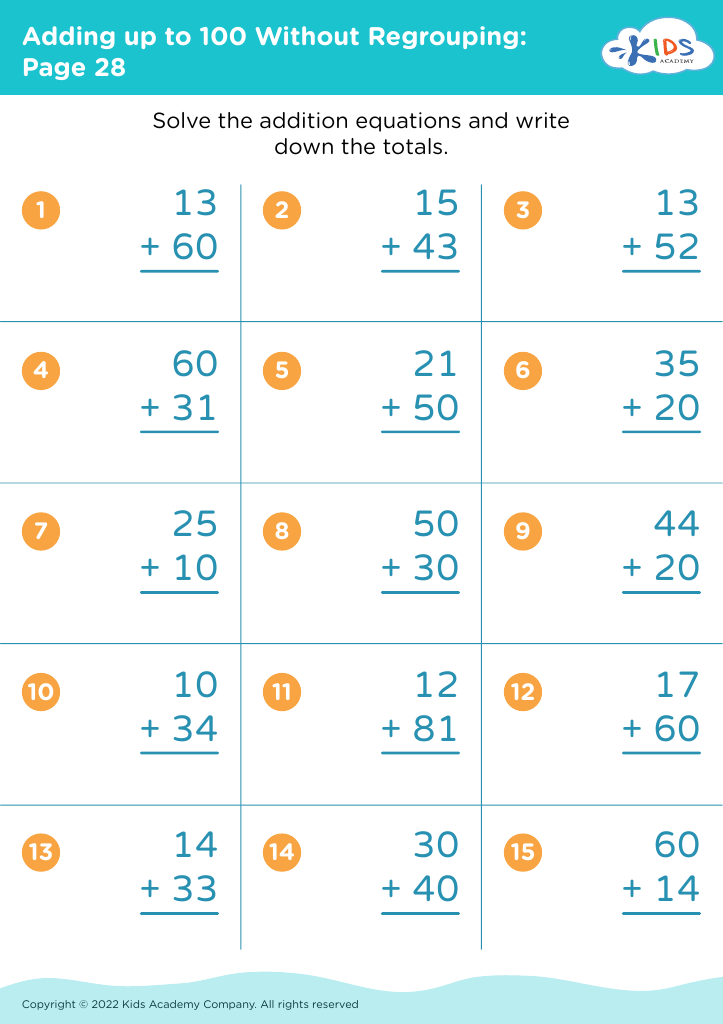
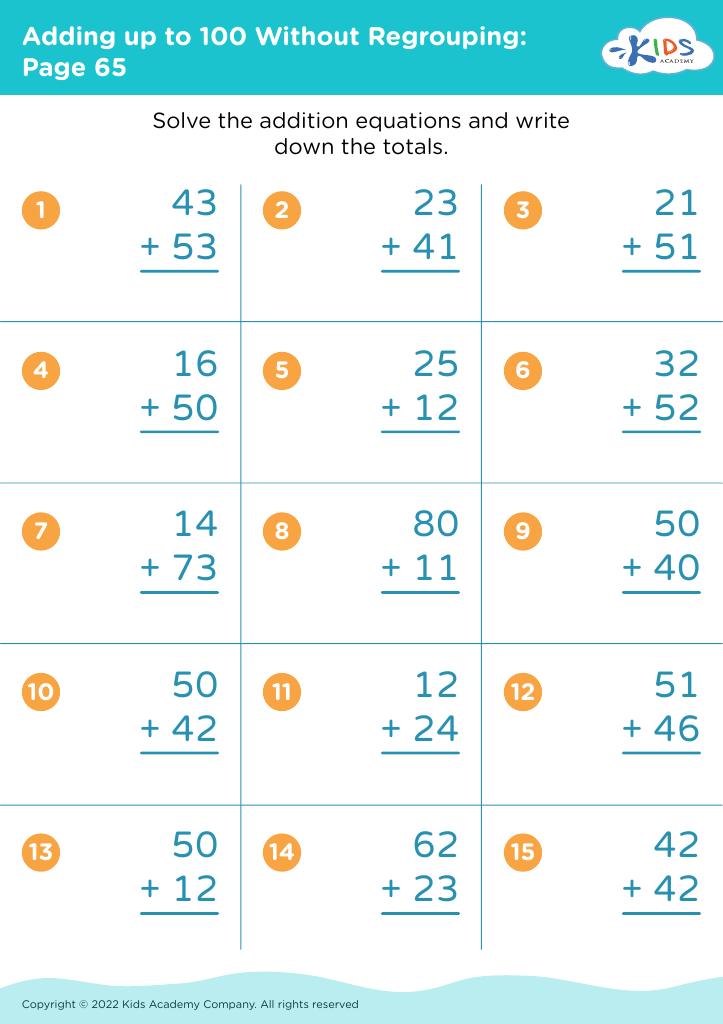
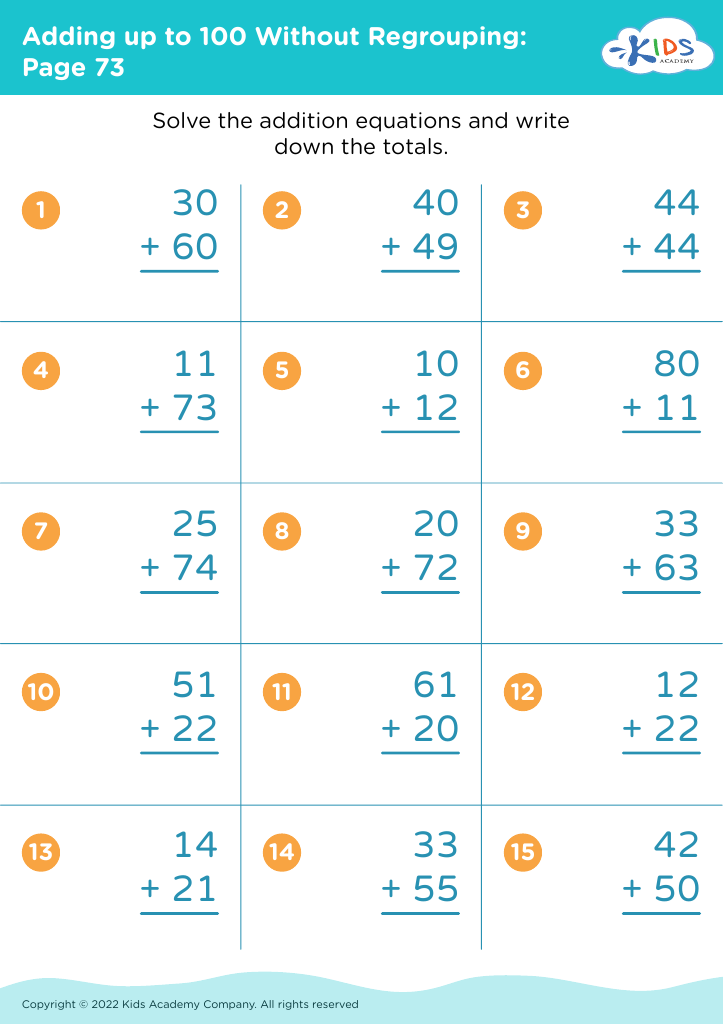
Explore our "Understanding Fractions: Adding up to 100 Without Regrouping" worksheets, specially designed for children aged 4-8. These engaging activities help young learners grasp the concept of fractions and improve their addition skills without complicating regrouping. Each worksheet offers fun and interactive exercises that make learning fractions exciting and accessible. Kids will gain confidence in their math abilities while developing essential problem-solving skills. Perfect for both classroom and home use, our resources make it easy for teachers and parents to support children's early mathematics education. Start your child's journey to math proficiency today with our thoughtfully crafted worksheets!
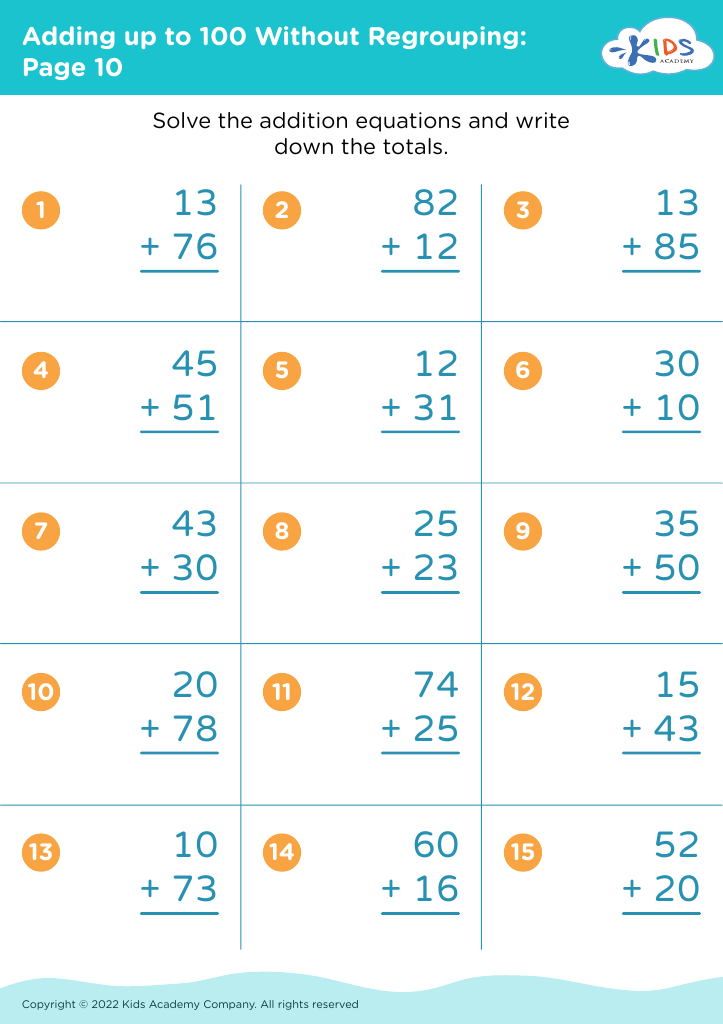
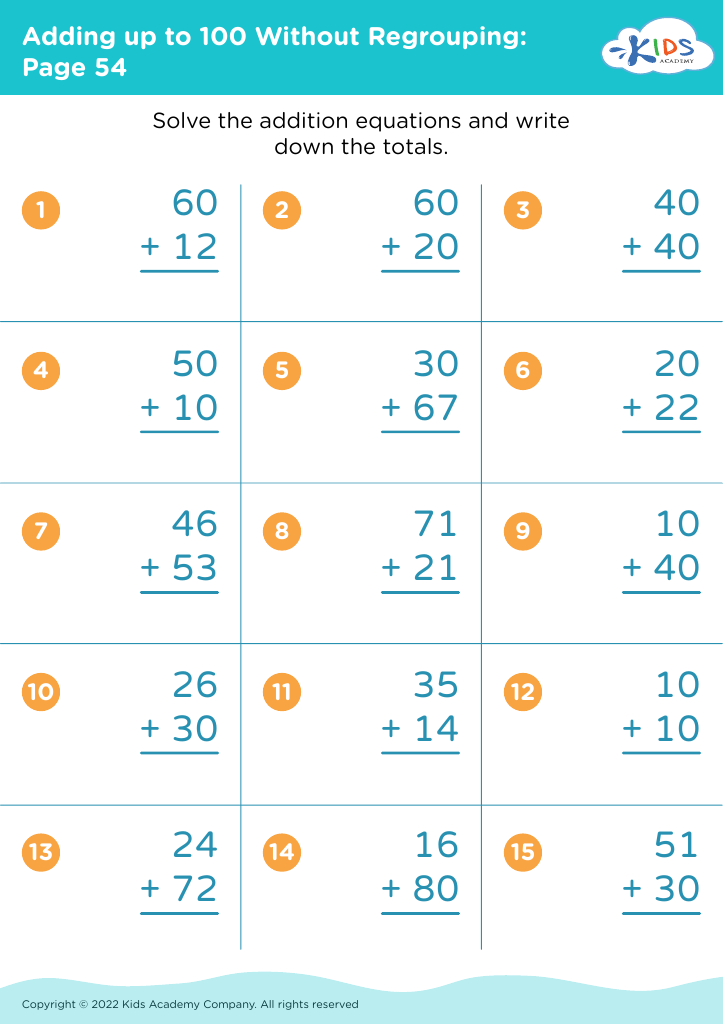
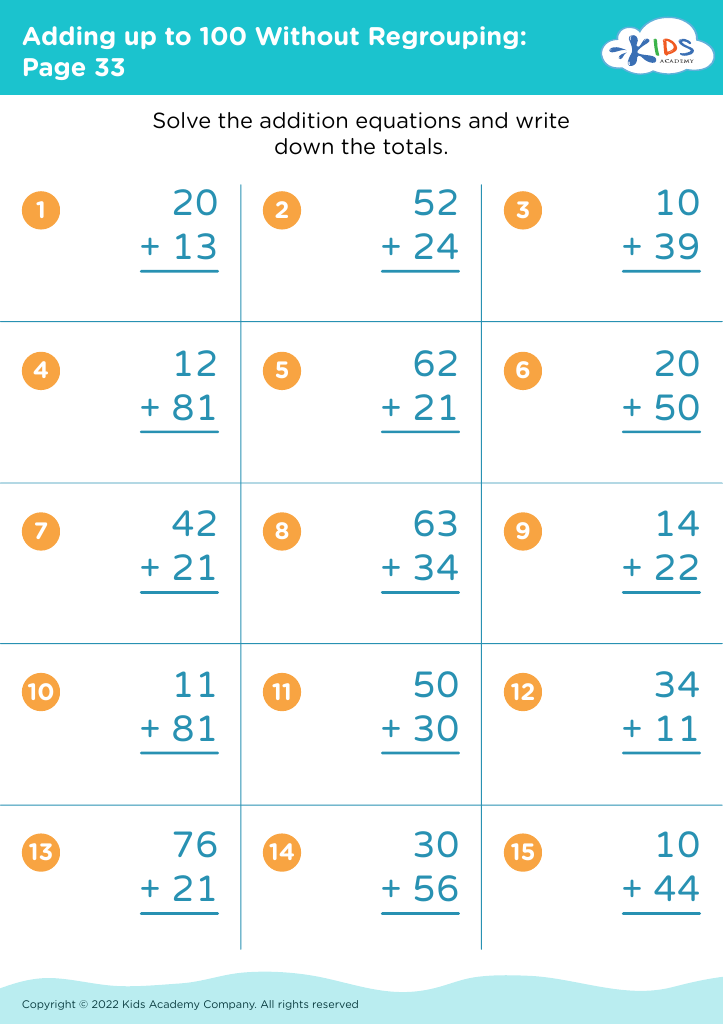
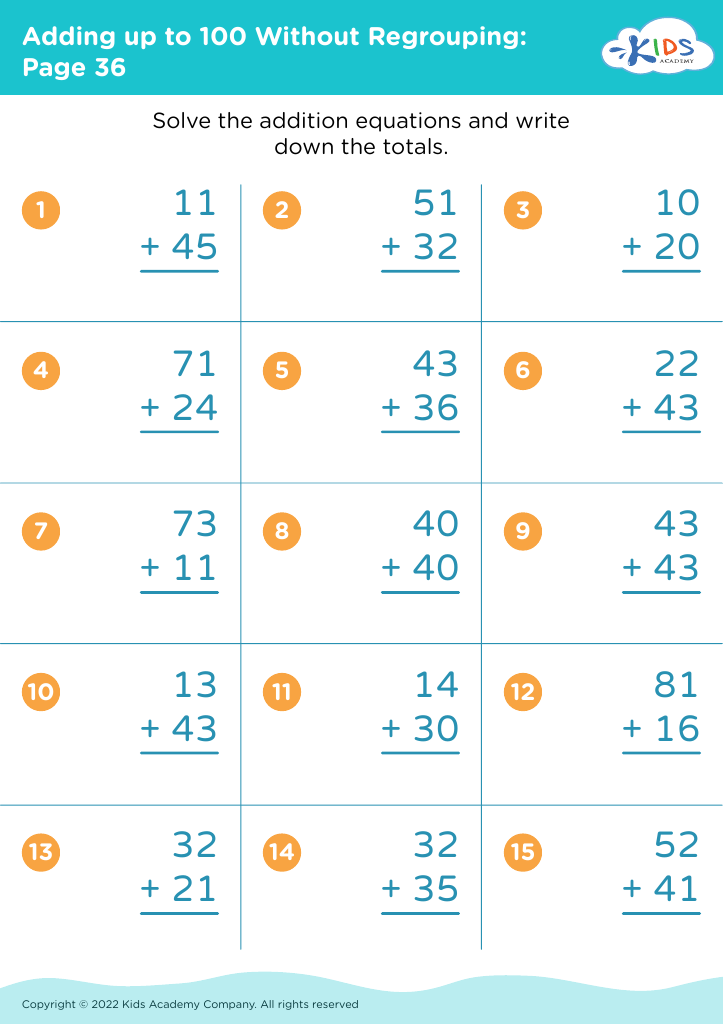
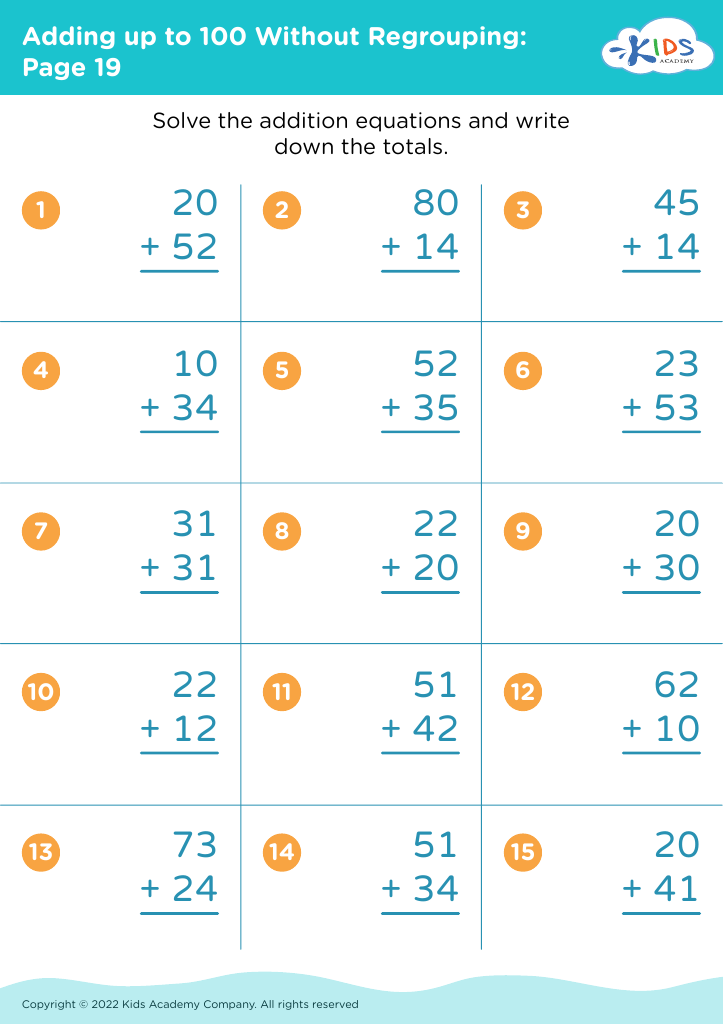
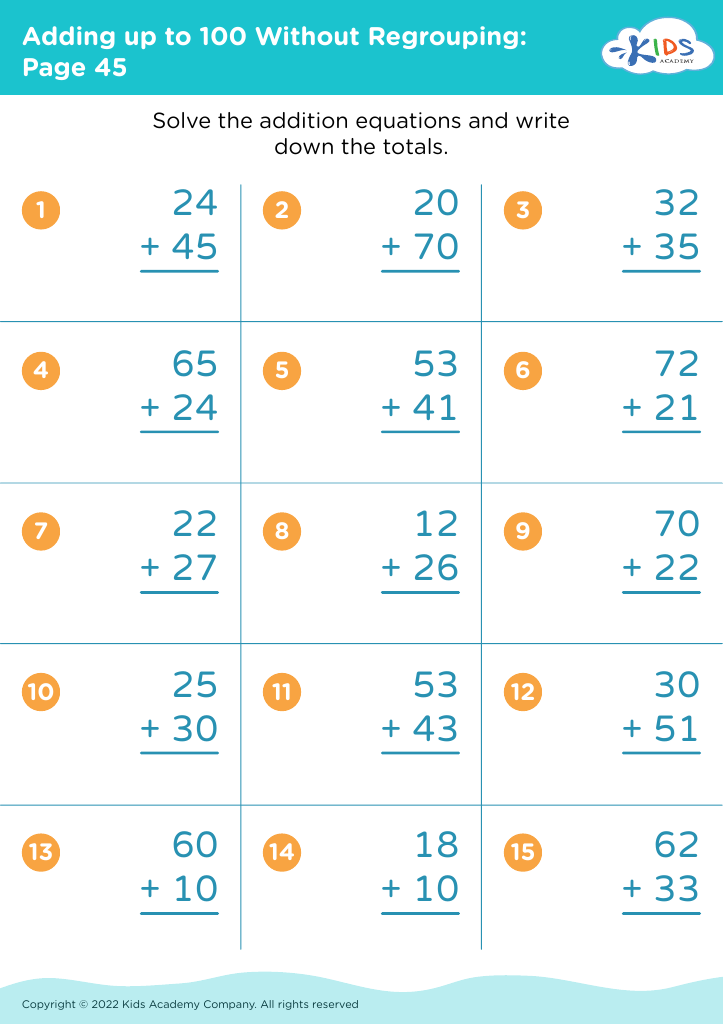
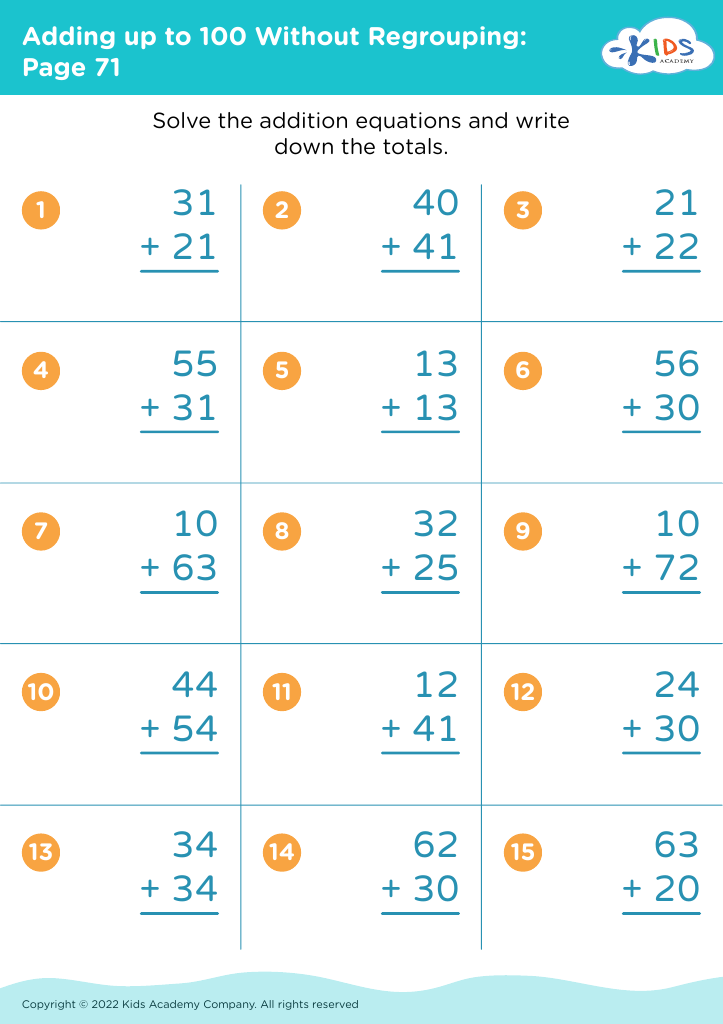
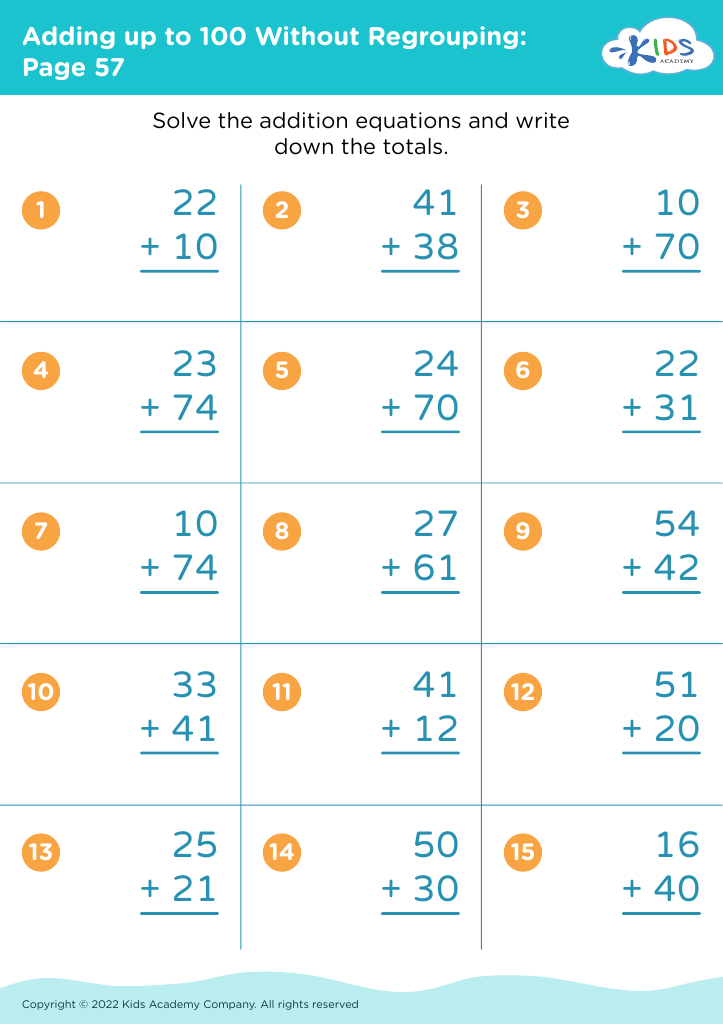
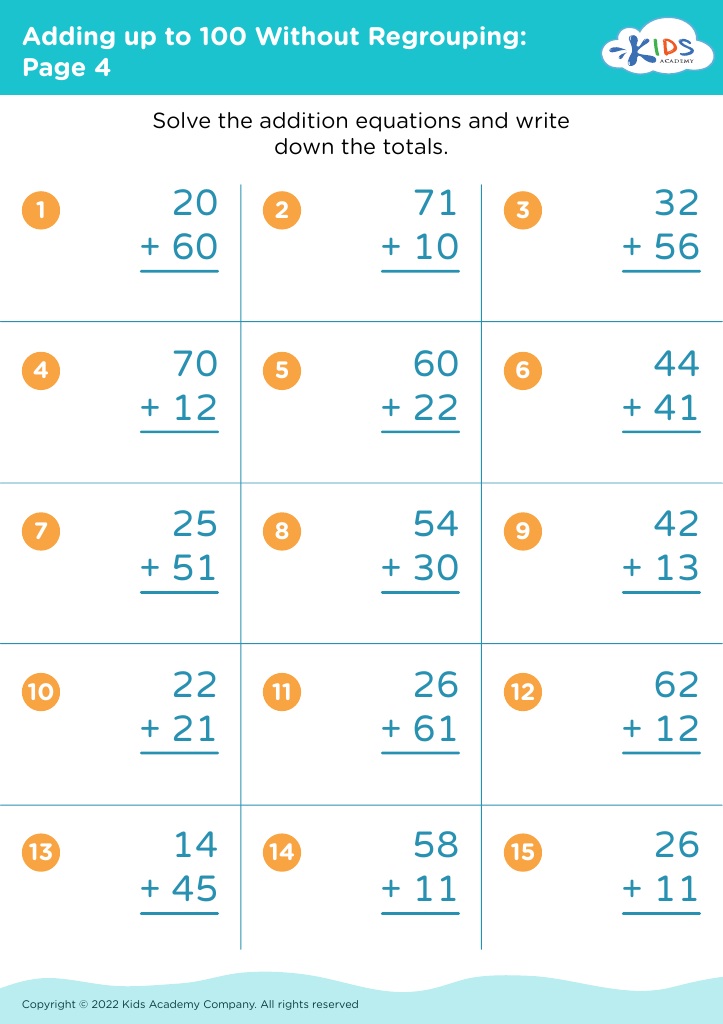
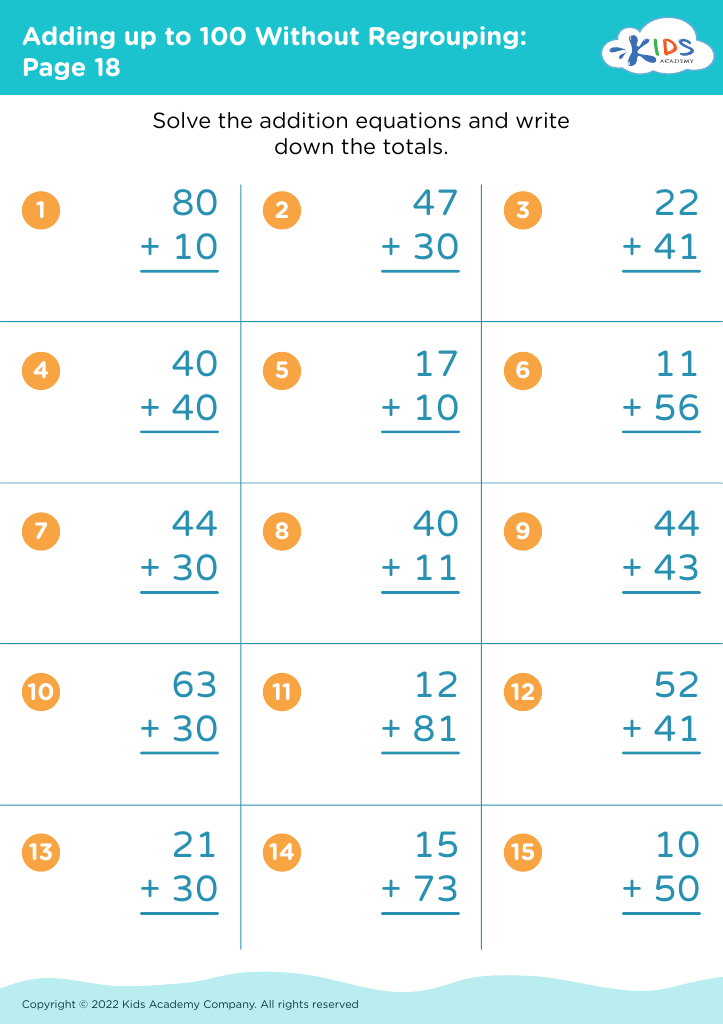
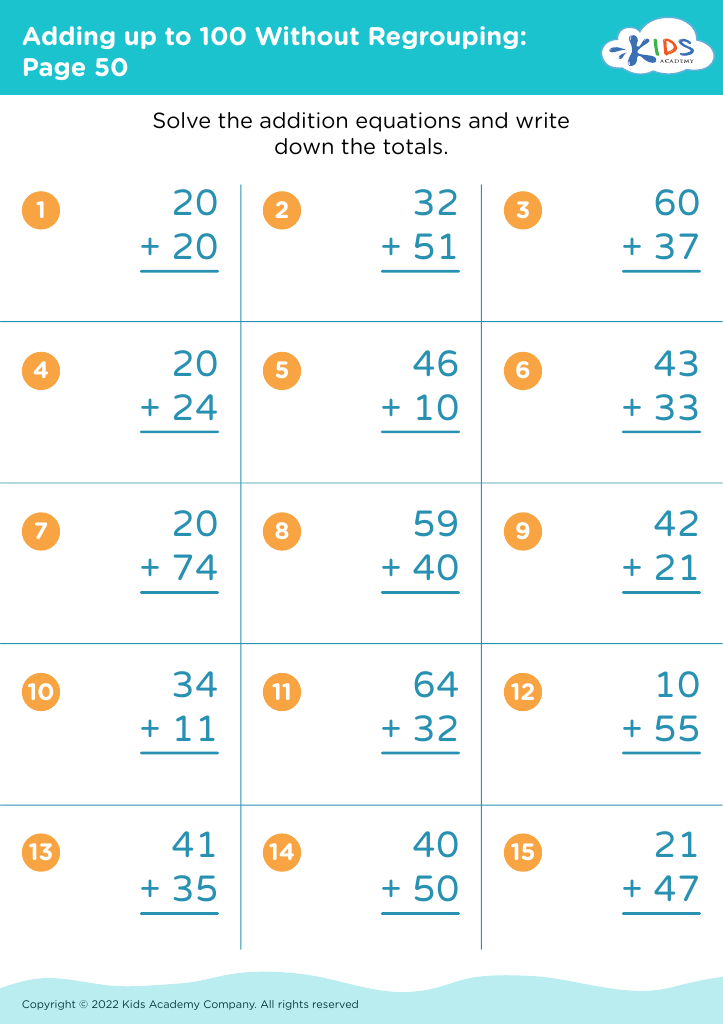
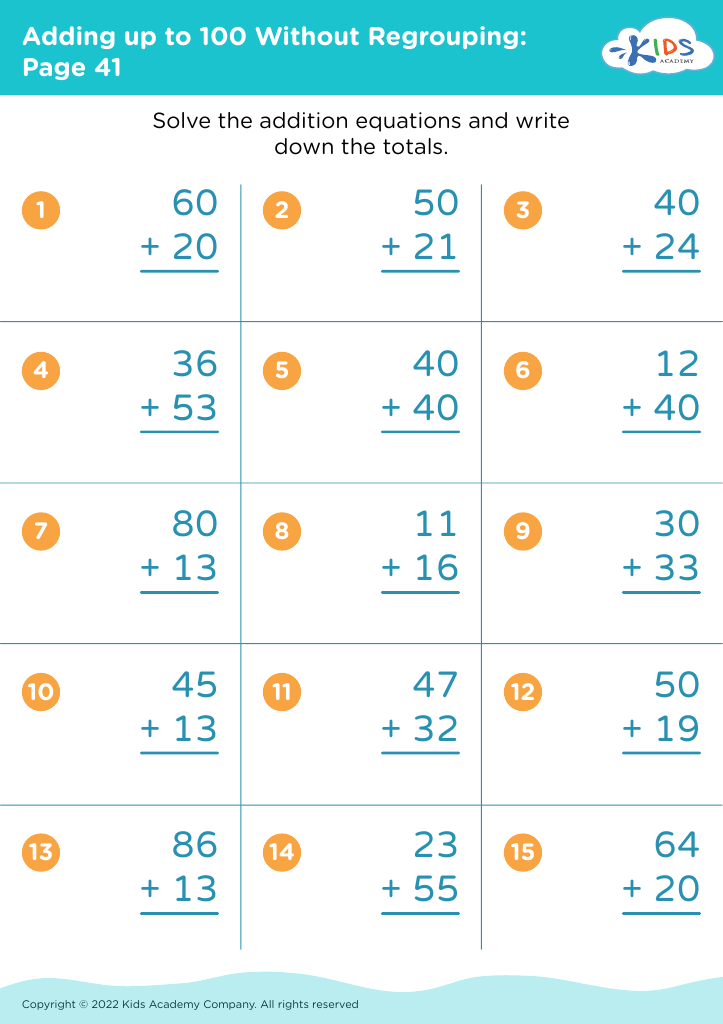
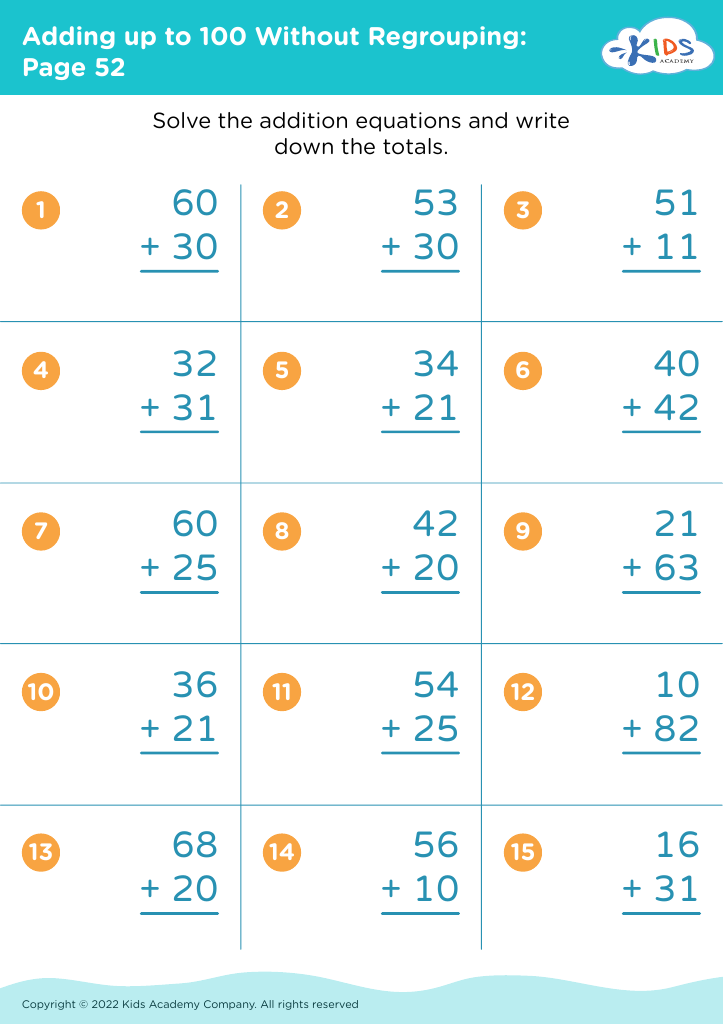
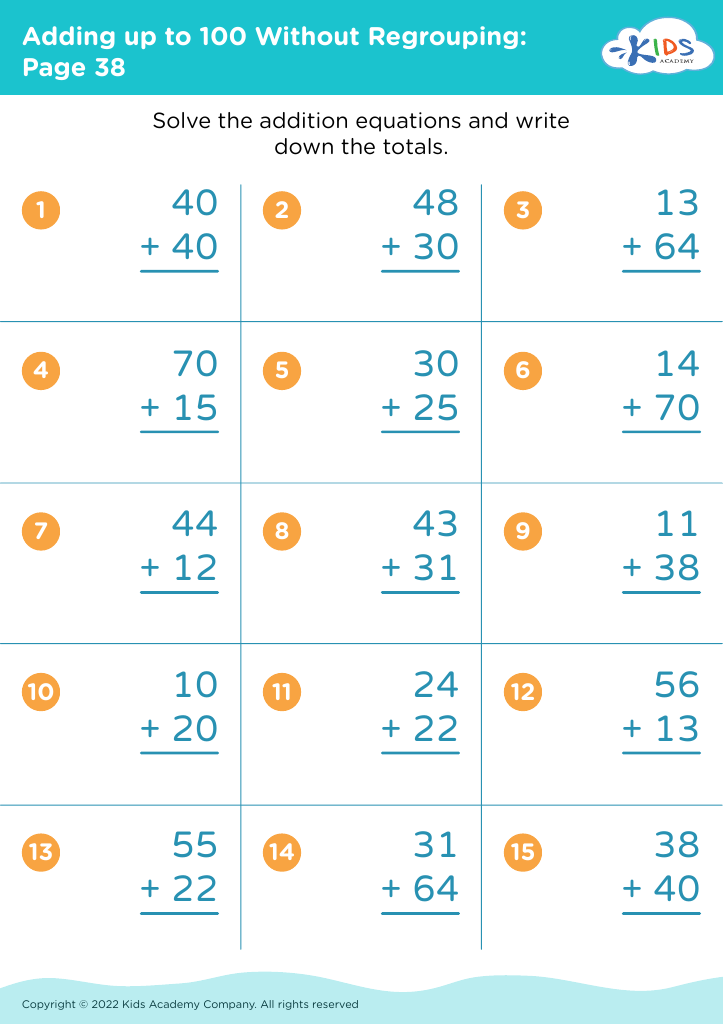
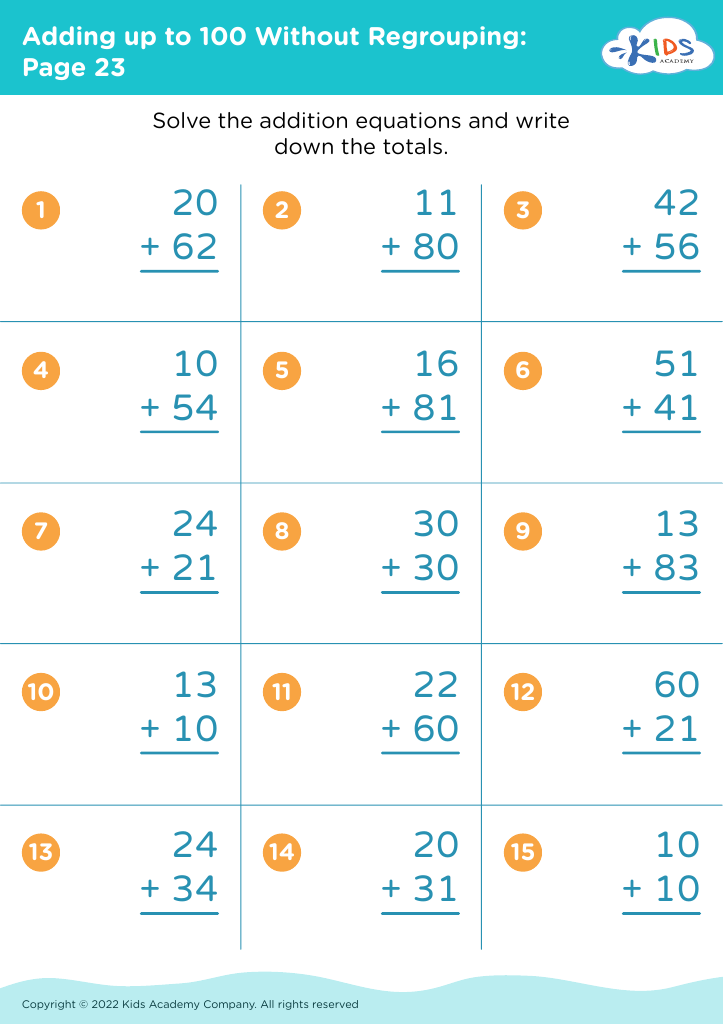
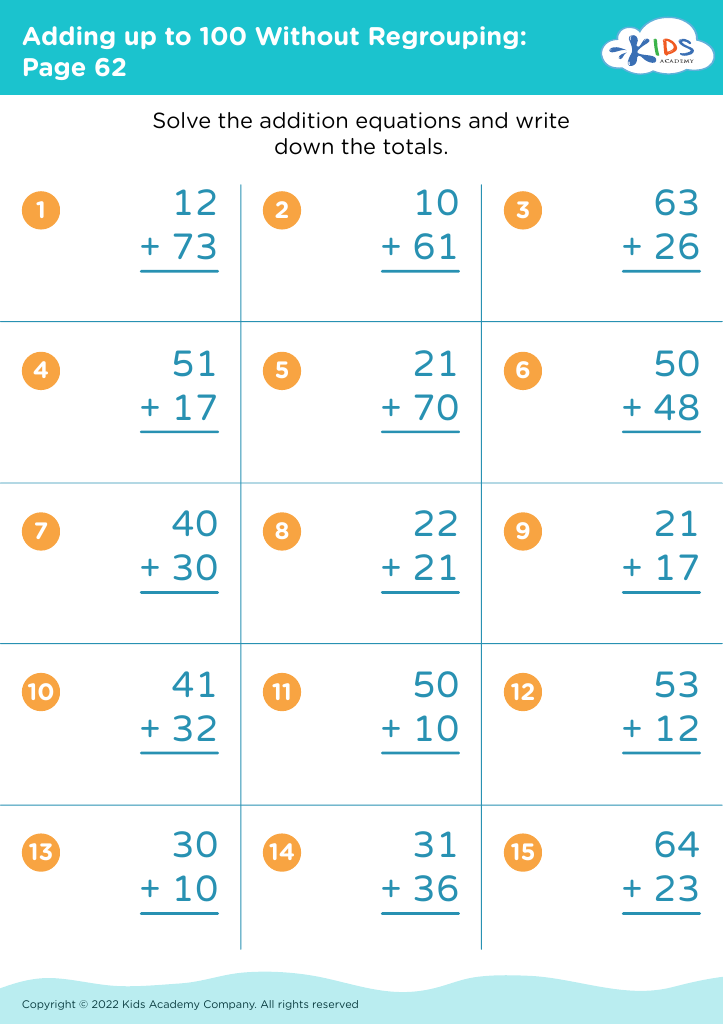




Understanding fractions, especially adding fractions that sum up to 100 without regrouping, is crucial for children aged 4 to 8 for several reasons. Firstly, a solid grasp of fractions lays a foundation for more complex mathematical concepts later on. Early exposure to fractions helps children recognize parts of a whole, which can enhance their ability to understand percentages and ratios in the future.
Moreover, learning to add fractions without regrouping builds confidence in children's mathematical abilities. It offers a clear, straightforward process that they can master, making mathematics less intimidating and fostering a positive attitude towards numeracy. This skill also promotes logical thinking and problem-solving abilities, as students learn to visualize how different fractions combine.
Additionally, learning fractions can be made engaging through practical applications, such as cooking or crafting, providing real-world context. This integration helps children see the relevance of math in everyday life. By supporting children as they explore and understand fractions, parents and teachers not only contribute to their academic success but also empower them with essential life skills that extend beyond the classroom. Thus, investing time in understanding fractions adds immense value to a child’s early learning experience.