Color Identification Adding up to 100 Worksheets for Ages 4-8
8 filtered results
-
From - To
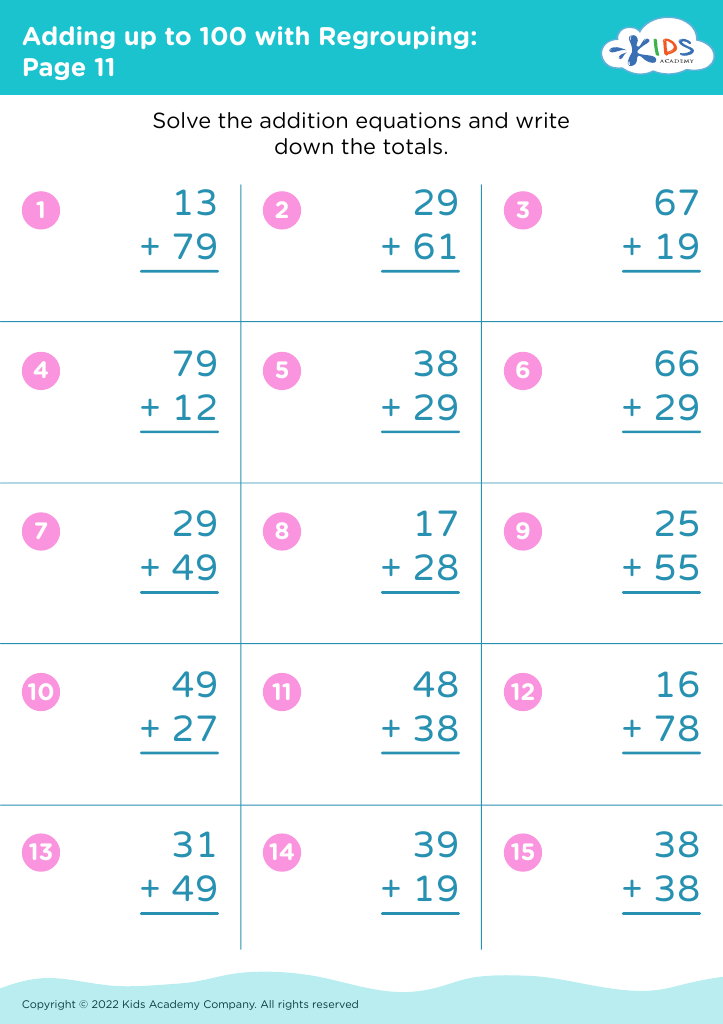
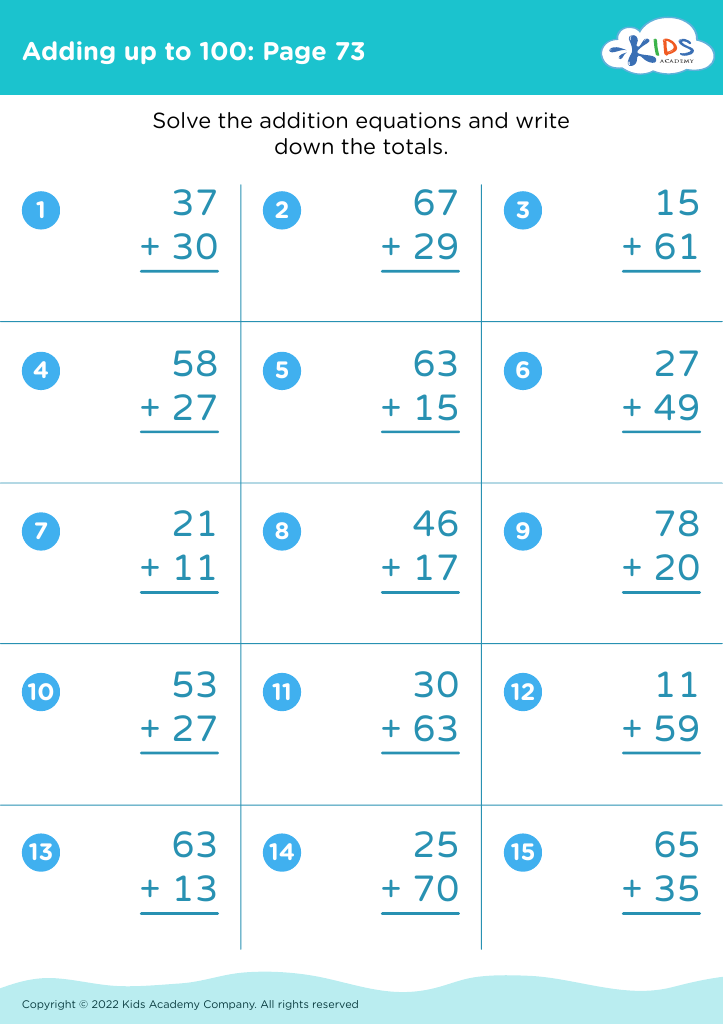
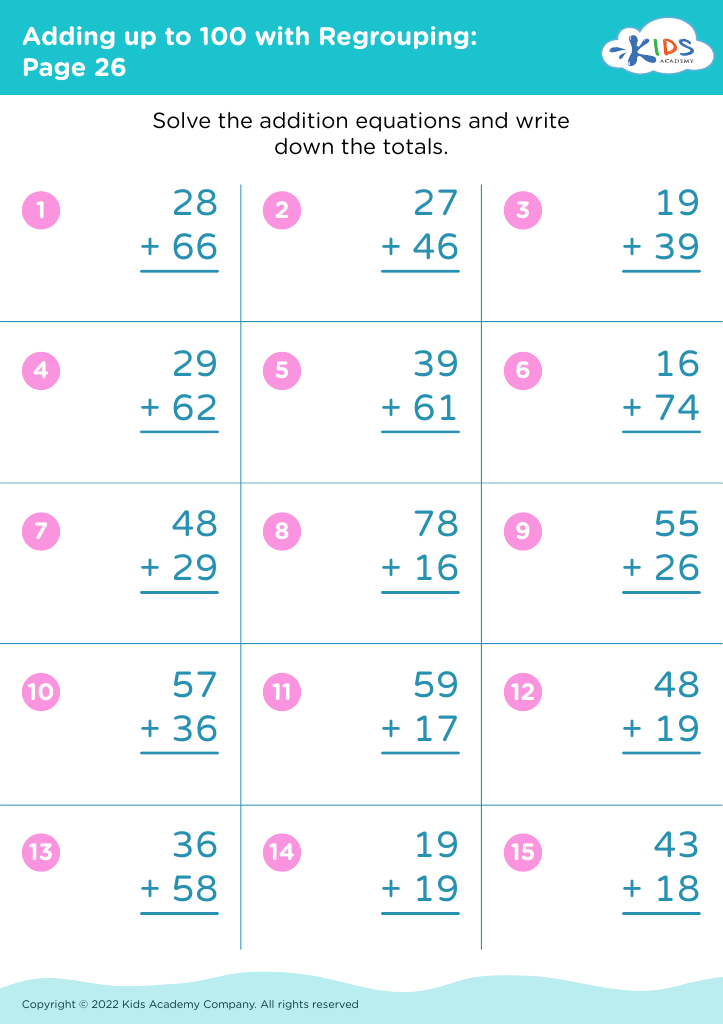
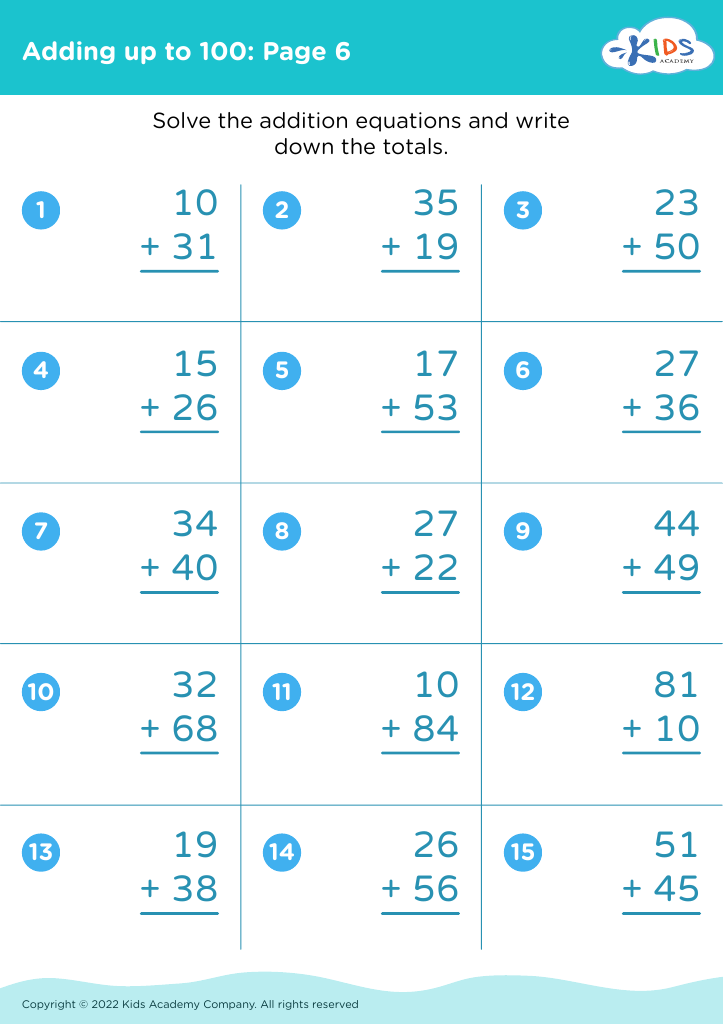
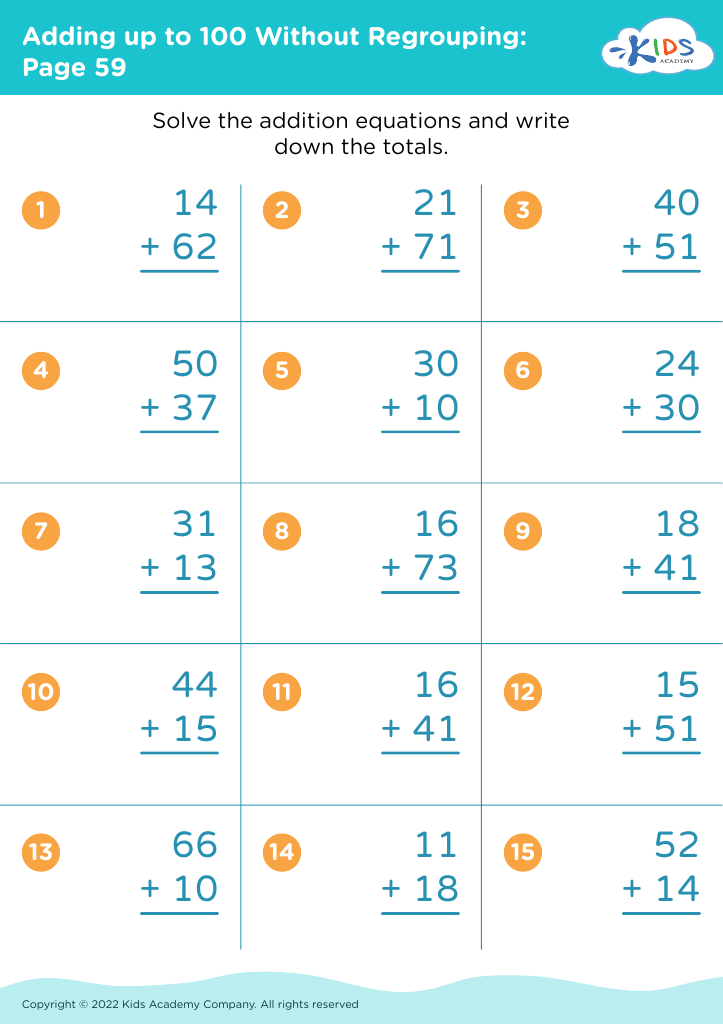
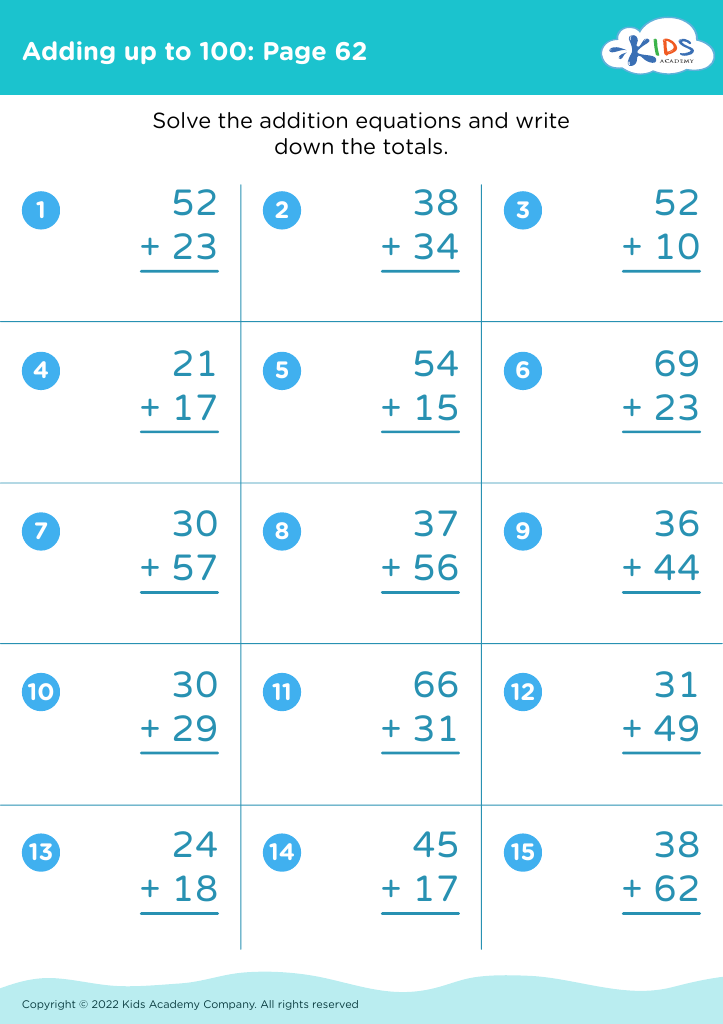
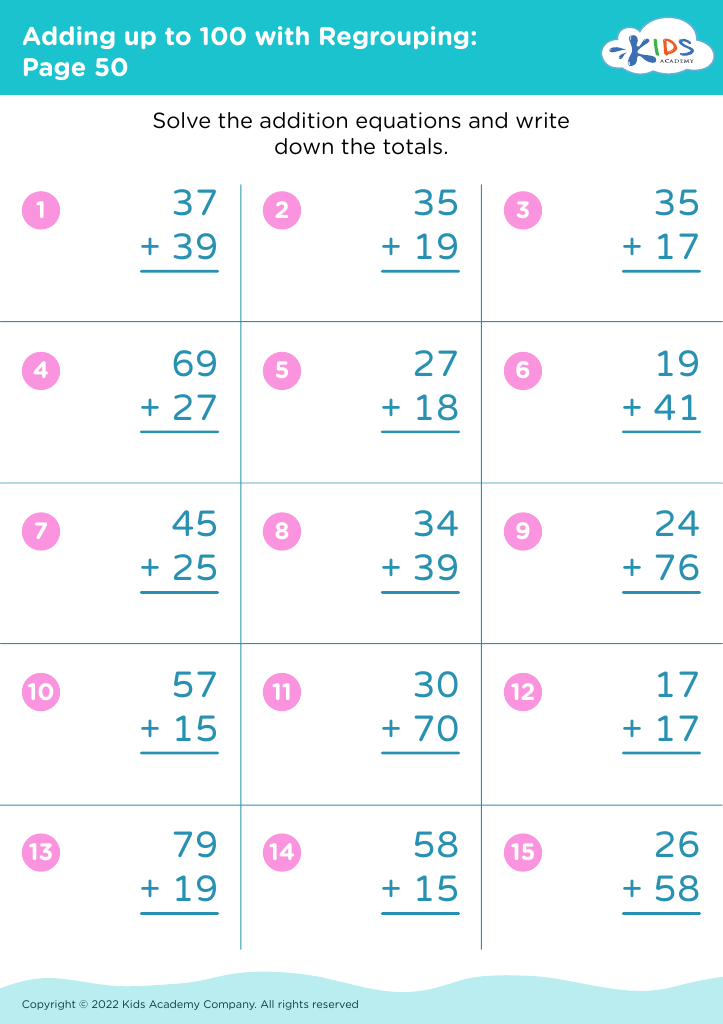
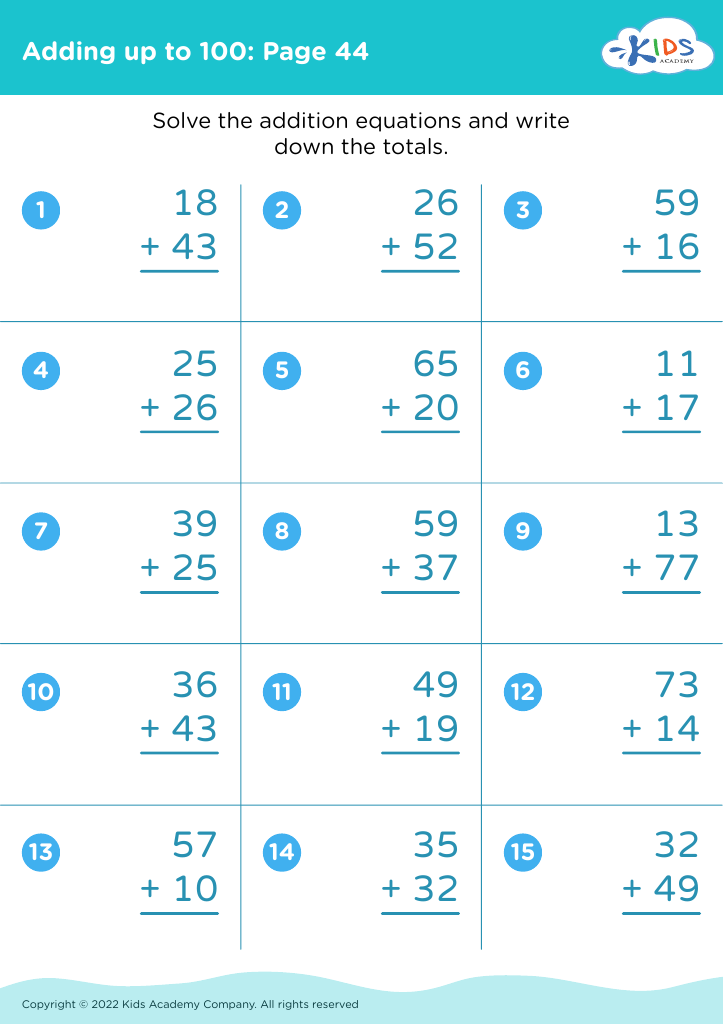
Welcome to our "Color Identification Adding Up to 100 Worksheets" page, specially designed for children aged 4 to 8! These engaging worksheets combine the excitement of learning math with vibrant color identification activities, making math enjoyable and visually stimulating. Your child will practice addition skills up to 100 while identifying and naming colors, enhancing both their mathematical and observational abilities. Perfect for enhancing early learning, these worksheets encourage creativity and critical thinking in a fun, interactive way. Help your child build a solid math foundation and broaden their color recognition skills. Start your color-packed learning adventure with us today!




%20(1).jpg)


Color identification and understanding number concepts, such as adding up to 100, are foundational skills that significantly impact a child's development. For ages 4-8, learning colors enhances cognitive growth, as it helps children categorize their surroundings, recognize patterns, and improve memory. By identifying colors, children develop language skills and learn to communicate more effectively about the world around them.
Similarly, the concept of adding up to 100 lays the groundwork for essential mathematical skills. At this age, children are naturally curious about numbers, and teaching them to add effectively fosters logical thinking and problem-solving abilities. It supports their readiness for more complex mathematics in later years.
When parents and teachers focus on these areas, they engage children in hands-on, enjoyable learning activities, such as games and craft projects that incorporate colors and numbers. This not only makes learning fun but also reinforces concepts through practical application.
Moreover, developing these skills early helps build confidence and a positive attitude towards learning. By prioritizing color identification and basic math principles, parents and teachers help set a foundation for academic success and critical thinking skills in children's future education. In essence, fostering these skills paves the way for lifelong learning.








