Color recognition Adding up to 100 Worksheets for Ages 4-8
4 filtered results
-
From - To
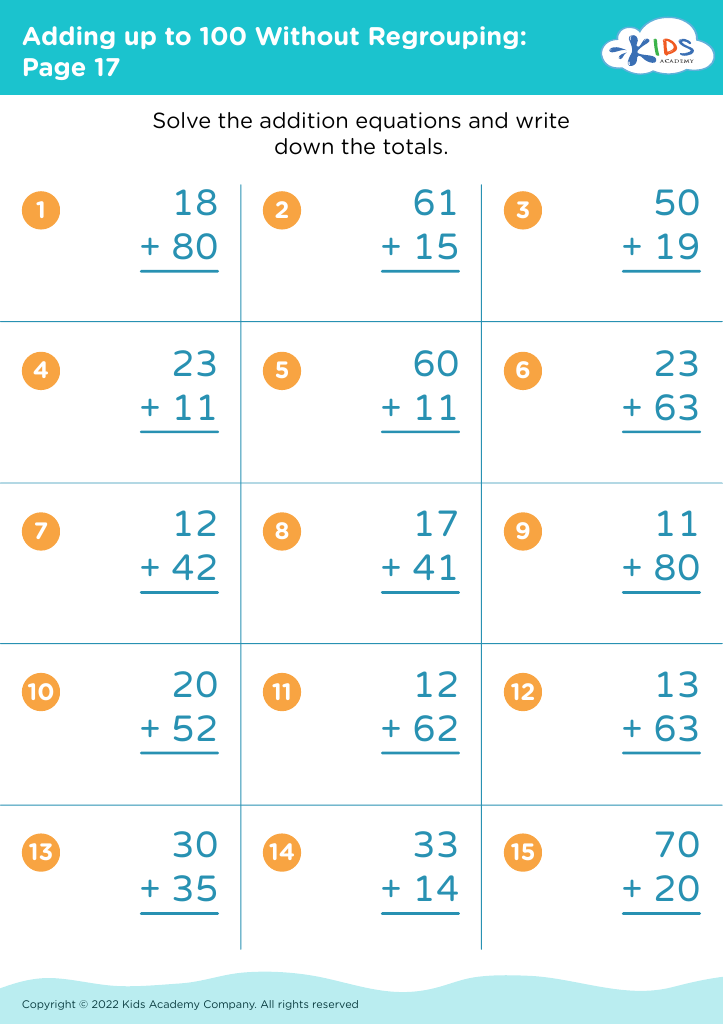
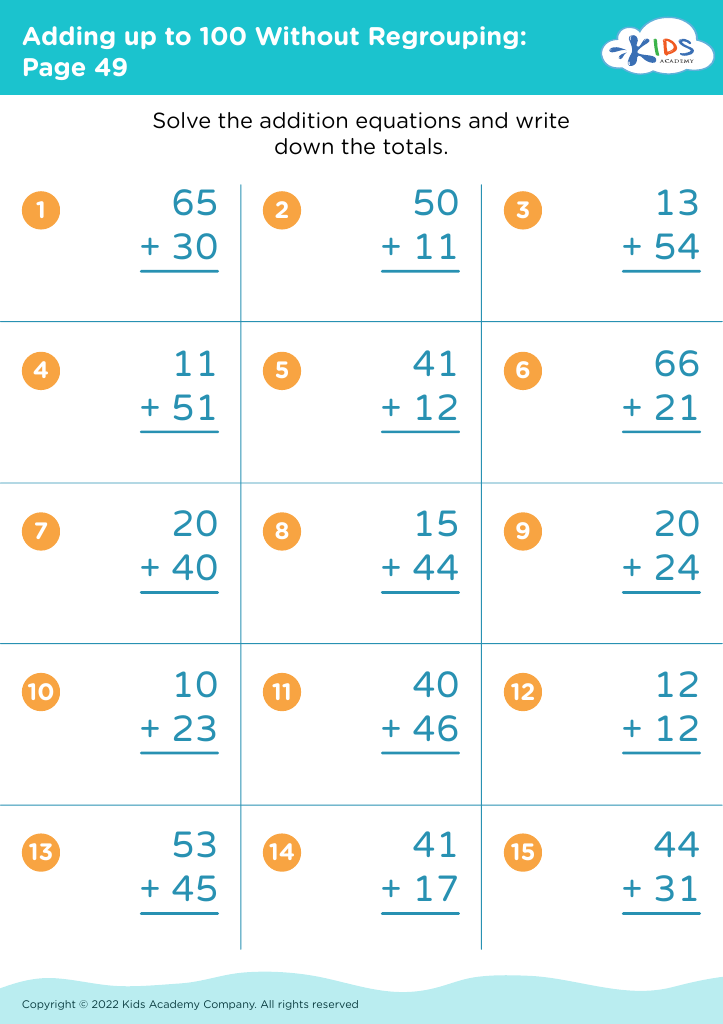
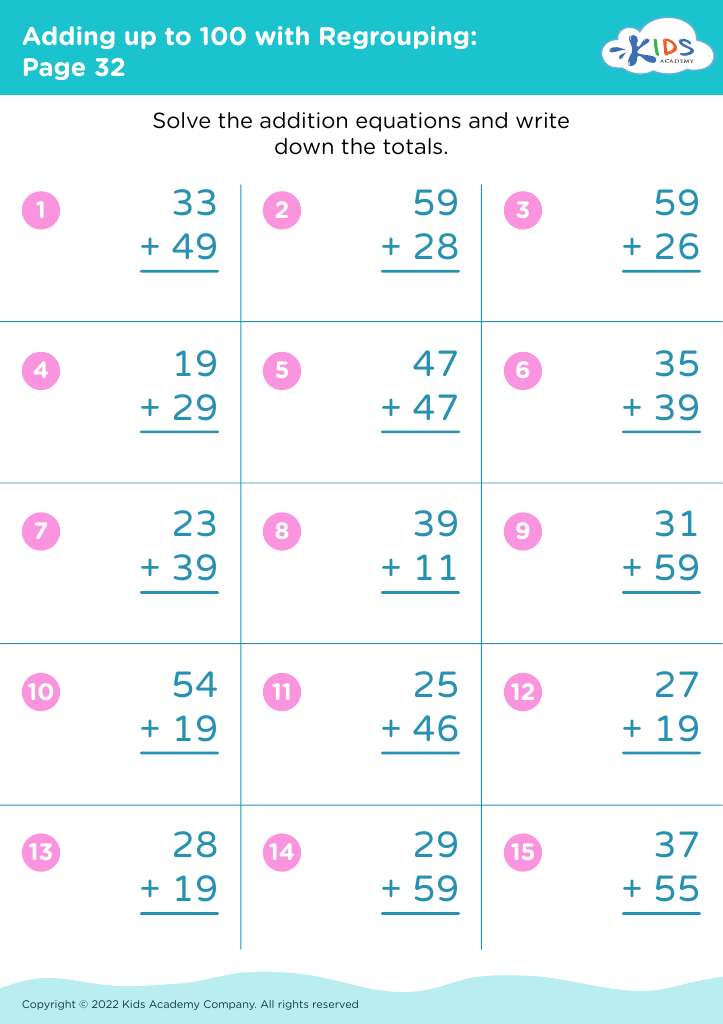
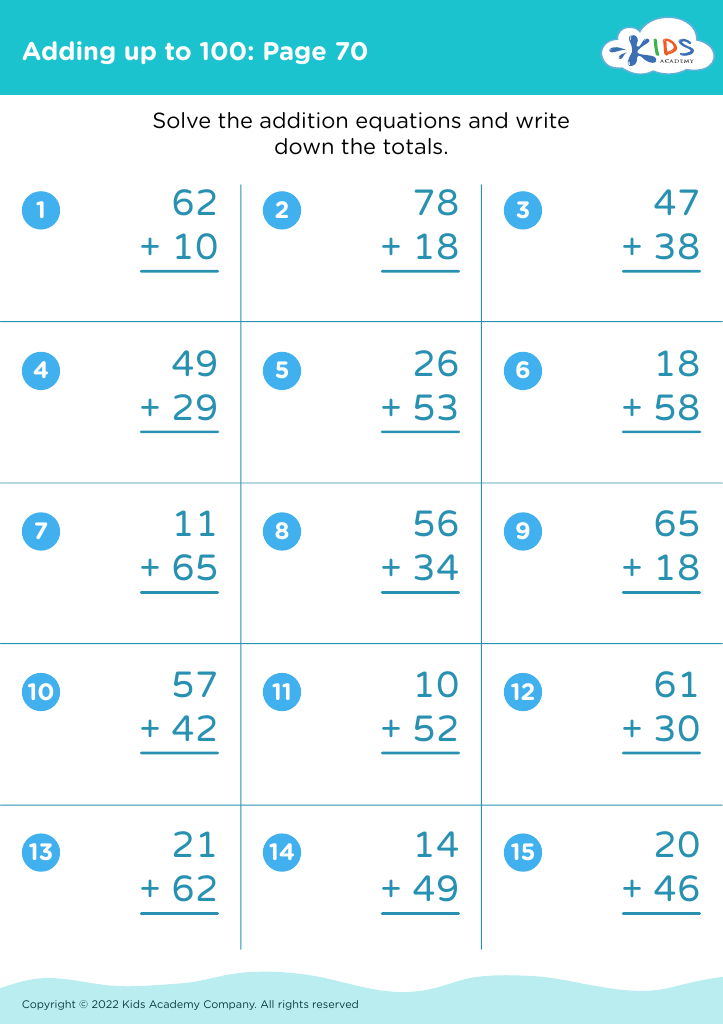
Discover our engaging "Color Recognition Adding Up to 100 Worksheets" for children aged 4-8! These carefully designed worksheets blend vibrant colors with essential math skills, helping young learners enhance their color recognition while mastering addition. Each worksheet features fun and interactive exercises that encourage creativity and make learning both enjoyable and effective. As children progress, they’ll gain confidence in their math abilities and develop a strong foundation in number recognition and counting. Perfect for home or classroom use, our worksheets are an invaluable resource for early education, promoting a playful yet structured learning experience. Start your educational journey today!





%20(1).jpg)

Color recognition and number skills, such as adding up to 100, are fundamental components of early childhood education that significantly benefit young learners aged 4-8. Understanding colors aids children in developing their observational skills, enhancing creativity, and fostering expressive abilities through art and play. It helps them categorize objects within their environment, promoting cognitive development.
Similarly, fundamental math skills, including counting and simple addition, lay the groundwork for more advanced mathematical concepts. Adding up to 100 not only boosts a child’s confidence in their reasoning abilities but also strengthens critical thinking skills, which are essential for everyday problem-solving.
Parents and teachers should care about these areas of development because they are interconnected in promoting a child’s holistic growth. Mastery of color recognition and number skills enables children to engage more effectively in activities across various subjects, including art, science, and mathematics, creating a solid foundation for lifelong learning. Addressing these skills in educational activities also fosters an enthusiasm for learning, making children eager to explore and discover. Ultimately, focusing on these basic competencies cultivates well-rounded individuals, better preparing them for future academic challenges and instilling a love for learning.








