Comparing Fractions Adding up to 100 Worksheets for Ages 4-8 - Page 2
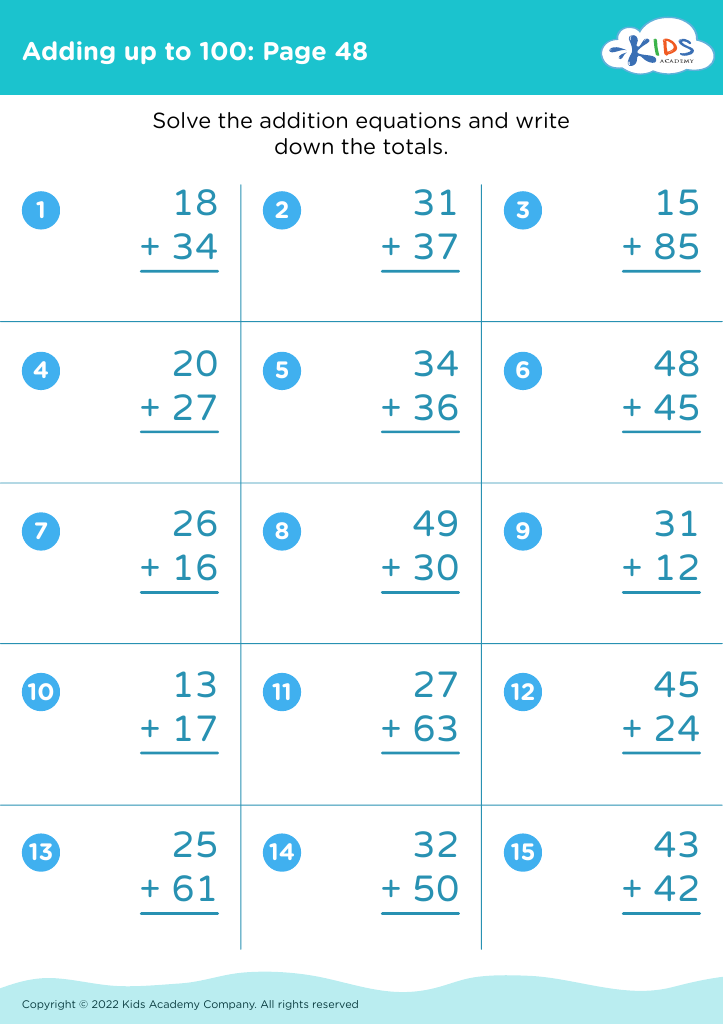
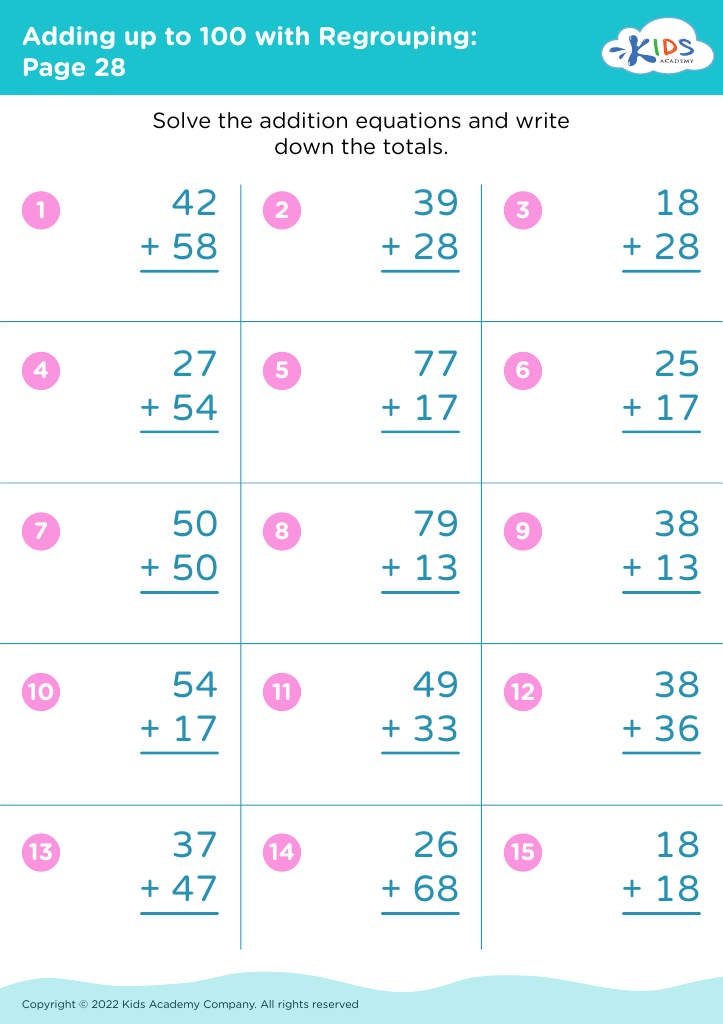
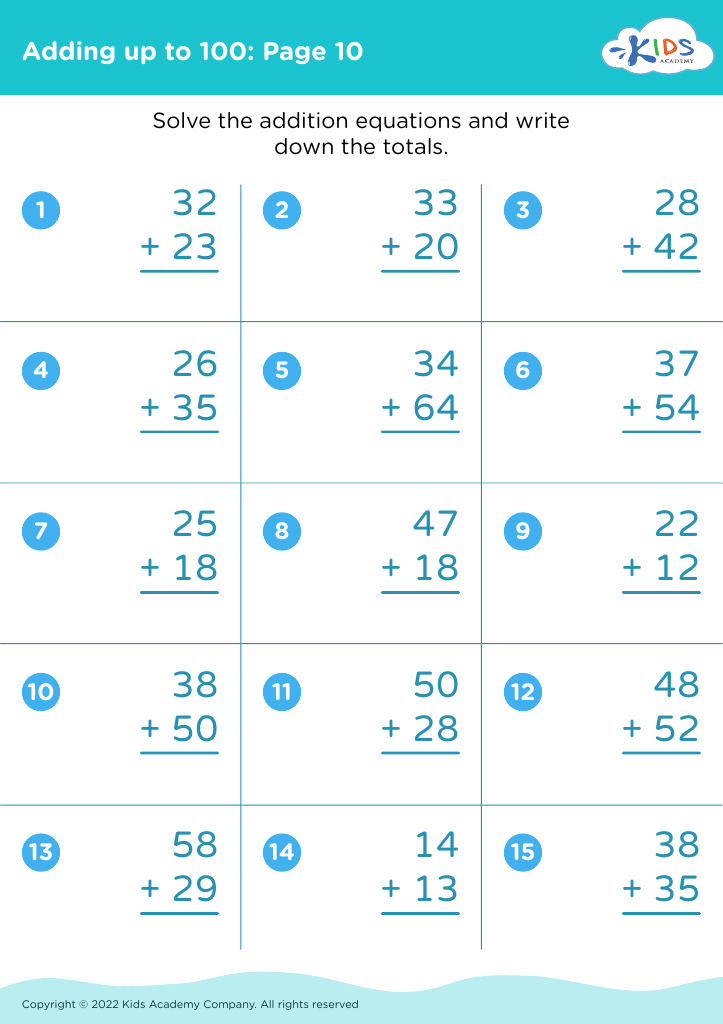
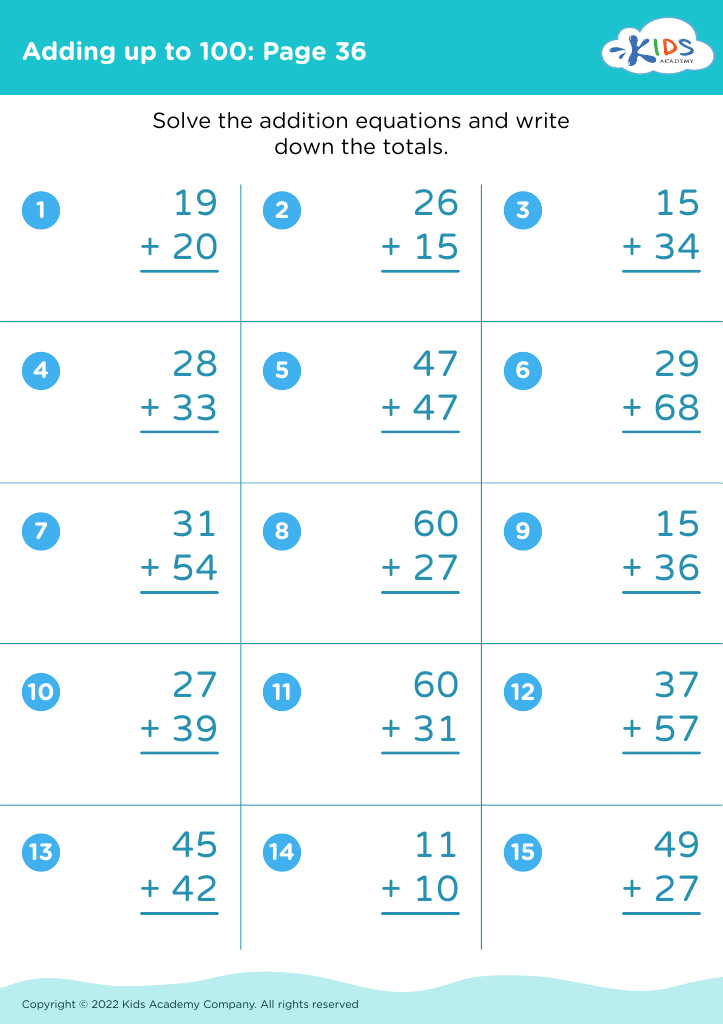
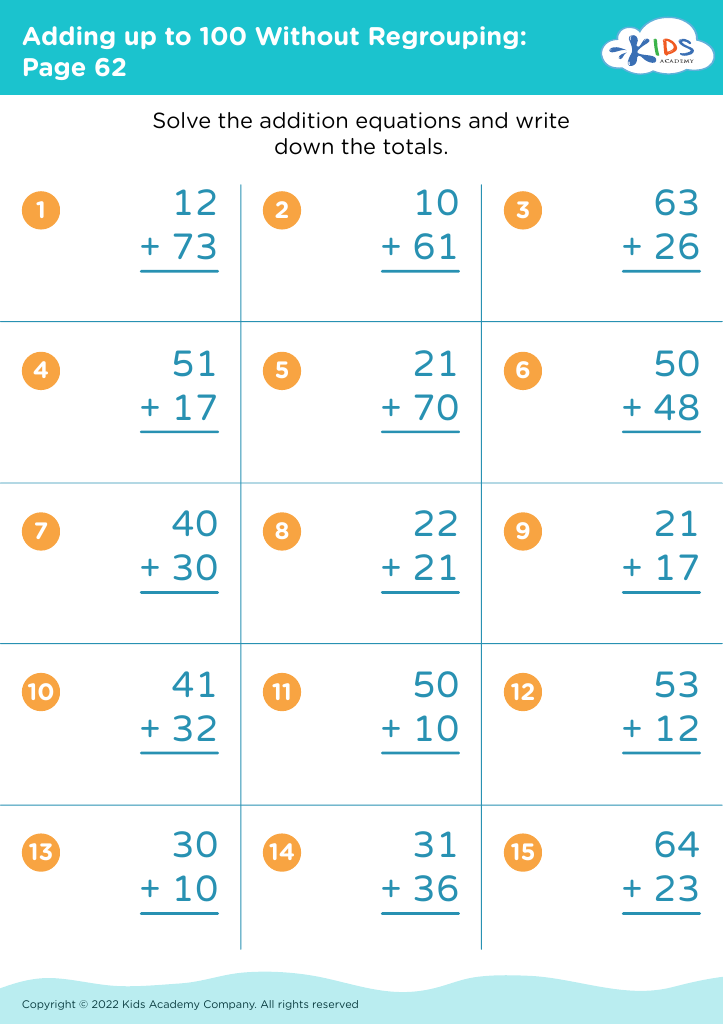
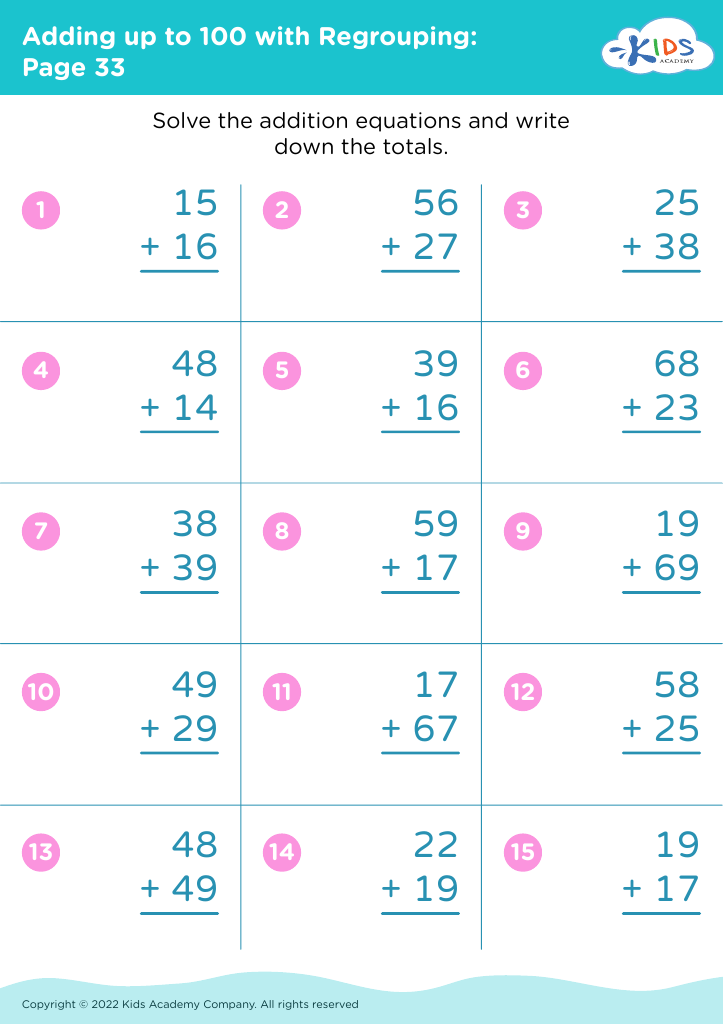








Understanding fractions is fundamental to a child's early mathematical development, particularly for those aged 4-8, and is especially relevant when comparing fractions that add up to 100. This knowledge lays a solid foundation for future mathematical concepts. By engaging with fractions, children learn about proportions and relationships, which is crucial for their cognitive development.
For parents and teachers, fostering this skill supports a child's ability to think critically and develop problem-solving techniques. When children learn to compare fractions that sum to 100, they gain insights into how parts relate to a whole, enhancing their understanding of percentages and basic arithmetic.
Moreover, this concept is activity-rich: educators can use real-life examples (like dividing a pizza or pie between friends) to make learning engaging. This not only helps children relate math to daily life but also keeps them motivated.
Additionally, mastering comparisons and additions of fractions boosts self-confidence in math, alleviating anxiety around the subject early on. This foundational knowledge prepares children for more complex math challenges in the future and instills a positive attitude toward learning that can last a lifetime. Thus, it’s vital for parents and teachers to prioritize activities that involve comparing fractions.








