Developing math skills Adding up to 100 Worksheets for Ages 4-8
3 filtered results
-
From - To
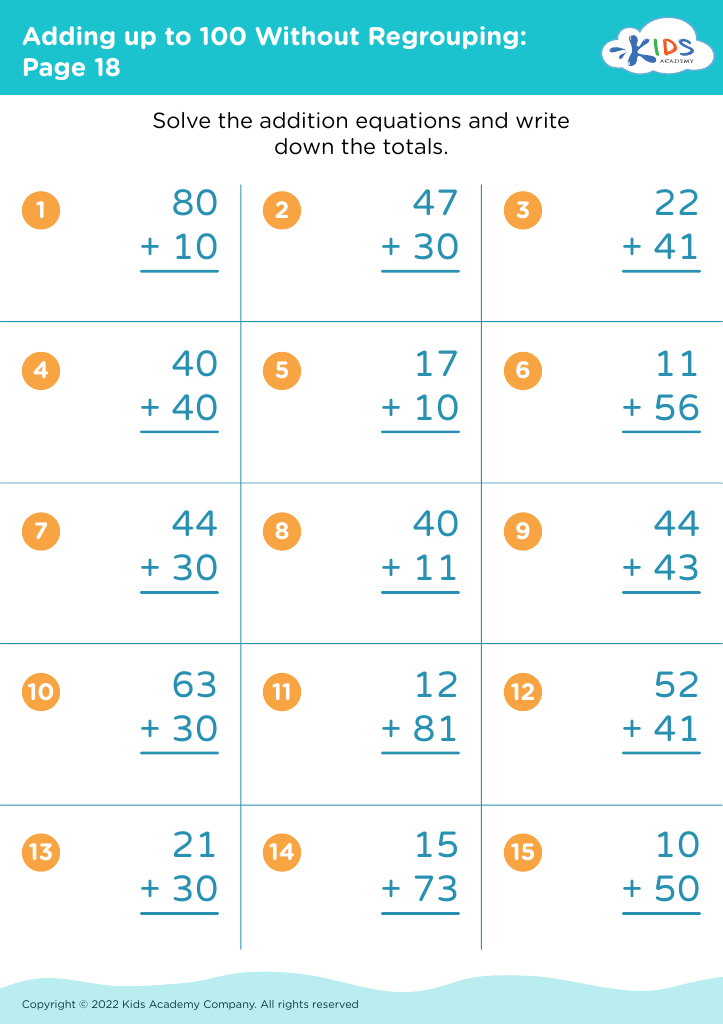
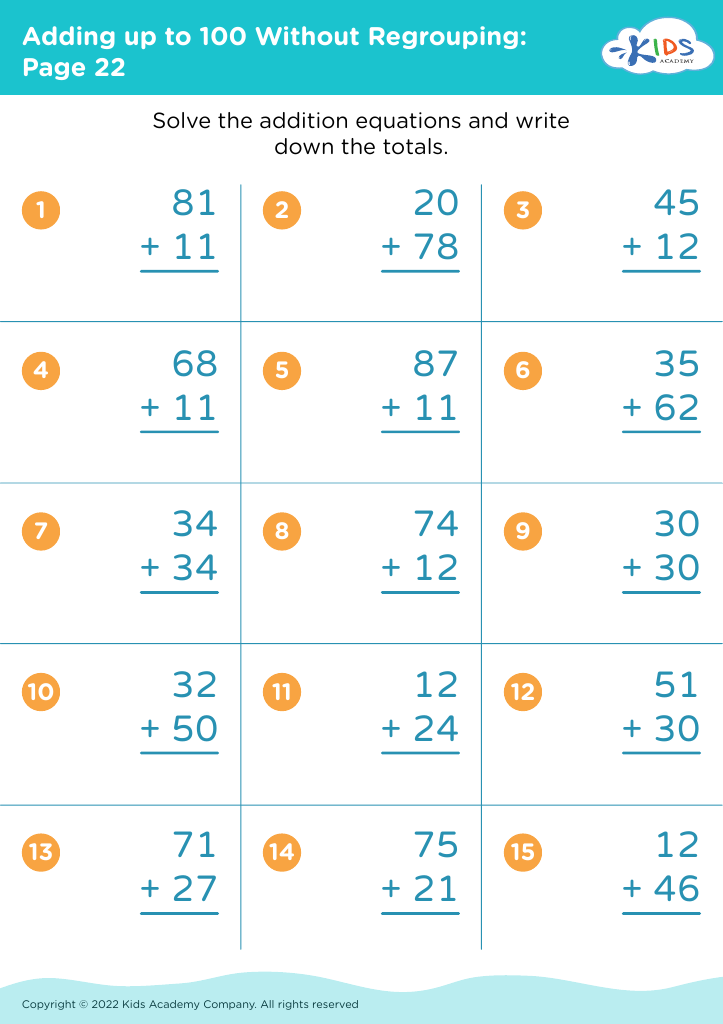
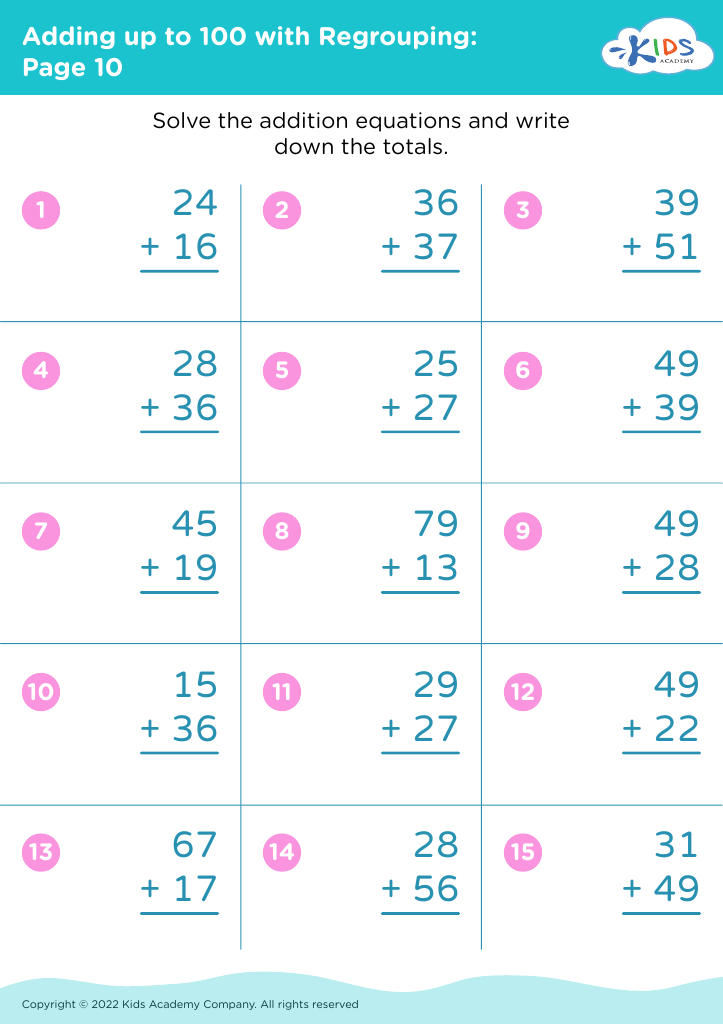
Unlock your child's math potential with our "Developing Math Skills: Adding Up to 100 Worksheets" designed for ages 4-8! Our engaging worksheets offer a fun and interactive way for young learners to master addition. Through colorful and age-appropriate designs, children can practice counting, solving math problems, and enhancing their numerical literacy. Each activity is tailored to build confidence and reinforce foundational math skills, setting the stage for future academic success. Perfect for parents and educators alike, these worksheets will make learning math enjoyable and effective. Start your child's math journey today as they add up to 100 with ease and confidence!


%20(1).jpg)




Developing math skills, particularly the ability to add up to 100, is crucial for children aged 4-8 as it lays the foundation for their future academic success and real-life problem-solving abilities. Mastering addition fosters confidence and strengthens children’s numerical fluency, enabling them to tackle more complex math concepts later on.
At this early age, children are highly receptive to learning, and engaging them in fun, interactive math activities can stimulate their interest and enjoyment in the subject. Parents and teachers play a vital role in creating an enriching environment that encourages exploration and understanding of numbers.
Additionally, the ability to add up to 100 enhances critical thinking skills, allowing children to grasp important concepts such as patterns, sequences, and basic spatial awareness. These skills are not only integral within mathematics but also in various subjects like science and even creative arts.
Moreover, equipping children with strong math skills increases their competitiveness in an increasingly technology-driven world, where quantitative literacy is more essential than ever. Supporting young learners in reaching this milestone can build a love for math that lasts a lifetime, ultimately influencing their attitude and success in education and beyond.








