Enhance number recognition Adding up to 100 Worksheets for Ages 4-8
8 filtered results
-
From - To
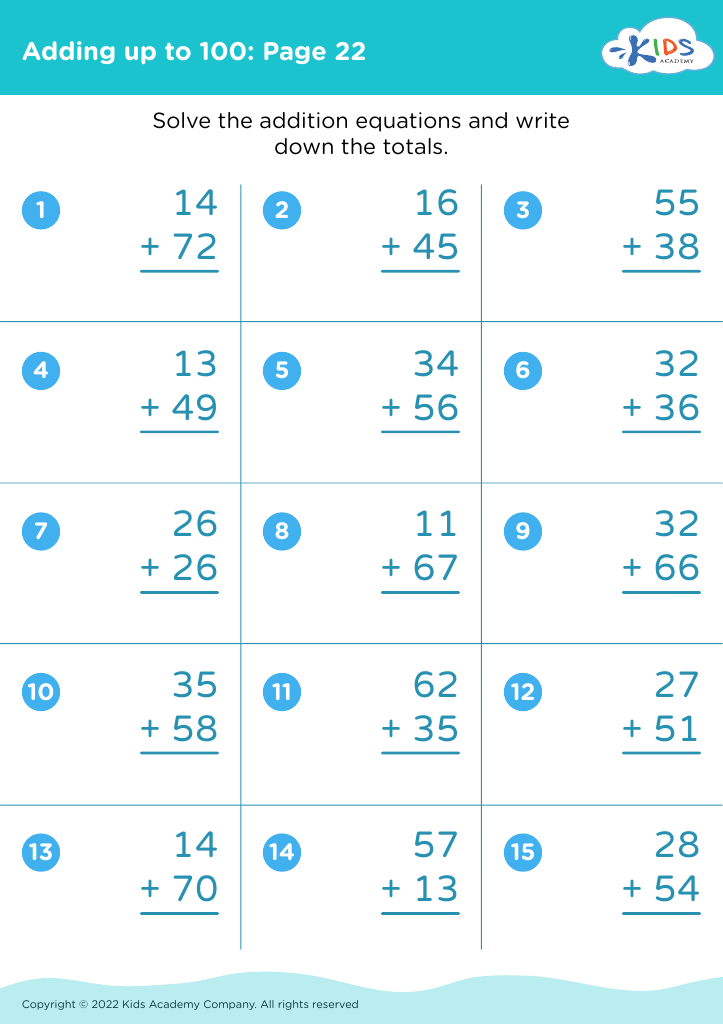
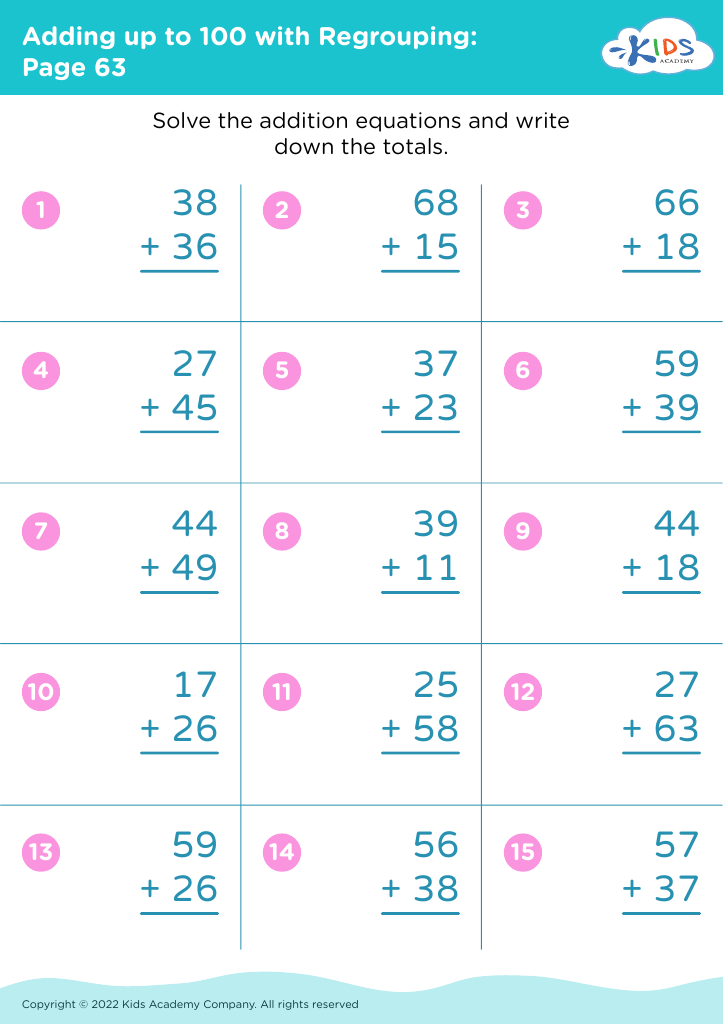
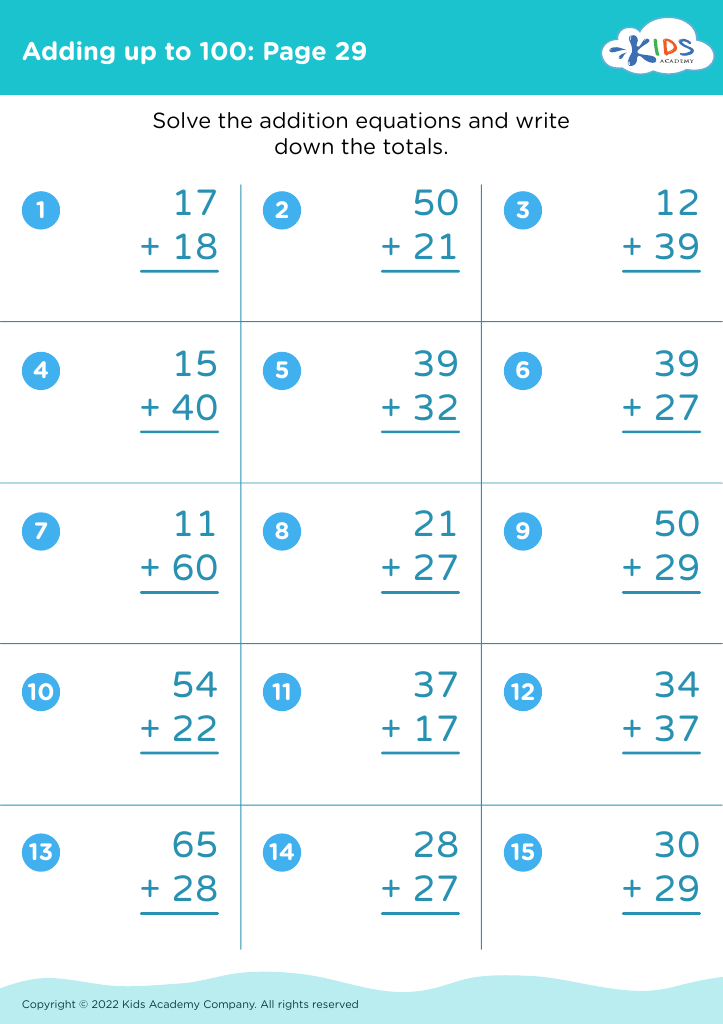
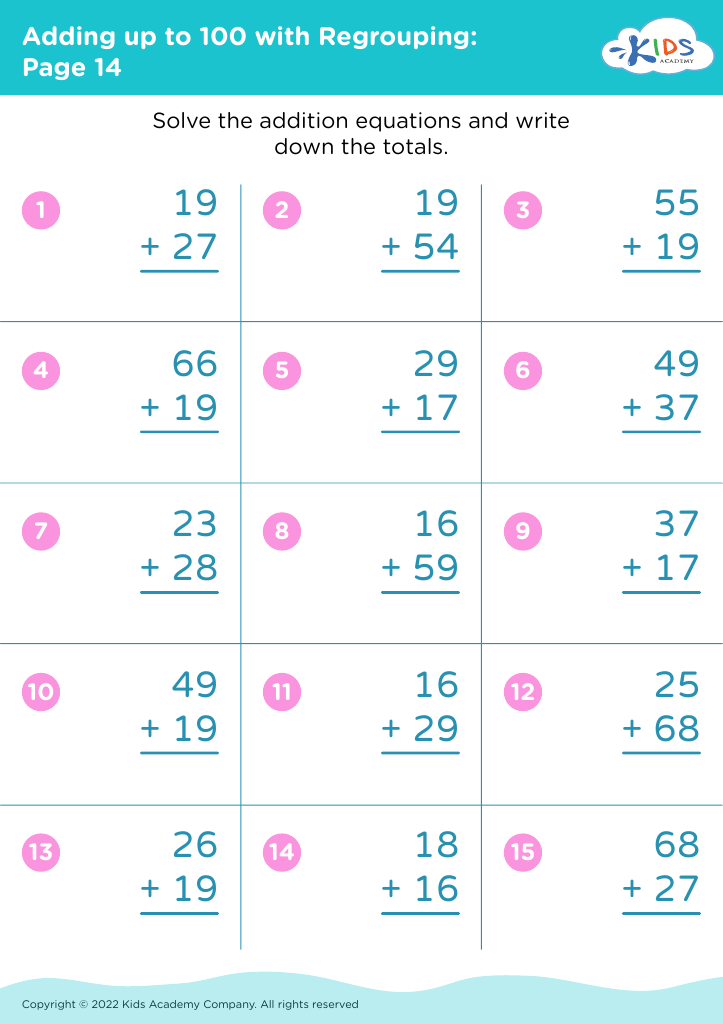
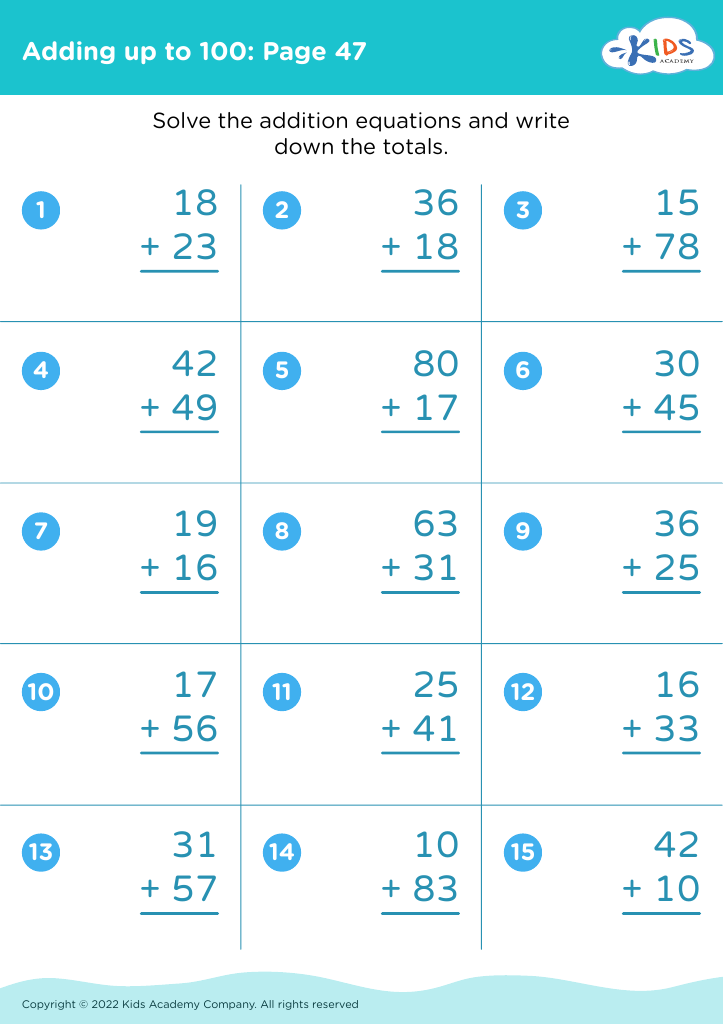
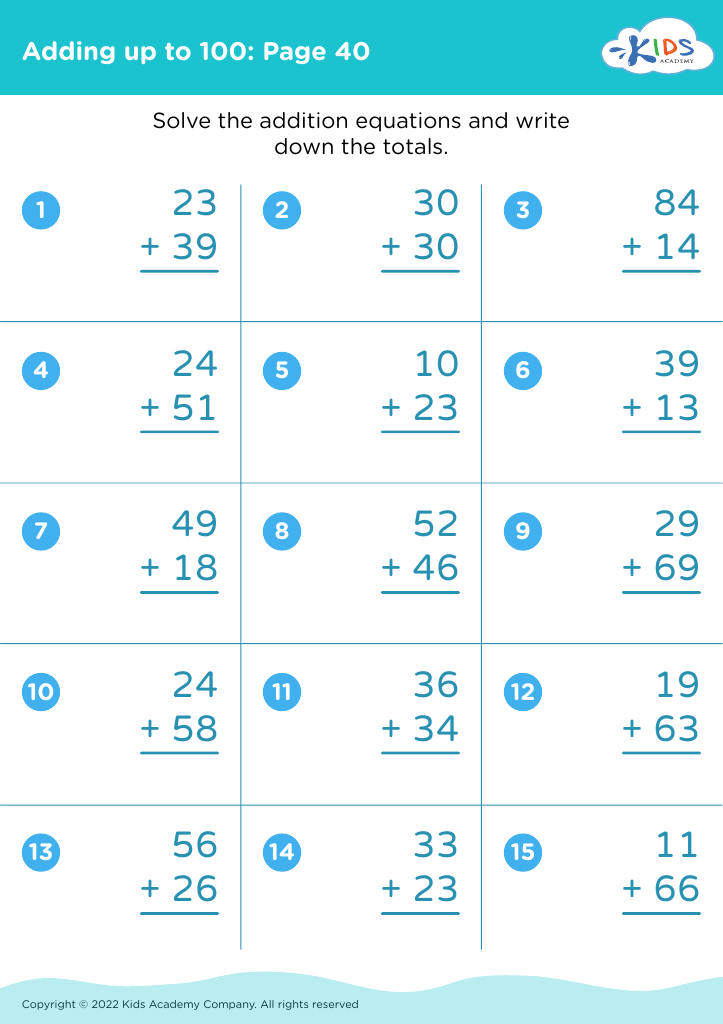
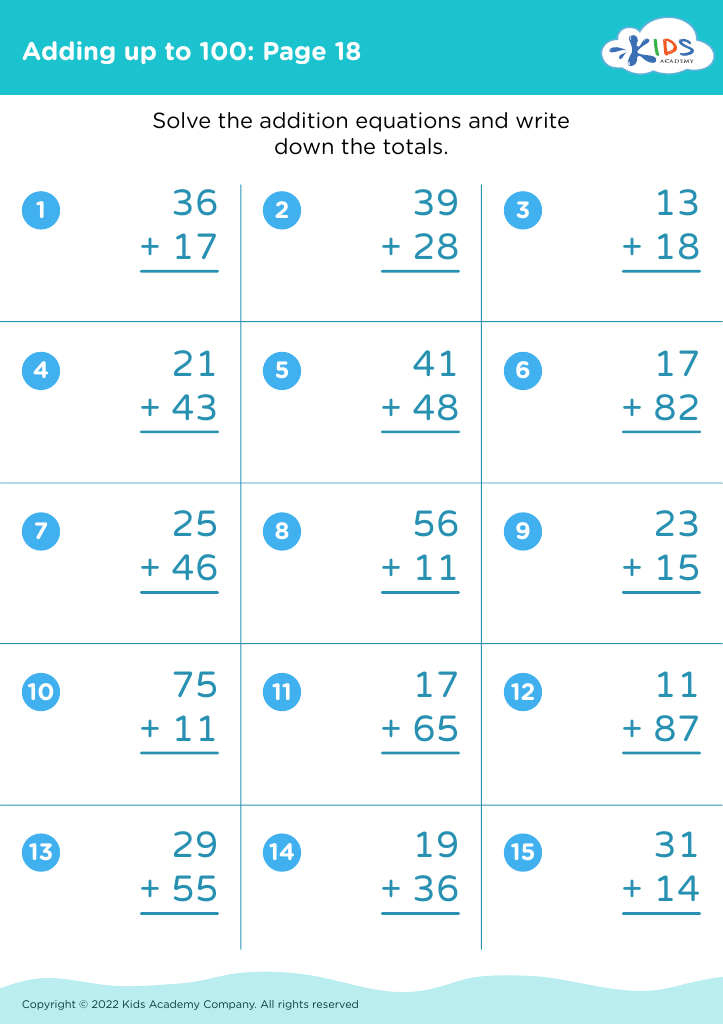
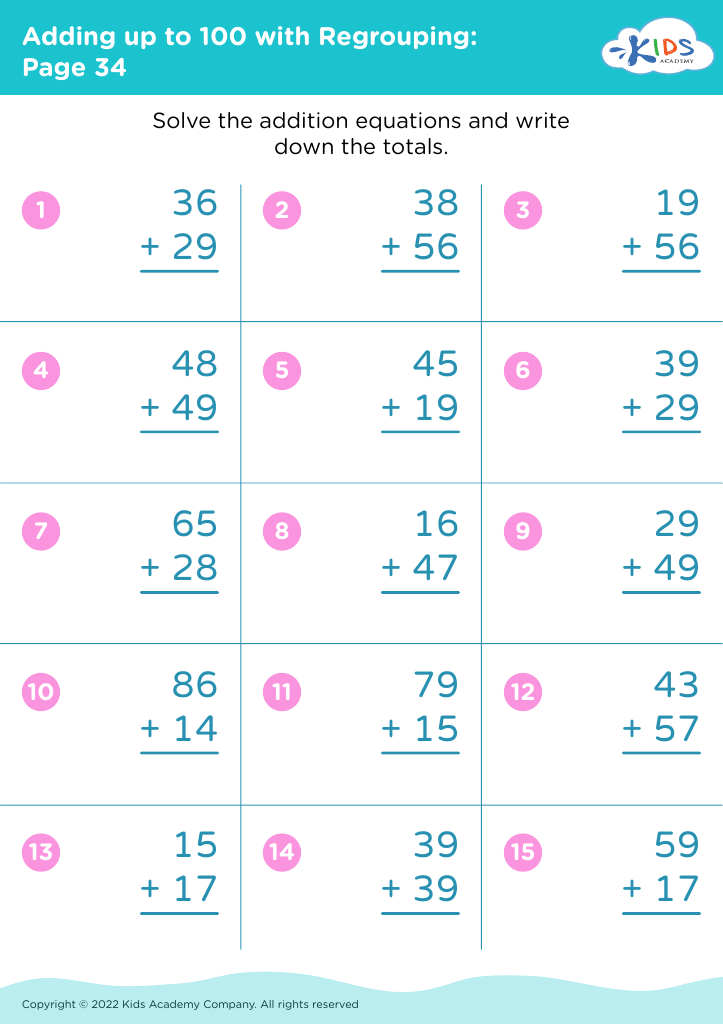
Enhance number recognition with our engaging "Adding Up to 100 Worksheets" designed for children ages 4-8. These interactive worksheets are crafted to help young learners develop foundational math skills while exploring the concept of addition up to 100. With a variety of fun exercises, including visual aids and puzzles, children will sharpen their number recognition and improve their problem-solving abilities. Our resources support early development and make learning math enjoyable. Perfect for at-home learning or classroom activities, these worksheets create an engaging environment where young mathematicians can thrive. Download now to embark on a rewarding educational adventure!





%20(1).jpg)

Enhancing number recognition and addition skills up to 100 for children aged 4-8 is crucial for several reasons. First, foundational math skills are essential for academic success. Early mastery of numbers and basic addition helps develop critical thinking and problem-solving abilities. This age group is particularly receptive to learning through engaging and interactive methods, making it an ideal time to establish a strong numerical base.
Secondly, strong number recognition builds confidence in young learners. When children easily recognize numbers and understand addition, they feel more capable in math activities, reducing math anxiety as they progress through their education. This foundational confidence can influence their attitudes toward learning and academic subjects as they grow.
Furthermore, improving numerical skills aligns with everyday life. Parents and teachers can help children understand practical applications of math, such as counting items, understanding time, managing money, or solving simple problems in real-world scenarios. These skills are essential for their future independence and financial literacy.
In summary, prioritizing number recognition and addition skills fosters a strong mathematical foundation, builds confidence, and prepares children for real-life situations, making it a vital focus for both parents and educators aiming for holistic development.








