Enhancing calculation skills Adding up to 100 Worksheets for Ages 4-8
4 filtered results
-
From - To
Boost your child's arithmetic proficiency with our "Enhancing Calculation Skills: Adding Up to 100" worksheets, specially designed for ages 4-8. These entertaining and educational worksheets offer a variety of engaging activities that help young learners master addition within 100, laying a solid foundation for future math success. Each worksheet enhances their ability to solve problems, improve number sense, and develop critical thinking skills. Ideal for both classroom use and at-home practice, these worksheets ensure learning is always fun and effective. Guide your child towards math confidence with our tailored educational resources!
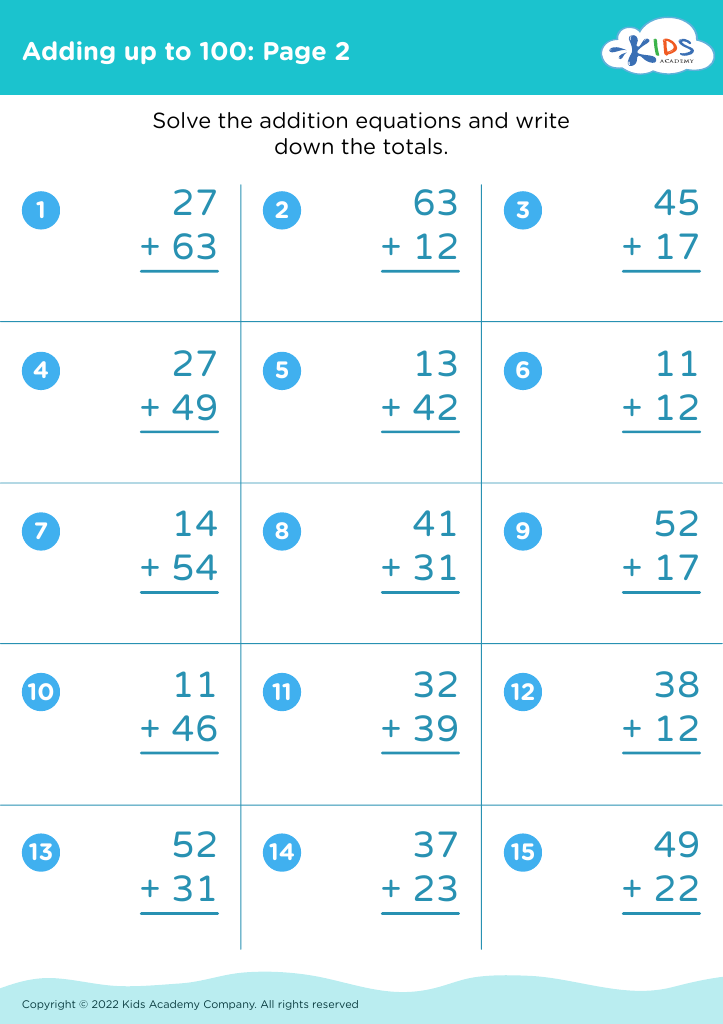
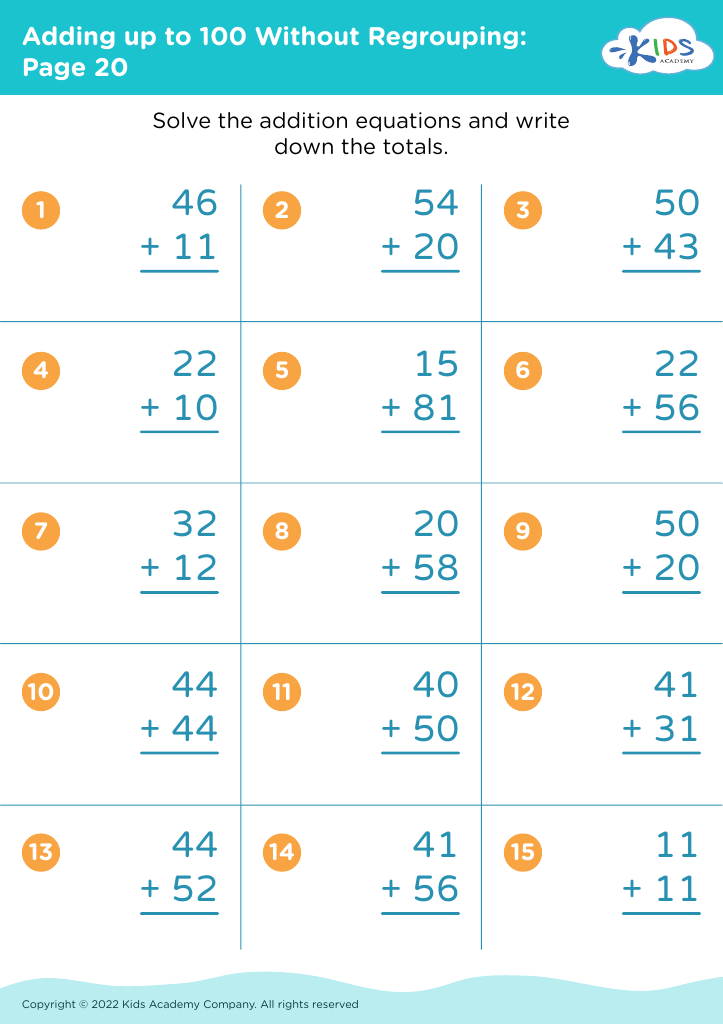
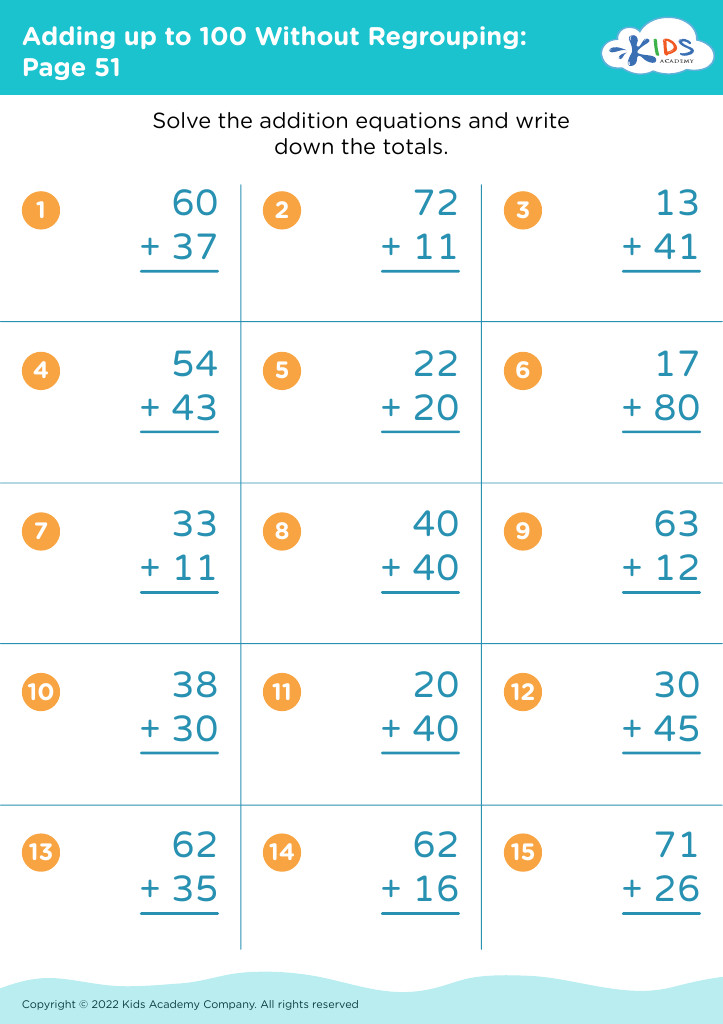
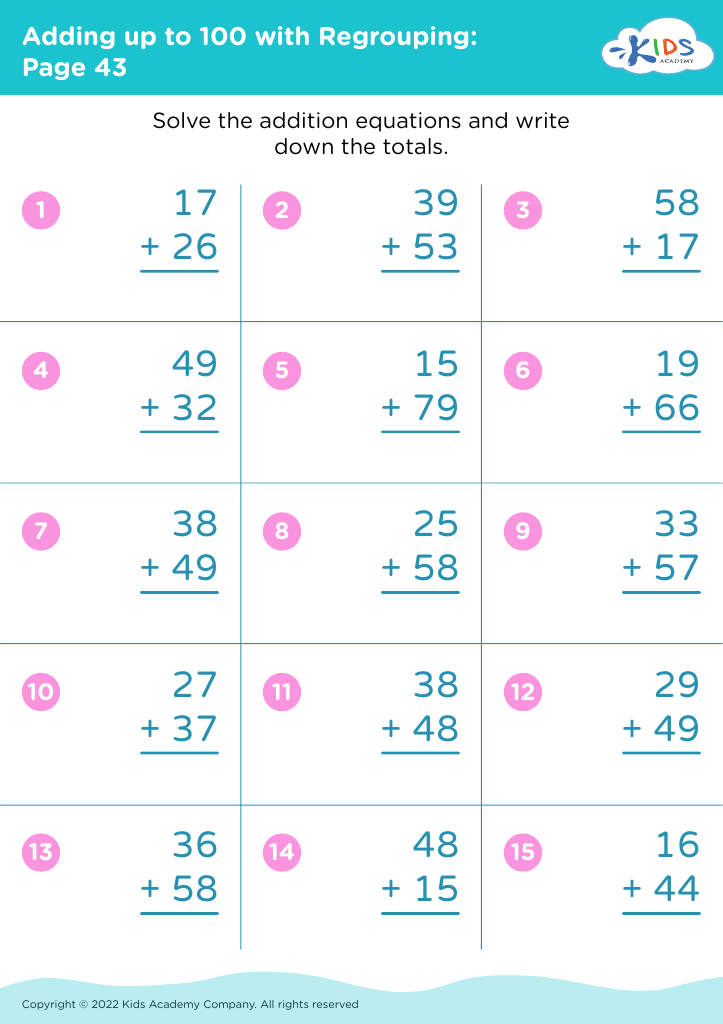






%20(1).jpg)
Enhancing calculation skills, specifically adding up to 100, for children aged 4-8 is a critical foundational step in their mathematical development. At this young age, children are developing crucial cognitive abilities, including working memory, attention, and problem-solving skills, which are all directly honed by practicing basic arithmetic.
Firstly, strong arithmetic skills foster a love for math by making children more confident and proficient. This early confidence lays the foundation for more complex mathematical concepts they'll encounter later in their education, such as multiplication, division, and eventually algebra.
Secondly, math is not just an academic subject but a key skill used in everyday life. From counting change to measuring ingredients for a recipe, addition within 100 trains children to handle basic numerical tasks independently. This practicality encourages autonomy and critical thinking.
Moreover, engaging children in arithmetic helps develop their logical reasoning and pattern recognition skills. These abilities are transferable to other academic subjects and numerous life situations, fostering a well-rounded intellectual growth.
Parents and teachers must collaborate to make learning addition enjoyable and accessible, employing games, visual aids, and real-life examples. By investing in these foundational skills, we give children the tools they need for future academic success and everyday challenges, building their confidence and setting them up for life-long learning.








