Enhancing problem-solving skills Adding up to 100 Worksheets for Ages 4-8
3 filtered results
-
From - To
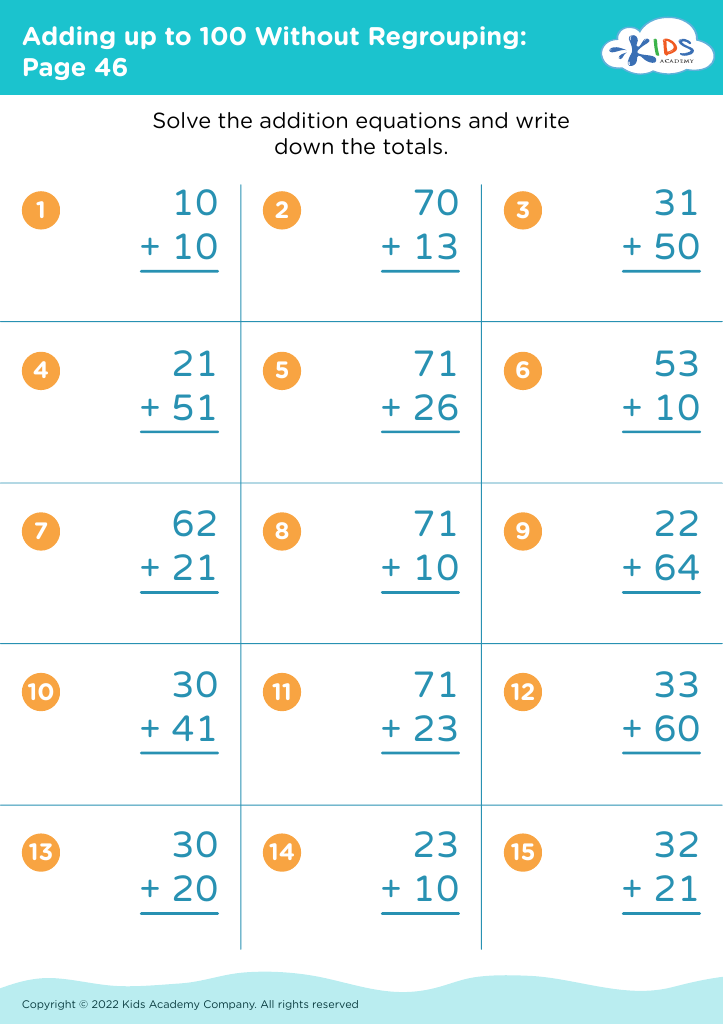
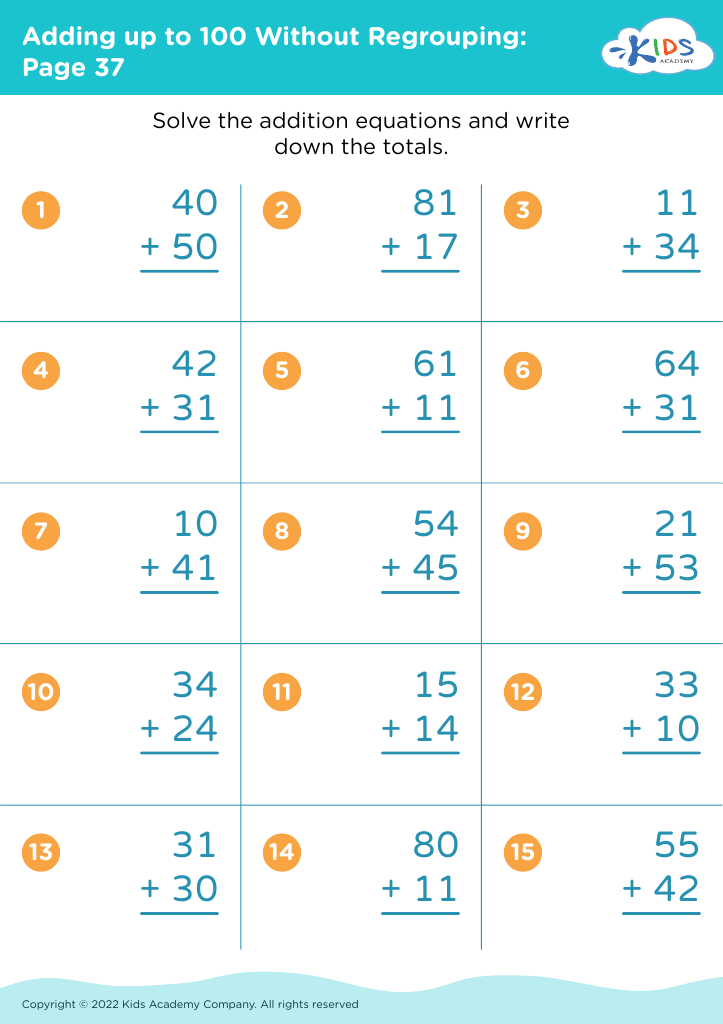
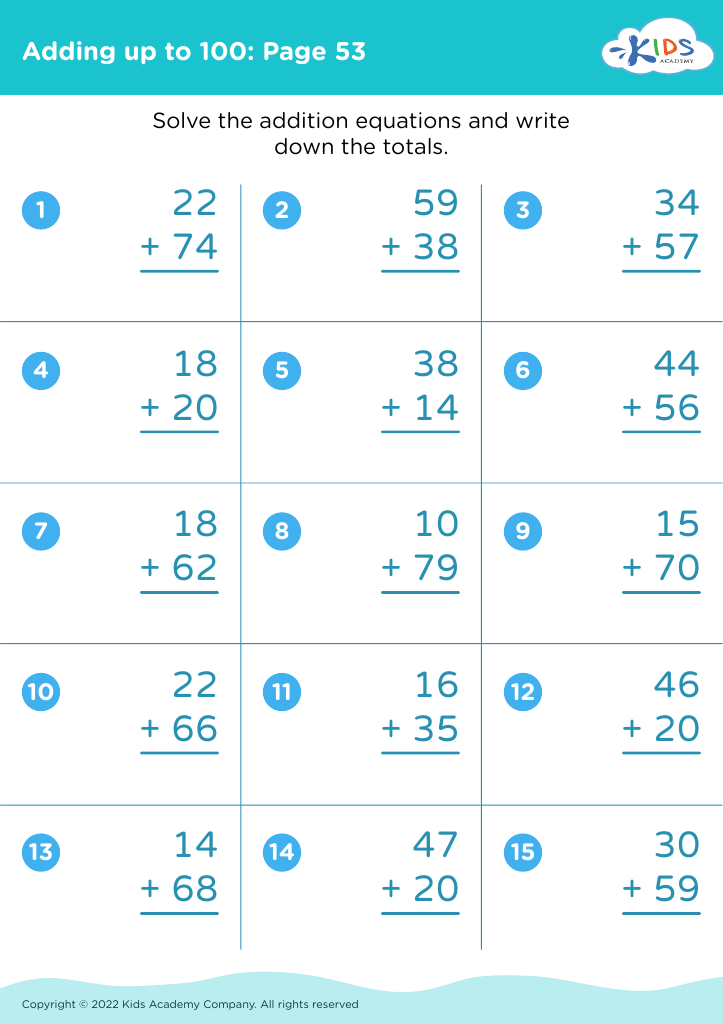
Boost your child's problem-solving skills with our engaging "Adding Up to 100 Worksheets" designed for ages 4-8! These interactive worksheets provide a fun way for young learners to master addition while developing critical thinking abilities. Each worksheet features colorful illustrations and challenging math problems that encourage kids to think creatively and strategically. With 100 worksheets at their fingertips, children will gain confidence as they explore various problem-solving techniques. These resources not only make math enjoyable but also lay the foundation for a lifelong love of learning. Start enhancing your child's skills today and watch them thrive in mathematics!




%20(1).jpg)


Enhancing problem-solving skills, particularly the concept of "adding up to 100," is vital for children ages 4-8 as it lays a strong mathematical foundation. At this age, children are developing critical thinking abilities and are more receptive to learning. Incorporating problem-solving activities centered around reaching the sum of 100 helps them practice essential math skills, such as addition, subtraction, and number recognition.
When parents and teachers prioritize these skills, they foster independence and resilience. Children learn to approach challenges methodically, testing different strategies until they arrive at the solution, which boosts their confidence. Engaging in this type of learning cultivates a mindset that values critical thinking and perseverance—skills that extend beyond the classroom and into real-life situations.
Moreover, early exposure to problem-solving prepares students for future academic success. By grasping the concept of manipulating numbers in a fun and practical way, children begin to understand more complex mathematical concepts in later grades. Therefore, initiatives to improve problem-solving skills through playful, enriching activities help develop not just numeracy but also a lifelong love for learning. Emphasizing this critical skill early on ultimately contributes to a child’s overall cognitive development and future achievements.








