Fraction comparison Adding up to 100 Worksheets for Ages 4-8
6 filtered results
-
From - To
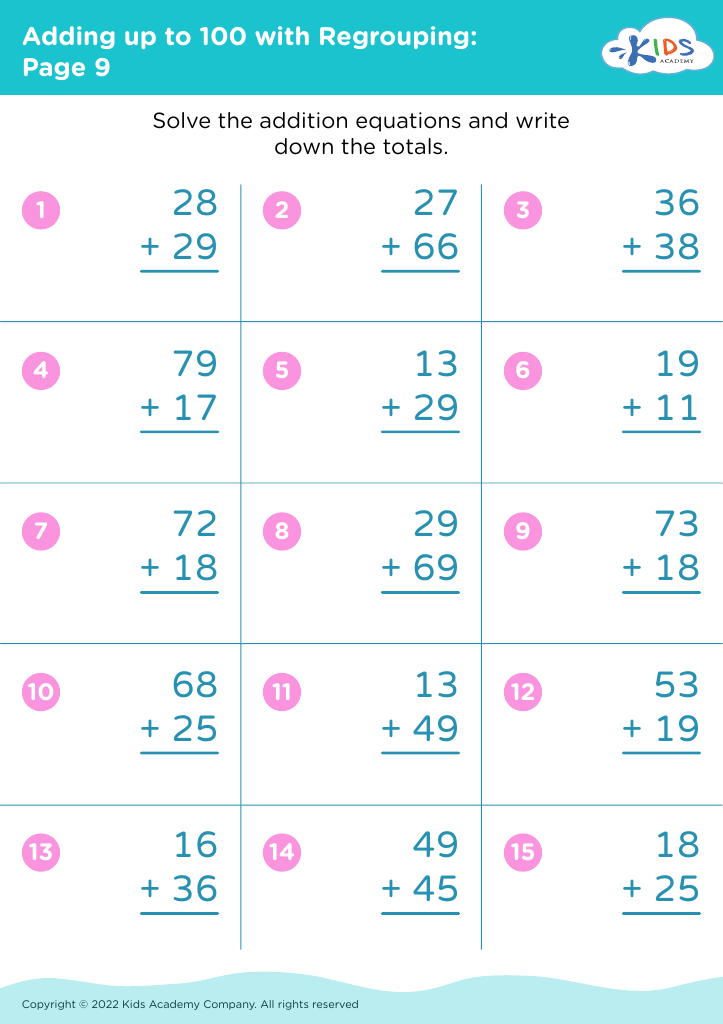
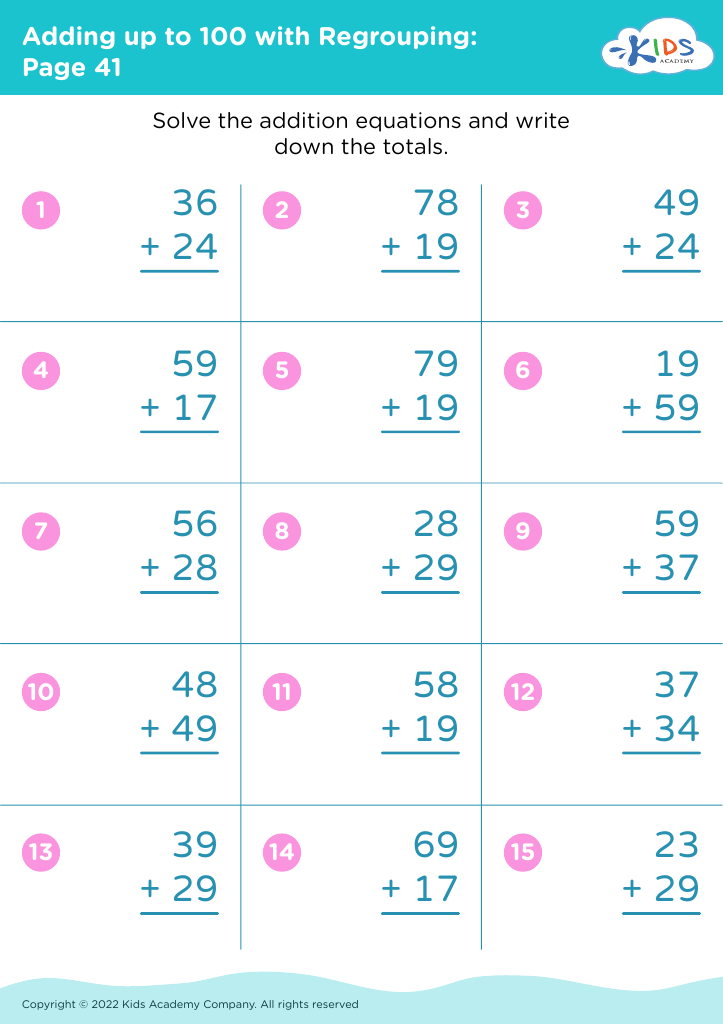
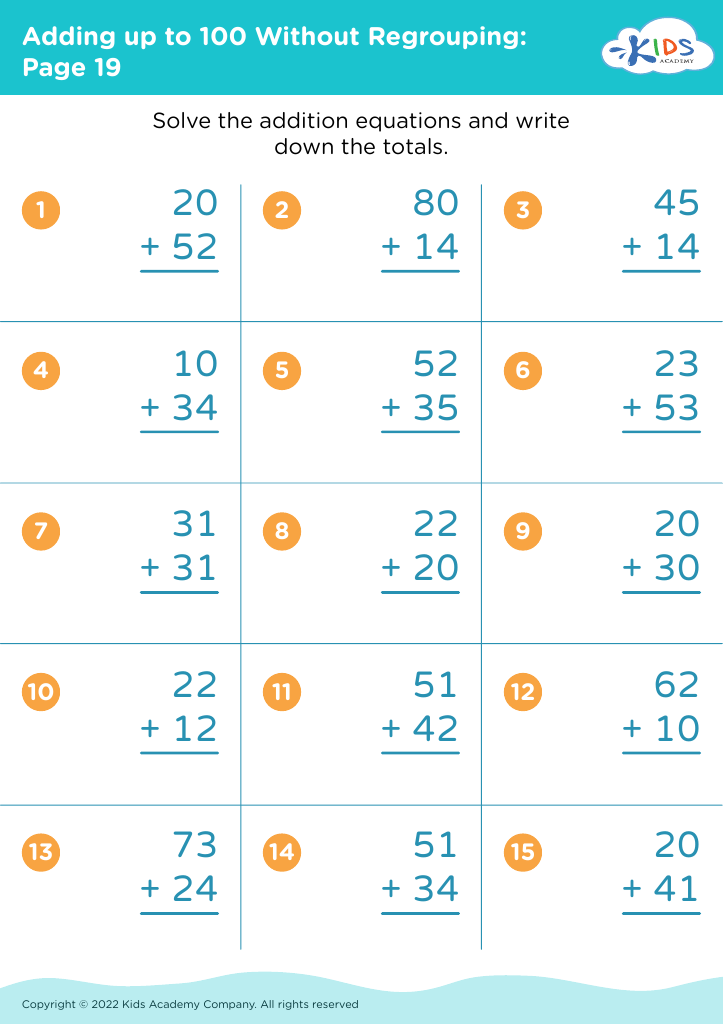
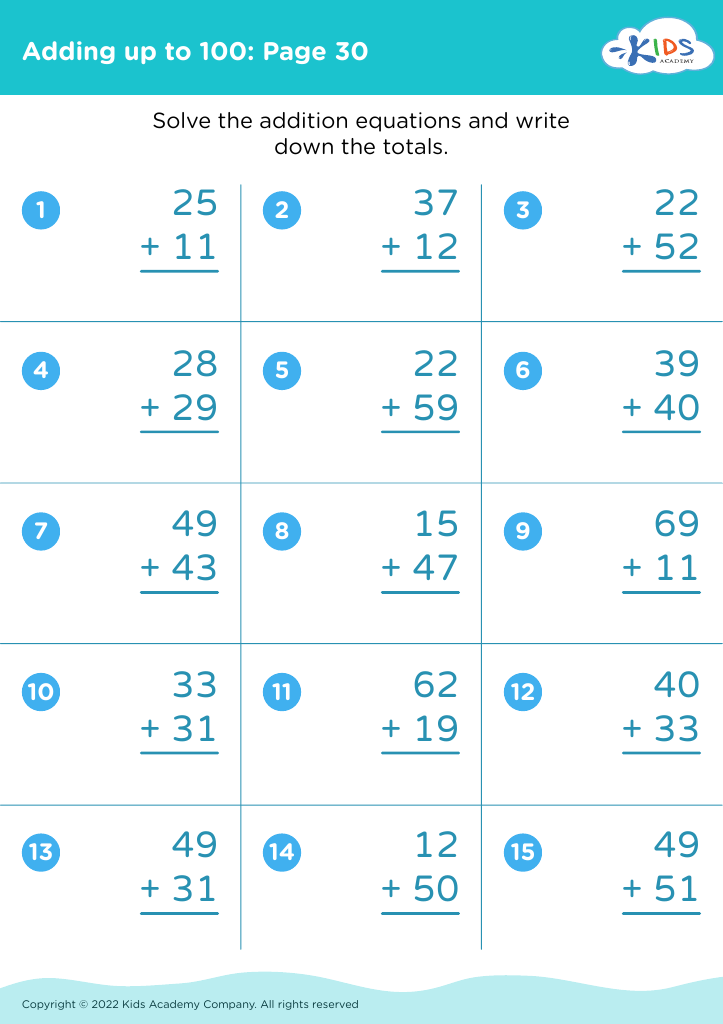
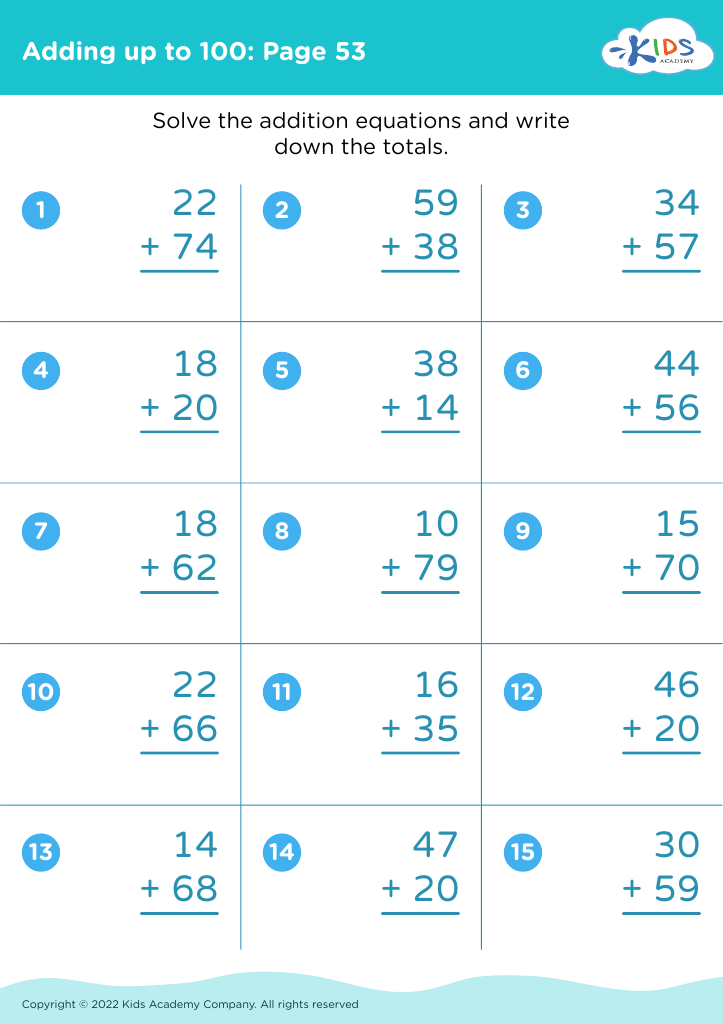
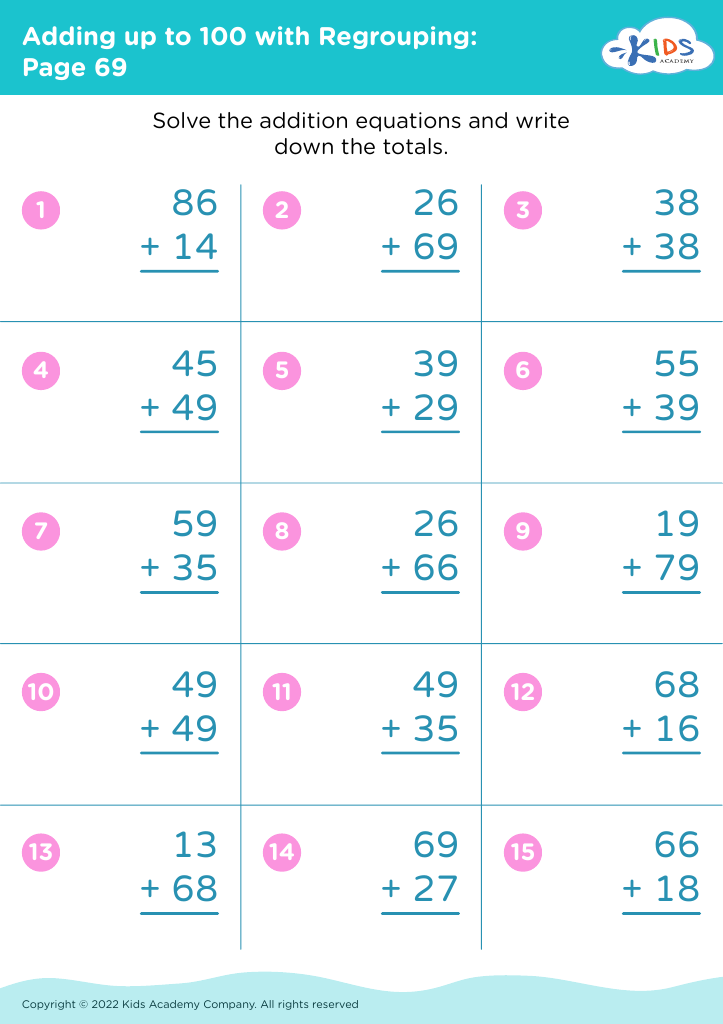
Enhance your child's math skills with our "Fraction Comparison Adding up to 100 Worksheets for Ages 4-8." These engaging activities are designed to help young learners grasp the fundamentals of fractions and improve their number skills. Our worksheets offer a variety of exercises that teach fraction comparison and addition, fostering a strong foundation for future math success. With colorful visuals and age-appropriate challenges, your child will have fun while mastering key concepts. Perfect for both classroom and home use, these worksheets support crucial math development in an easy and enjoyable way. Start building essential skills today!




%20(1).jpg)


Parents and teachers should care about teaching fraction comparison and adding up to 100 to children aged 4-8 because these skills lay the foundation for essential math proficiency. During these formative years, children are highly receptive to new concepts, and early exposure helps them develop a strong numerical foundation.
First, learning fraction comparison at a young age enhances a child's ability to understand parts of a whole, equivalence, and the relationships between different quantities, which are crucial for advanced math topics. Teaching fractions early can make abstract concepts more concrete, fostering better comprehension as they advance through their education.
Second, adding up to 100 helps young children grasp the notion of "whole numbers" and place value, which are integral aspects of arithmetic. Understanding how numbers interact to form larger sums builds their mental math skills and reinforces the concept of base-ten, crucial for more advanced calculations. Mastery in these areas ensures that children are less likely to struggle with more complex math later on.
Ultimately, focusing on these skills during the early grades promotes critical thinking, problem-solving abilities, and a positive attitude towards math, which can boost their confidence and academic performance across all subjects. Early intervention and consistent practice in these areas set students on a path toward lifelong mathematical competency.








