Fraction simplification Adding up to 100 Worksheets for Ages 4-8
22 filtered results
-
From - To
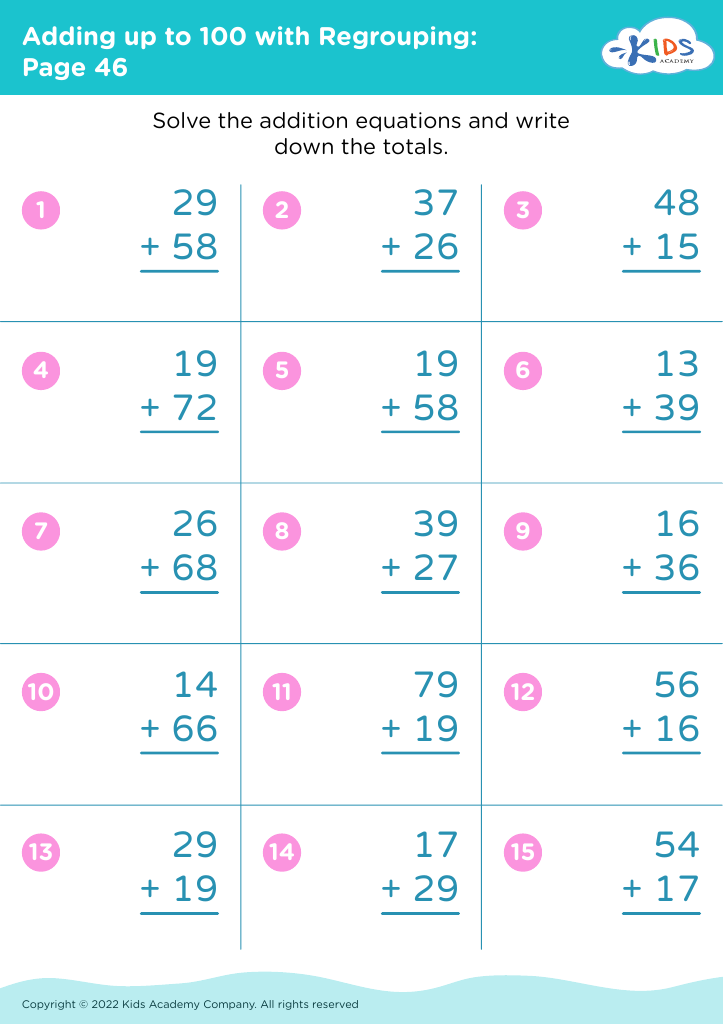
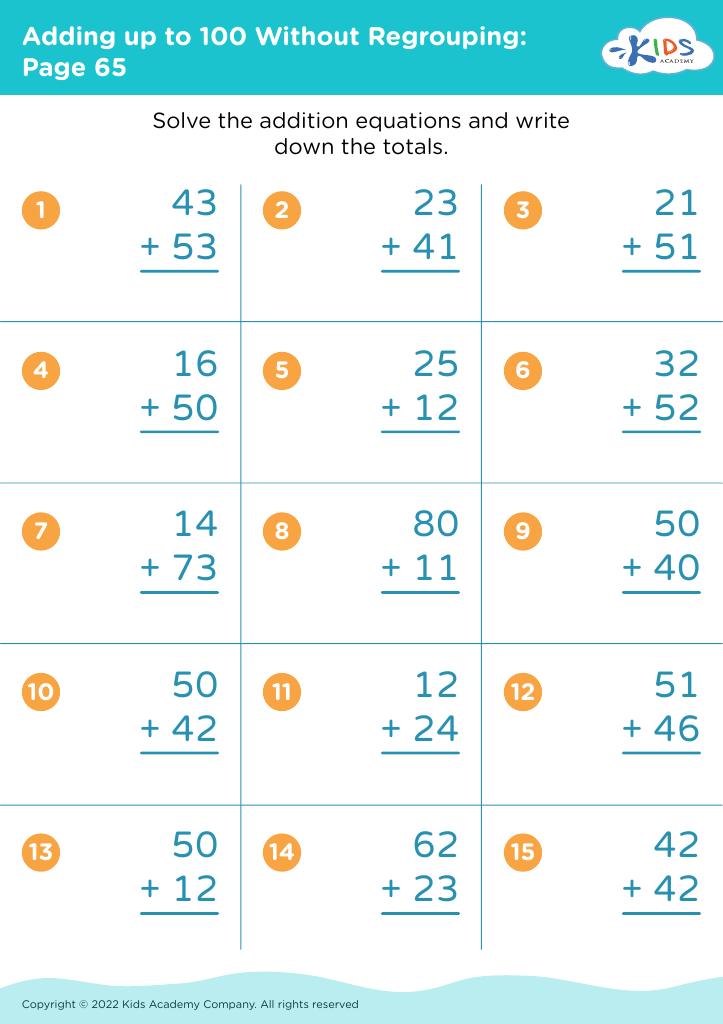
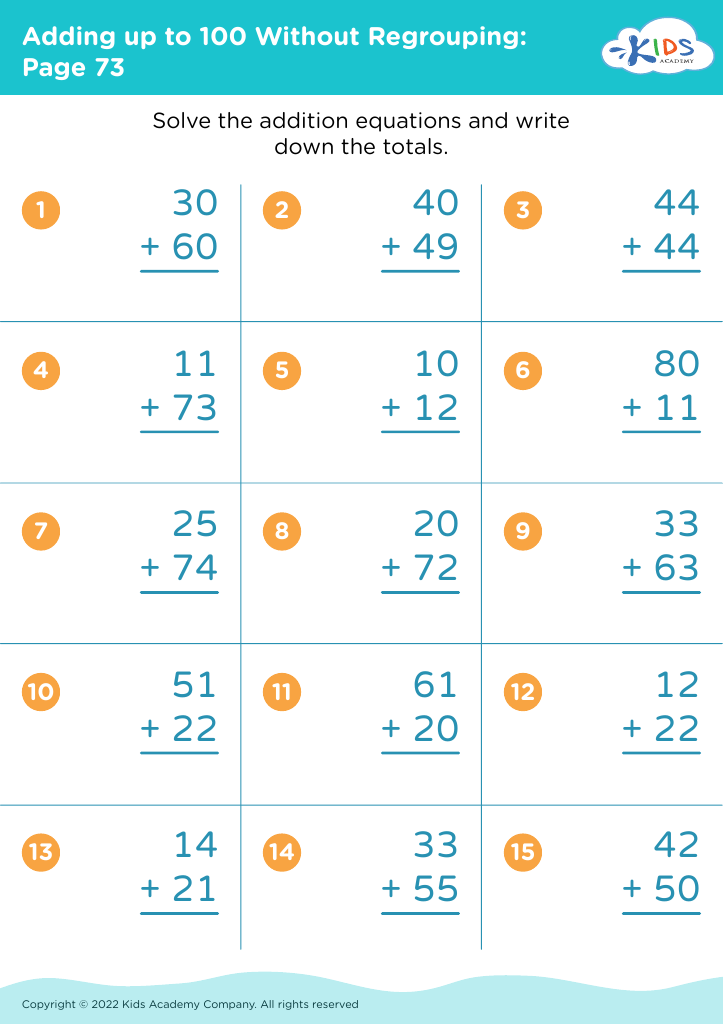
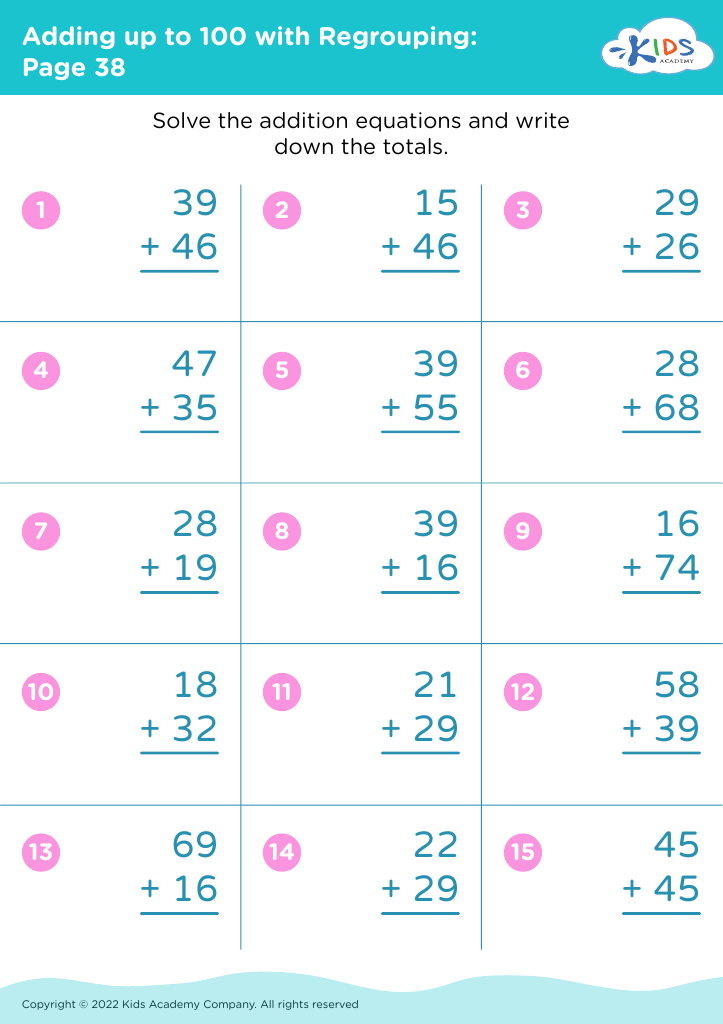
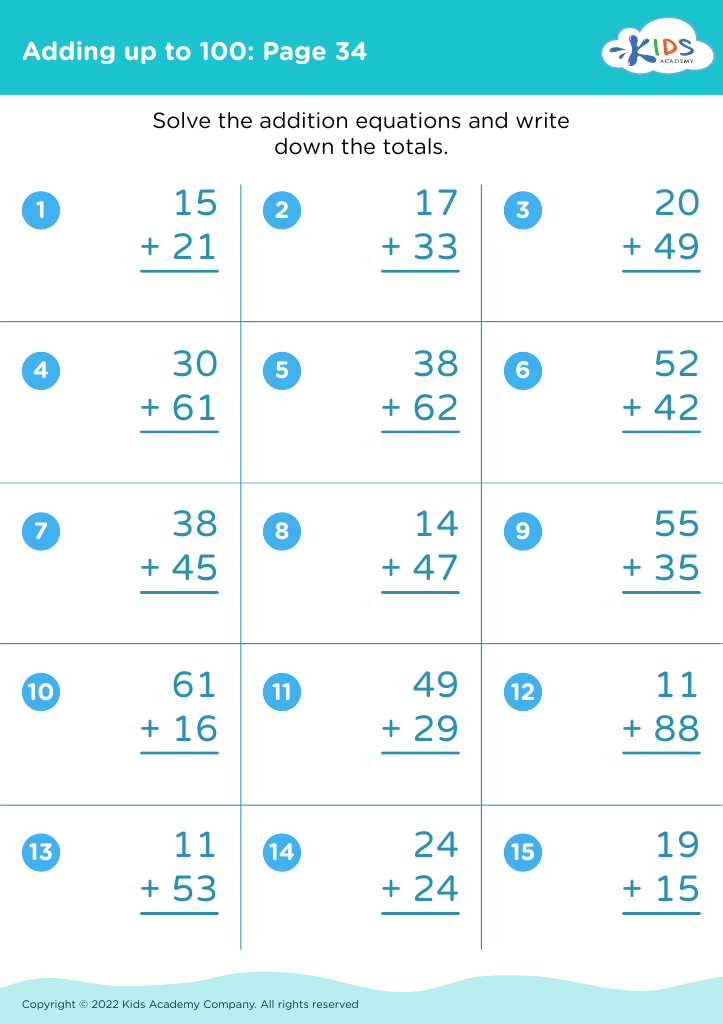
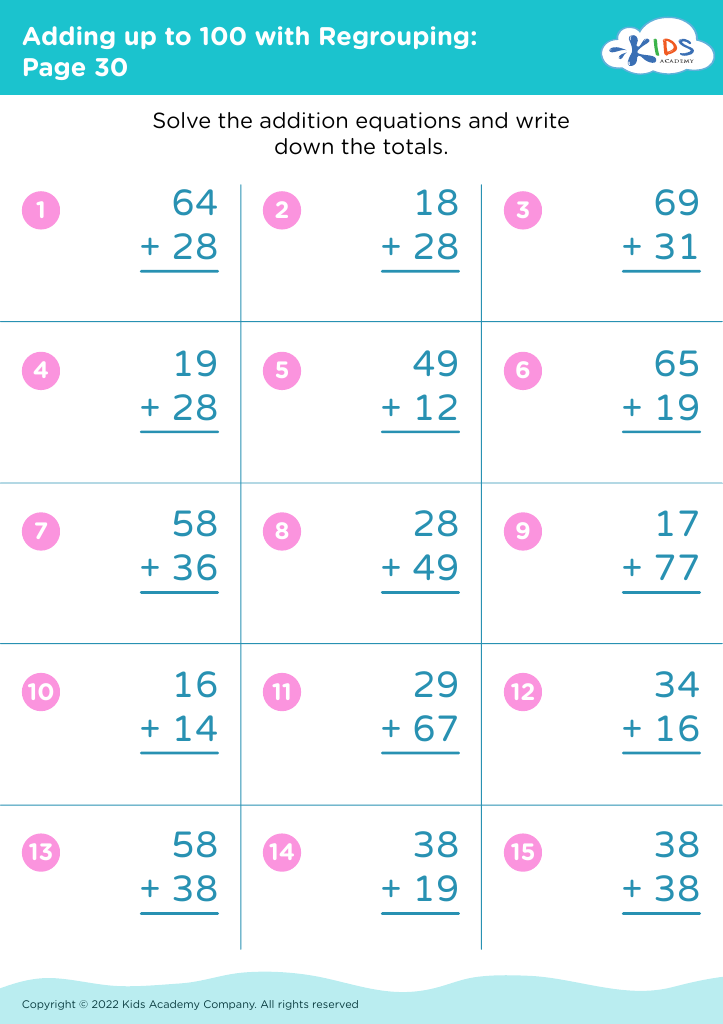
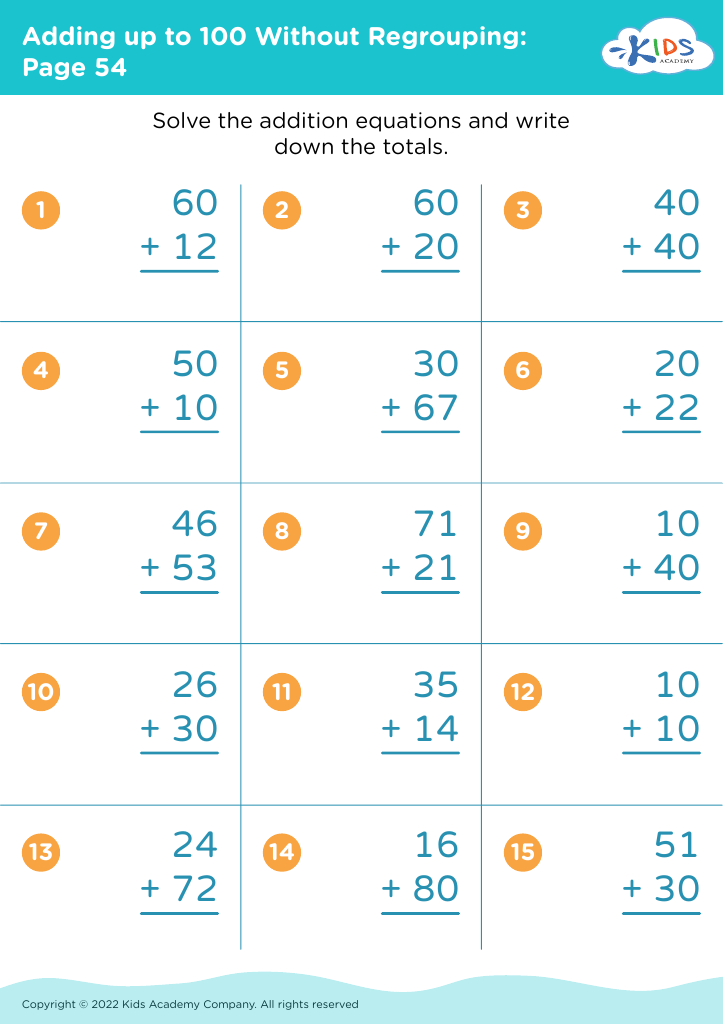
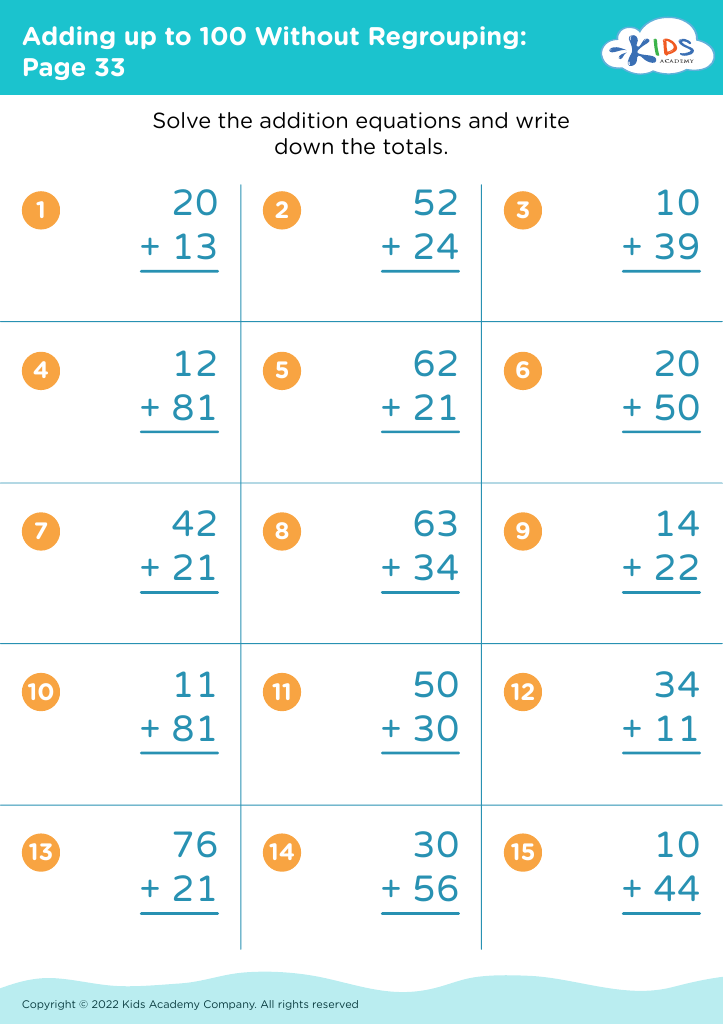
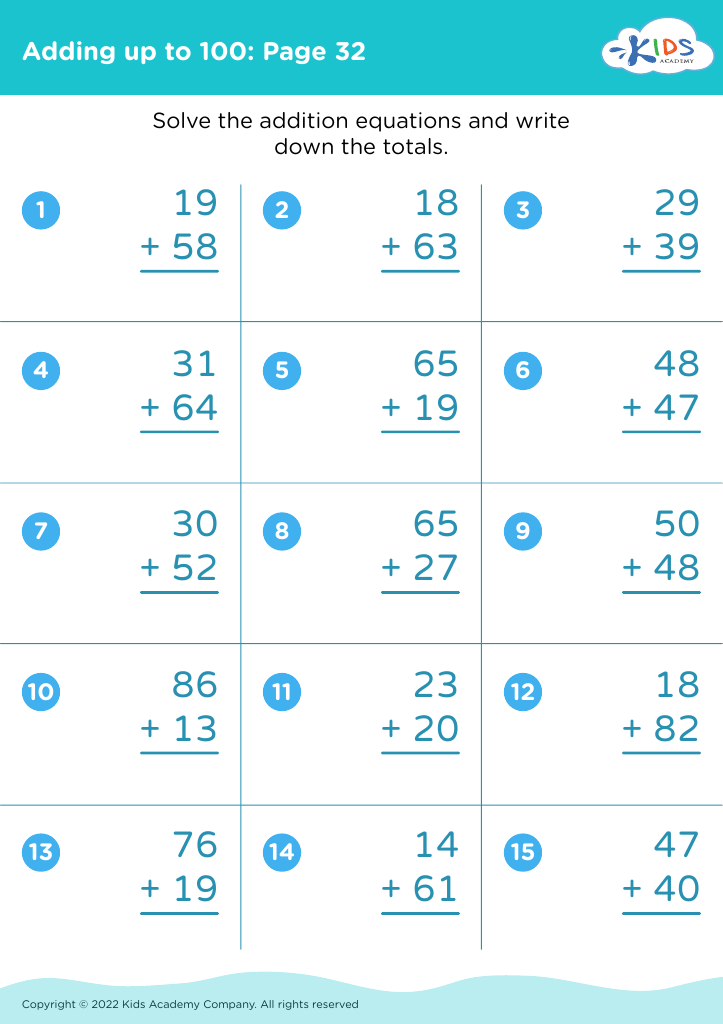
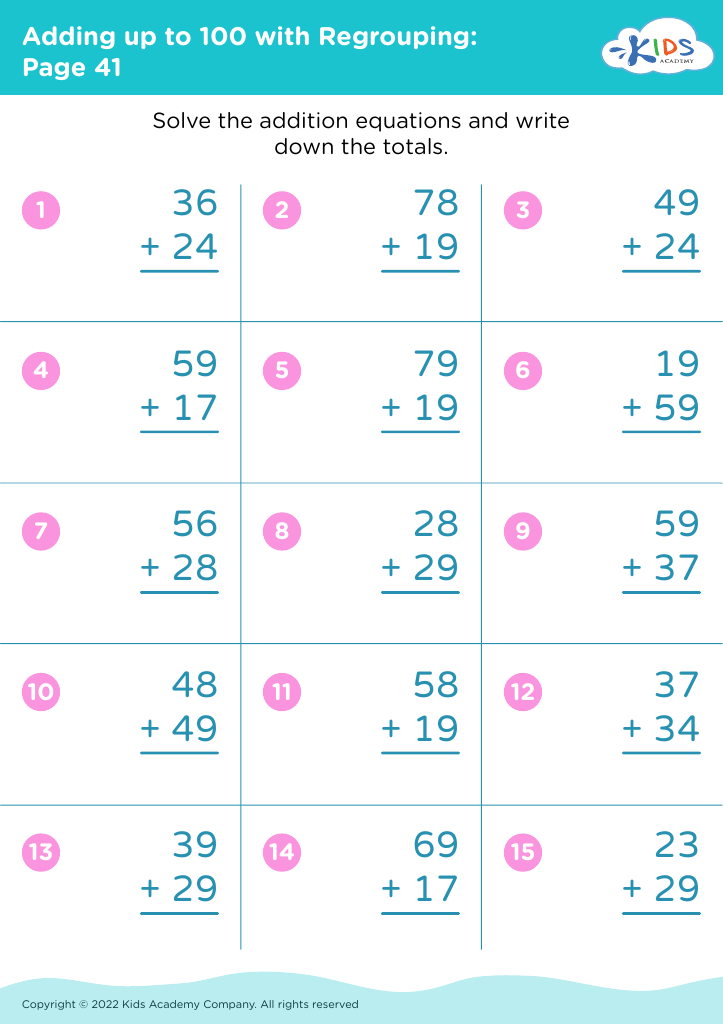
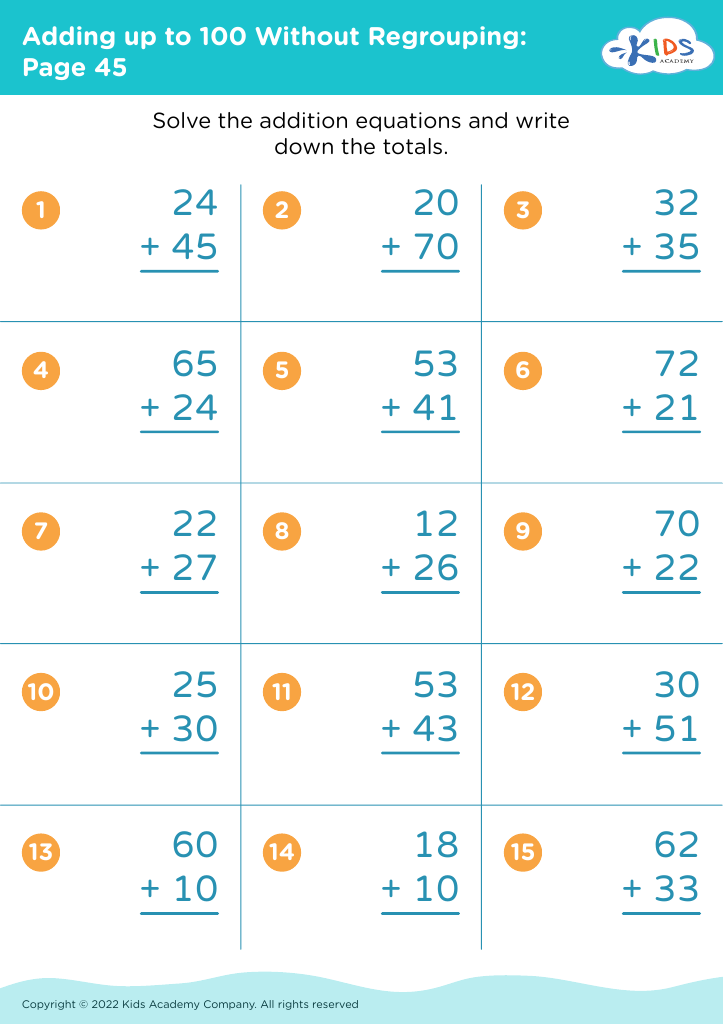
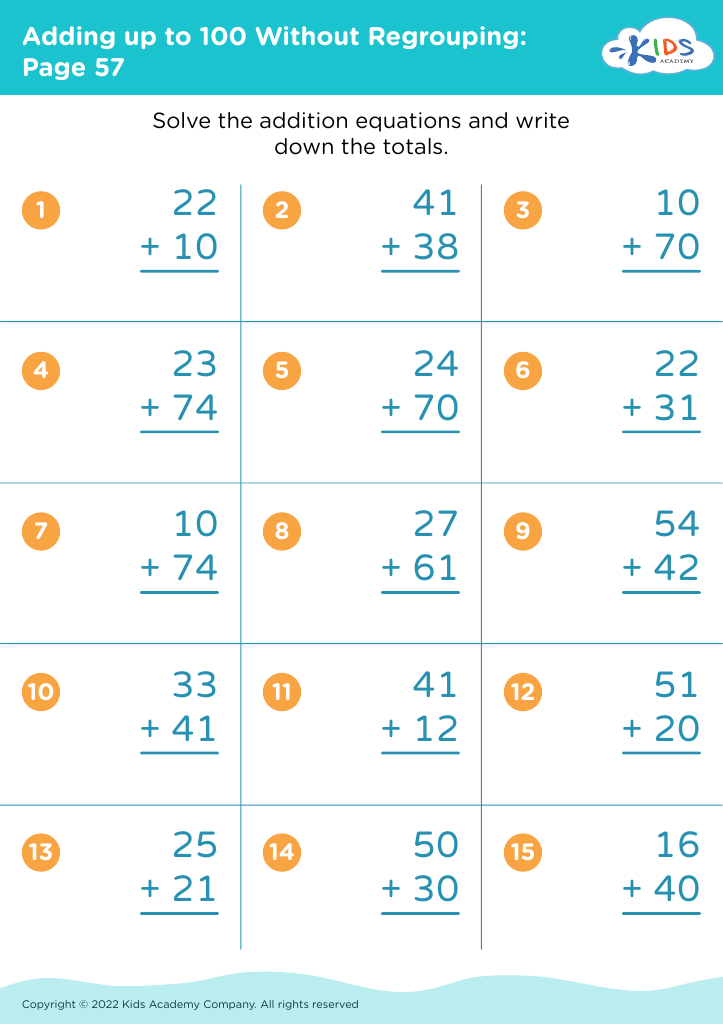
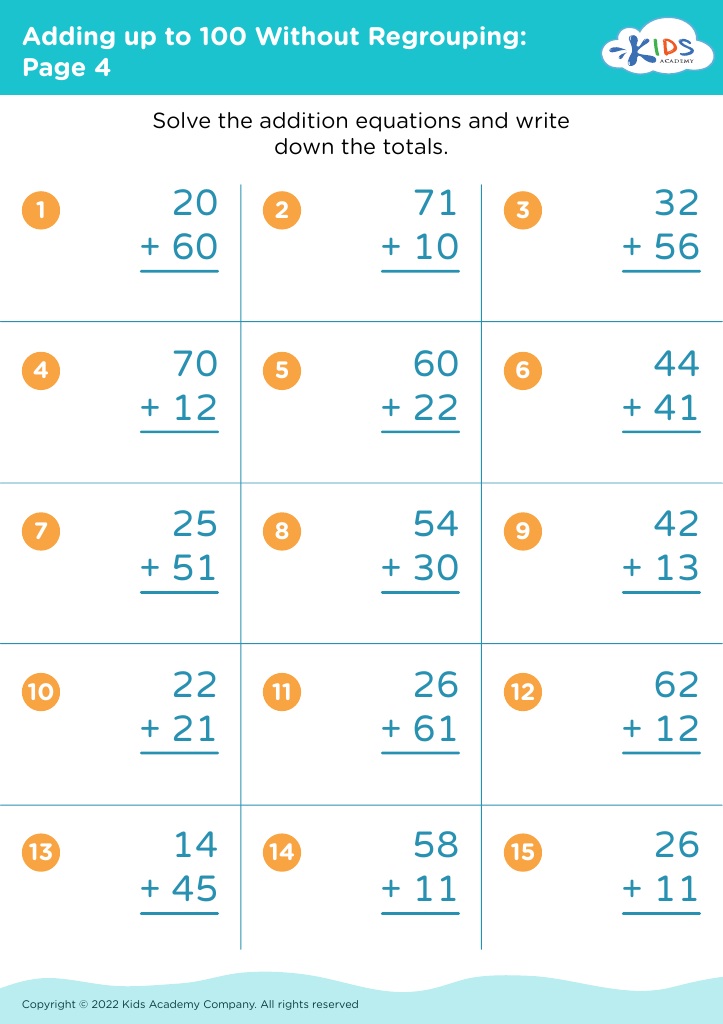
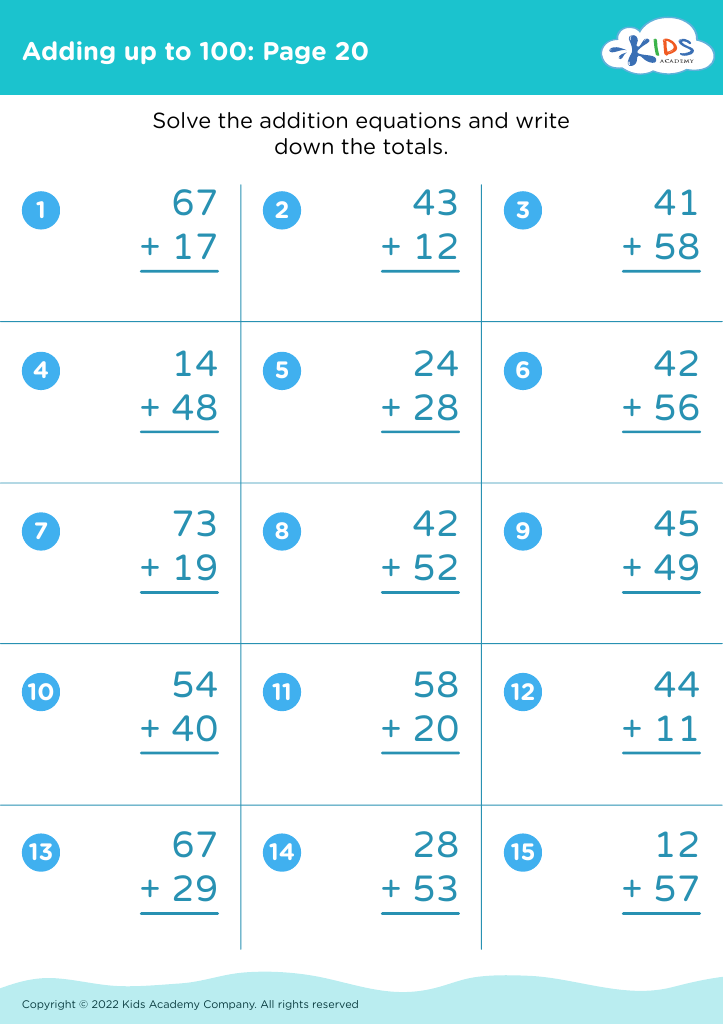
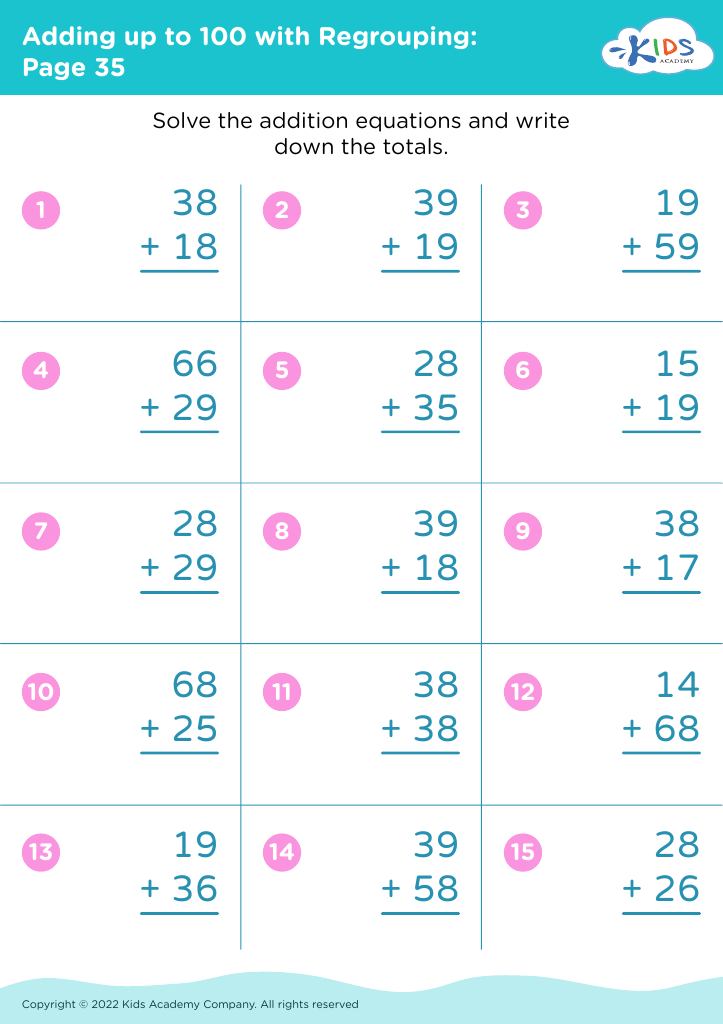
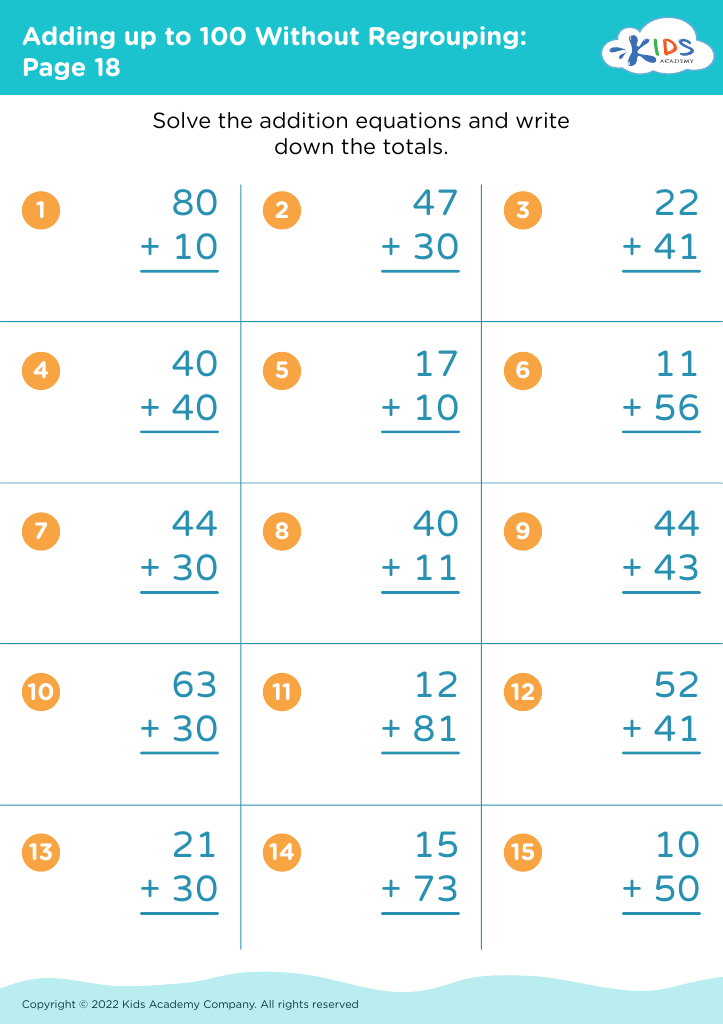
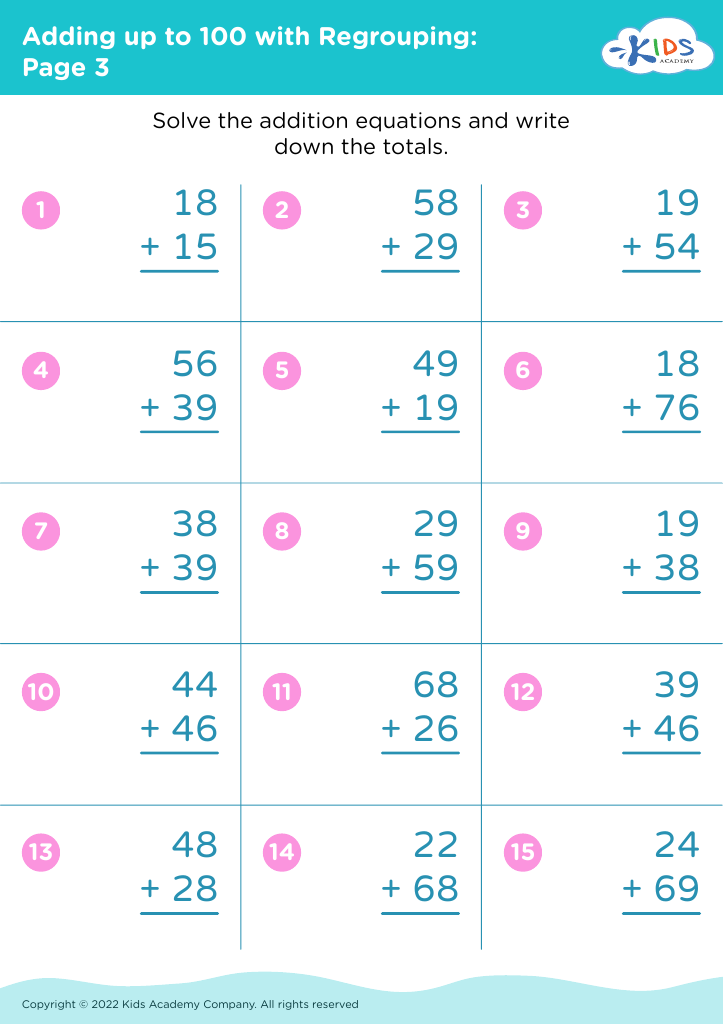
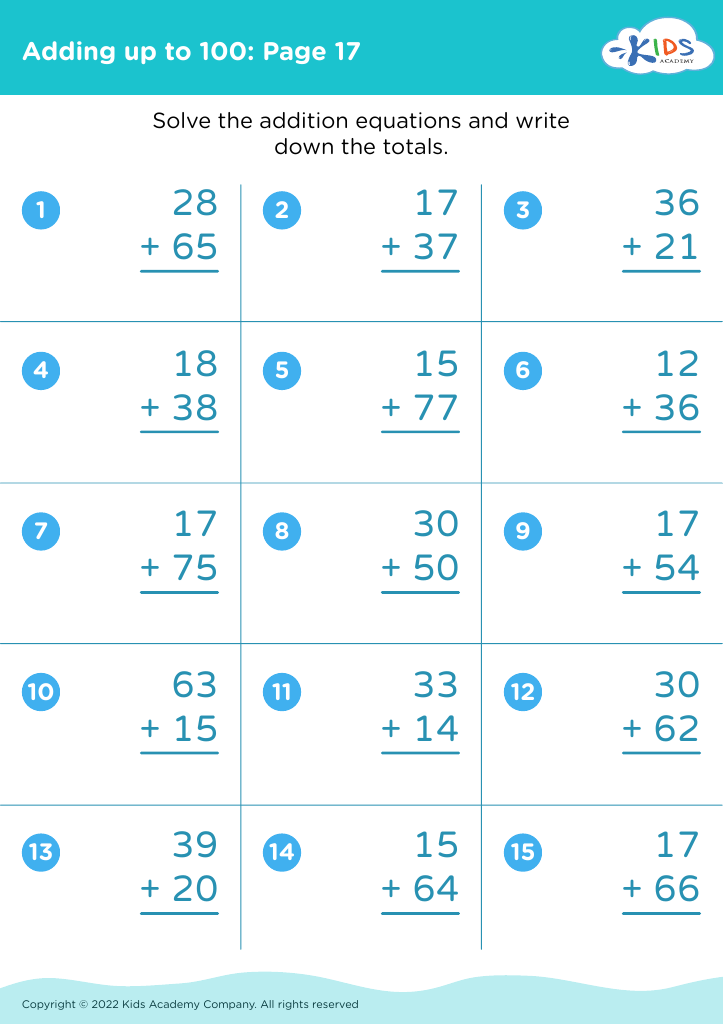
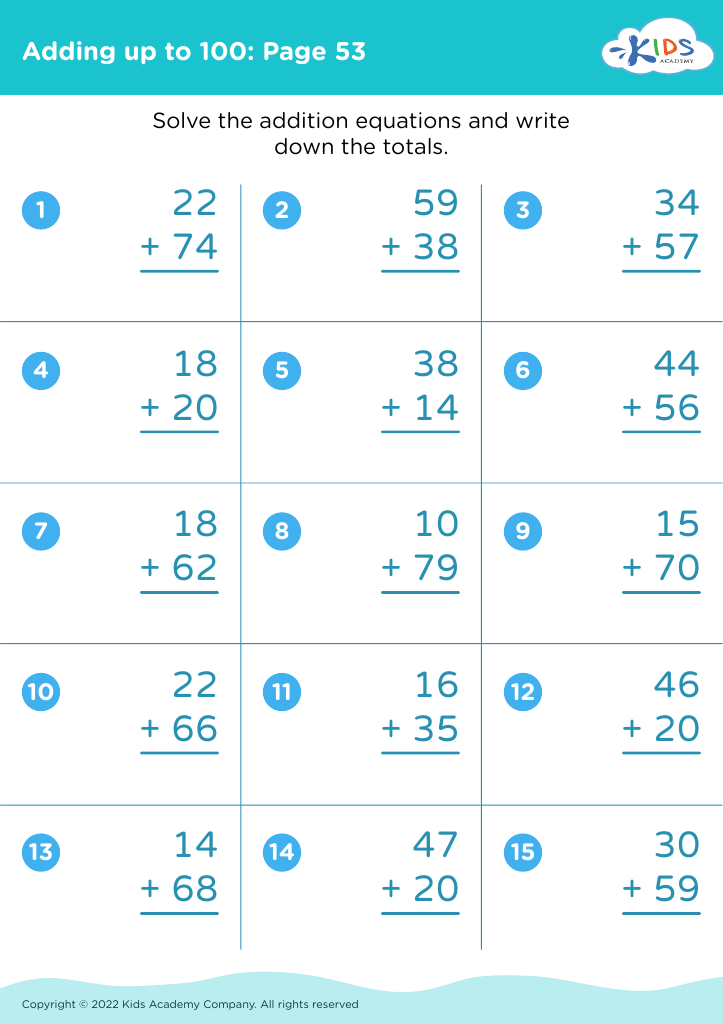
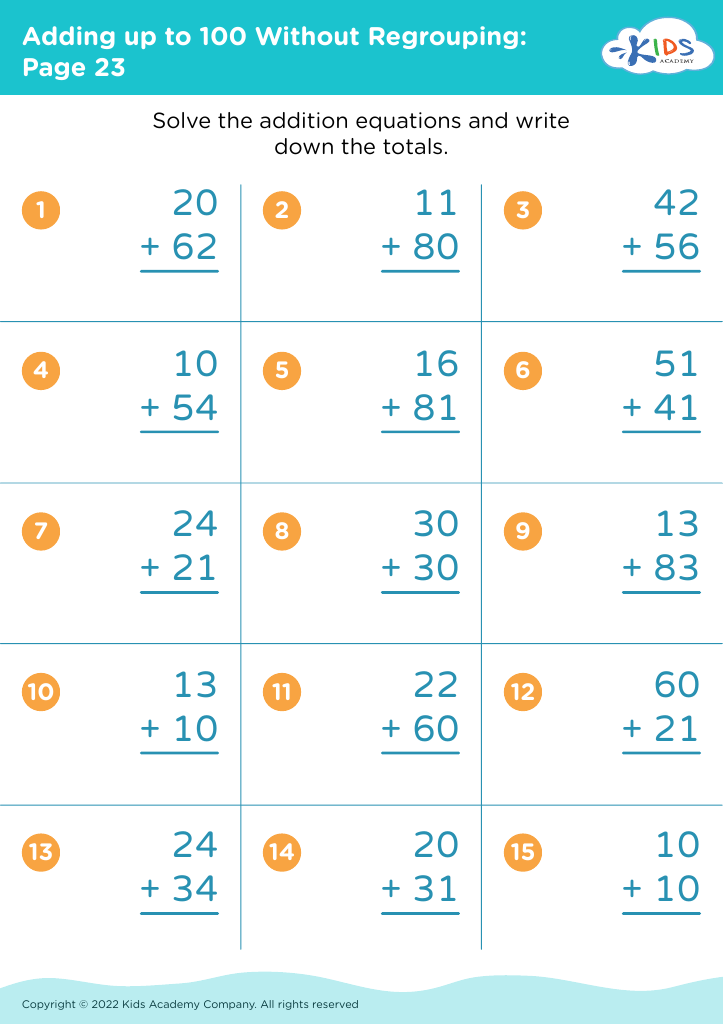
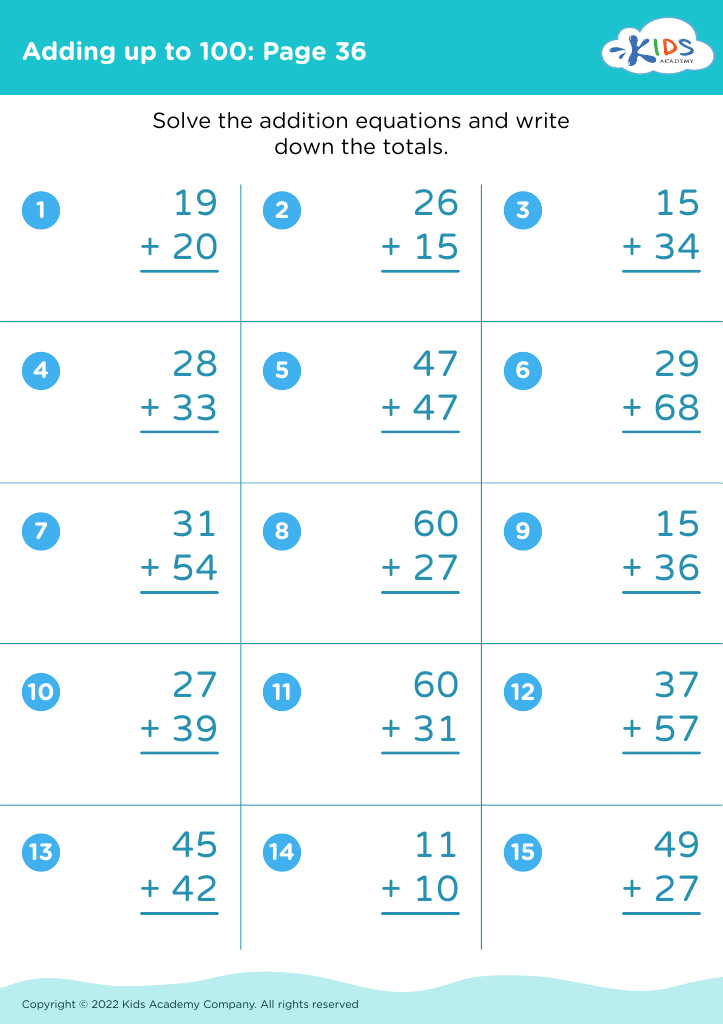
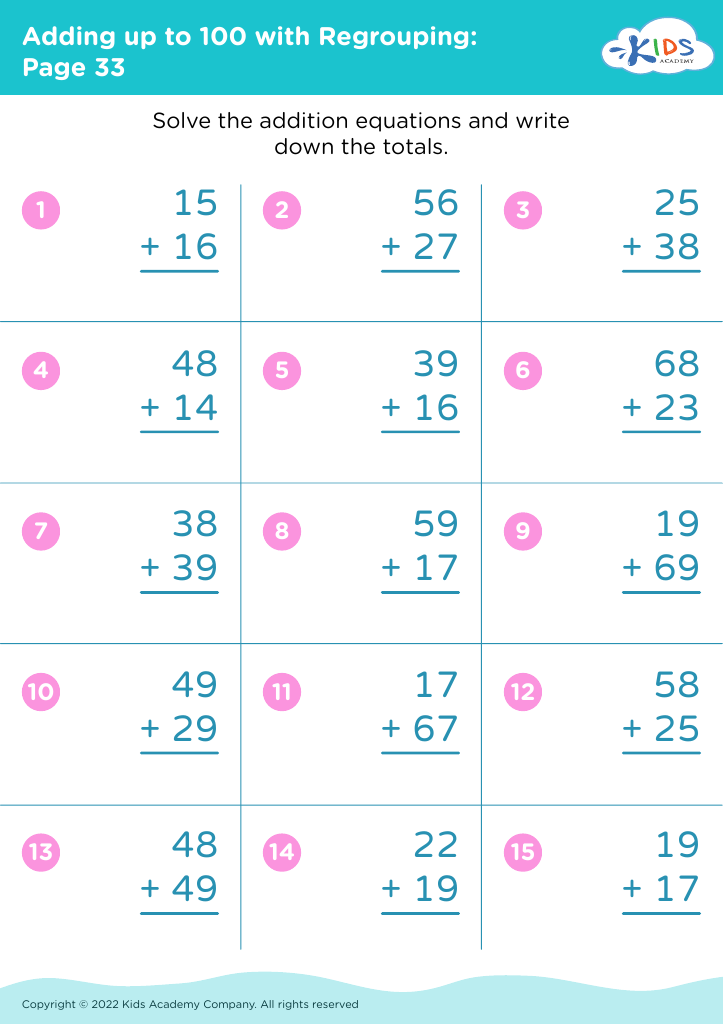
Discover our engaging "Fraction Simplification Adding Up to 100 Worksheets" designed specifically for children aged 4-8. These worksheets make learning fractions fun and interactive while building essential math skills. Featuring vibrant illustrations and clear instructions, they guide young learners through the process of simplifying fractions in a playful way. Perfect for parents and educators, these resources help reinforce foundational concepts in math while encouraging critical thinking. Challenge your child to practice addition and subtraction of fractions that total 100, fostering confidence and competence in their mathematical abilities. Start your child’s journey toward fraction mastery with our delightful and educational worksheets!


%20(1).jpg)




Understanding fraction simplification and the concept of adding up to 100 is essential for children aged 4-8, as it lays the foundation for more complex mathematical reasoning later on. For parents and teachers, grasping these concepts is crucial to helping children develop a strong numerical sense and confidence in mathematics.
Starting with fractions, children learn to recognize parts of a whole, which enhances their problem-solving skills and logical thinking. Simplifying fractions encourages critical thinking, as it teaches them about equivalence and relationships between numbers. This promotes curiosity and independence in their mathematical journey.
On the other hand, introducing the idea of adding numbers to make 100 helps students understand place value and the concept of complements. This foundational knowledge assists in mental math strategies and enhances their ability to make quick calculations in daily life.
Both skills foster a love for math by making it approachable and relevant. Engaging with these concepts can boost children's confidence, reducing math anxiety, and leading to better performance in school. By reinforcing these skills at home or school, parents and teachers contribute significantly to building a solid math foundation that will benefit children throughout their education.








