Hand-eye Coordination Adding up to 100 Worksheets for Ages 4-8
3 filtered results
-
From - To
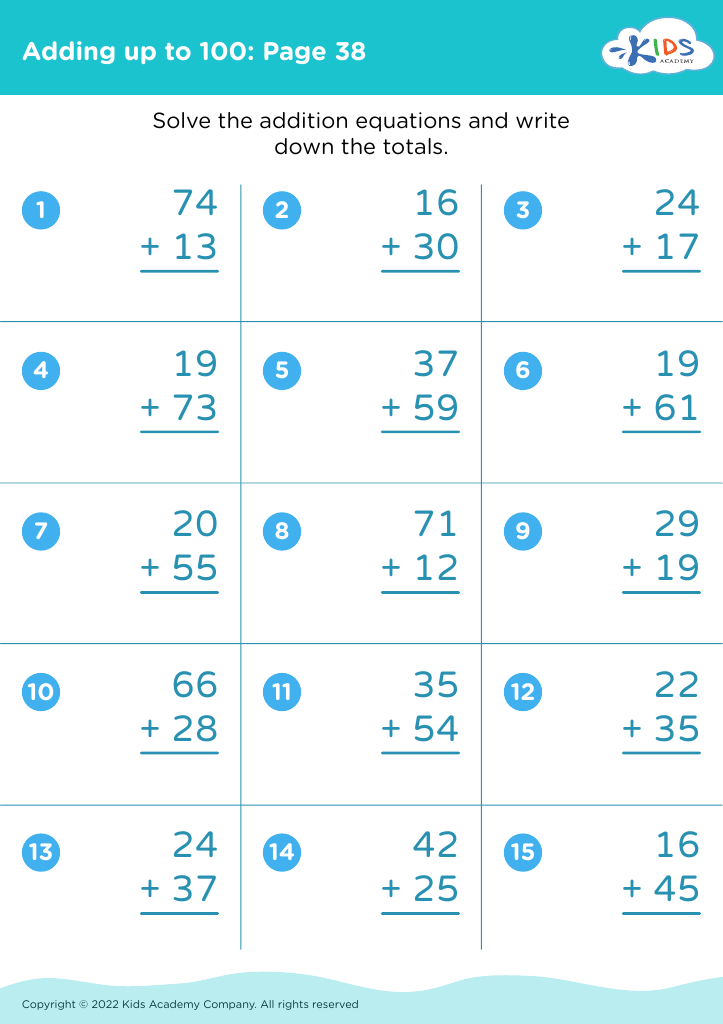
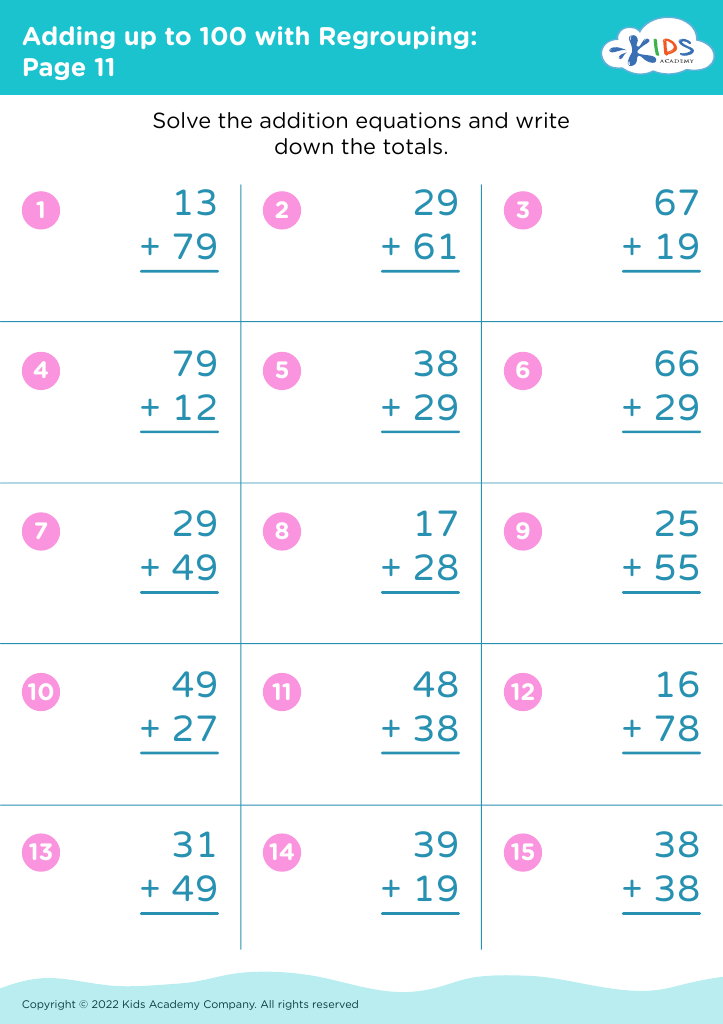
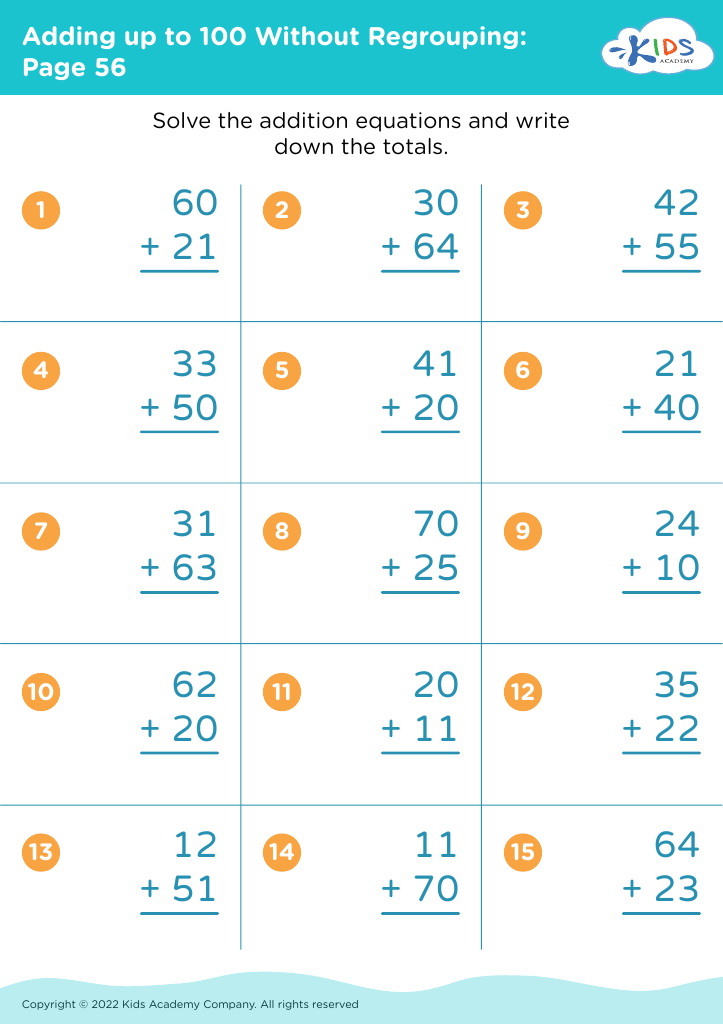
Enhance your child's math skills and hand-eye coordination with our "Hand-eye Coordination Adding up to 100 Worksheets" for ages 4-8! These engaging worksheets are designed to help young learners practice addition in a fun, interactive way. Each activity encourages children to develop their physical coordination while solving math problems, fostering both cognitive and motor skills. With colorful graphics and child-friendly designs, these worksheets make learning enjoyable and effective. Perfect for homeschooling or classroom use, our resources empower children to master addition concepts while improving their fine motor skills, setting a solid foundation for their educational journey. Get started today!




%20(1).jpg)


Hand-eye coordination is crucial for children aged 4-8 as it supports their overall development and learning progression. This skill enables kids to sync their visual input with motor skills, which is key for numerous everyday activities, from writing and drawing to playing sports. By honing their hand-eye coordination, children can enhance their fine motor skills—essential for tasks like buttoning clothing, using scissors, and navigating art projects.
Parents and teachers should particularly care about the relationship between hand-eye coordination and concepts like adding up to 100, as it paves the way for a better understanding of math. Engaging in activities that incorporate both movement and math, such as using counting game pieces or targeting numbers in a physical space, can make learning more interactive and dynamic.
Moreover, fostering hand-eye coordination can boost children's confidence and encourage a positive attitude toward learning, as they see tangible progress in their abilities. When children develop this coordination, they are also more likely to participate enthusiastically in group activities and games, fostering social skills and teamwork. By prioritizing hand-eye coordination, parents and teachers lay a foundation for academic success, motor development, and social interaction.








