Identifying equivalent fractions Adding up to 100 Worksheets for Ages 4-8
5 filtered results
-
From - To
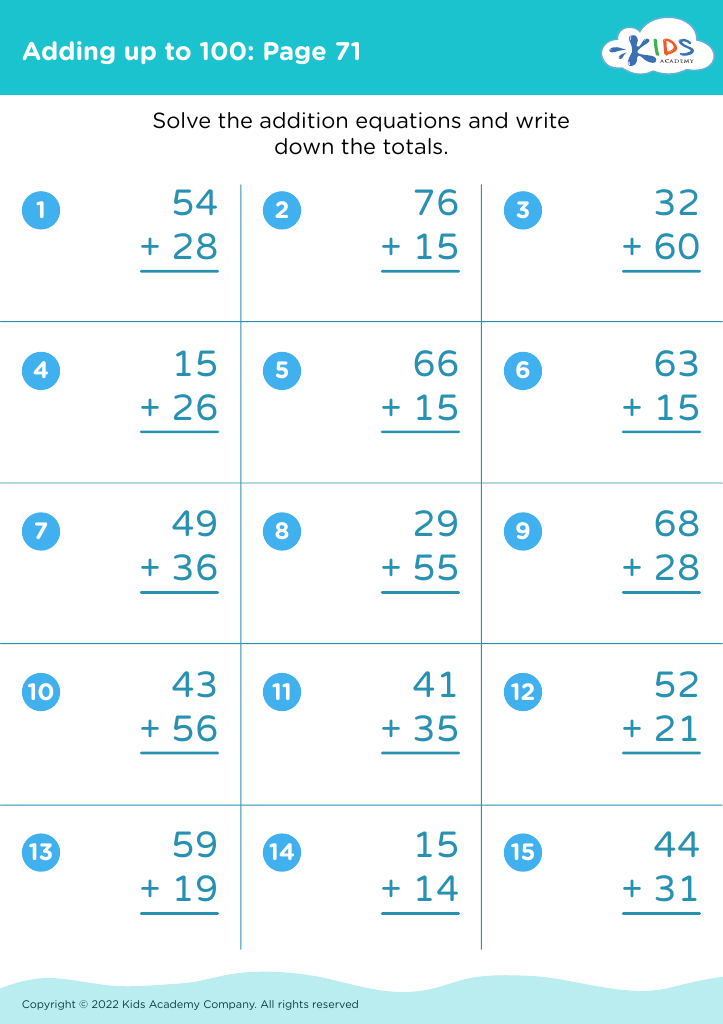
Discover fun and engaging worksheets designed to help children ages 4-8 master the concept of identifying equivalent fractions that add up to 100. Our interactive resources encourage young learners to explore fractions visually and numerically, enhancing their understanding of this essential math skill. With colorful illustrations and easy-to-follow exercises, your child will enjoy improving their fraction recognition and addition abilities. Perfect for home or classroom use, these worksheets make learning captivating and effective. Boost your child's confidence in mathematics today by introducing them to the world of equivalent fractions with our thoughtfully curated activities!
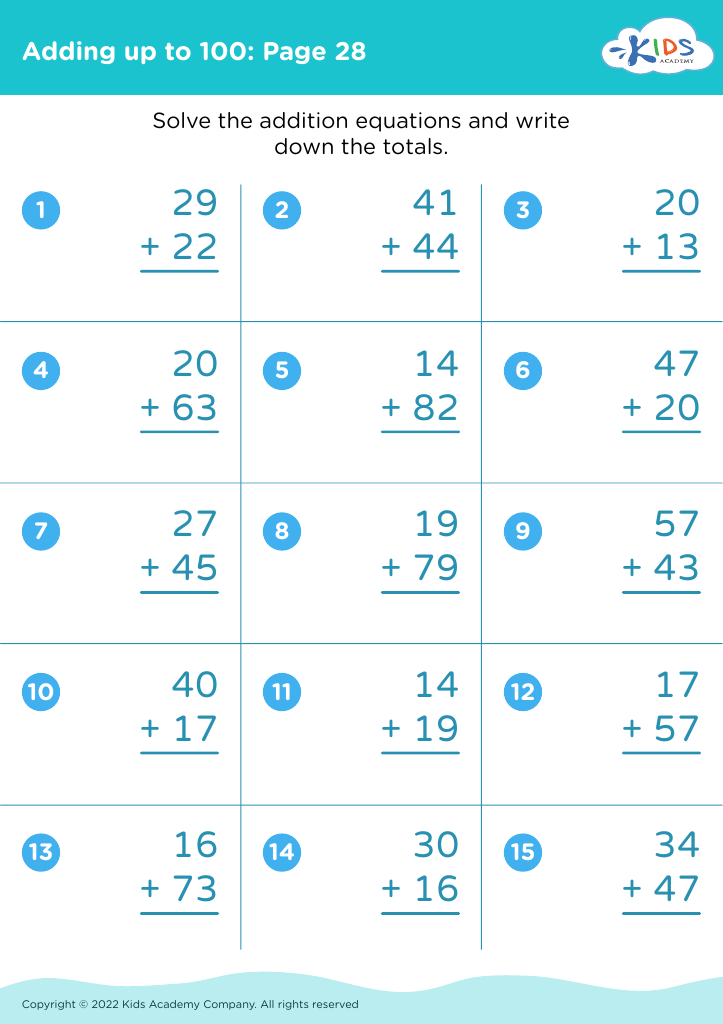
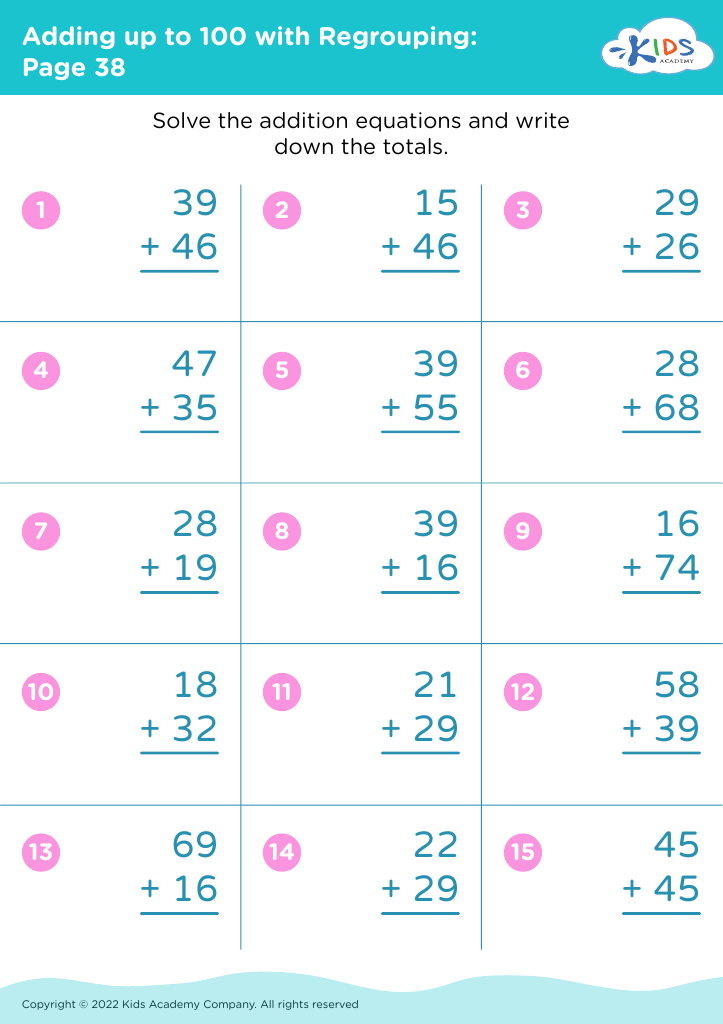
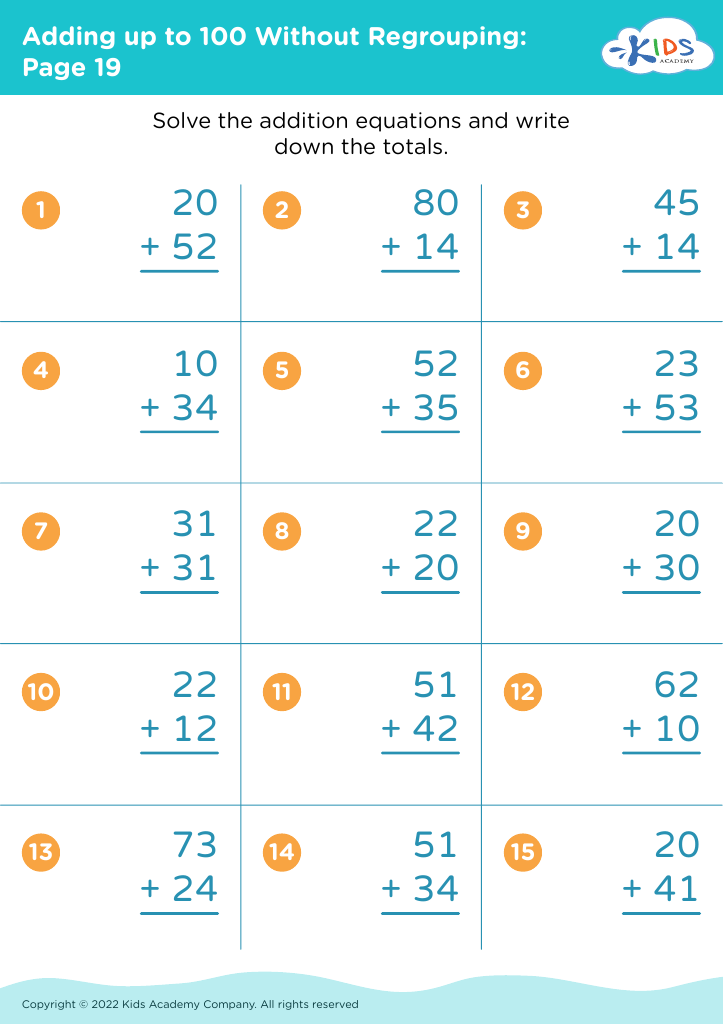
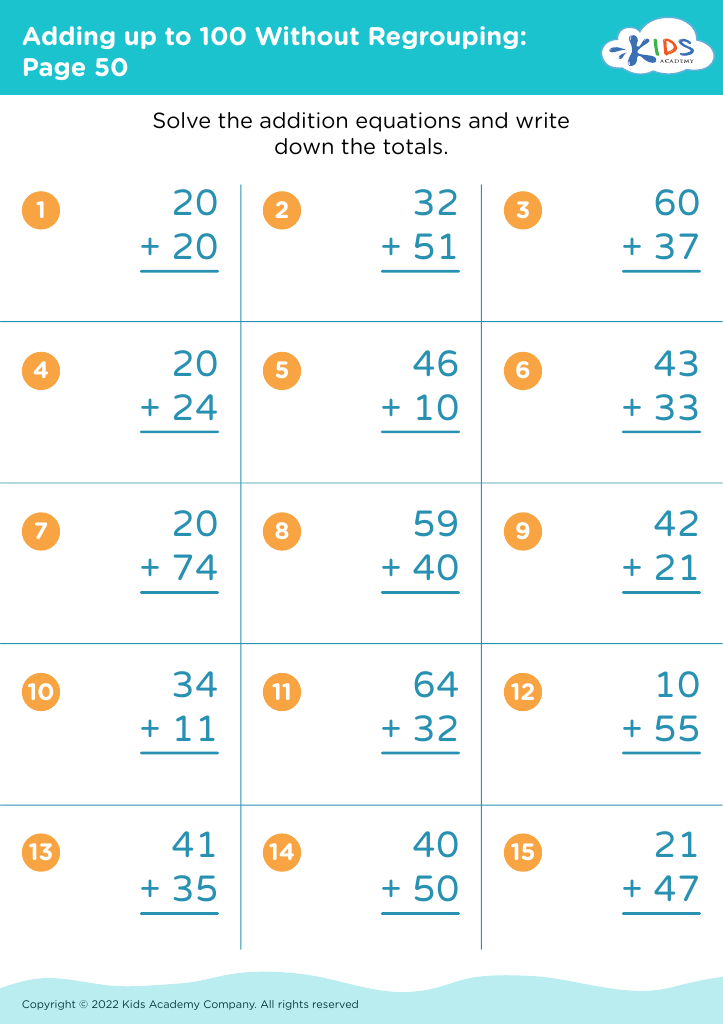


%20(1).jpg)




Identifying equivalent fractions and understanding how they relate to the concept of part-whole relationships is fundamental for children ages 4-8 as it lays a strong mathematical foundation. Teaching these concepts early fosters critical thinking skills, as children learn to recognize patterns in numbers and develop an innate sense of quantities. Understanding equivalent fractions helps young learners see that numbers can be represented in various ways, facilitating flexibility and problem-solving abilities in complex mathematical contexts later on.
By introducing the idea of adding up to 100 through equivalent fractions, children can grasp how different parts contribute to a whole, reinforcing their comprehension of percentages and basic arithmetic. This is particularly relevant when they begin exploring money, time, and measurement, where these skills are vital.
Furthermore, engaging with these concepts in an enjoyable and interactive manner promotes positive attitudes towards math. When parents and teachers actively participate in this learning process, they nurture a supportive environment that encourages curiosity and exploration. This can instill the confidence required to tackle more advanced mathematical topics as they progress in their education. Ultimately, emphasizing equivalent fractions and their significance is essential in equipping children with the tools needed for lifelong learning and problem-solving.








