Identifying shapes Adding up to 100 Worksheets for Ages 4-8
8 filtered results
-
From - To
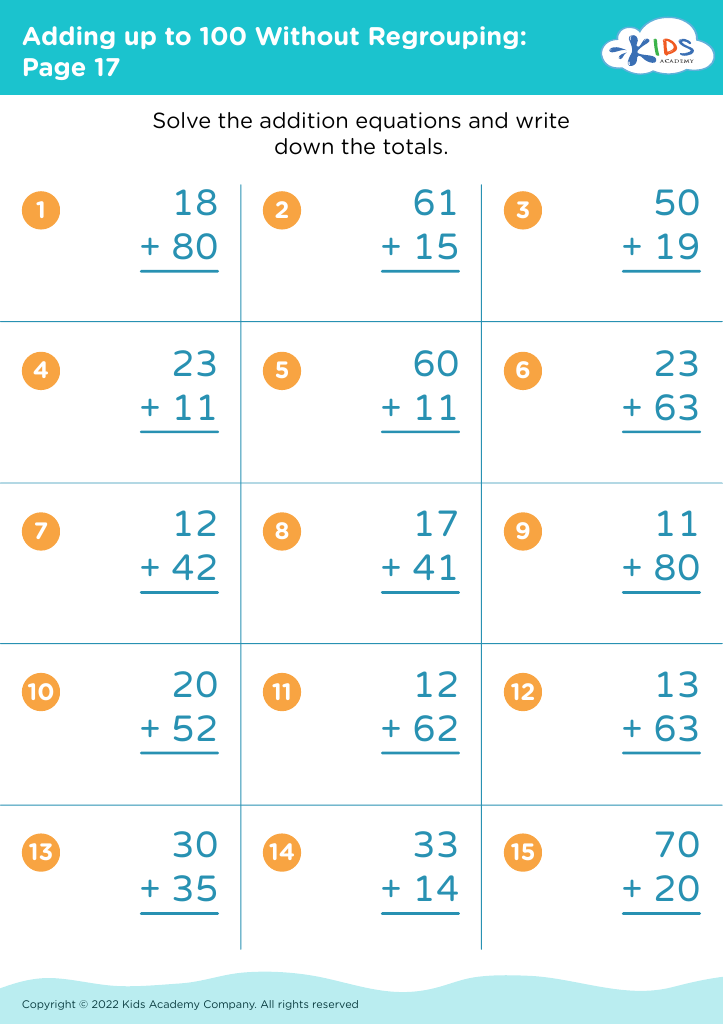
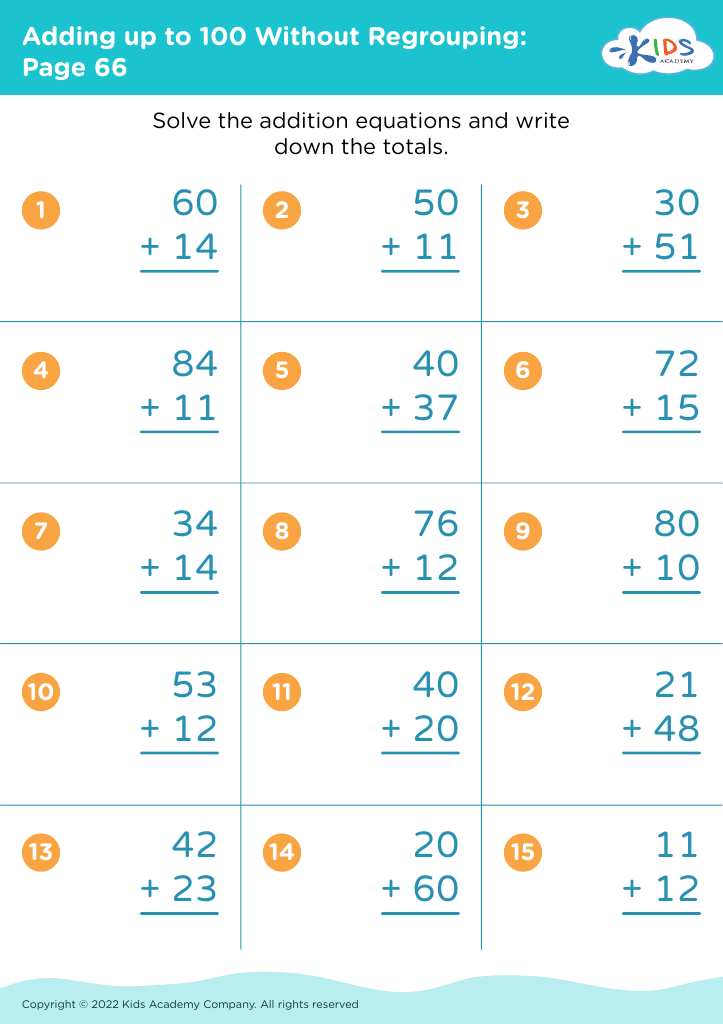
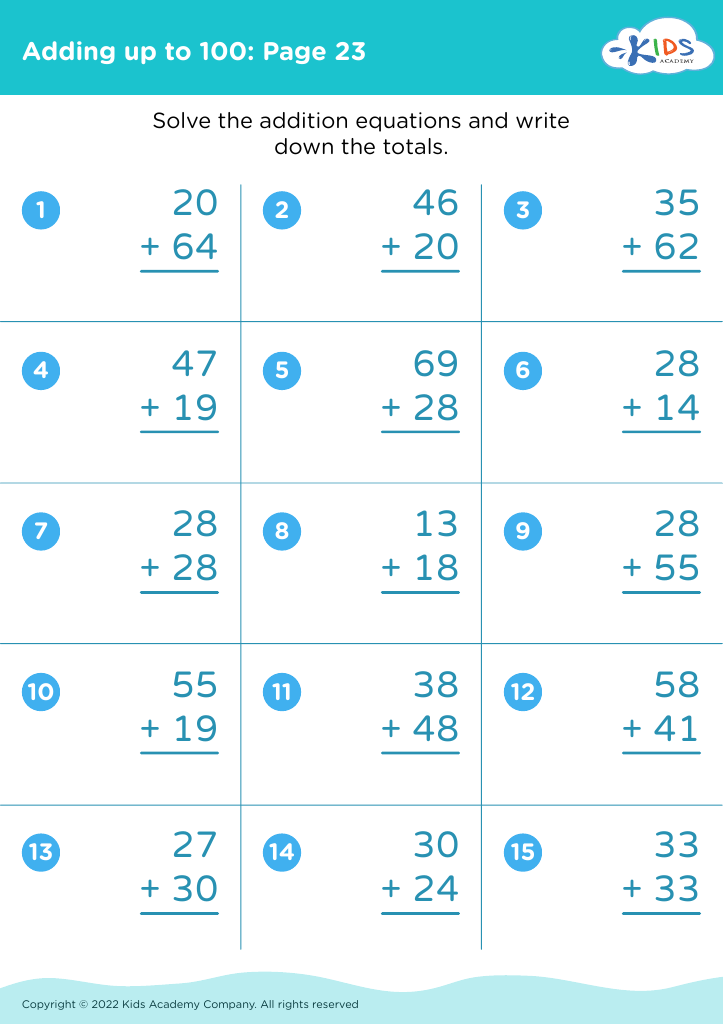
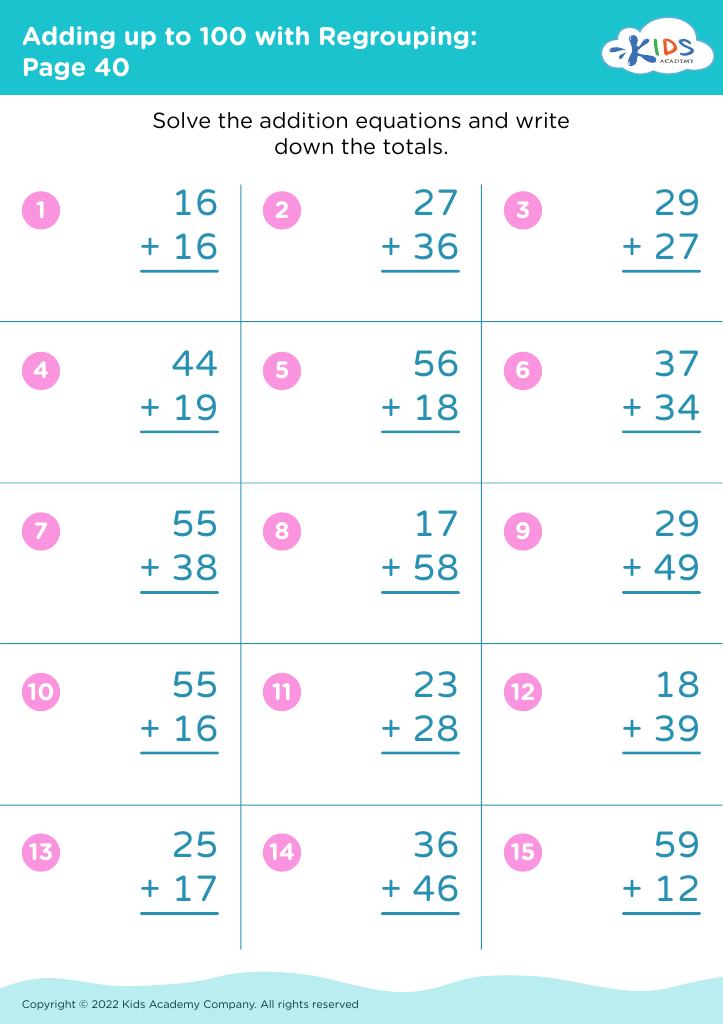
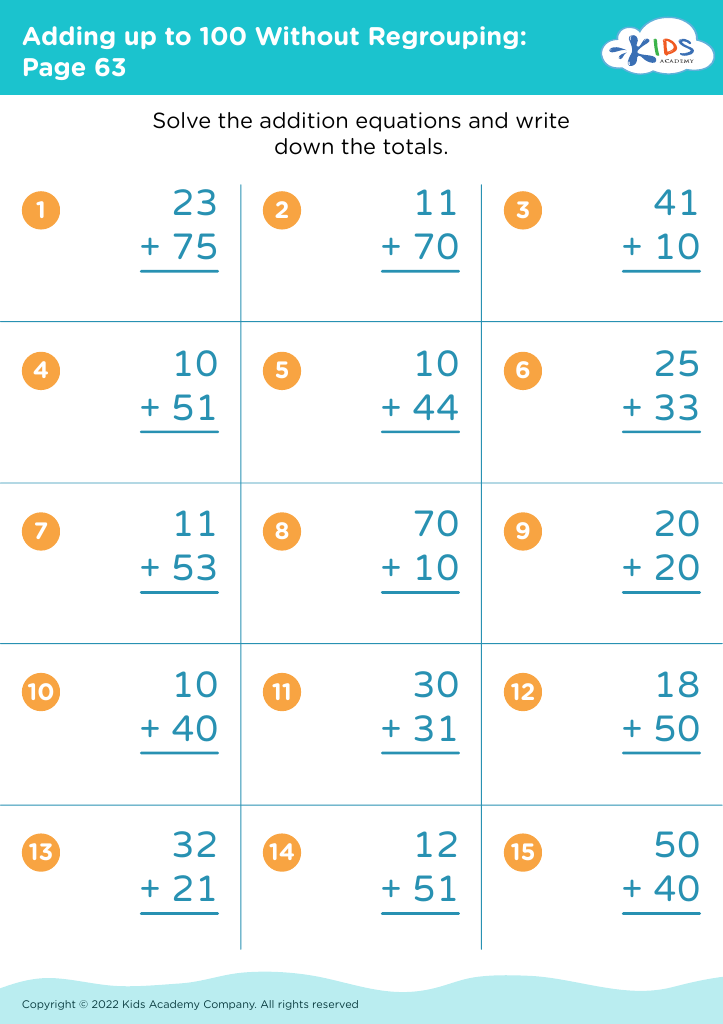
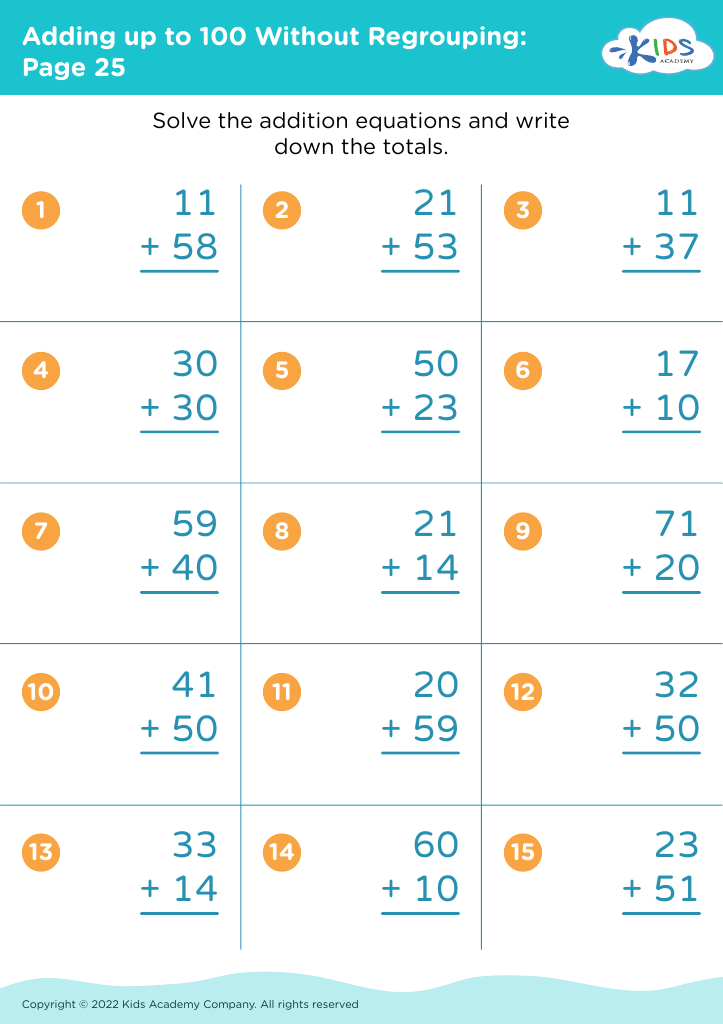
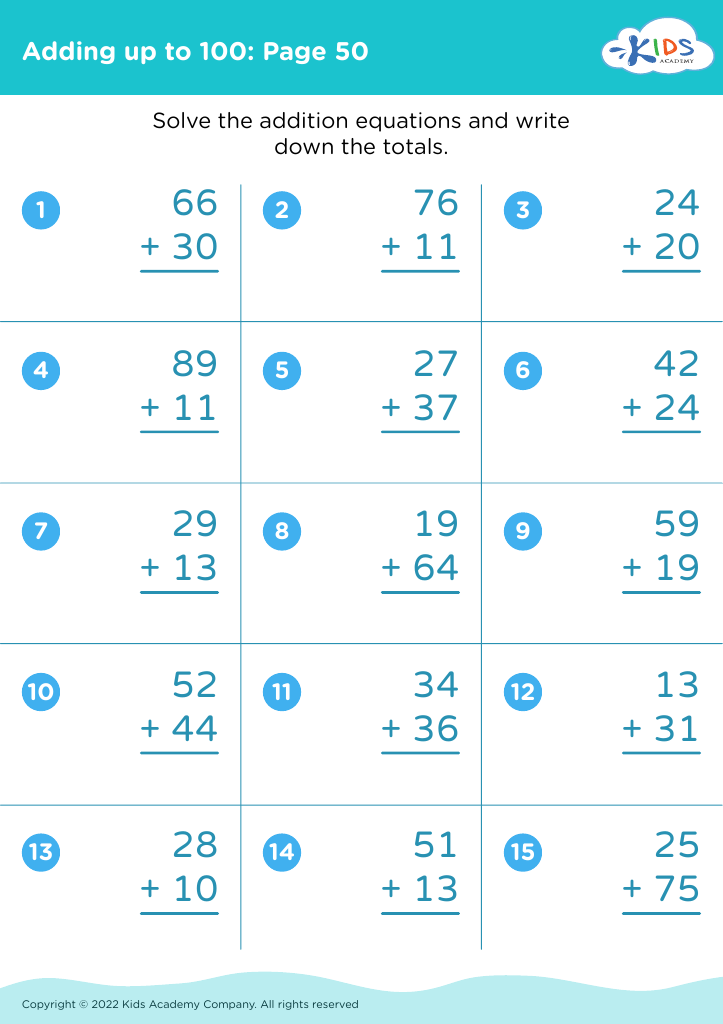
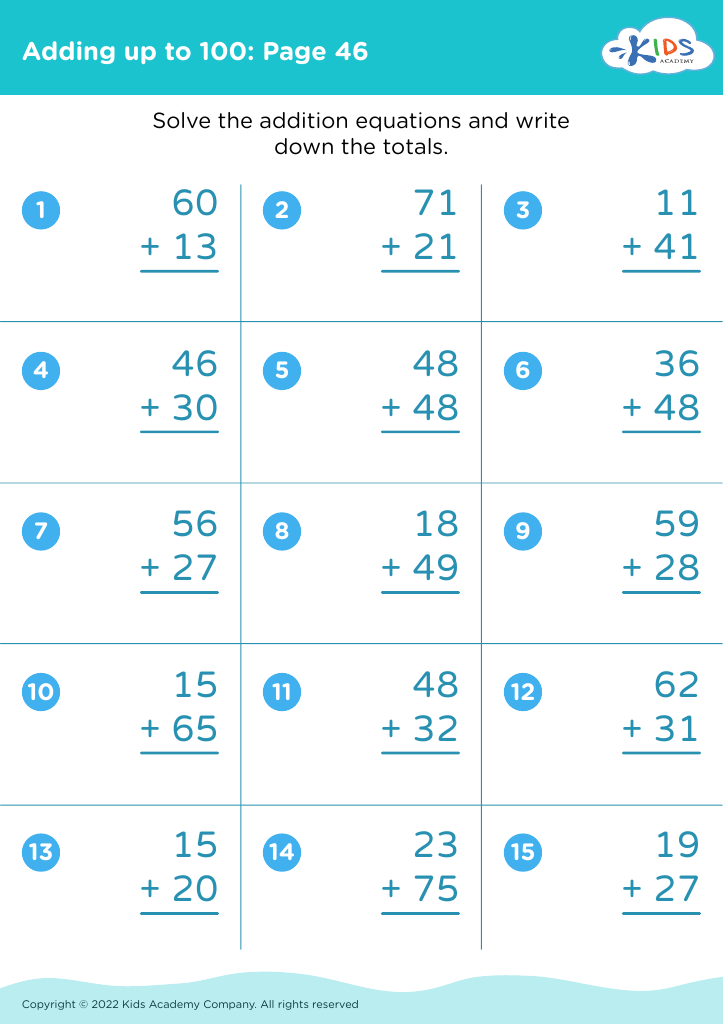
Our "Identifying Shapes Adding up to 100 Worksheets" are designed for children ages 4-8, combining fun and learning to build crucial math skills. These worksheets help kids practice adding numbers up to 100 while identifying geometric shapes, boosting both their arithmetic and spatial awareness. With colorful, engaging exercises, young learners will enjoy exploring numbers, patterns, and shapes, fostering a love for math. Ideal for classroom use or at-home practice, these printable worksheets support early mathematical development and enhance problem-solving abilities. Nurture your child's curiosity and confidence in math with our expertly crafted resources.






%20(1).jpg)
Identifying shapes and adding up to 100 are foundational skills for children aged 4-8 that surpass their mathematical importance, impacting cognitive, language, and socio-emotional development. Understanding shapes fosters spatial awareness, critical for problem-solving and recognizing patterns—a bedrock for mathematical reasoning and other subjects like Physics and Art. For instance, discerning rectangles from triangles is more than shape recognition; it involves categorizing information, a vital cognitive skill.
On the other hand, mastering addition up to 100 nurtures early numerical literacy and lays the groundwork for arithmetic and later, complex math problems. It promotes logical thinking as children learn policies and sequential steps for adding numbers. Moreover, practical life requires such abilities, e.g. counting money or measuring.
Beyond cognitive benefits, these skills bolster confidence and perseverance. When children accurately identify shapes or successfully add numbers, they experience a sense of achievement, driving a positive attitude towards learning. This early success reduces math anxiety later in life, motivating consistent scholarly efforts.
Thus, nurturing these skills during the critical developmental stage of 4-8 years equips children with necessary tools across various domains, ensuring holistic growth and setting them up for future academic and life successes. Parents and teachers play a pivotal role by fostering an encouraging, engaging environment for acquiring these essential abilities.








