Improve math skills Adding up to 100 Worksheets for Ages 4-8
6 filtered results
-
From - To
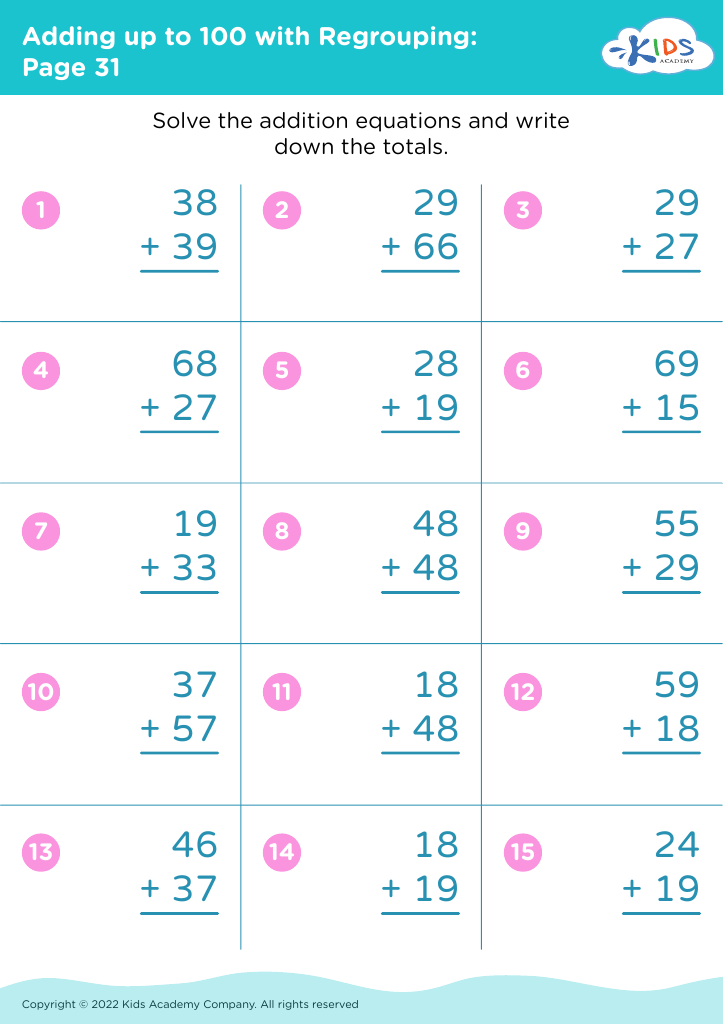
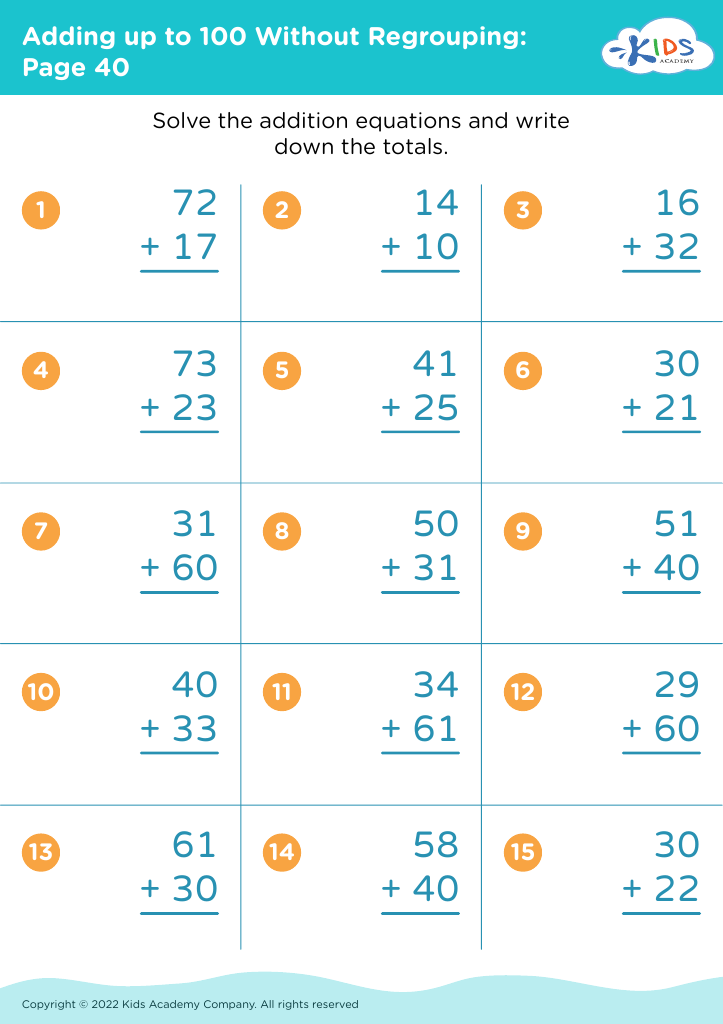
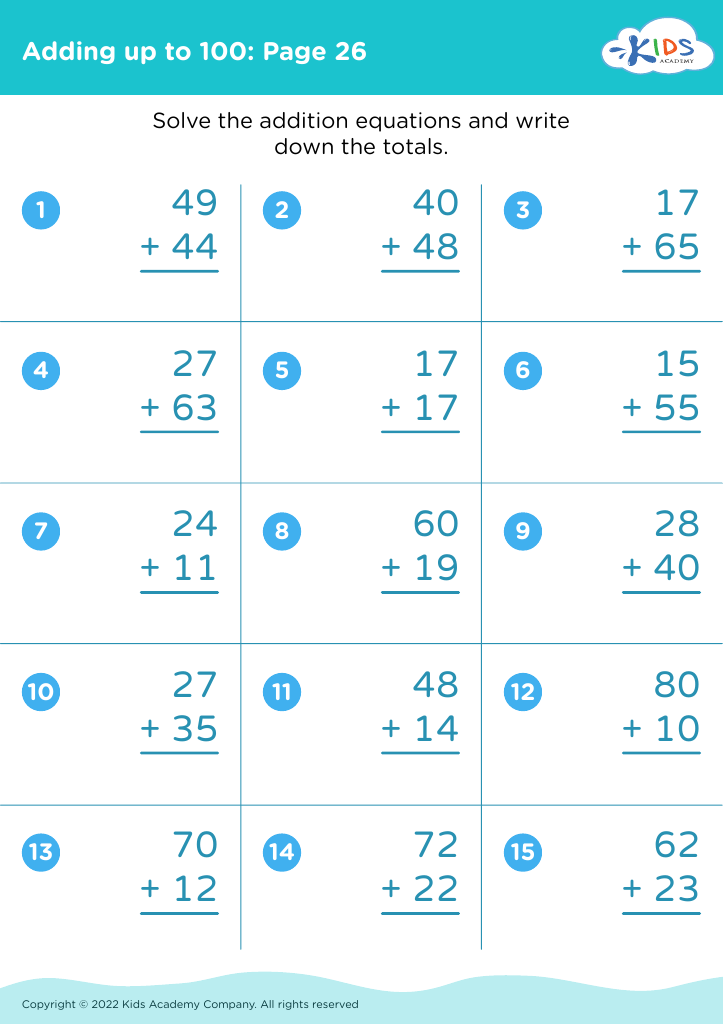
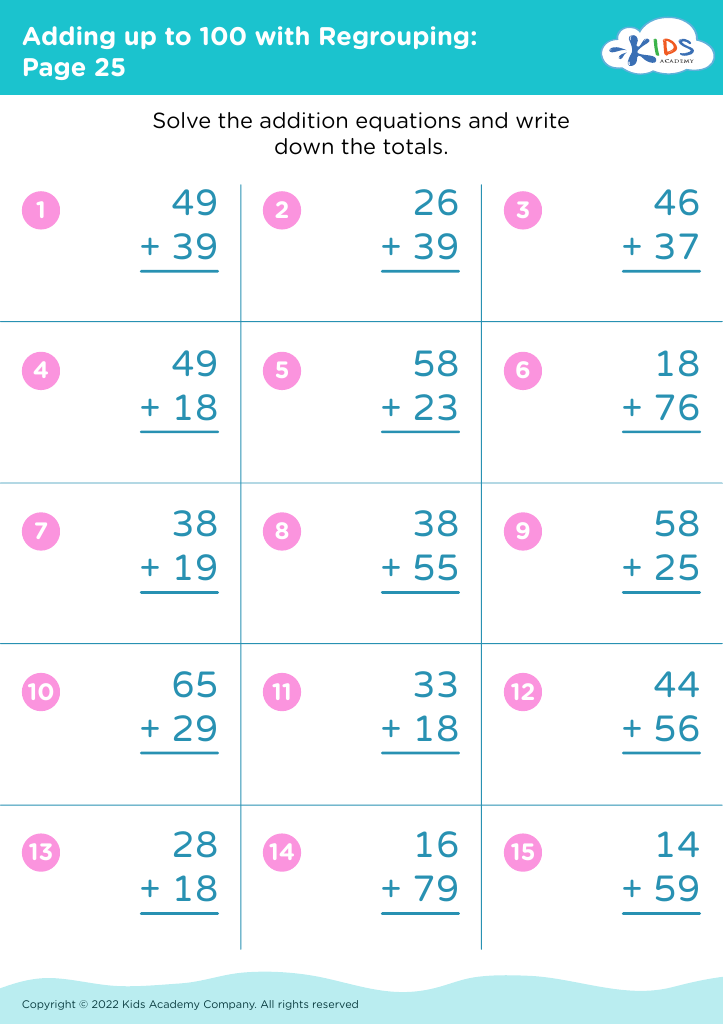
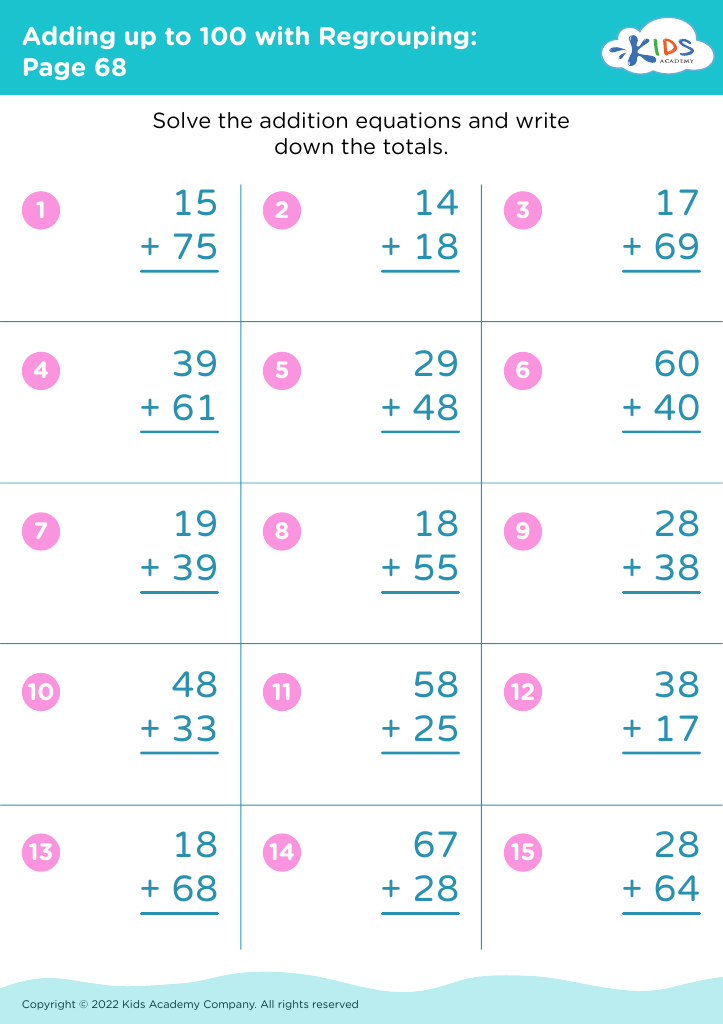
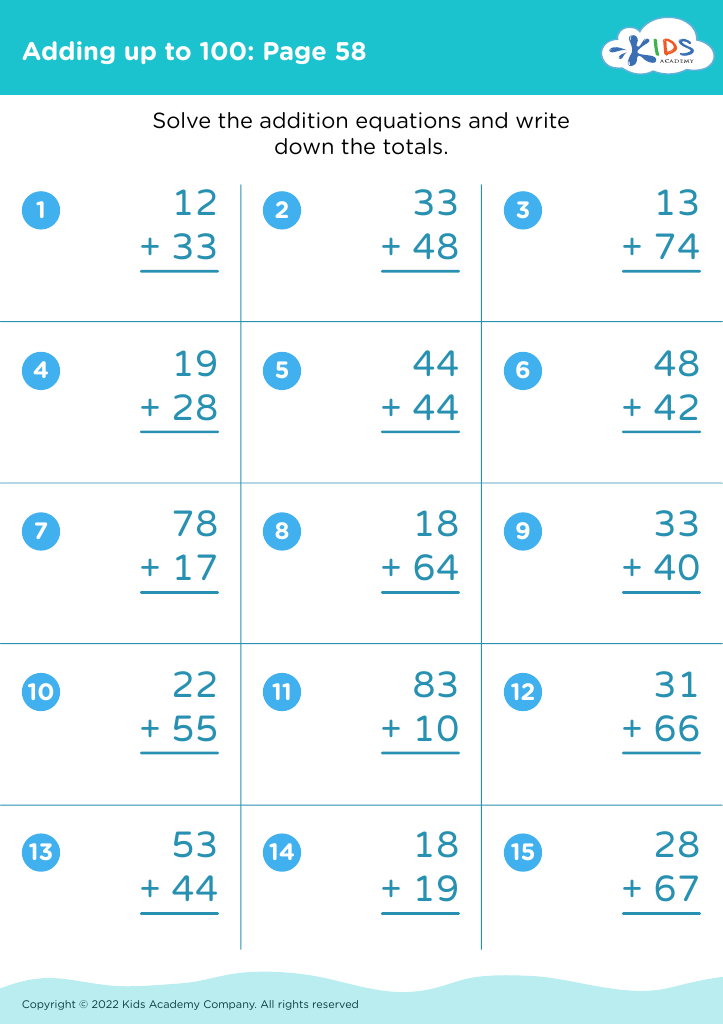
Boost your child's arithmetic abilities with our "Adding up to 100 Worksheets for Ages 4-8." Featuring a variety of engaging and age-appropriate exercises, these worksheets help children conquer addition within 100 effortlessly. Tailored for young learners, our worksheets combine fun graphics with challenging problems designed to enhance both accuracy and speed. Perfect for home or classroom use, they support skill reinforcement and confidence building in essential math concepts. Trust Kids Academy to make mastering addition an enjoyable journey, ensuring your child lays a solid foundation for future math success. Start exploring our free, printable worksheets today!






%20(1).jpg)
Improving math skills for children aged 4-8, especially around the concept of adding up to 100, is crucial for several reasons. During these formative years, kids develop foundational skills that set the stage for future academic success. Early math competency is strongly linked to better achievement not just in math, but in other subjects like science and reading. Mastering addition up to 100 helps children understand number sense—a core mathematical concept that encompasses the ability to grasp number relationships, place value, and simple arithmetic operations.
Furthermore, early proficiency in math fosters confidence in students. When children grasp basic math concepts early, it builds their self-confidence and curiosity towards learning. This enthusiasm and positive outlook can extend into other areas, promoting an overall love for learning.
Parents and teachers who prioritize math skills also equip children with critical life skills. Math teaches problem-solving, logical reasoning, and analytical thinking—abilities that are invaluable beyond academics. These skills are essential for younger children to navigate everyday situations and gradually prepare them for real-world challenges.
Overall, investing in the development of math skills in early childhood lays a solid foundation for lifelong learning, equips children with essential cognitive and emotional skills, and opens doors to a myriad of future opportunities.








