Improve reading comprehension Adding up to 100 Worksheets for Ages 4-8
4 filtered results
-
From - To
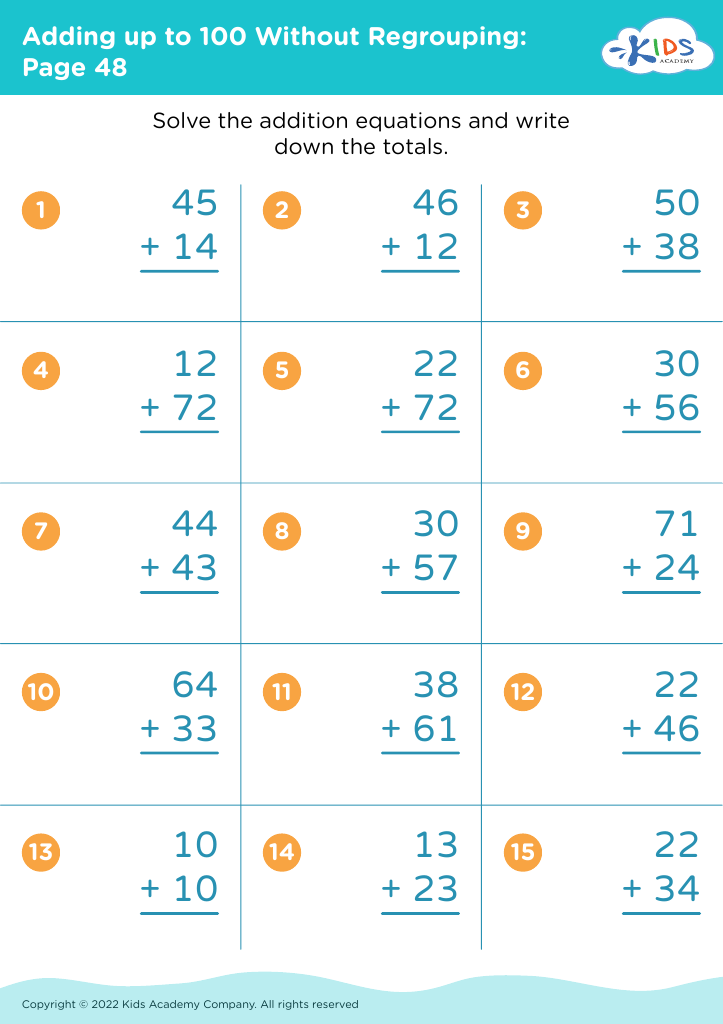
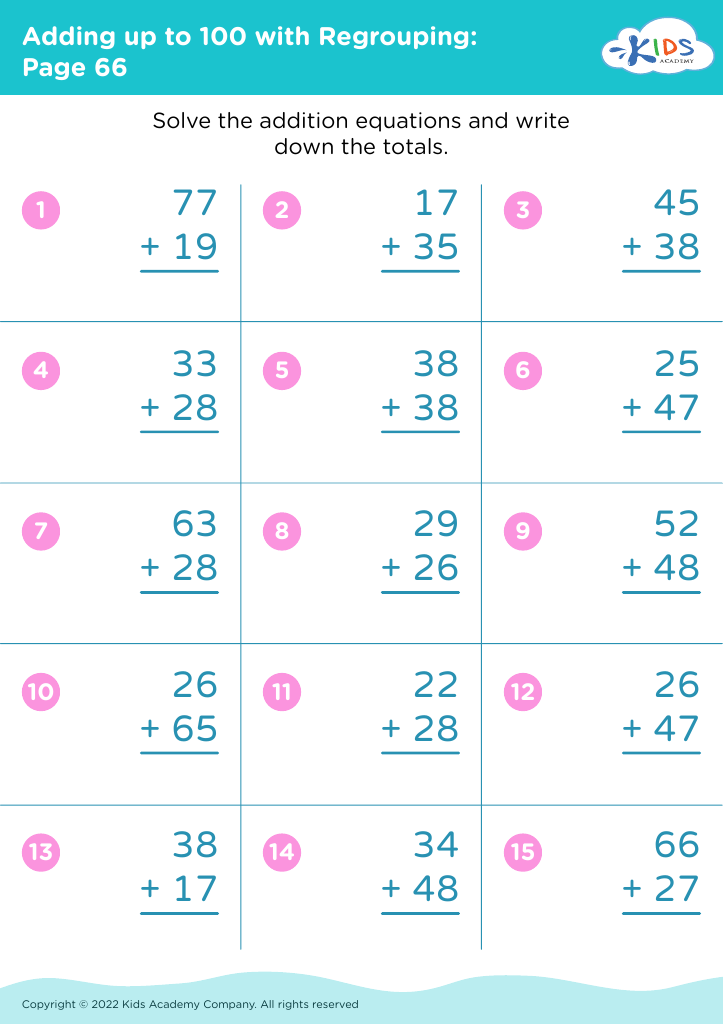
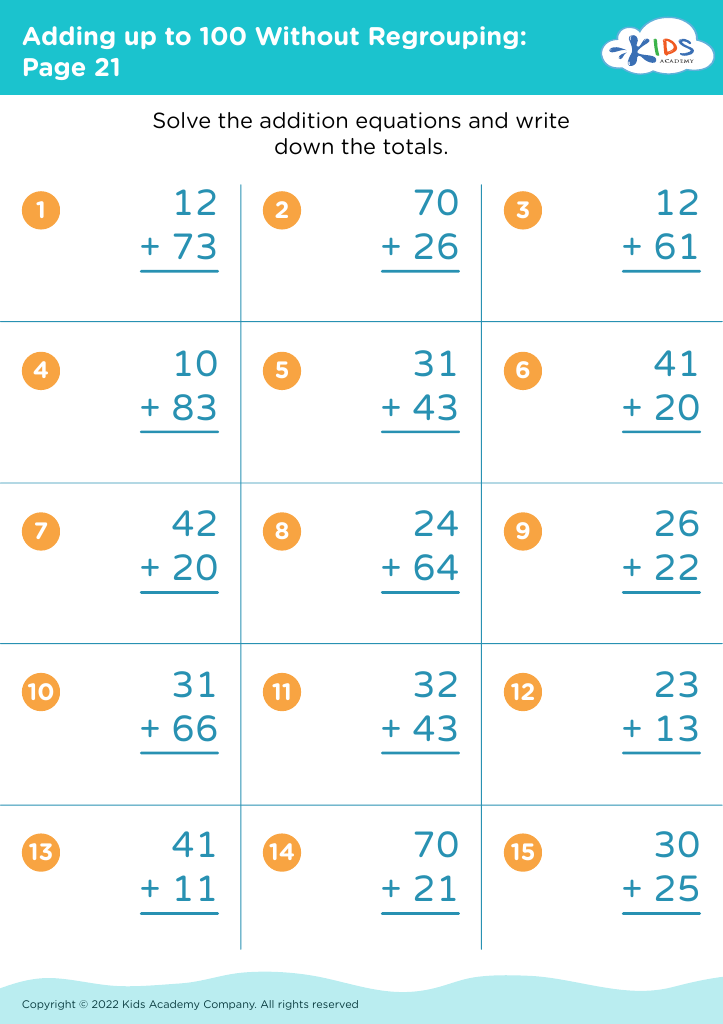
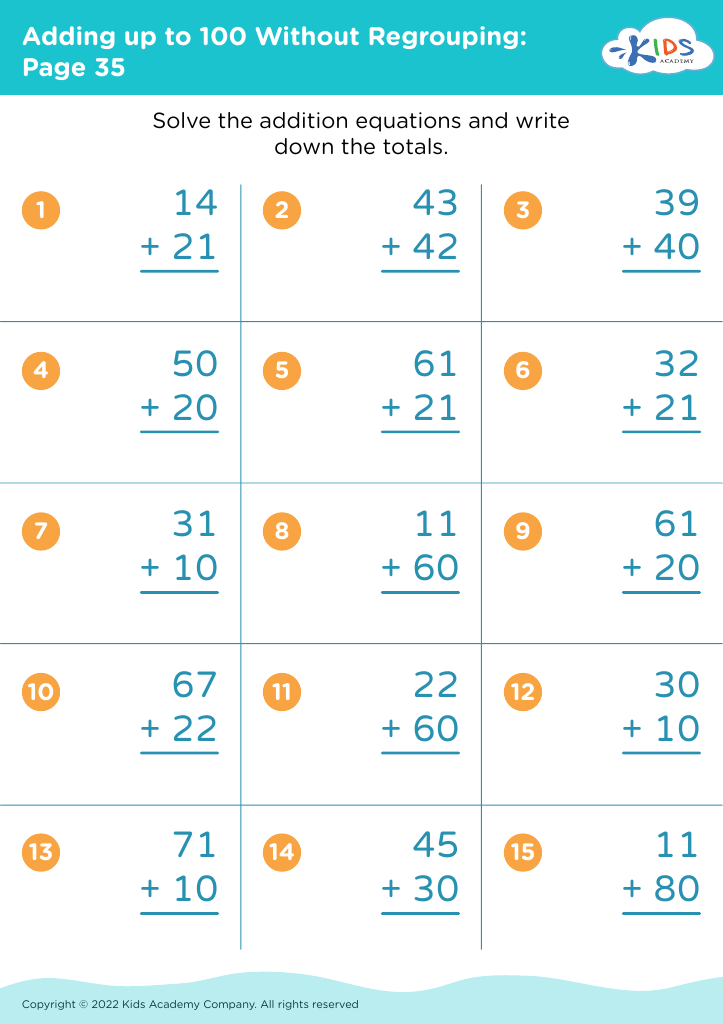
Boost your child's reading comprehension skills with our engaging "Improve Reading Comprehension: Adding Up to 100" worksheets, designed for ages 4-8. This collection of 100 interactive worksheets employs a fun, age-appropriate approach to combine math and reading. Kids will enhance their understanding of texts while solving addition problems up to 100, reinforcing both numeracy and literacy skills. Each worksheet is carefully crafted to promote critical thinking, vocabulary development, and a love for learning. Perfect for home or classroom use, these resources support young learners in becoming confident readers and problem solvers. Start the reading and math journey today!



%20(1).jpg)



Improving reading comprehension for children aged 4-8 is crucial for various reasons that deserve the attention of both parents and teachers. First and foremost, comprehension is the foundation of literacy. When children understand what they read, they are more likely to develop a love for reading and learning. This essential skill boosts their vocabulary acquisition and enhances their ability to express ideas clearly.
Additionally, strong reading comprehension supports academic success across all subjects. As students progress, they increasingly encounter complex texts in science, history, and math that require understanding and interpretation. If children lack comprehension skills, they may struggle with homework and assessments, impacting their overall confidence and motivation.
By focusing on reading comprehension, parents and teachers can help create engaged and curious learners. Interactive reading sessions, discussions about the story, and asking open-ended questions can foster deeper understanding. Moreover, when educators and families collaborate in developing these skills, they cultivate a community that values literacy. As children grow to become proficient readers, they also gain critical thinking abilities, preparing them for future challenges and opportunities. Ultimately, nurturing reading comprehension is an investment in a child’s lifelong education and personal growth.








