Number Recognition Adding up to 100 Worksheets for Ages 4-8 - Page 2
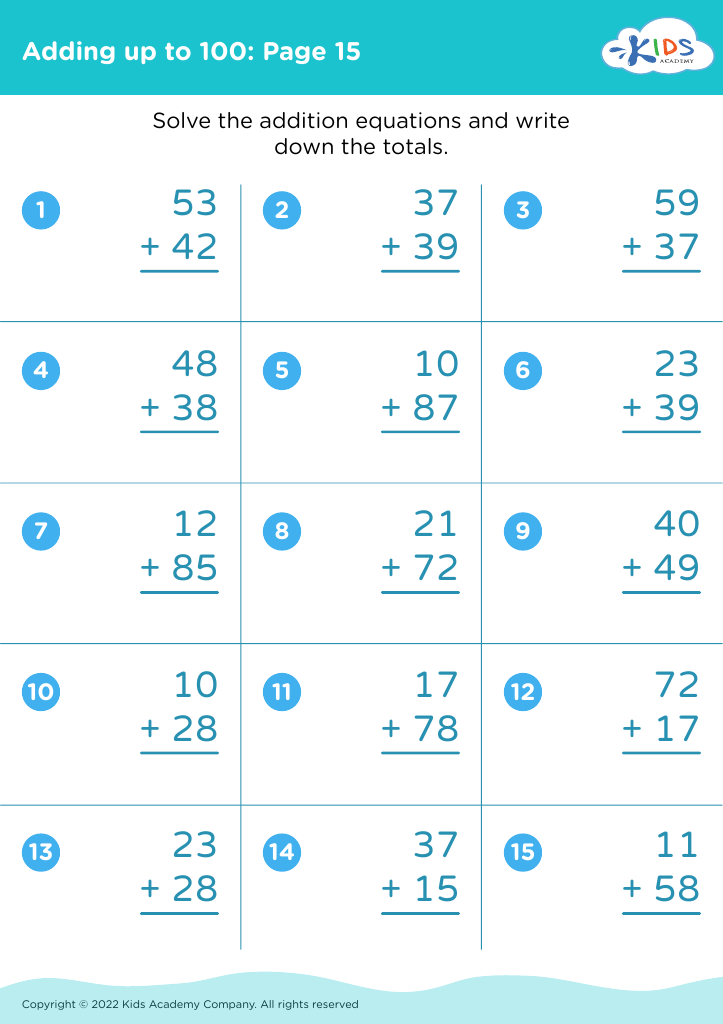
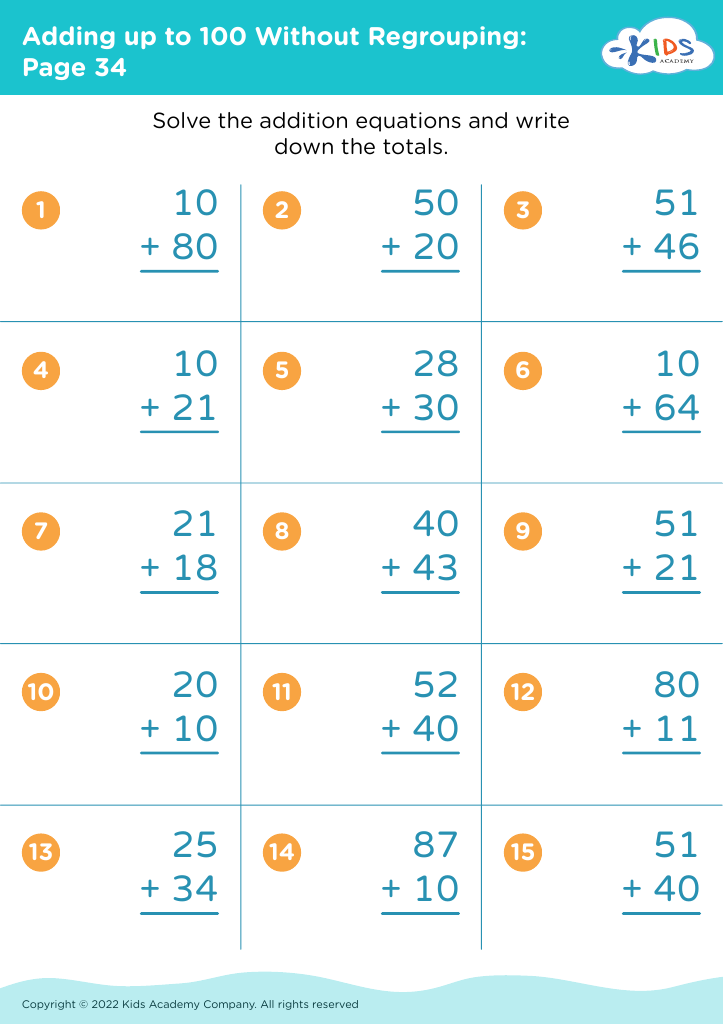
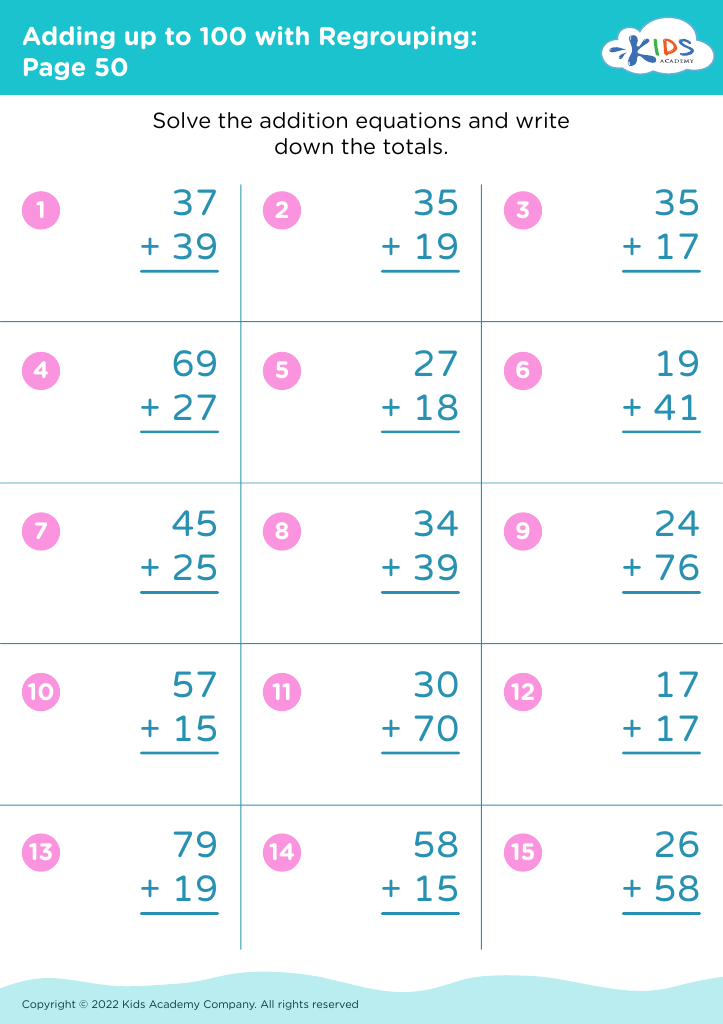
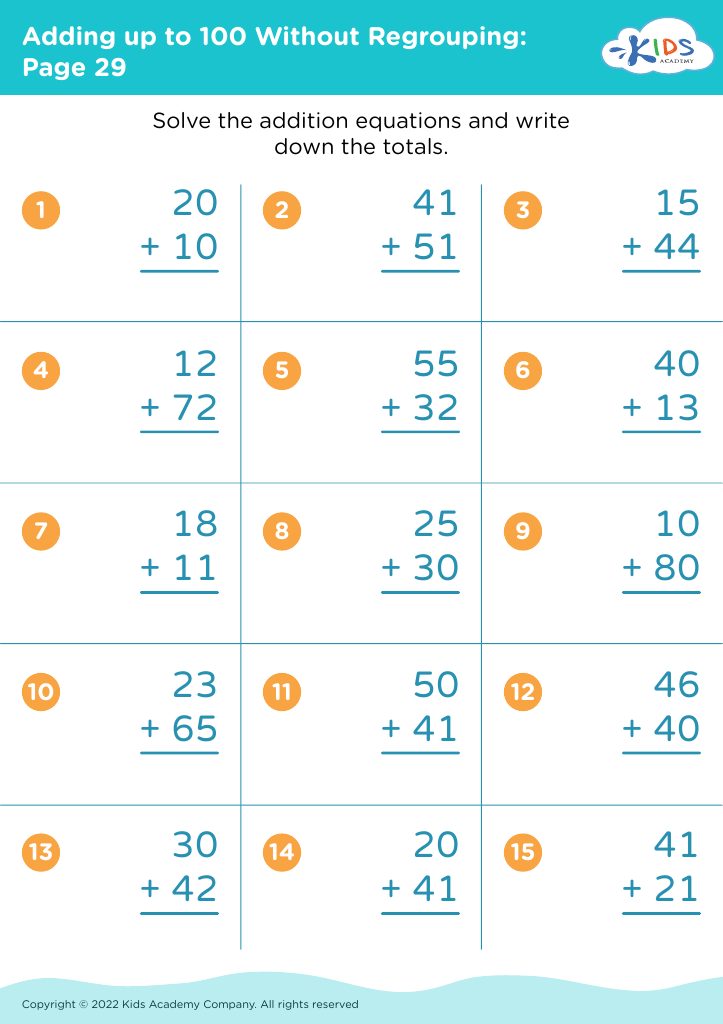



%20(1).jpg)




Number recognition is a foundational skill critical for young children aged 4 to 8. It serves as the building block for more complex mathematical concepts and everyday problem-solving. When children can recognize numbers and associate them with quantity, they develop a better understanding of mathematics, which is essential in their educational journeys.
For parents and teachers, fostering number recognition up to 100 encourages children to engage with numbers in a meaningful way. It enhances cognitive skills such as counting, sorting, and analyzing quantities. These abilities are not only fundamental for math but also allow children to develop logical thinking and problem-solving strategies early on.
Recognizing numbers helps children gain confidence and improves their ability to communicate about everyday activities involving numbers. Simple tasks like comparing weights, sorting objects by quantity, or understanding prices become more accessible when children can readily identify numbers.
Moreover, consistent engagement in number recognition lays the groundwork for lifelong learning, setting a positive tone for their attitudes toward math. Consequently, parents and teachers play a crucial role in creating an enriching environment that emphasizes the importance of numerical awareness, nurturing confident learners ready to tackle more advanced mathematical challenges.








