Practice multiplication Adding up to 100 Worksheets for Ages 4-8
4 filtered results
-
From - To
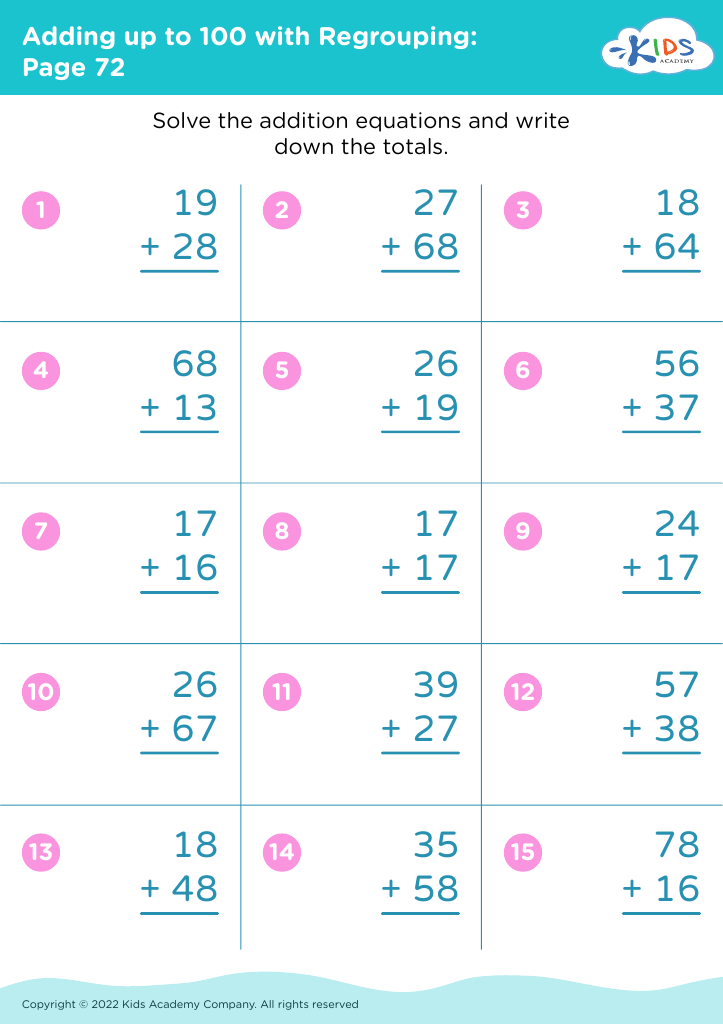
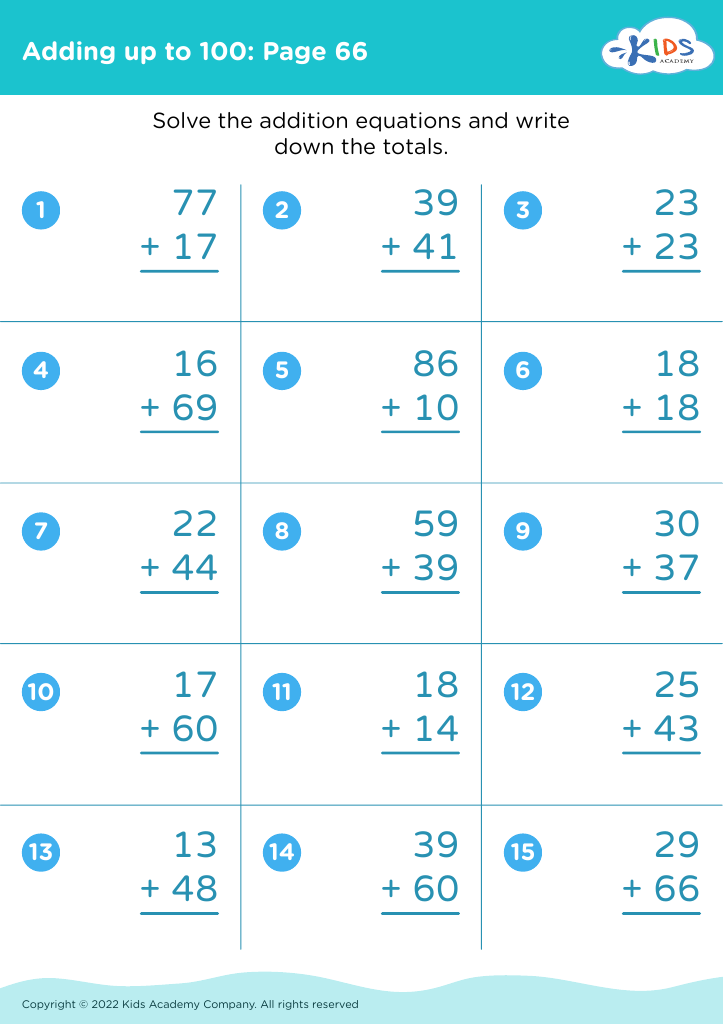
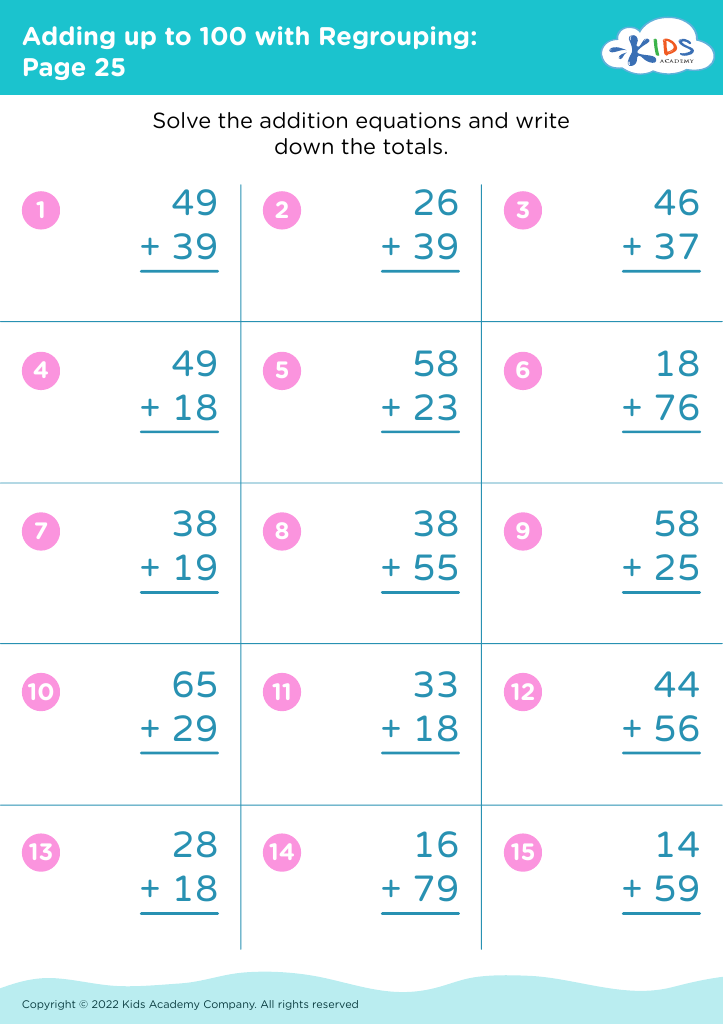
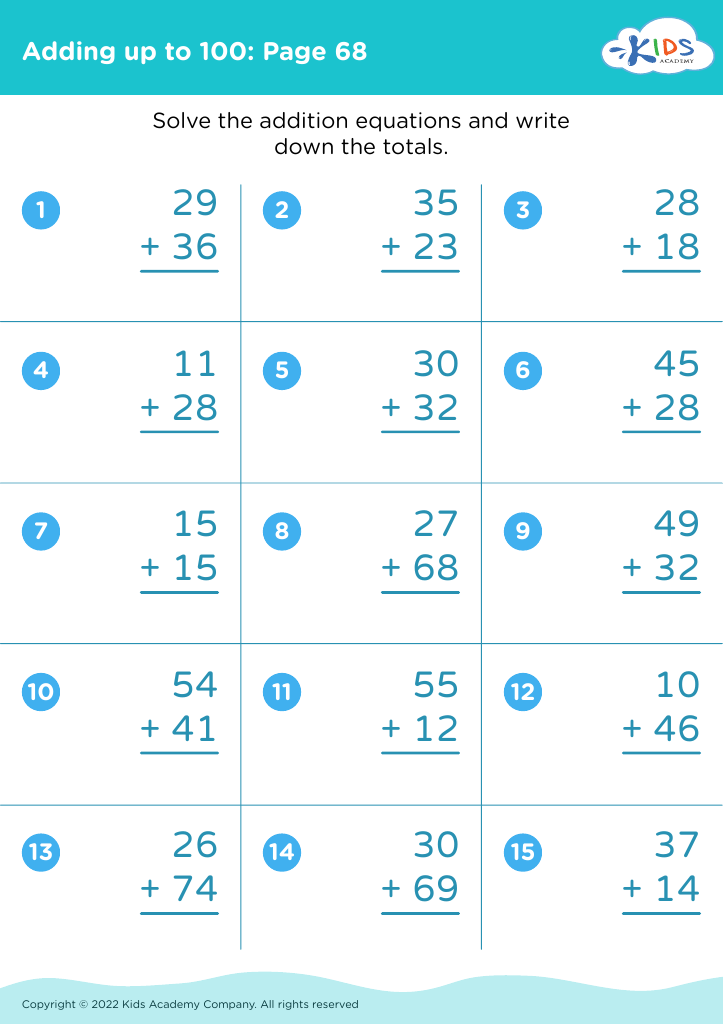
Introducing our engaging "Practice Multiplication Adding up to 100 Worksheets for Ages 4-8"! Designed to build foundational math skills, these fun and interactive worksheets help young learners grasp multiplication concepts through colorful visual aids and intriguing exercises. Perfect for classroom use or home practice, they'll guide your child step-by-step towards mastering basics efficiently. With these worksheets, kids can boost their problem-solving abilities, enhance their numerical confidence, and gain a solid understanding of math fundamentals. Encourage your child's mathematical journey with our carefully crafted materials, tailored to inspire wonder and a love for learning in young minds!


%20(1).jpg)




Parents and teachers should prioritize practice multiplication and addition for ages 4-8 because these foundational math skills are crucial for cognitive development and future academic success. At this age, children's brains are highly receptive to learning new concepts, and developing strong numerical skills early on provides a concrete foundation for more complex mathematical concepts later in their educational journey.
Practicing multiplication and adding up to 100 helps children improve their number sense and mental arithmetic, making them more fluent and confident in problem-solving. Engaging in regular practice boosts memory retention, pattern recognition, and logical thinking, all of which are essential across various subjects.
Additionally, mastery of these basic math skills fosters a positive attitude towards learning and builds perseverance. When children experience success in mathematics early on, it enhances their self-esteem and motivation to tackle increasingly challenging problems. Understanding multiplication also paves the way for future topics in school, such as division, fractions, and algebra, by establishing a solid grasp of how numbers interact.
By encouraging and supporting young learners in practicing these skills, parents and teachers lay the groundwork for lifelong numeracy, improving both academic potential and everyday competency in managing tasks that require mathematical understanding.








