Problem-solving practice Adding up to 100 Worksheets for Ages 4-8
5 filtered results
-
From - To
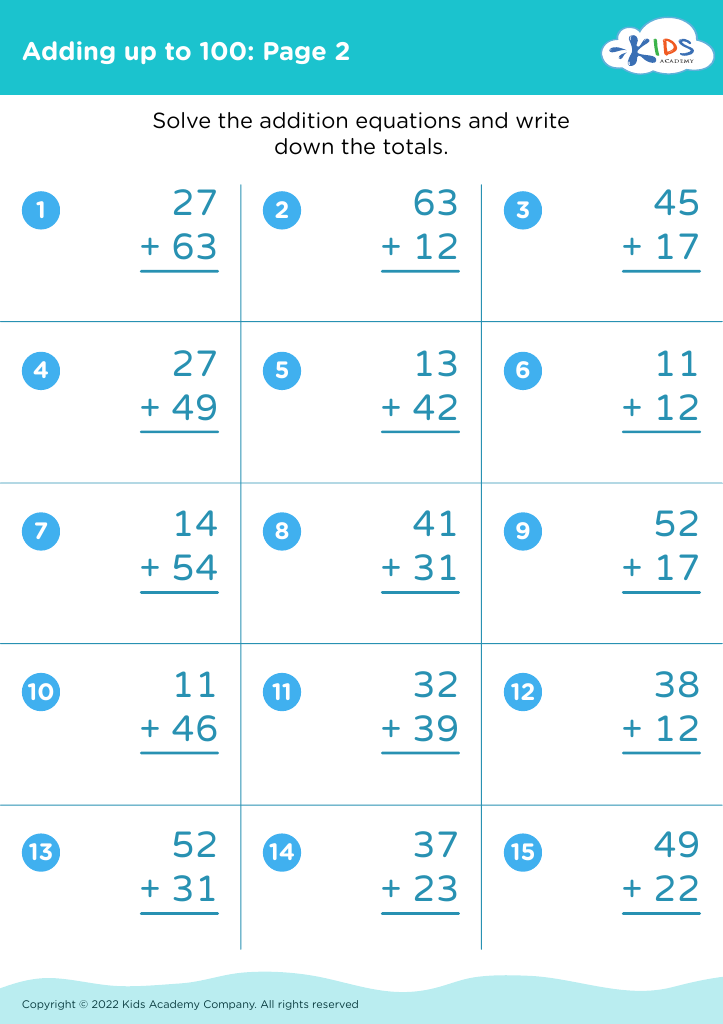
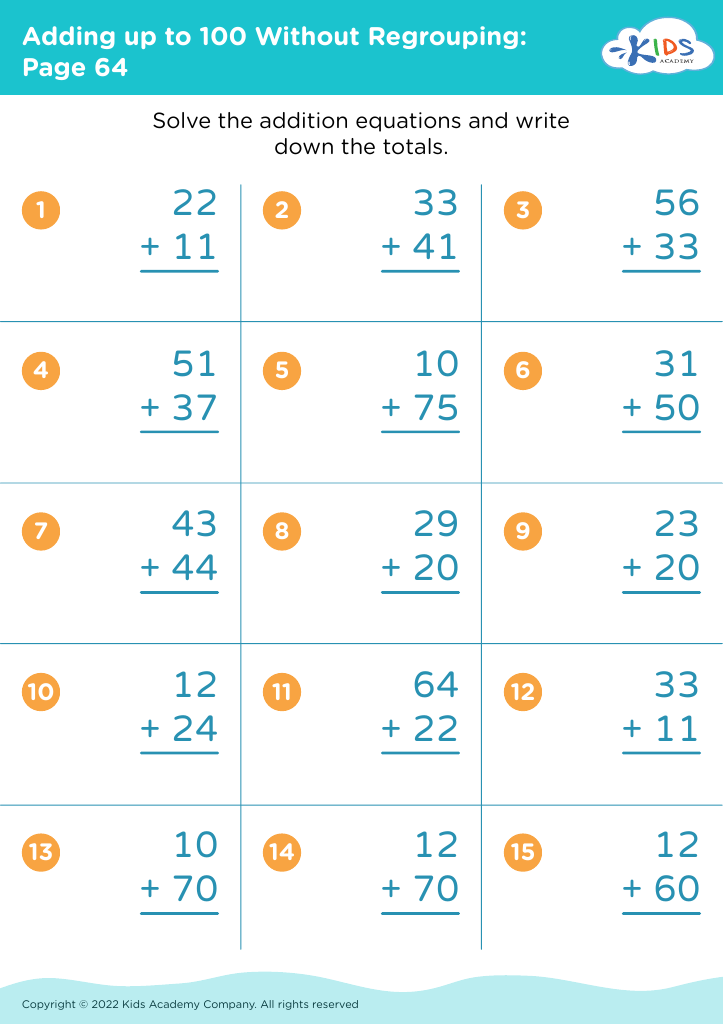
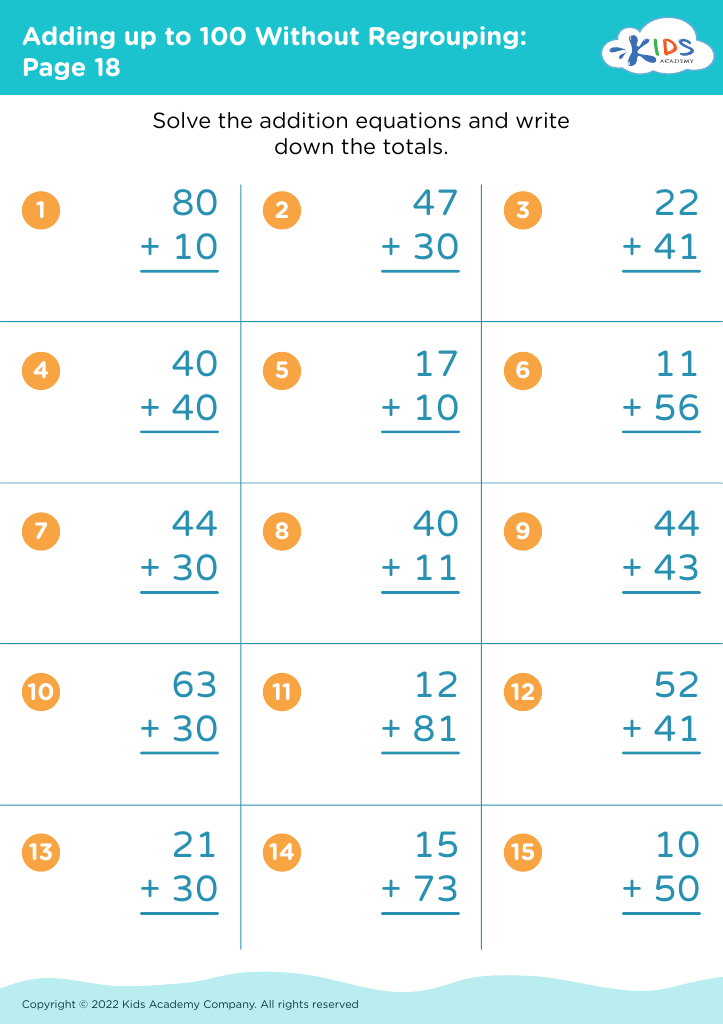
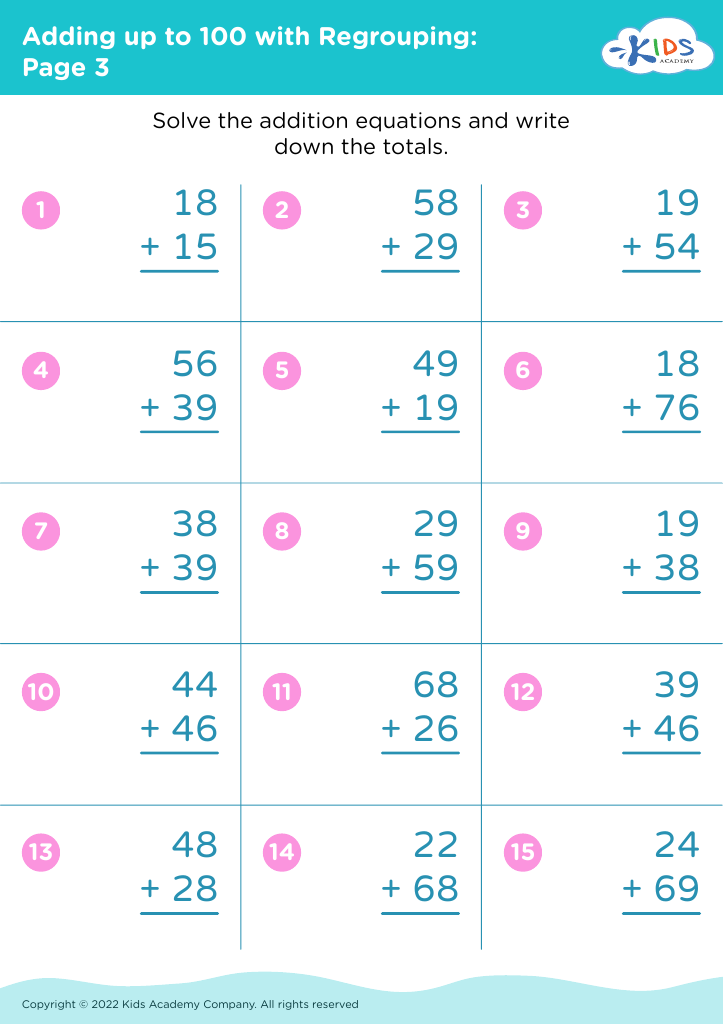
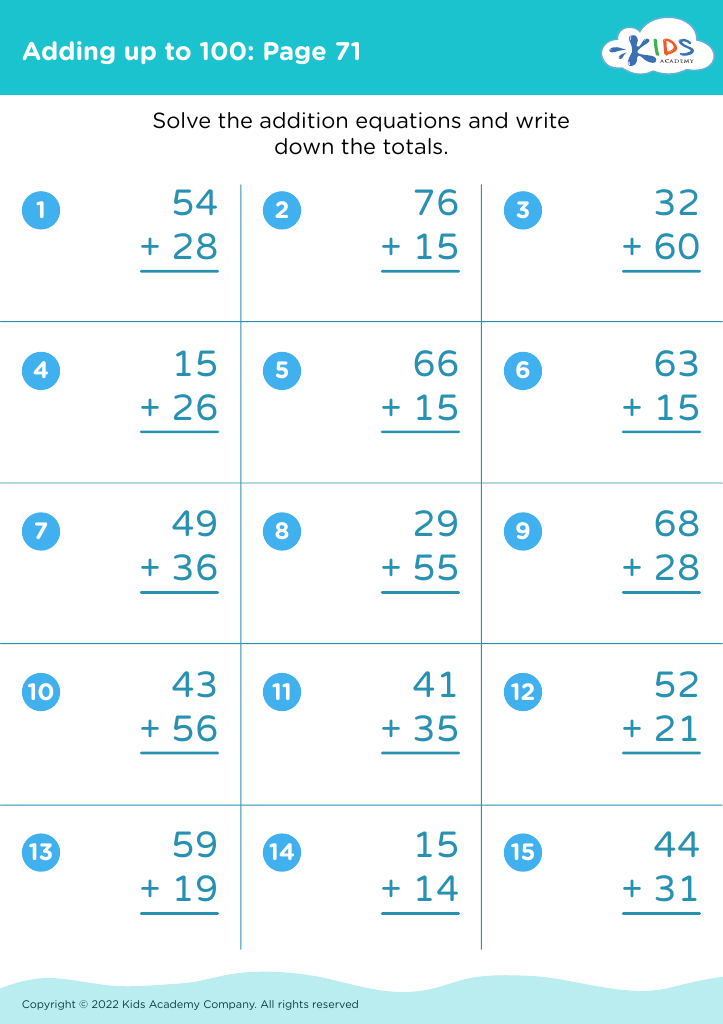
Discover "Problem-Solving Practice: Adding up to 100 Worksheets for Ages 4-8" – an engaging way to help young learners enhance their math skills. These carefully designed worksheets stimulate creative thinking and build a strong numerical foundation. Using vibrant visuals and fun scenarios, children will develop essential problem-solving abilities while mastering the addition of numbers up to 100. Ideal for classroom or home use, our worksheets cater to various learning styles and boost confidence in solving math challenges. Set your child on a path to math success with these interactive and educational problem-solving exercises. Saxon Early Learning offers a perfect mix of fun and learning!



%20(1).jpg)



Problem-solving practice involving adding up to 100 is crucial for children aged 4-8, as it lays a solid foundation for their future mathematical learning and cognitive development. At this young age, engaging in activities that focus on basic arithmetic skills like addition helps spark an interest in mathematics. This foundational knowledge is essential for understanding more complex mathematical concepts in later school years.
Moreover, practicing addition up to 100 enhances children's number sense, allowing them to recognize and understand relationships between numbers. It also improves their mental math skills, crucial for everyday tasks and more advanced mathematical calculations. Working on these problems can bolster essential cognitive skills such as memory, logical thinking, and problem-solving.
For educational and developmental reasons, parents and teachers should care about and support these practices. It helps children develop persistence and resilience, learning that challenges can be approached methodically and solved with effort. Additionally, it fosters confidence and a positive attitude towards learning mathematics.
In sum, practicing problem-solving with addition up to 100 equips young learners with the necessary skills. It broadens their understanding as they progress academically and in their everyday lives, showing the lasting value of early arithmetic skills.








