Recognizing Patterns Adding up to 100 Worksheets for Ages 4-8
5 filtered results
-
From - To
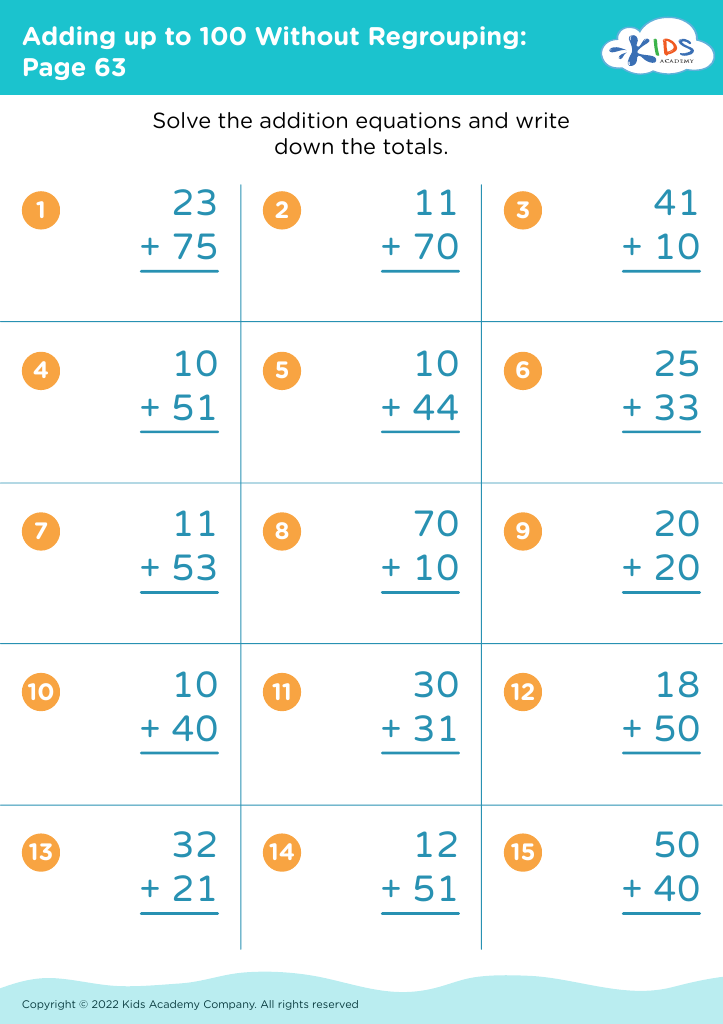
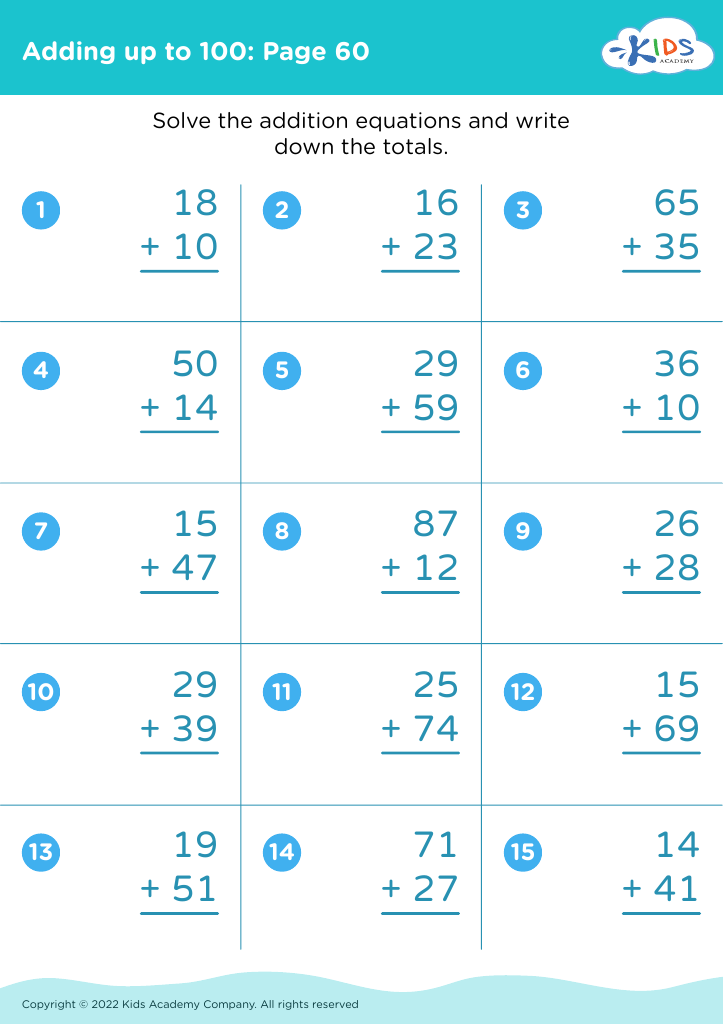
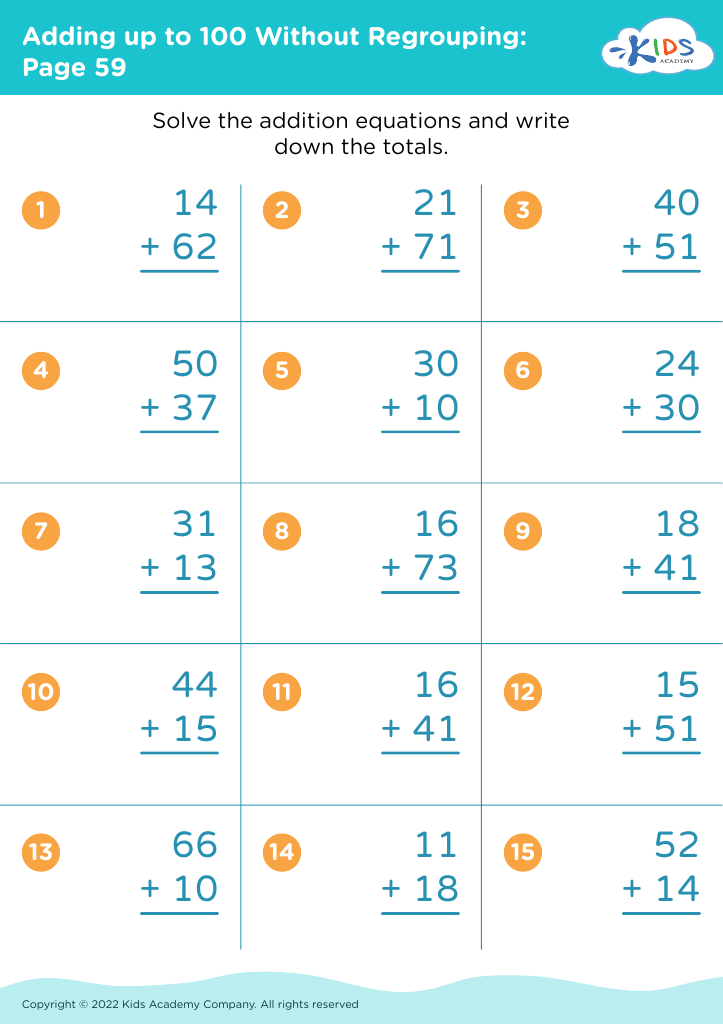
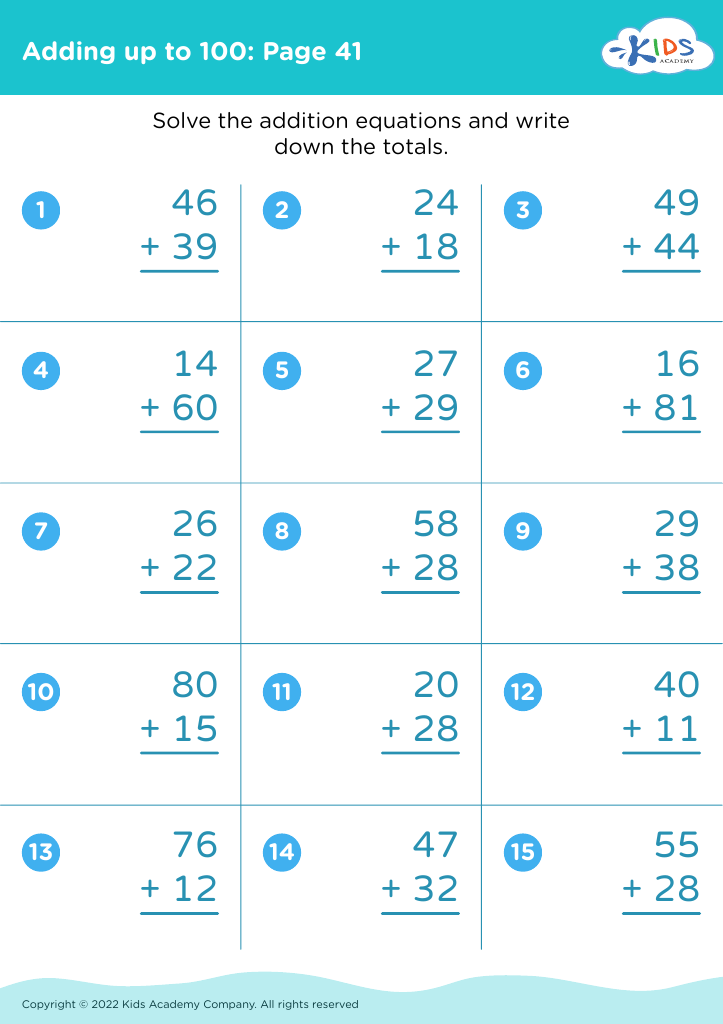
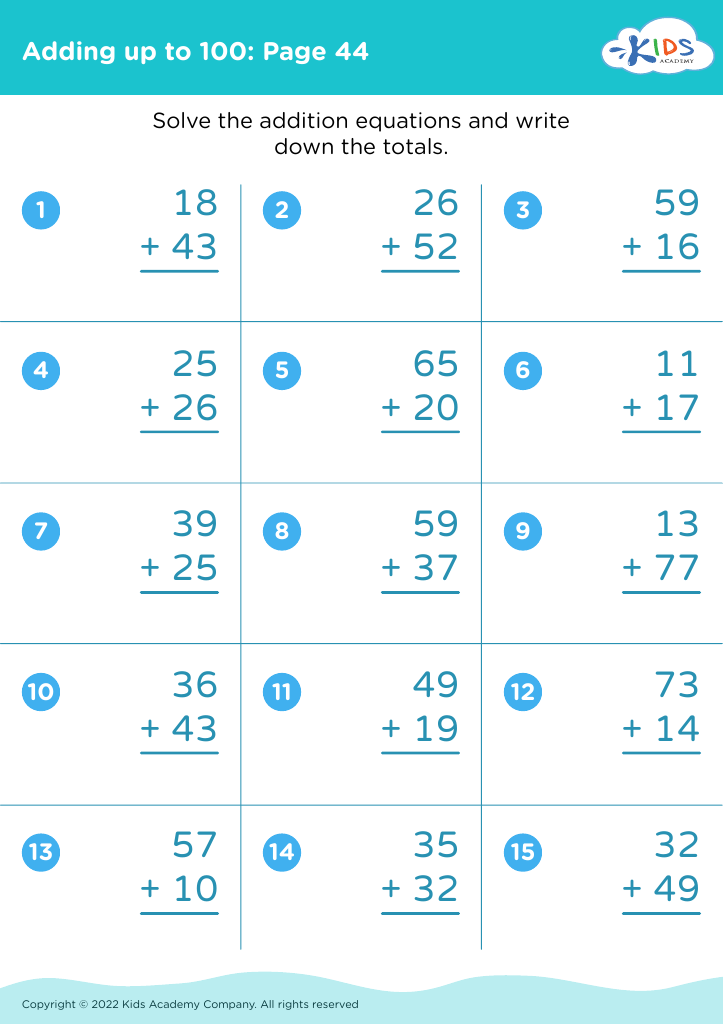
Unlock your child's potential with our "Recognizing Patterns Adding up to 100 Worksheets for Ages 4-8"! Perfectly designed for young learners, these engaging worksheets help kids master fundamental math skills through fun pattern recognition exercises. With vibrant illustrations and simple instructions, children will enjoy learning to identify and extend numerical patterns. These activities also enhance critical thinking and problem-solving abilities, laying a strong foundation for future math success. Ideal for preschoolers and early elementary students, these worksheets are a fantastic resource for both classroom and home learning. Boost your child’s confidence in math today!





%20(1).jpg)

Recognizing patterns and adding up to 100 for children ages 4-8 lays the foundation for fundamental mathematical understanding and problem-solving skills. At this critical developmental stage, engaging in pattern recognition enhances cognitive functions and improves logical thinking abilities, which are essential for academic success not just in math, but across all subjects. Identifying patterns helps children understand the concept of sequences and relationships, which underpins comprehending more complex mathematical concepts later on.
When children practice adding up to 100, they are also honing their number sense, understanding the place value system, and becoming familiar with addition strategies that bolster their arithmetic fluency. Manipulating numbers up to 100 provides a tangible scope where they can see the relationships between numbers and operations, fostering a mental math capacity that is crucial for advanced calculation skills.
Moreover, recognizing patterns and performing additions build confidence. As children succeed in these activities, they develop a positive attitude towards math, which can drive motivation and reduce math anxiety. Both teachers and parents play a pivotal role in setting a stimulating and supportive environment. Encouraging pattern recognition and arithmetic practice in everyday activities makes learning seamless and fun, fostering a lifelong love for learning and numeracy.








