Shape identification Adding up to 100 Worksheets for Ages 4-8
3 filtered results
-
From - To
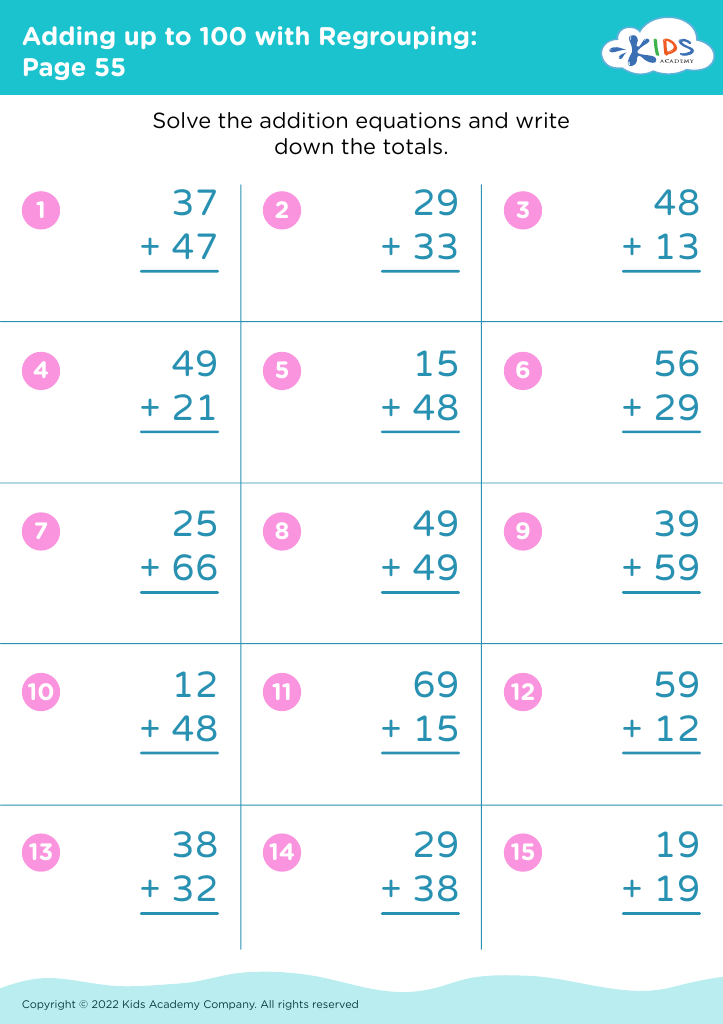
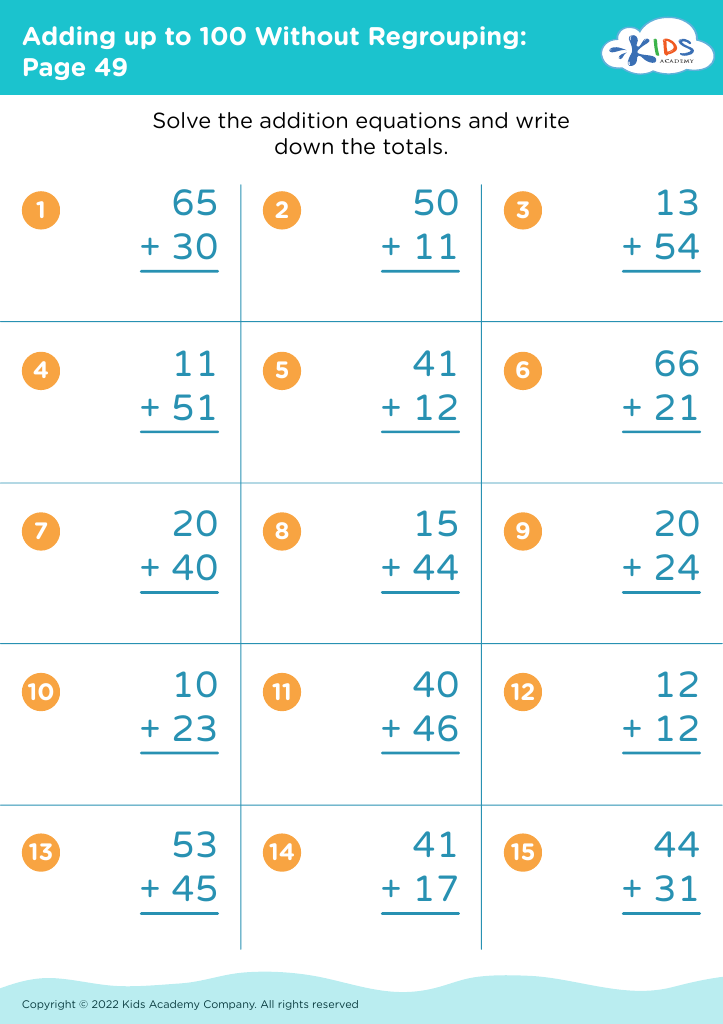
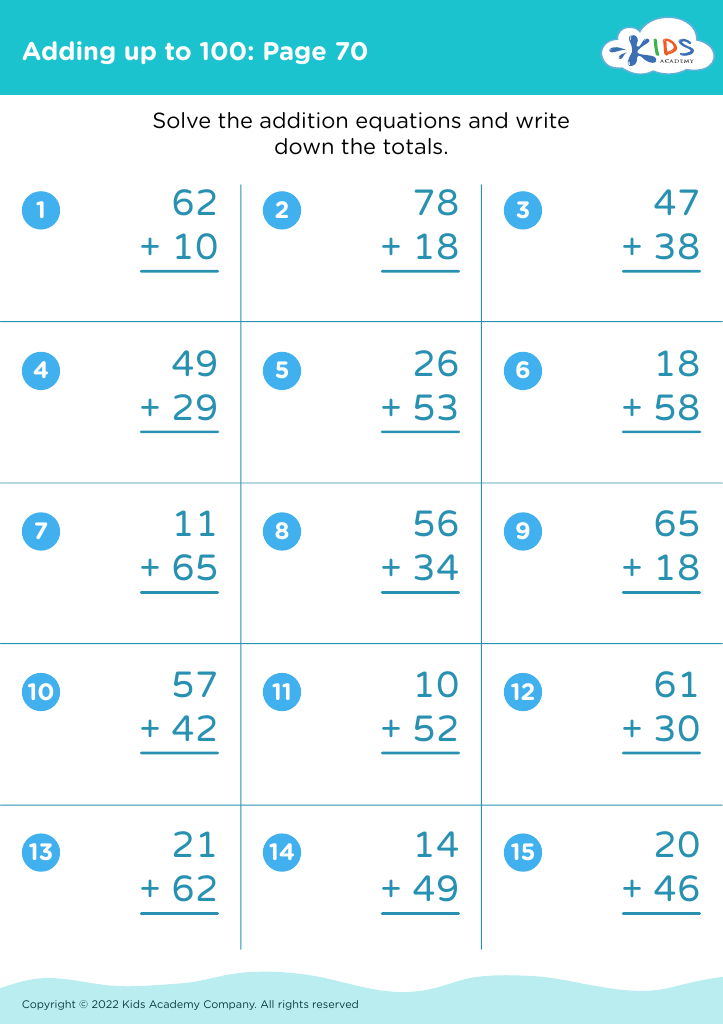
Discover our "Shape Identification Adding up to 100 Worksheets for Ages 4-8" designed to make learning fun. These worksheets help kids master math skills by combining shape identification with addition problems. Perfect for young learners, our resources enhance cognitive development, problem-solving abilities, and early geometry skills. Each activity is crafted to boost confidence while engaging in hands-on learning. With colorful visuals and diverse exercises, children gain proficiency in adding up to 100 through shape-based challenges. Ideal for classroom settings and homeschooling alike, our worksheets are the perfect tool to support your child's educational journey.





%20(1).jpg)

Parents and teachers should value shape identification and adding up to 100 for children ages 4-8 because these skills lay essential foundations for future learning. Shape identification introduces geometric concepts, aiding visual-spatial reasoning and problem-solving abilities. Recognizing shapes also supports early literacy skills by helping children understand letters and numerals, which are composed of geometric shapes.
Learning to add numbers up to 100 reinforces a strong numerical foundation, essential for more advanced mathematics. Early mastery of addition enhances number sense, allowing children to understand relationships between numbers and build arithmetic fluency. This confidence in basic math concepts can prevent math anxiety, fostering a positive attitude toward learning.
Engaging children in these activities also stimulates their cognitive development. Through hands-on learning and interactive play, kids enhance fine motor skills, concentration, and memory retention. These skills are pivotal not only academically but also in day-to-day problem solving and reasoning.
In summary, prioritizing shape identification and addition up to 100 ensures children develop strong math and reasoning abilities, setting the stage for success in their educational journey and beyond. Encouraging these skills through playful and engaging methods can create a joyful and impactful learning experience.








