Understanding Sequences Adding up to 100 Worksheets for Ages 4-8
5 filtered results
-
From - To
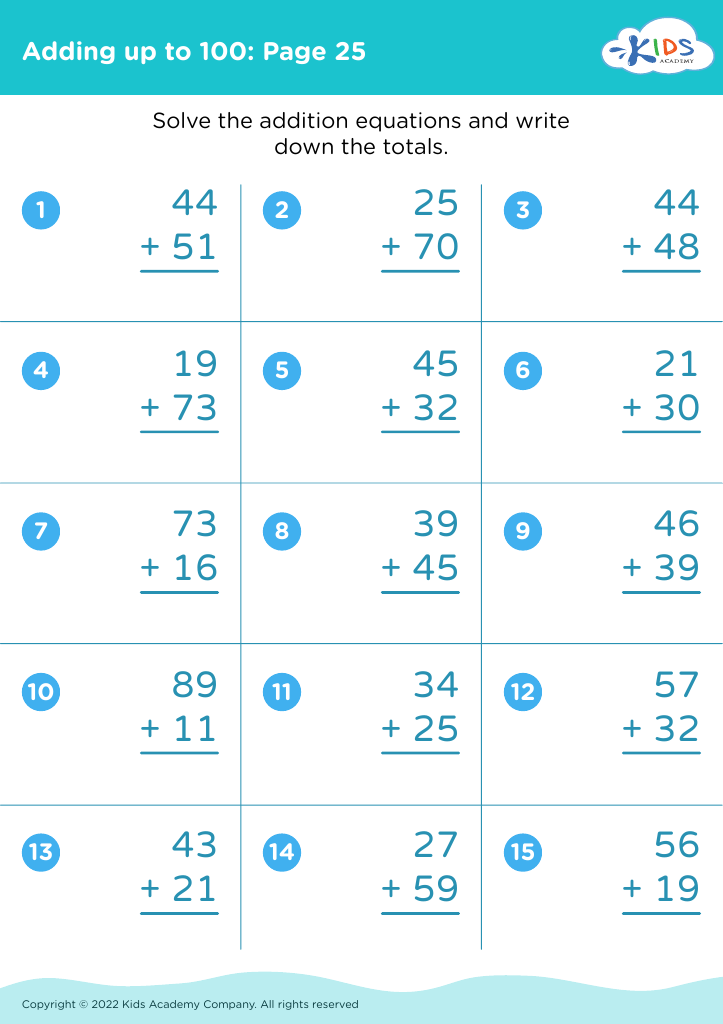
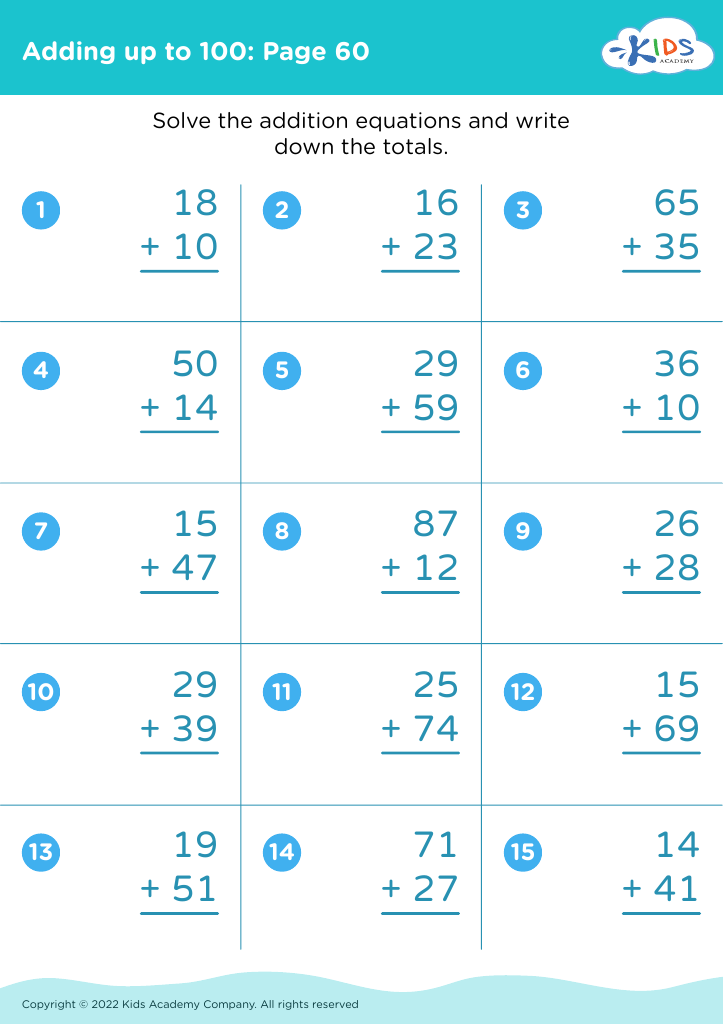
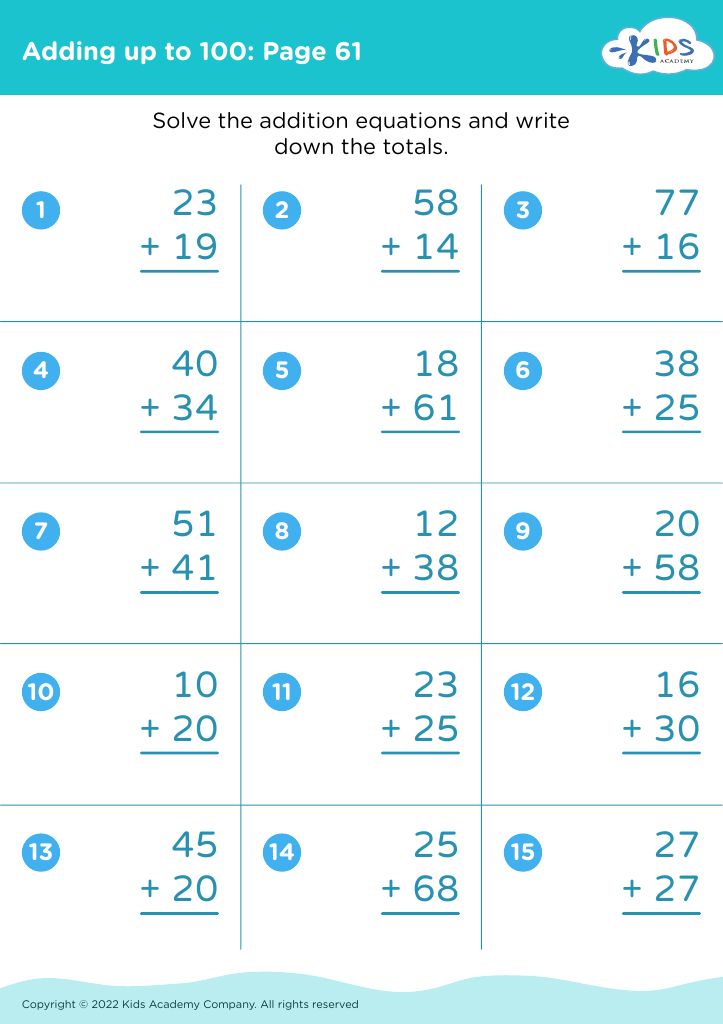
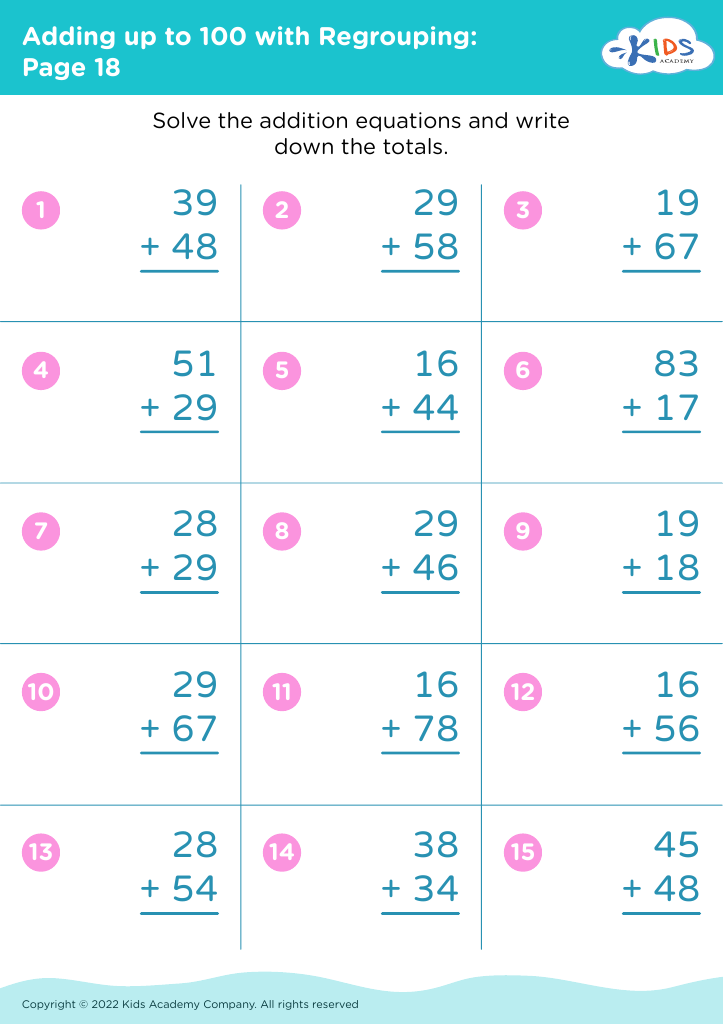
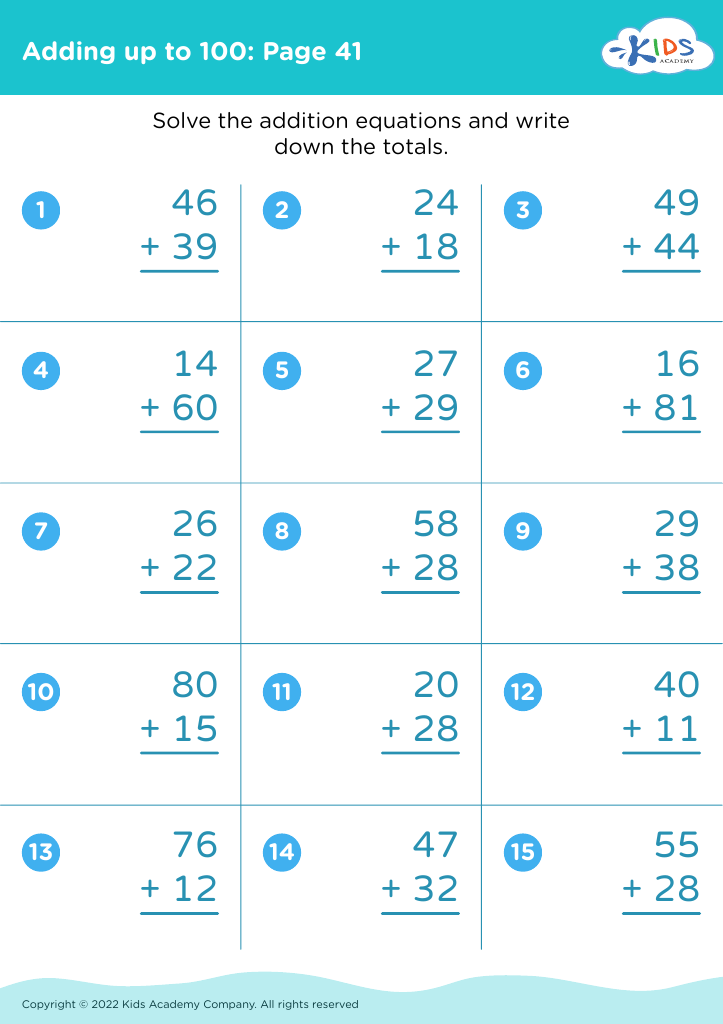
Unlock the world of math for children ages 4-8 with our engaging "Understanding Sequences Adding up to 100" worksheets! Designed to build foundational skills, these worksheets focus on understanding numerical patterns and sequences essential for mastering addition. Young learners will enjoy interactive exercises that promote critical thinking, problem-solving, and number recognition as they practice adding up to 100. Each worksheet combines fun visuals and straightforward instructions tailored to little ones, ensuring a friendly and encouraging learning environment. Perfect for at-home learning or classroom use, our resources empower kids to embrace math with confidence. Explore now and watch their skills flourish!



%20(1).jpg)



Understanding sequences that add up to 100 is vital for young learners aged 4-8, laying a strong foundational skill for their future mathematical understanding. When children grasp the concept of sequences, they begin to recognize patterns, develop problem-solving skills, and cultivate critical thinking abilities. This understanding is particularly significant because it not only enhances their numerical literacy but also prepares them for more complex mathematical concepts in higher grades.
For parents and teachers, fostering this knowledge is crucial because early math skills are tied to overall academic success. A solid grasp of sequences can enhance a child's confidence in math, making them more willing to engage with challenging content. Activities that involve adding up to 100 can be addressed in various ways—through games, visual aids, and hands-on materials—which makes learning fun and interactive.
Moreover, discussions about sequences can also encourage collaboration and communication among peers, building social skills. As children learn to navigate mathematical concepts, they acquire invaluable skills in organization, attention to detail, and perseverance. Ultimately, understanding sequences that lead to 100 not only prepares youngsters for future math challenges but also enriches their cognitive development and daily problem-solving experiences. Parents and teachers should invest in nurturing these skills to unlock their full potential.








