
Vocabulary enhancement Adding up to 100 Worksheets for Ages 4-8
3 filtered results
Difficulty Level
Grade
Age
-
From - To
Subject
Activity
Standards
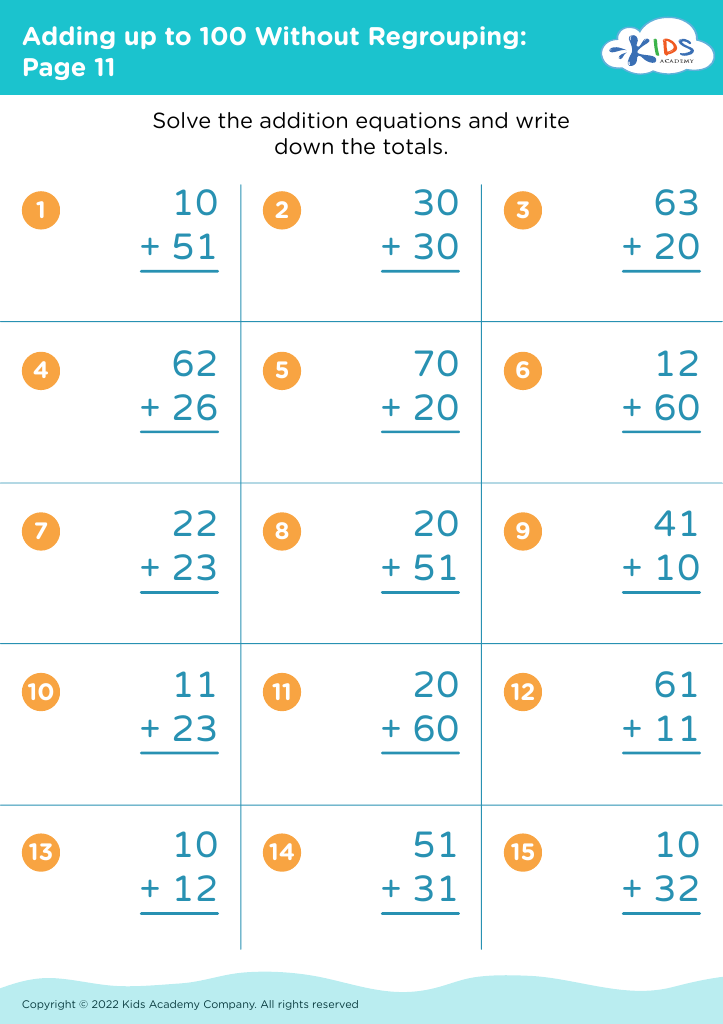
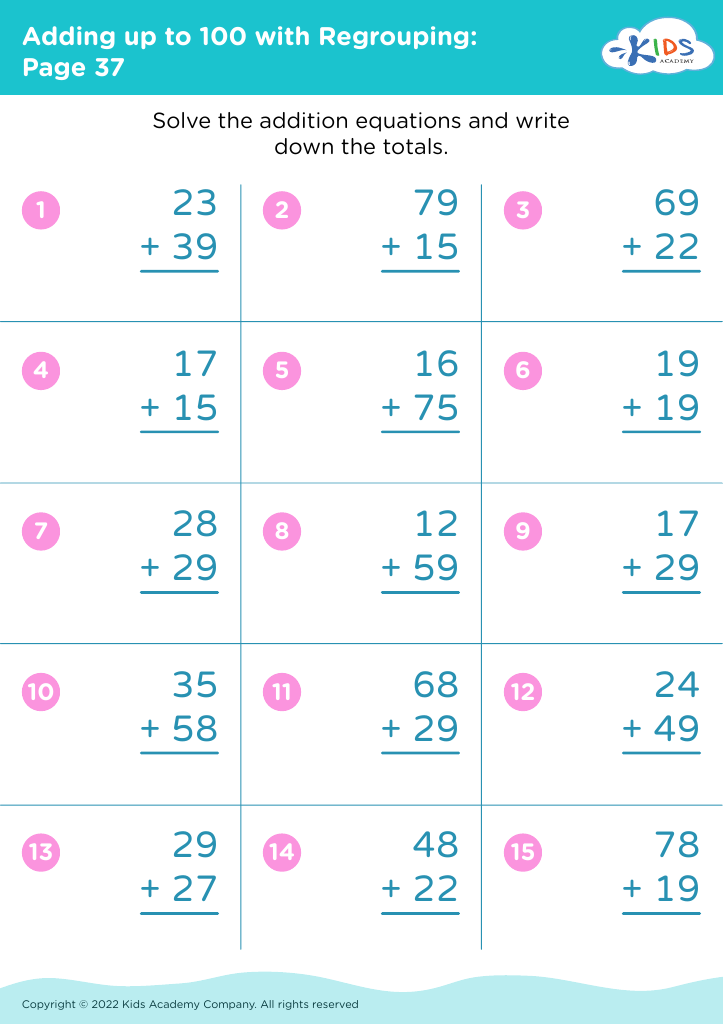
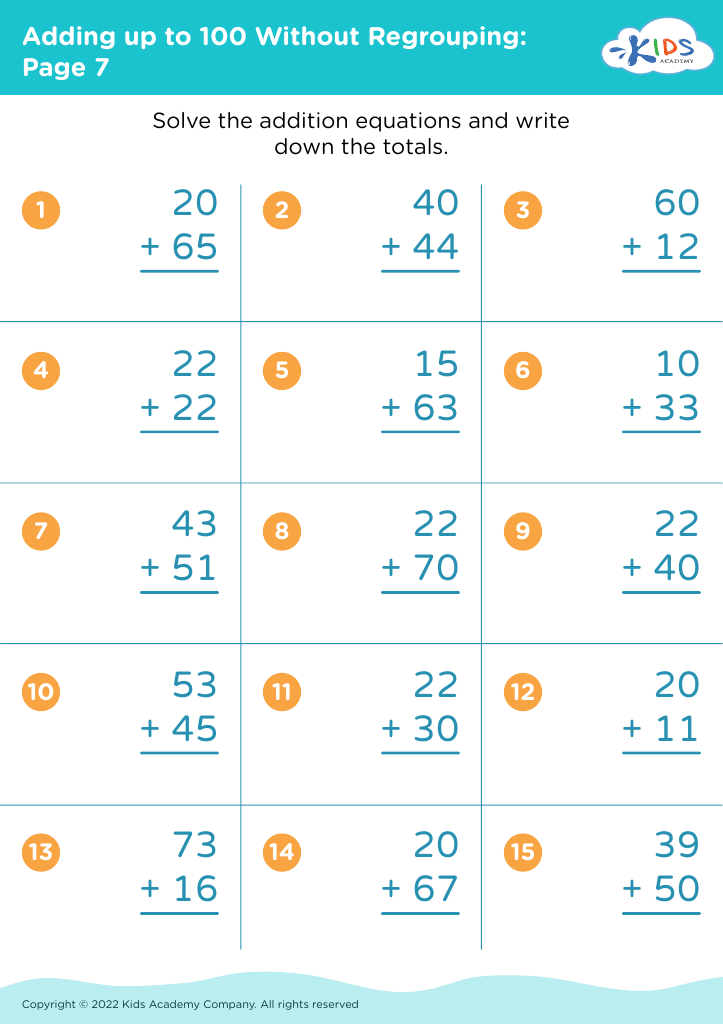
Boost your child’s vocabulary and math skills simultaneously with our "Vocabulary Enhancement Adding up to 100 Worksheets for Ages 4-8." Ideal for young learners, these engaging printable worksheets support both cognitive and linguistic development. Each activity intertwines fundamental math concepts of addition up to 100 with vocabulary-building exercises. Designed by early education experts, these resources make learning interactive and enjoyable, fostering a love for both math and words. Perfect for home or classroom use, these worksheets provide a well-rounded approach to education, helping children excel in multiple areas of learning. Download now and watch them thrive!
Favorites
With answer key
Interactive
Join Kids Academy for Free
Who is primarily going to use this learning content?



%20(1).jpg)



Vocabulary enhancement for children aged 4-8 is crucial for their overall development and academic success. At this formative stage, kids are like sponges, rapidly absorbing new information. A robust vocabulary lays the foundation for effective communication, reading comprehension, and critical thinking skills.
For parents and teachers, focusing on vocabulary growth is not solely about language proficiency. It fosters cognitive development, helping children understand and describe their world more accurately. A richer vocabulary aids in expressing emotions and complex ideas, promoting better social interactions and emotional intelligence.
Moreover, vocabulary skills are strongly correlated with academic achievement. Children with an extensive vocabulary often find it easier to grasp new concepts in various subjects, including math and science. This aspect aligns well with teaching essential math skills, such as adding up to 100. By integrating vocabulary learning with math problems, children can understand instructions more clearly and articulate their thought processes better. For instance, terms like “sum,” “addend,” and “total” become pivotal in solving math problems effectively.
Interactive storytelling, reading aloud, and engaging educational games that incorporate both vocabulary and math practices can significantly benefit young minds. Hence, integrating vocabulary enhancement into daily learning is a holistic investment in a child's future, equipping them with necessary skills for lifelong success.








