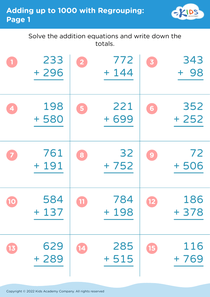
Enhance comprehension Adding up to 1000 Without Regrouping Worksheets for Ages 4-8
4 filtered results
-
From - To
Enhance comprehension with our "Adding Up to 1000 Without Regrouping" worksheets, designed specifically for children aged 4-8. These engaging and age-appropriate resources help young learners develop a solid foundation in addition skills without the complexity of regrouping. Through fun activities and clear visual aids, kids can practice adding larger numbers, boosting their confidence and reinforcing number understanding. This interactive approach encourages students to master the concept with ease, while also developing critical thinking skills. Our worksheets foster a love for math and make learning enjoyable, setting the stage for future mathematical success. Perfect for home or classroom use!
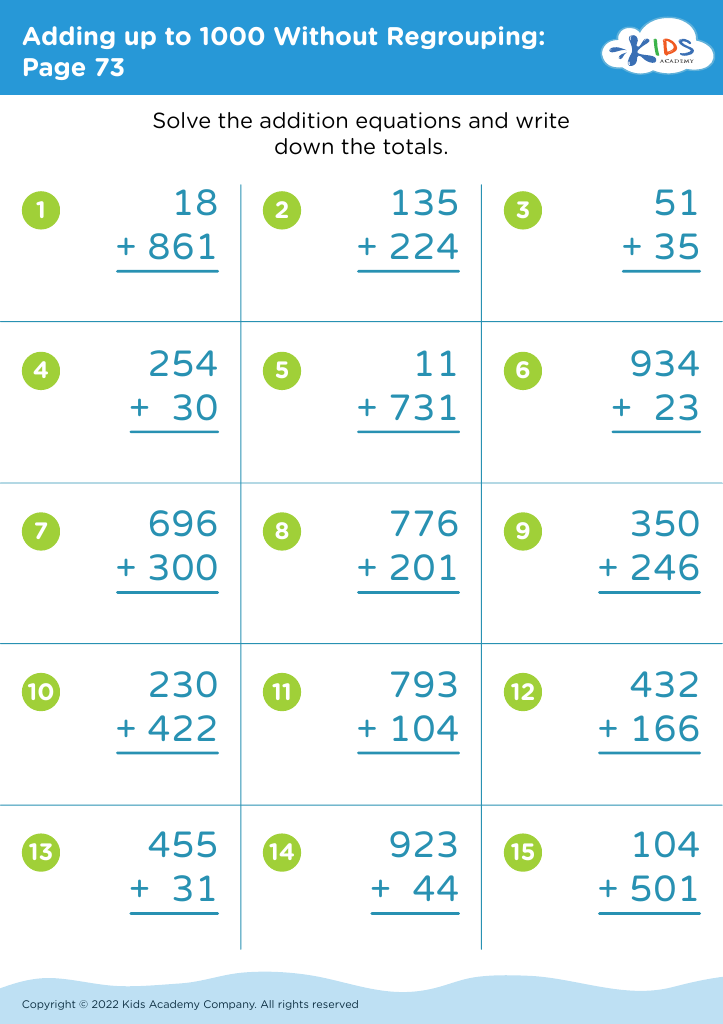
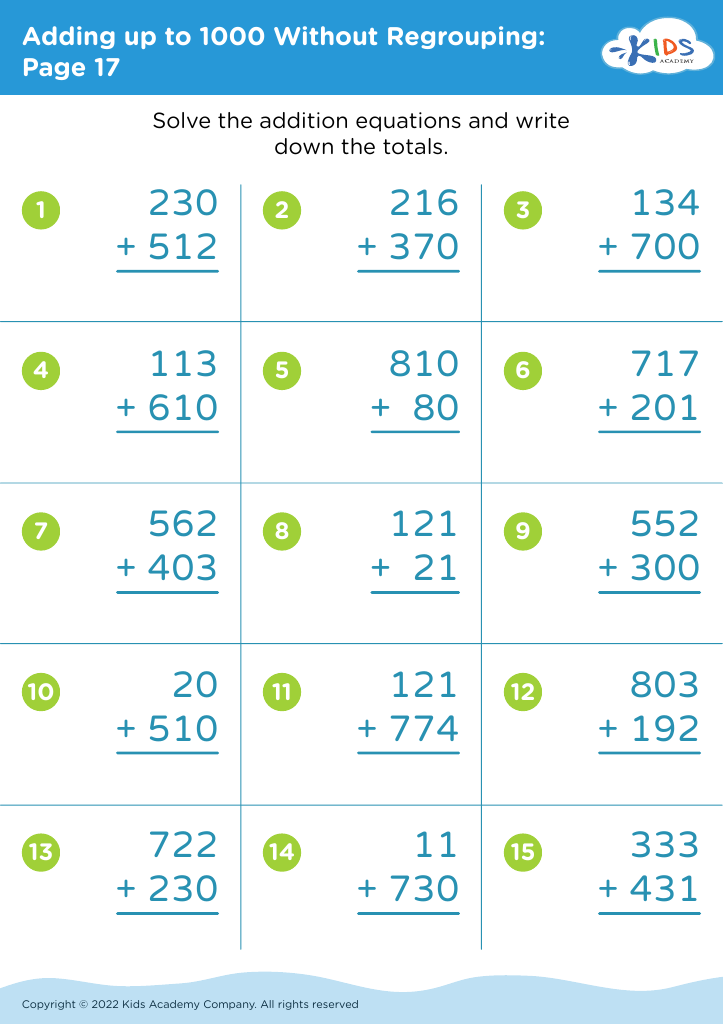
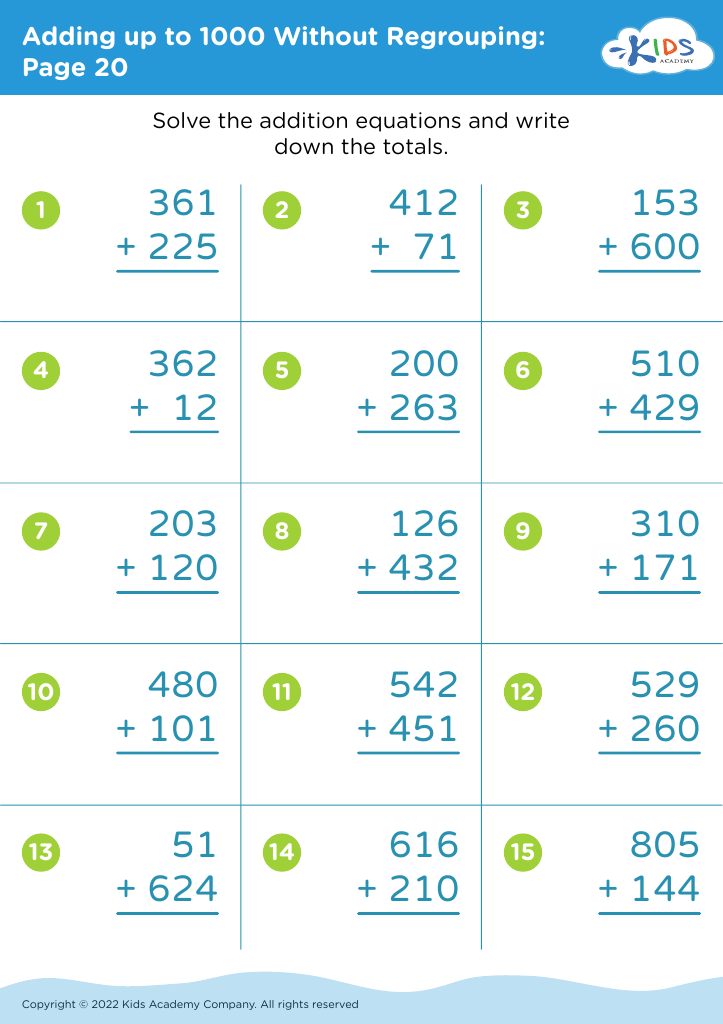
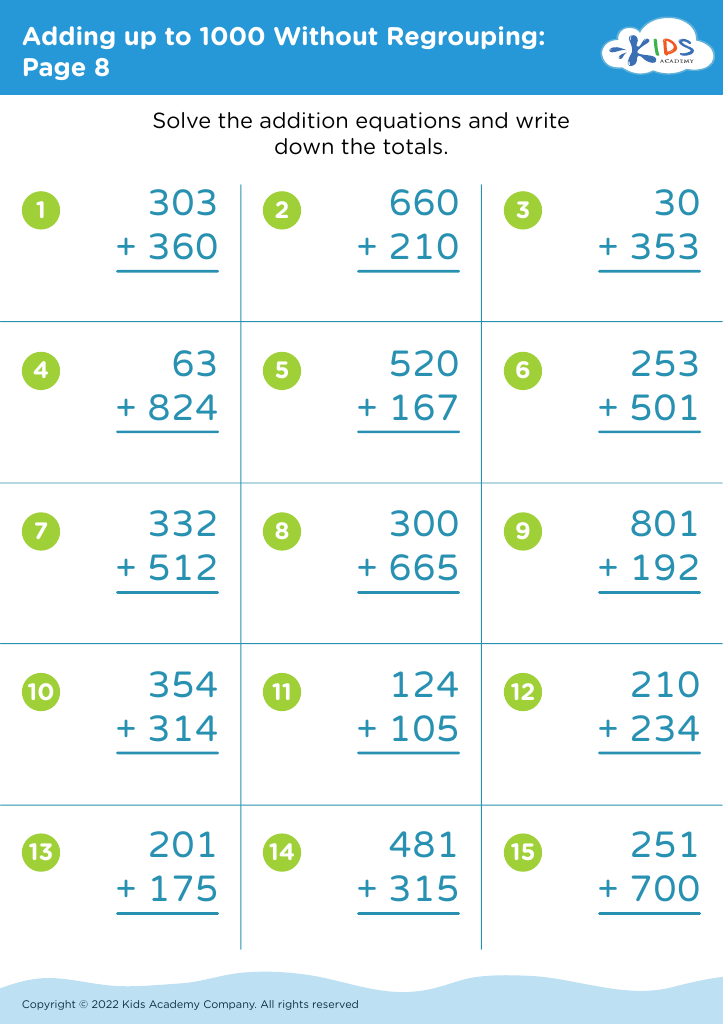


Enhancing comprehension in early mathematics, particularly in concepts like "Adding up to 1000 Without Regrouping," is crucial for young learners aged 4-8. During this formative stage, children develop foundational skills that influence their future academic success. Mastering addition without regrouping enables students to build confidence in their computational abilities, laying the groundwork for more complex math challenges as they progress through school.
Parents and teachers should care about this concept because it promotes number sense, which is connecting quantity with numerical values. By understanding how numbers work together, children learn to recognize patterns and relationships in mathematics, fostering a deeper comprehension of the subject overall. Additionally, this skill helps bridge the gap between concrete objects and abstract numbers, making it easier for them to approach real-world problems, such as measuring and budgeting.
Ultimately, enhancing comprehension in simple addition allows educators and parents to identify and address learning gaps early on, preventing difficulties in later math skills. Furthermore, instilling good habits in early learners promotes a positive attitude towards the subject, encouraging a lifelong appreciation for mathematics and critical thinking, which are essential skills in today's world. Helping students reach this milestone is not just educational—it can also be life-changing.