Improve reading skills Adding up to 1000 Worksheets for Ages 4-8
13 filtered results
-
From - To
Help your child excel in both math and reading with our comprehensive "Adding up to 1000 Worksheets for Ages 4-8." These engaging worksheets are designed to strengthen fundamental addition skills while fostering reading comprehension. Each activity combines math problems with exercises that enhance vocabulary, sentence structure, and critical thinking, empowering young learners to develop a holistic understanding. Tailored for ages 4-8, our resources offer entertaining and educational content to make learning fun and effective. Visit our website to explore the wide variety of worksheets and support your child's journey towards academic success today!
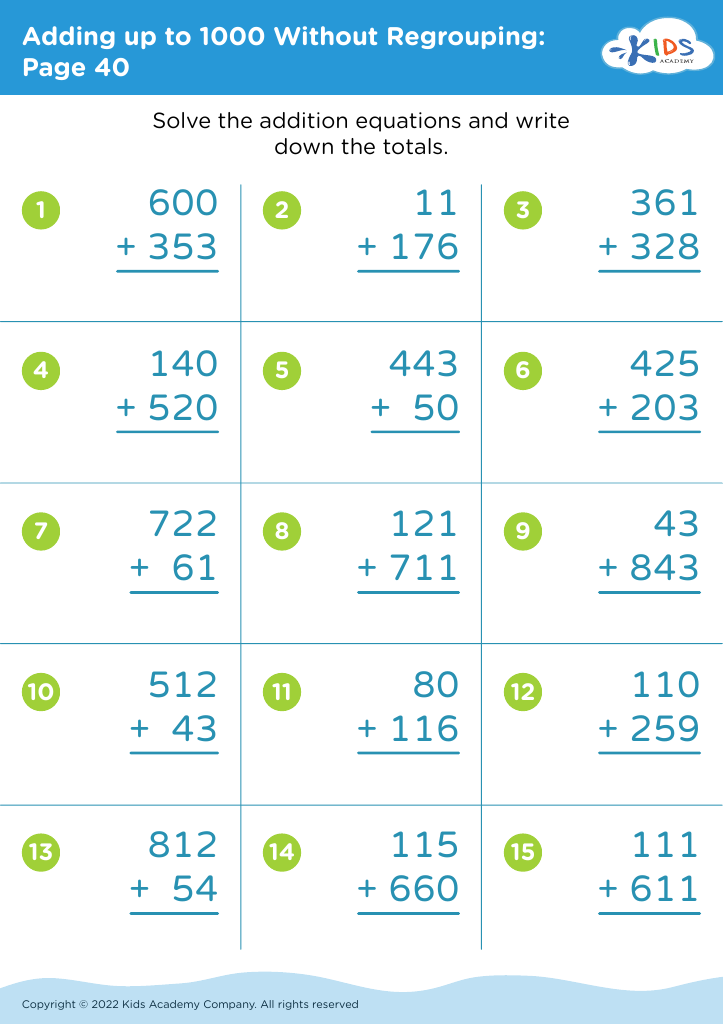
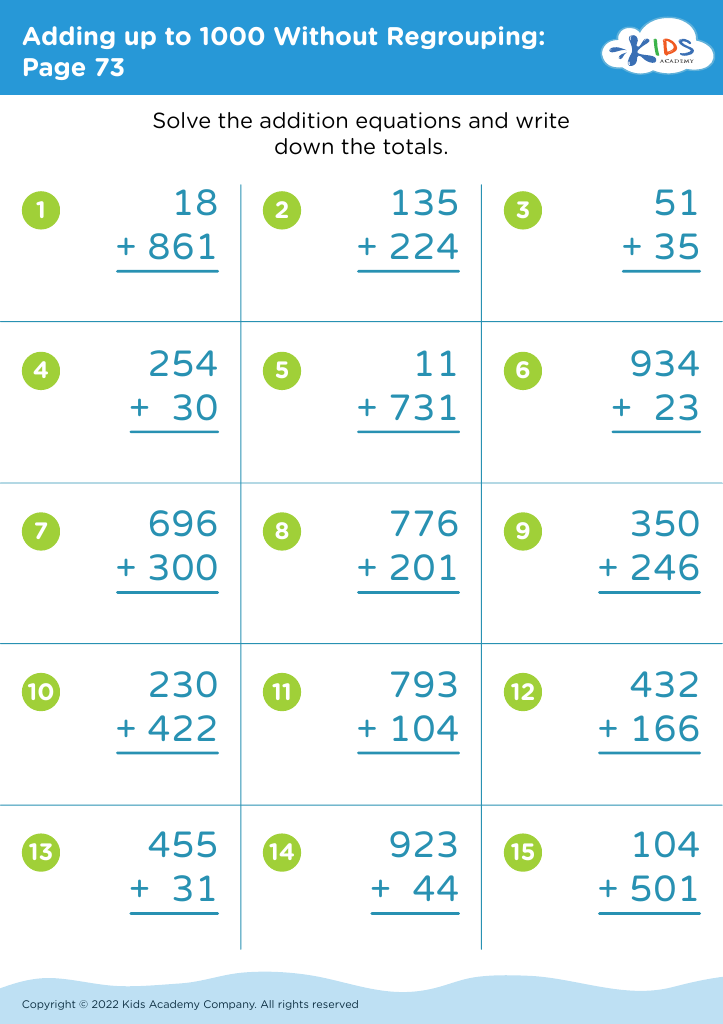
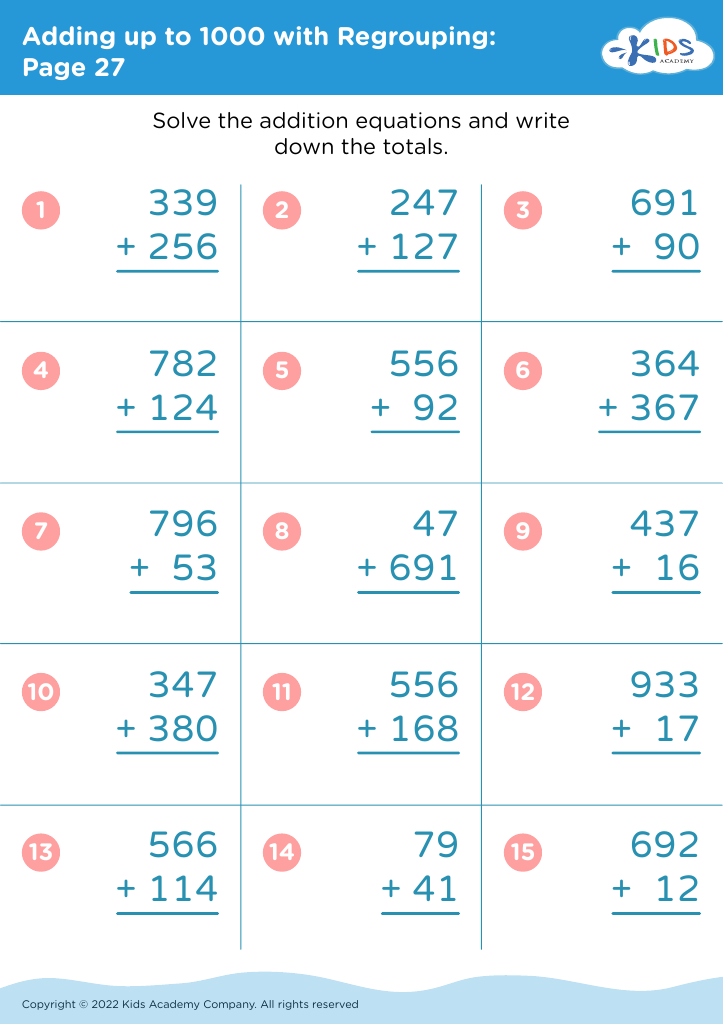
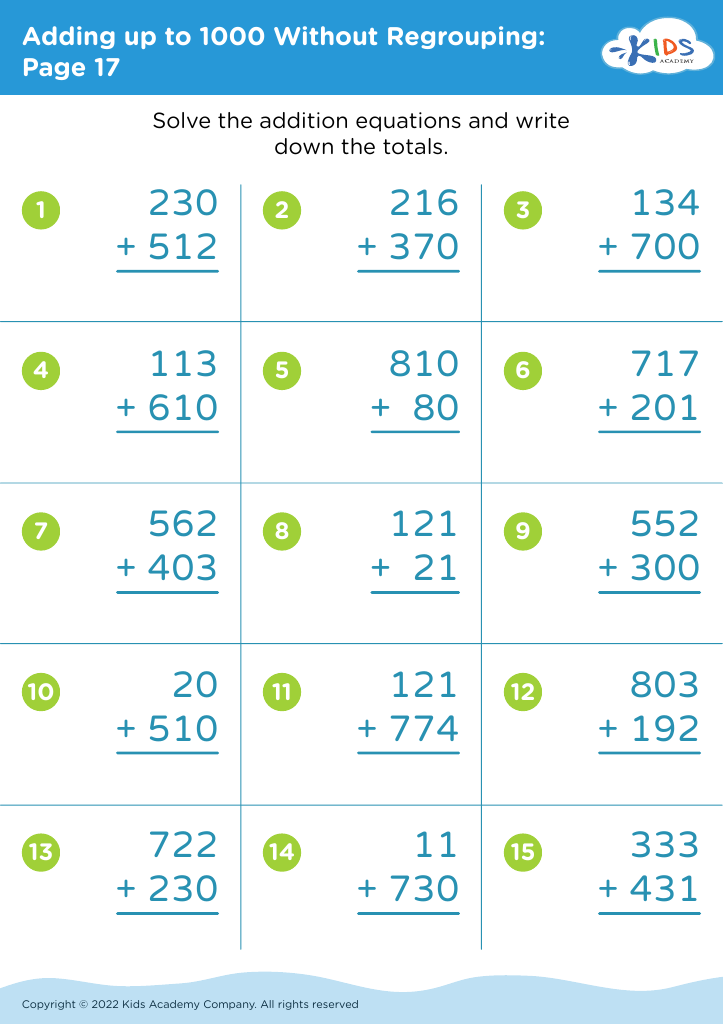
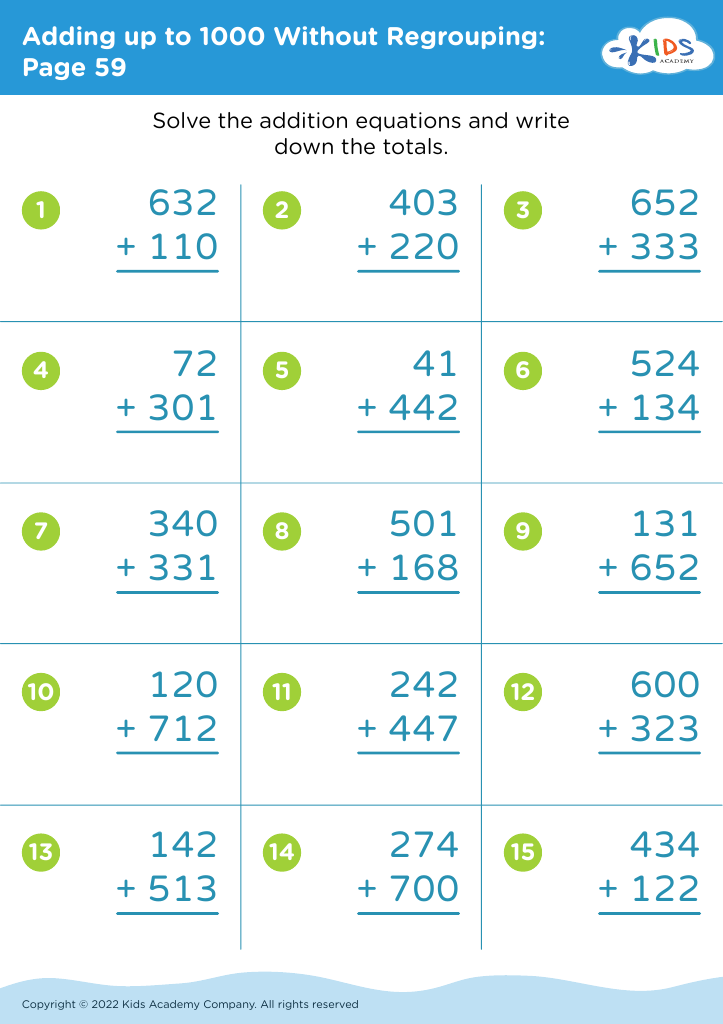
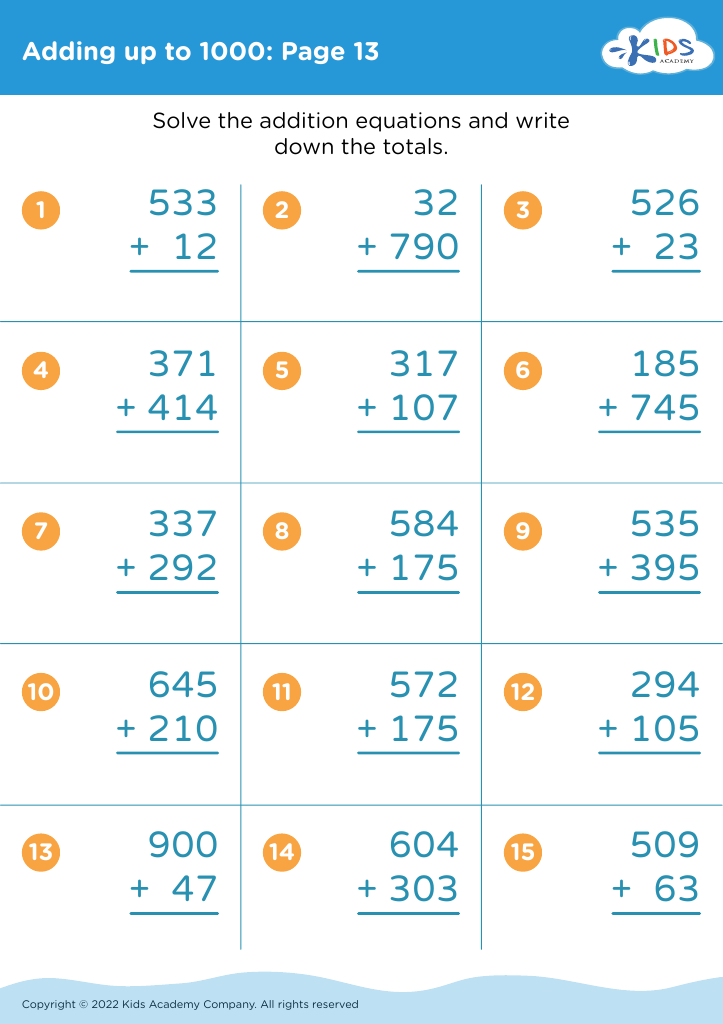
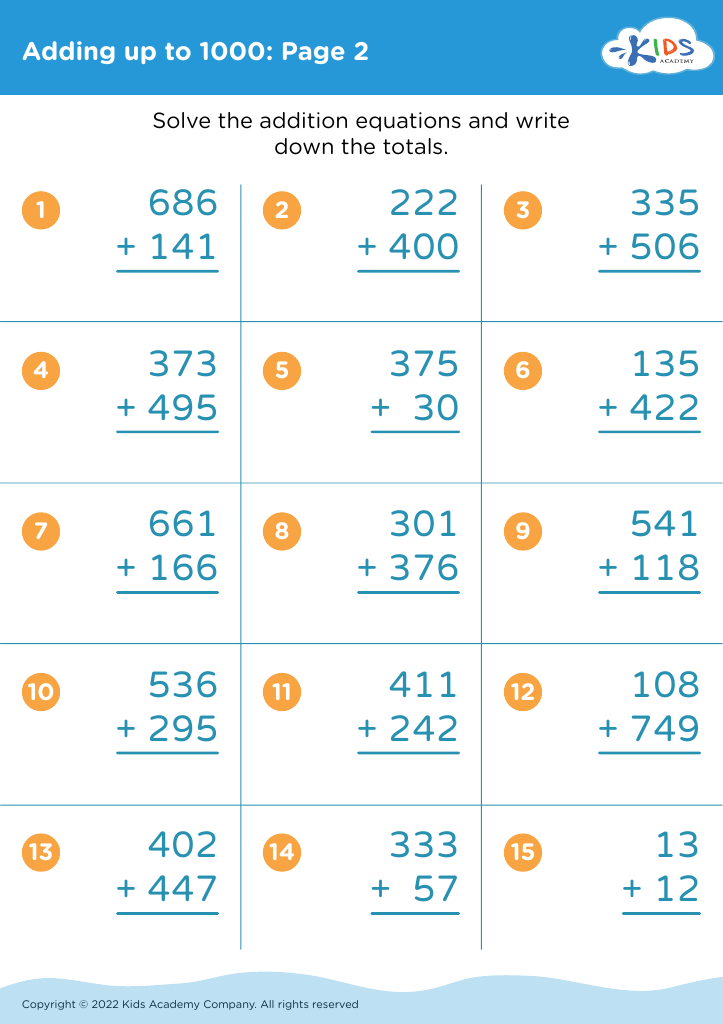
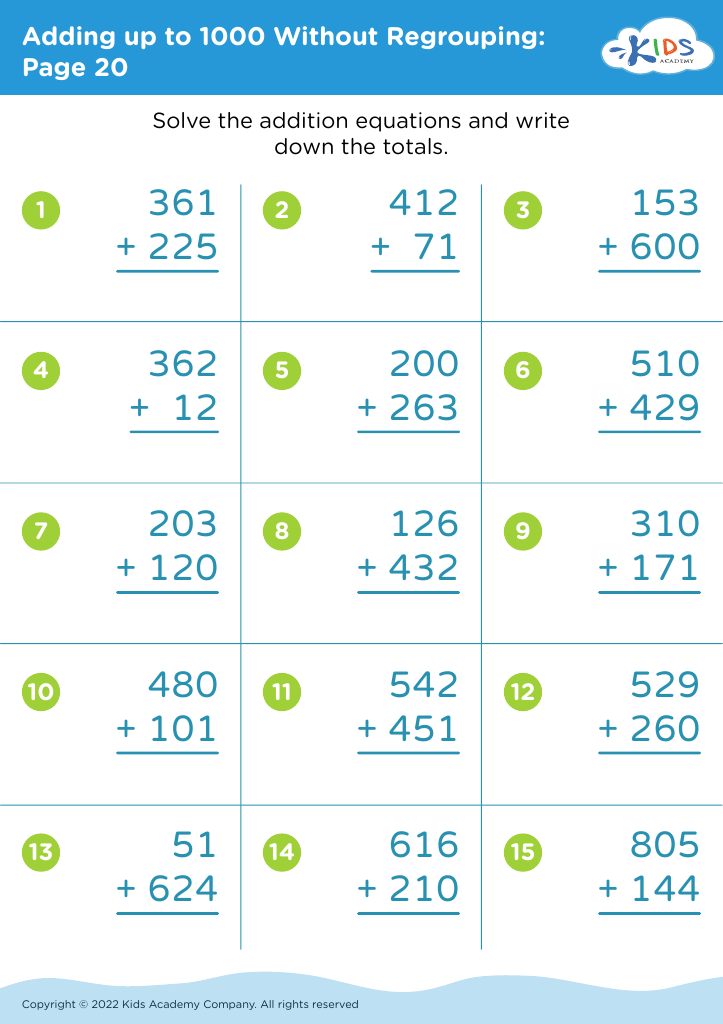
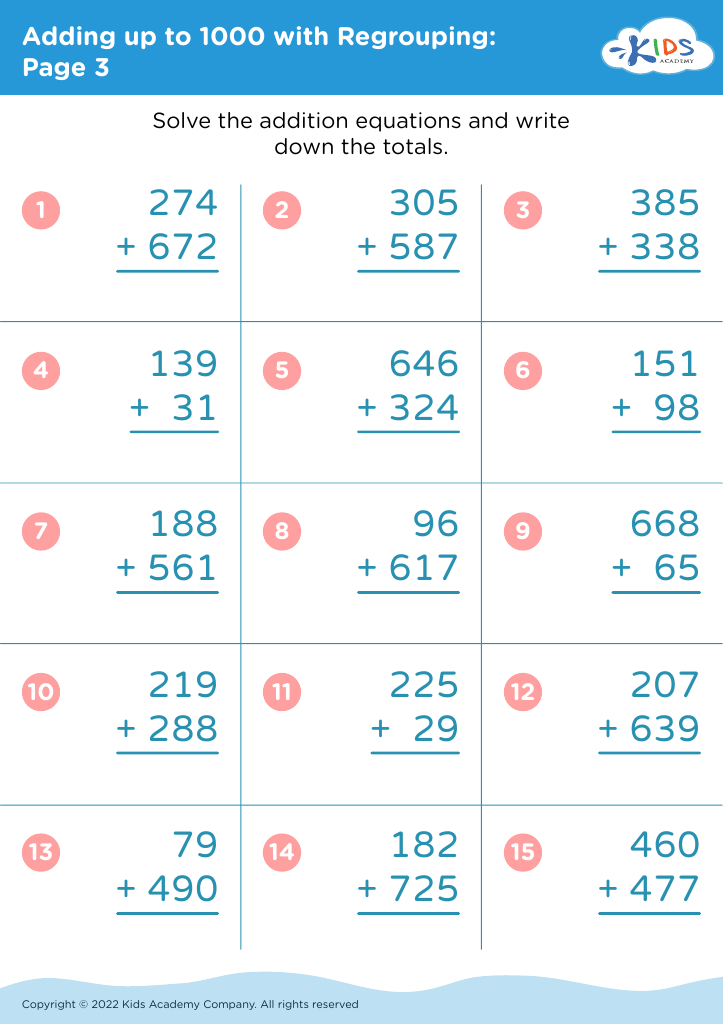
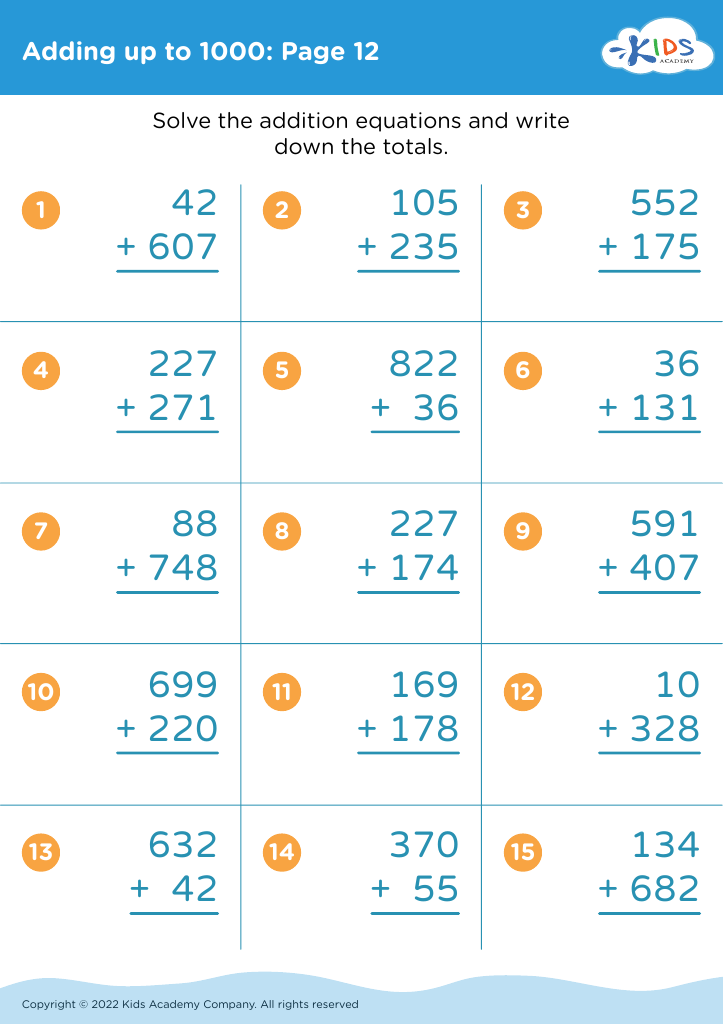
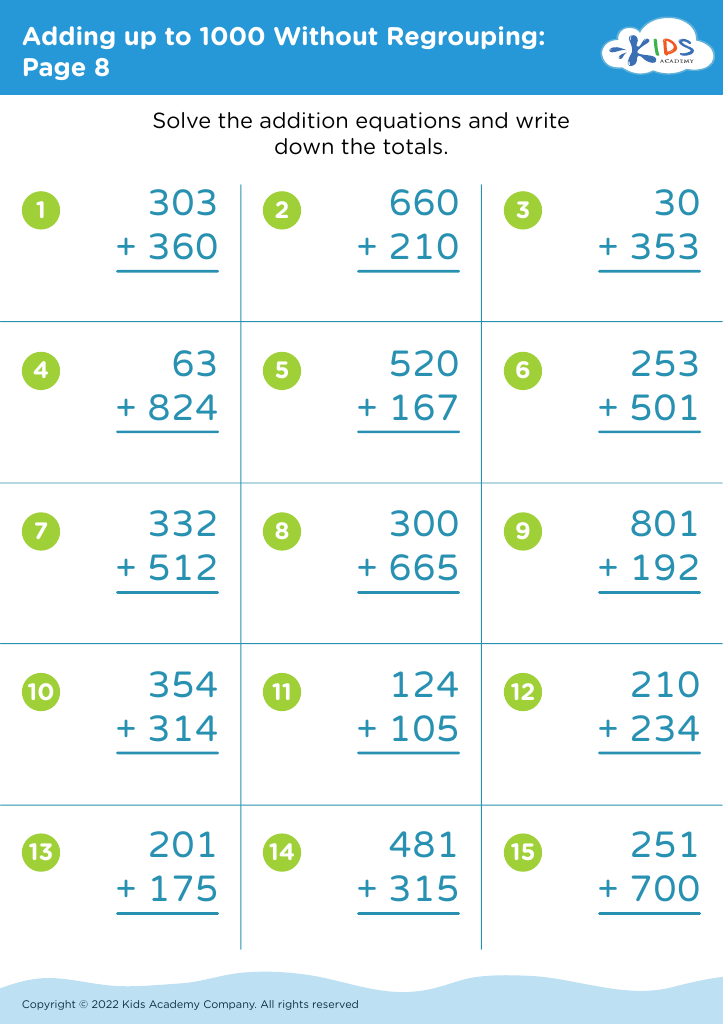
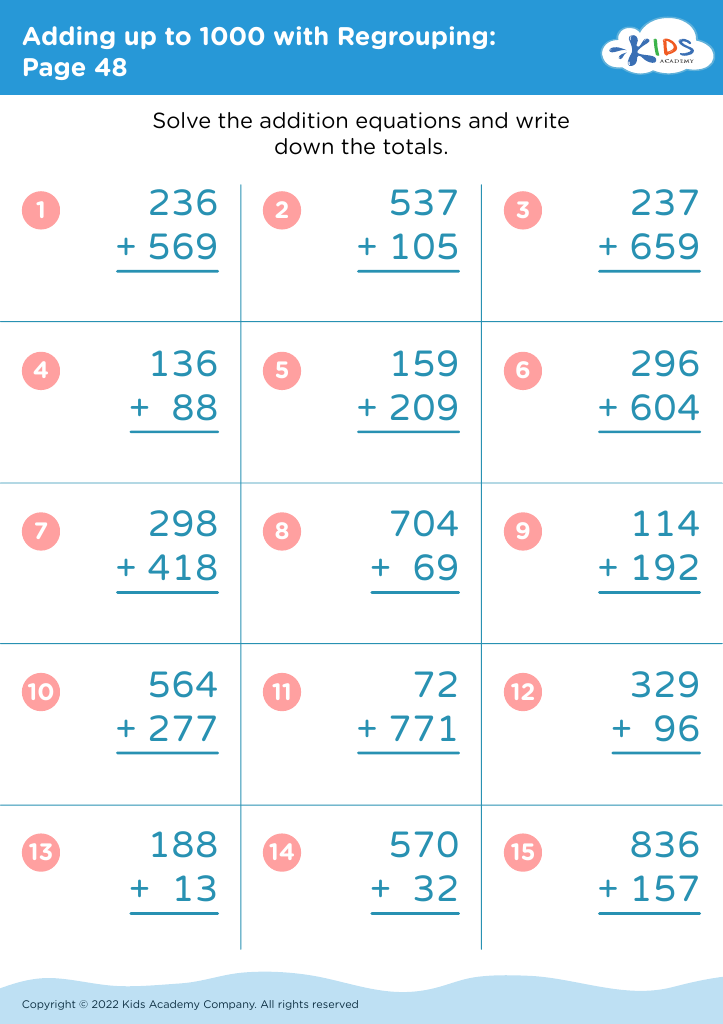
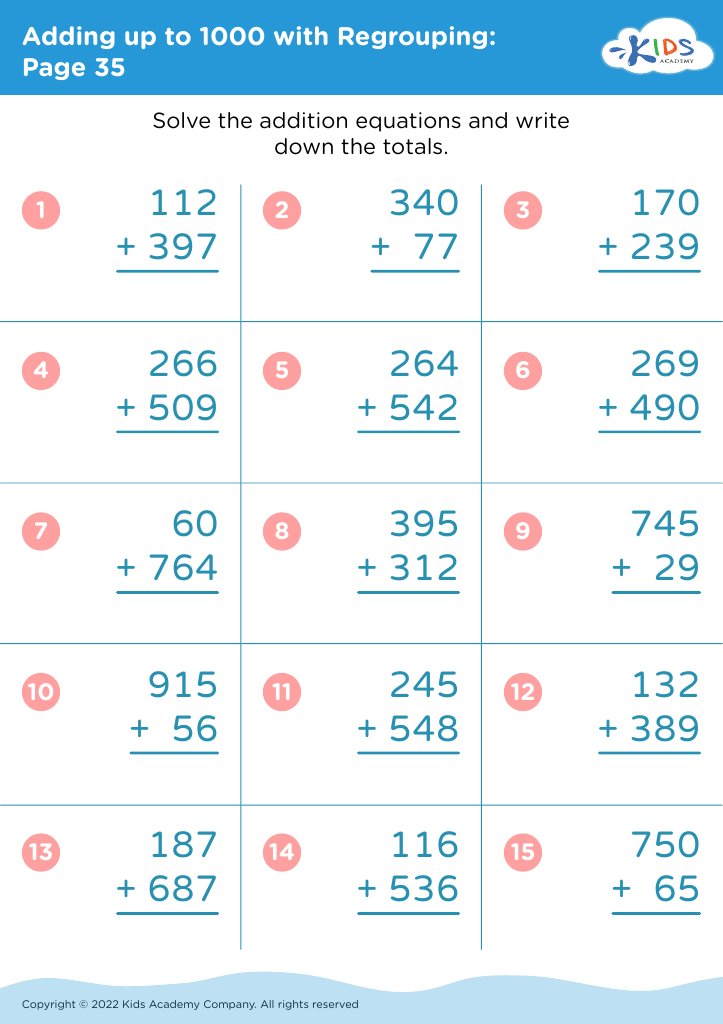



Improving reading skills and basic math proficiency for children ages 4-8 is essential for their overall development and future academic success. Reading forms the foundation of communication, comprehension, and critical thinking. By focusing on reading proficiency early on, parents and teachers can help children develop a love for literature, expand their vocabulary, and enhance their ability to understand and process information. This, in turn, fosters confidence and independence in learning, which are crucial traits for lifelong success.
Additionally, understanding basic math concepts, such as adding up to 1000, is equally important. Early numeracy skills pave the way for more complex mathematical problem-solving and logical reasoning required in higher grades. At this formative age, children are highly receptive to learning and developing cognitive skills. When they engage with math in fun, hands-on ways, they build a solid foundation that supports future academic coping.
Together, these skills are critical for a child's overall educational trajectory. Proficiency in reading and basic math provides children the tools they need to succeed in school and beyond, promoting a positive mindset towards learning. Early intervention and support from parents and teachers can make a significant difference, helping children meet developmental milestones and avoid potential learning difficulties down the road.








