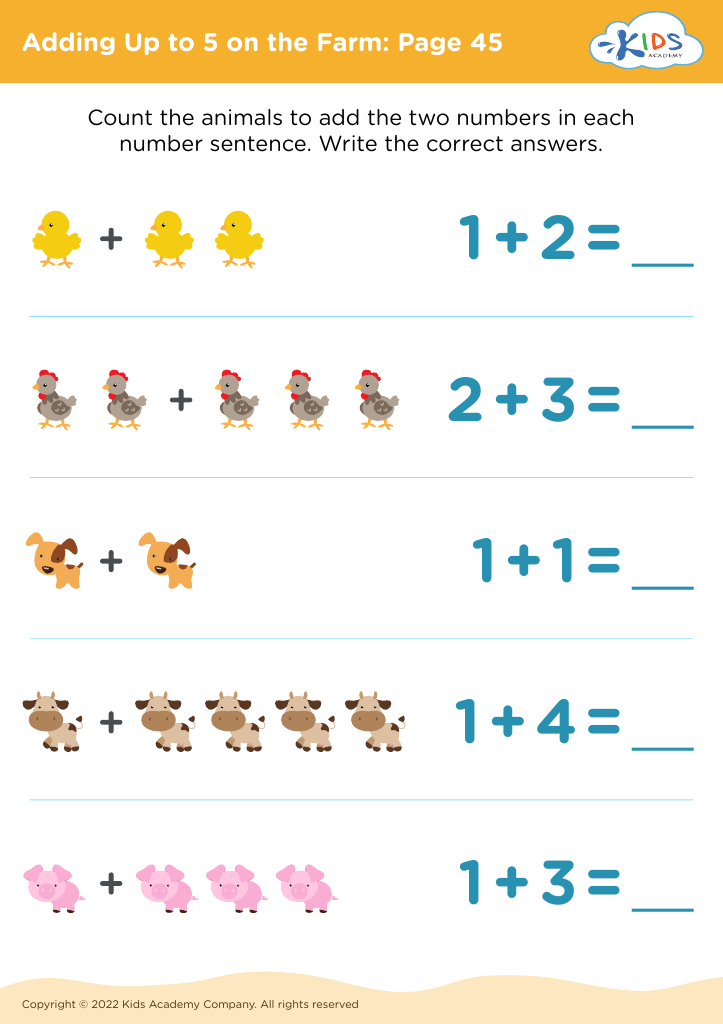
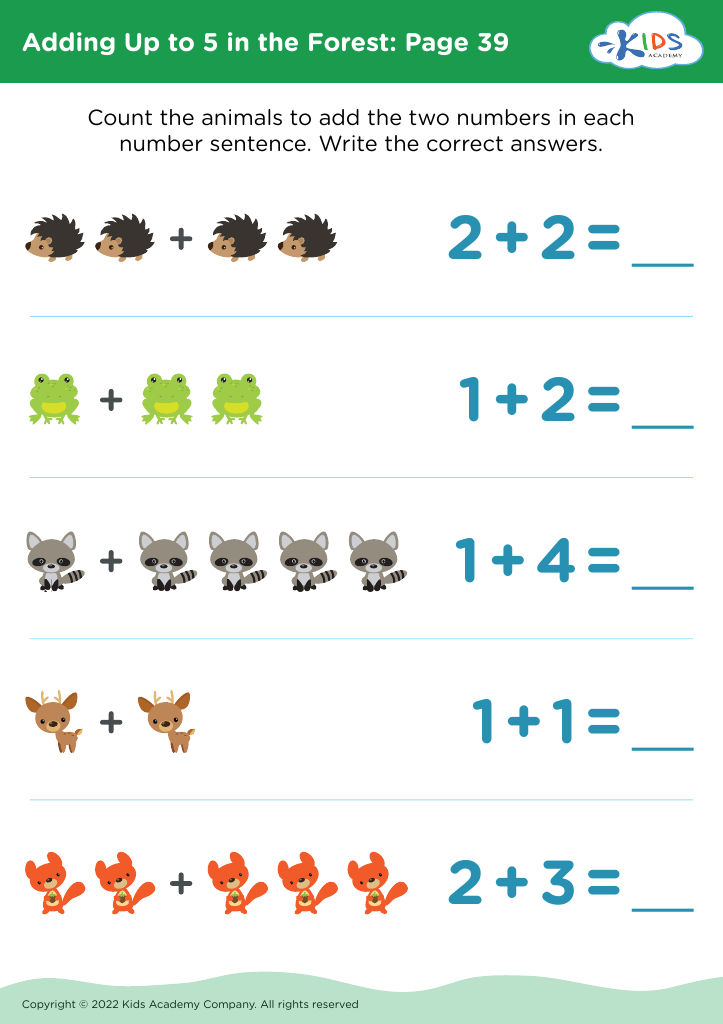
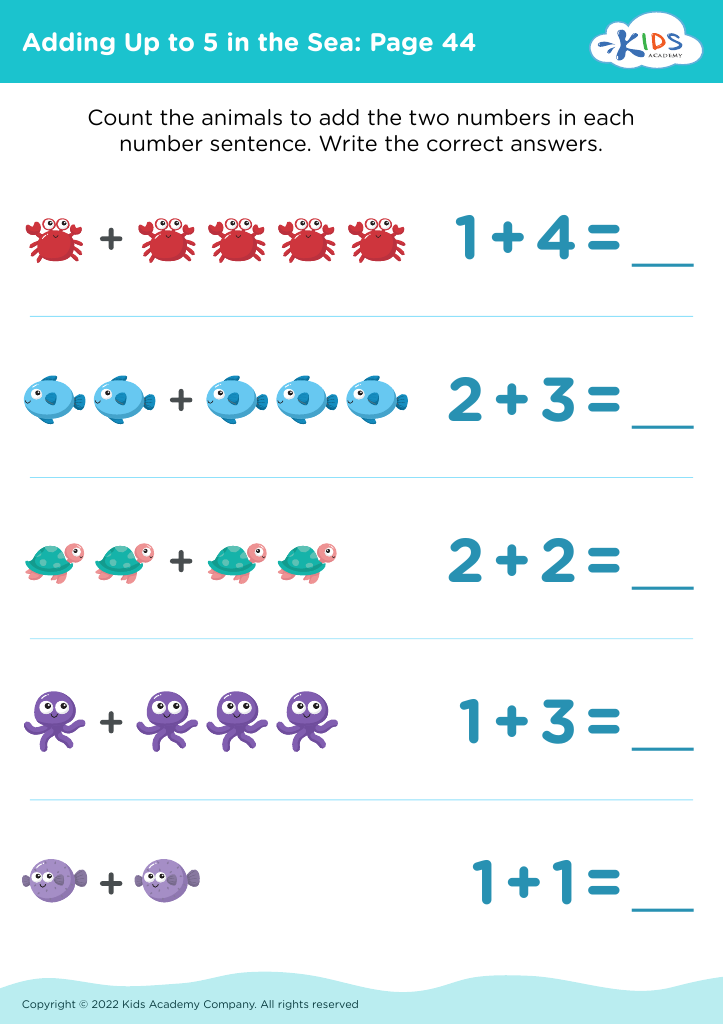
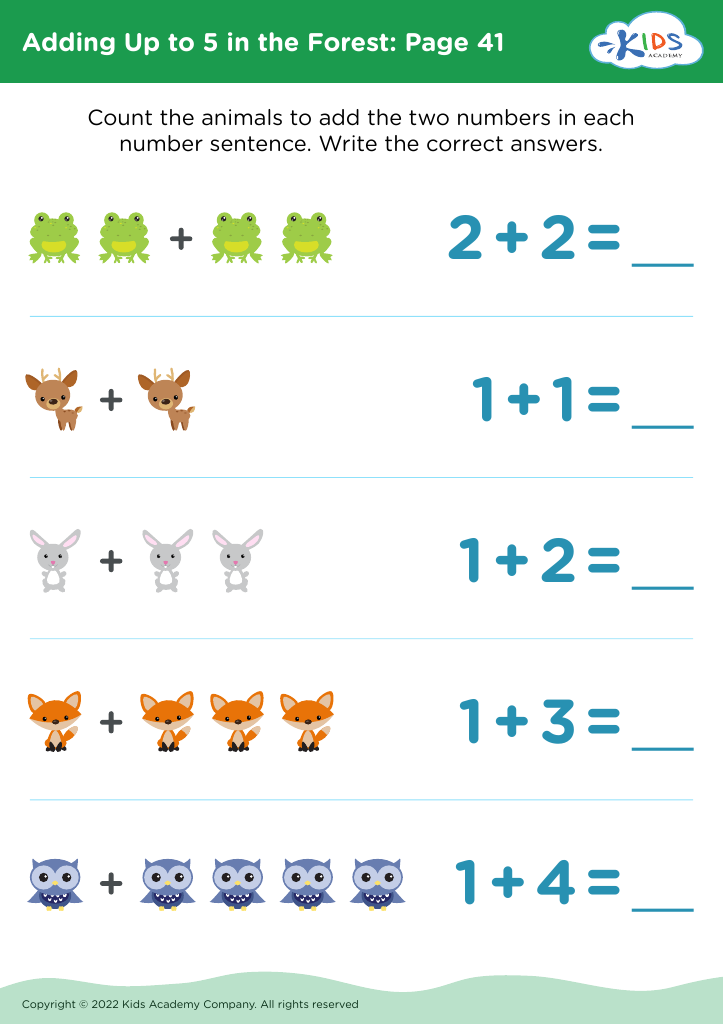








Fine motor skills refer to the collective abilities of using small muscles, typically in the hands and fingers, for precise movements. These skills are essential for children aged 4-8 as they lay the groundwork for numerous daily activities and for future academic learning. When parents or teachers focus on activities such as adding up to 5, they are aiding in the natural development of these critical skills through practice and repetition.
At ages 4-8, children are in a key developmental phase. Engaging in foundational math activities like adding up to 5 not only strengthens their cognitive abilities but also enhances fine motor skills. Activities involving counting and adding objects to a group necessitate picking up, sorting, and positioning small items, which advances hand-eye coordination and dexterity.
Additionally, mastering these fine motor skills is crucial for later complex tasks such as writing, using scissors, and manipulating small objects – all necessary for school readiness and beyond. When children work on such activities, they build the confidence and independence required for educational success. Therefore, emphasizing fine motor skills through simple math activities benefits their overall growth, academic performance, and instills a love of learning.








