Nature appreciation Adding Up to 5 Worksheets for Ages 4-8
5 filtered results
-
From - To
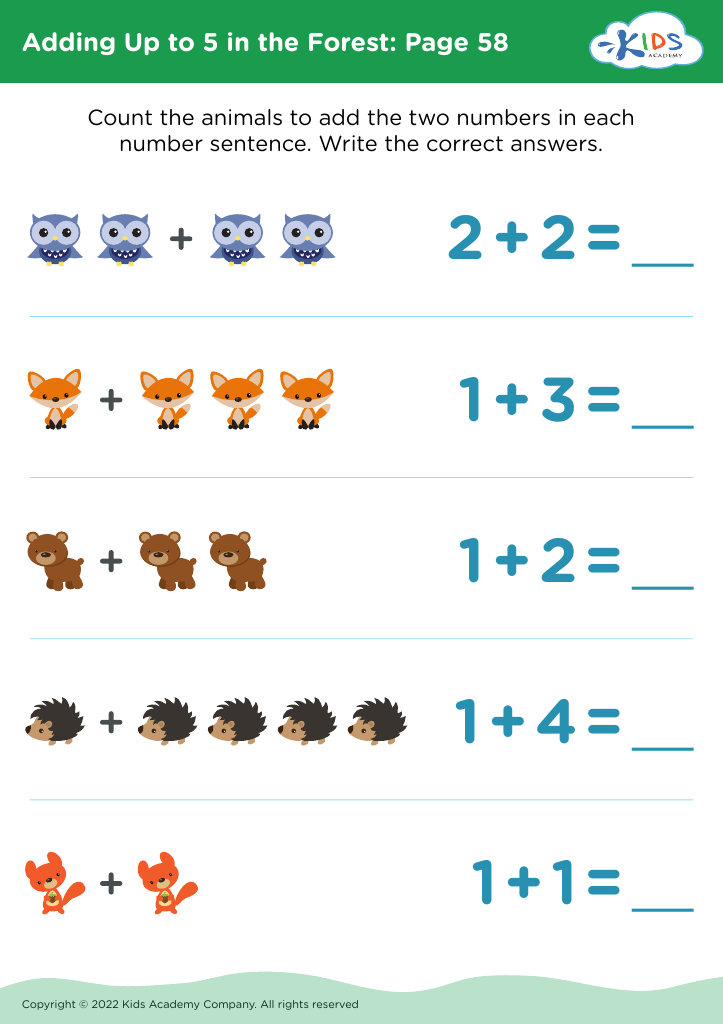
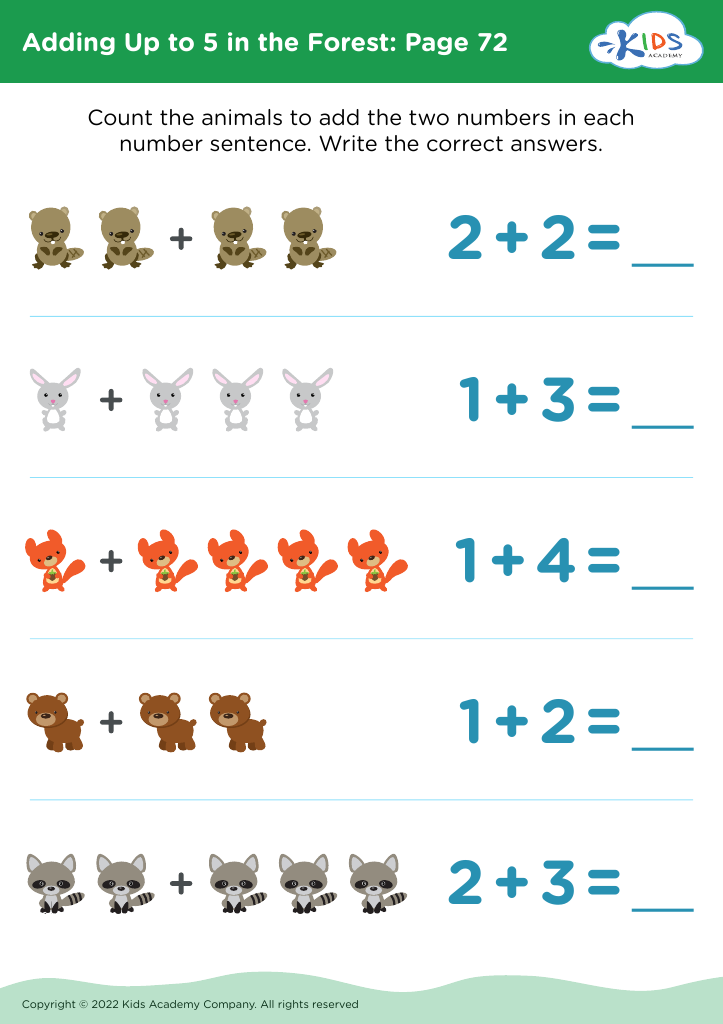
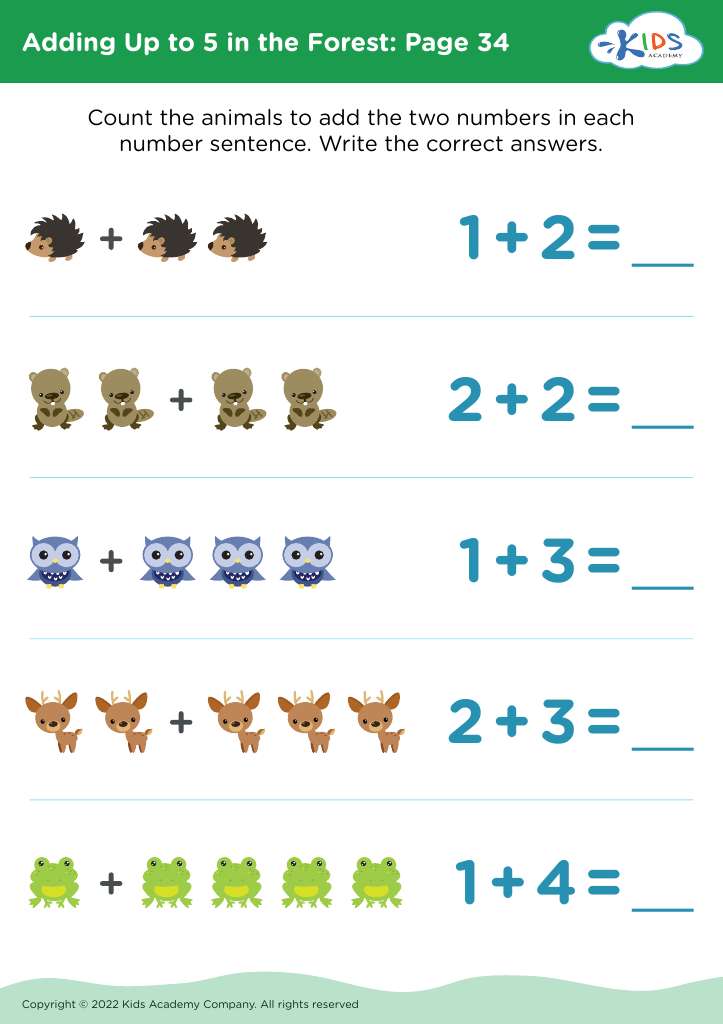
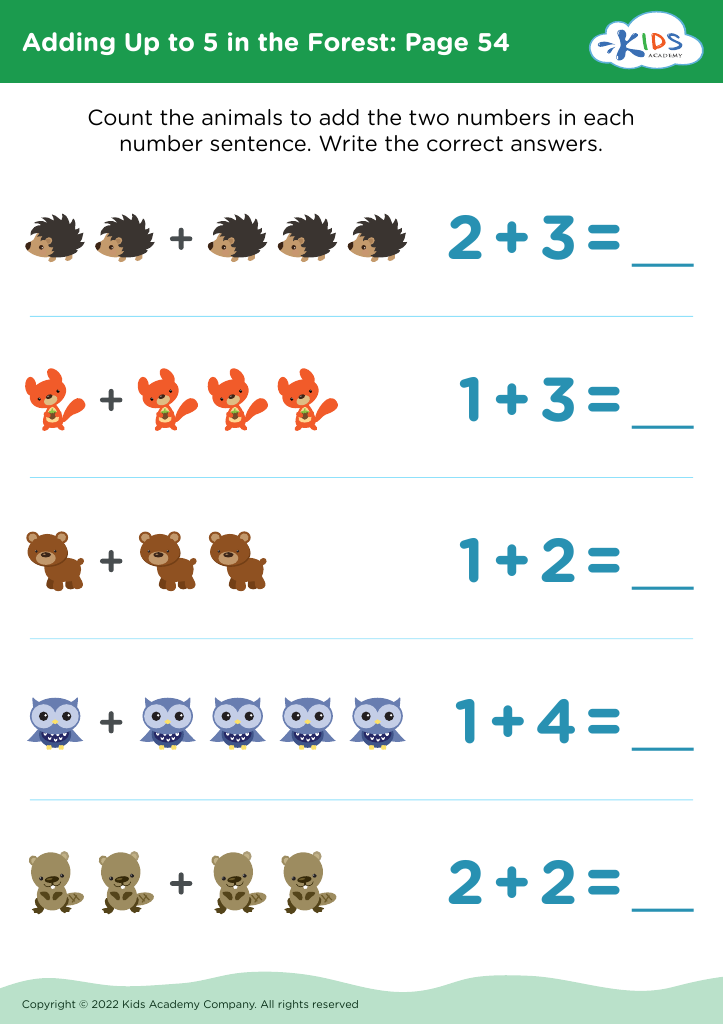
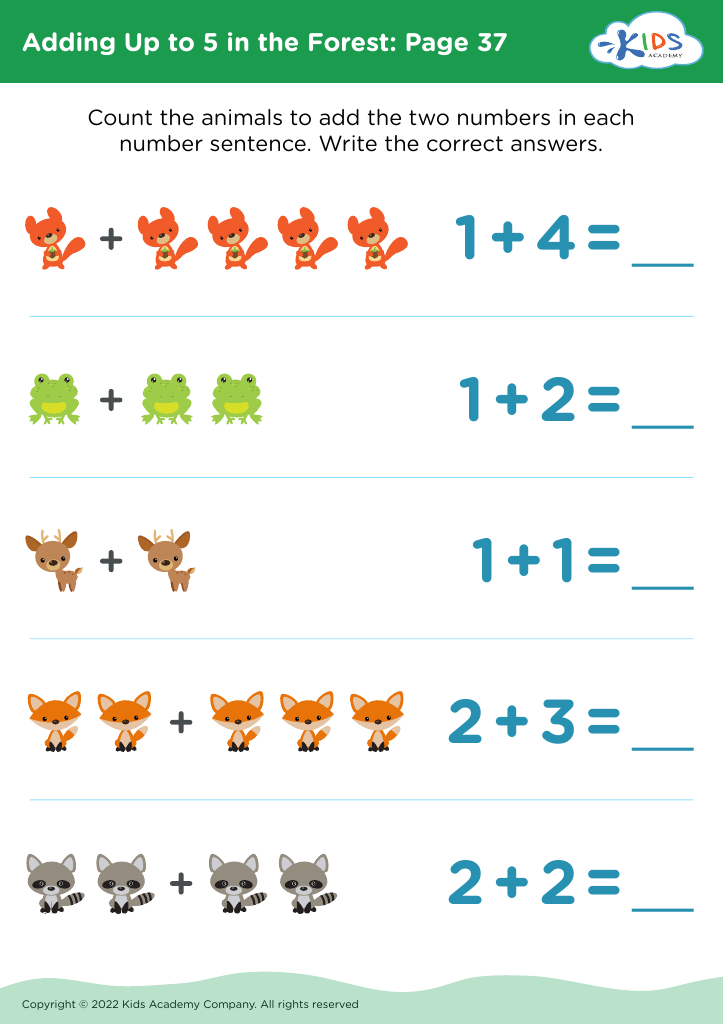
Introduce young learners to the beauty of nature while reinforcing essential math skills with our "Nature Appreciation Adding Up to 5 Worksheets for Ages 4-8." Designed for early grade educators and parents, these engaging worksheets blend captivating images of nature with fun, arithmetic challenges. Each sheet encourages children to explore counting and addition up to 5, fostering a love for the environment and foundational math skills. Perfect for enhancing number sense, these printables make learning enjoyable through nature-related themes. Help your students or children build a solid math foundation while appreciating the world around them.






%20(1).jpg)

Nature appreciation is a fundamental aspect that parents and teachers should actively cultivate in young children aged 4-8, particularly through creative educational methods like using the environment to teach math concepts such as adding up to 5. Introducing nature into learning has a multitude of benefits that aid both cognitive and emotional development.
Firstly, learning math through nature makes abstract concepts tangible. When children gather five leaves or count pebbles to practice addition, they are engaging in hands-on experiences that solidify their understanding. This active learning boosts memory retention compared to purely theoretical classroom methods.
Secondly, early nature exposure fosters environmental stewardship. Children develop an appreciation and understanding of the natural world, embedding sustainable values that are crucial for the future.
Furthermore, nature activities enhance physical and emotional well-being. Outdoor learning promotes physical activity, reducing the risk of childhood obesity and encouraging a healthy lifestyle. It also alleviates stress and fosters joy, curiosity, and imagination.
Lastly, integrating nature into learning cultivates essential life skills such as problem-solving, observation, and cooperation. Engaging with peers in a natural setting encourages social interaction and teamwork.
In sum, intertwining nature appreciation with early learning, such as adding up to 5, ensures not just better academic results but also holistic development, setting a foundation for lifelong learning and environmental consciousness.








