Filters

349 filtered results

Clear all filters
Favorites
With answer key
Interactive

349 filtered results

Difficulty Level

Grade


Subject

    Check out this FREE Trial Lesson on Adding Up to 5 for age 4-8!

    A

    Favorites
    With answer key
    Interactive
    • 4-8
    • Number Recognition
    • Adding Up to 5
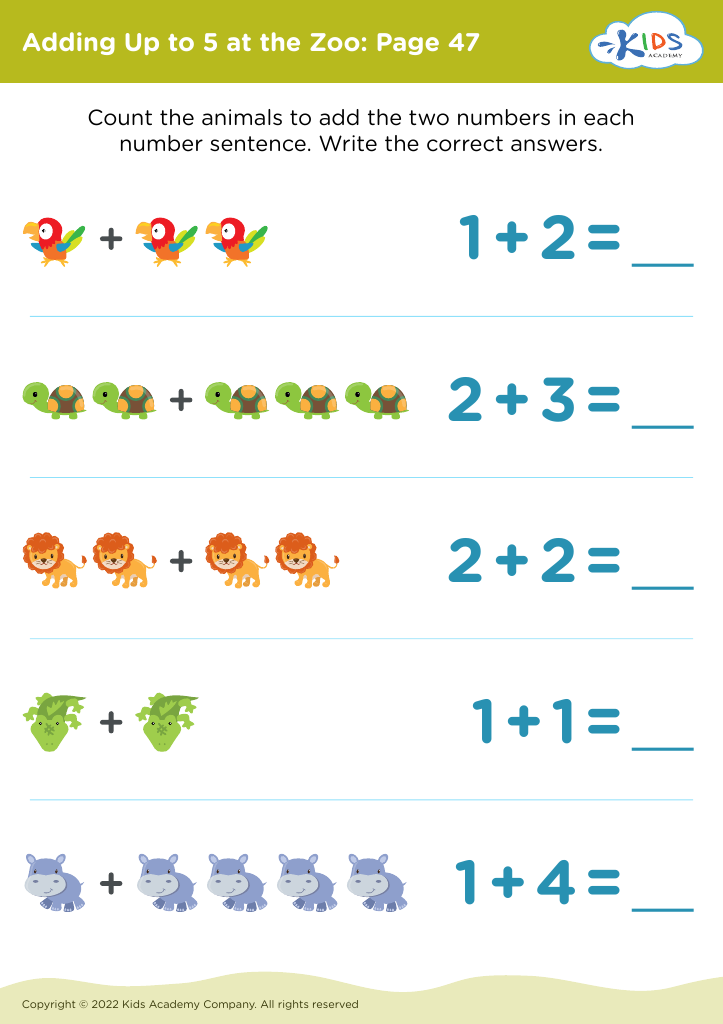
    Adding Up to 5 at the Zoo: Page 47
    Adding Up to 5 at the Zoo: Page 47
    Adding Up to 5 at the Zoo: Page 47
    Worksheet
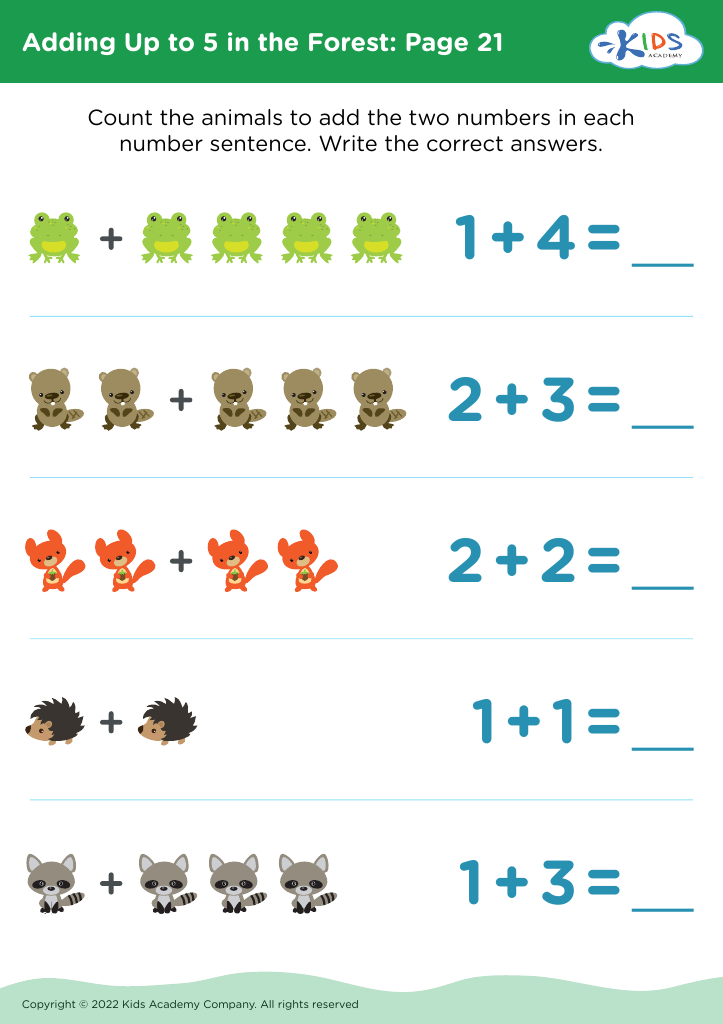
    Adding Up to 5 in the Forest: Page 21
    Adding Up to 5 in the Forest: Page 21
    Adding Up to 5 in the Forest: Page 21
    Worksheet
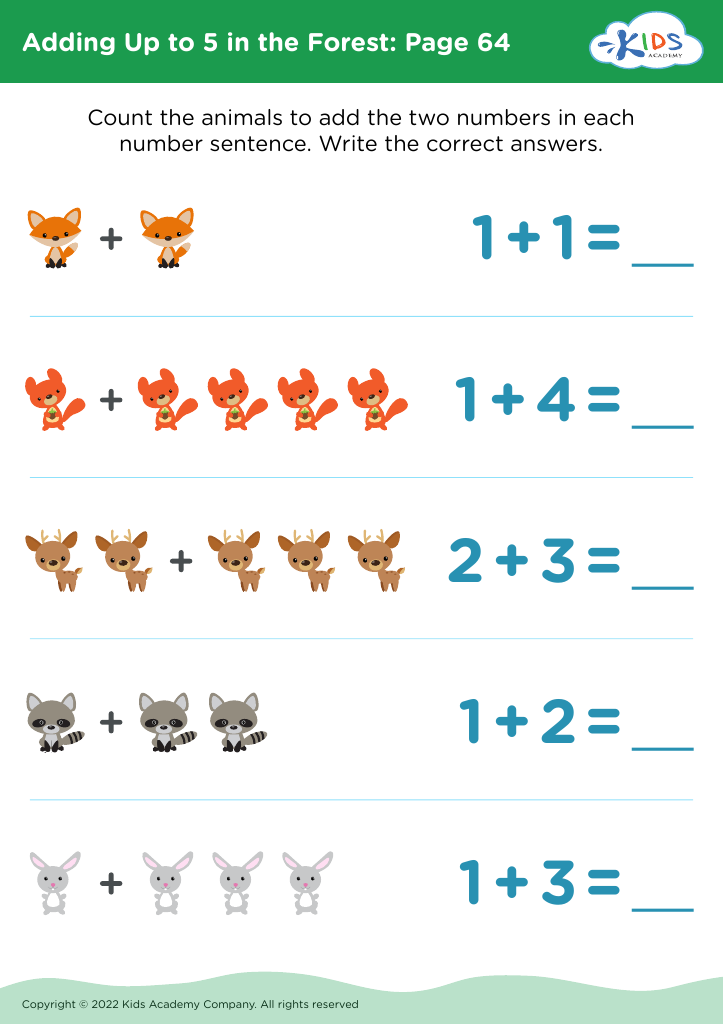
    Adding Up to 5 in the Forest: Page 64
    Adding Up to 5 in the Forest: Page 64
    Adding Up to 5 in the Forest: Page 64
    Worksheet
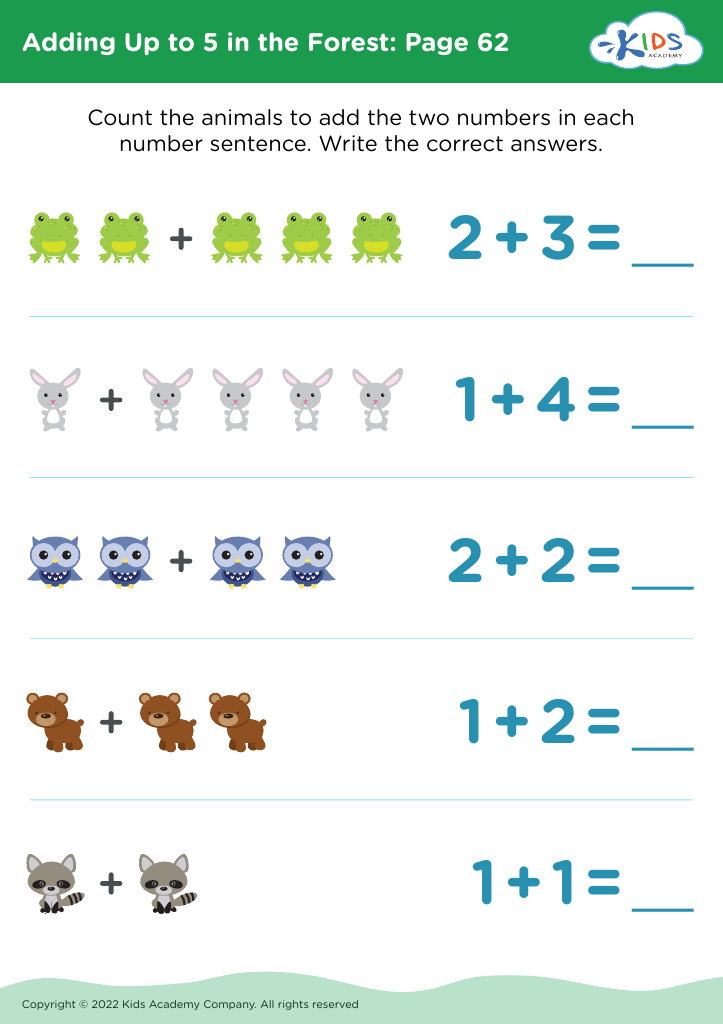
    Adding Up to 5 in the Forest: Page 62
    Adding Up to 5 in the Forest: Page 62
    Adding Up to 5 in the Forest: Page 62
    Worksheet
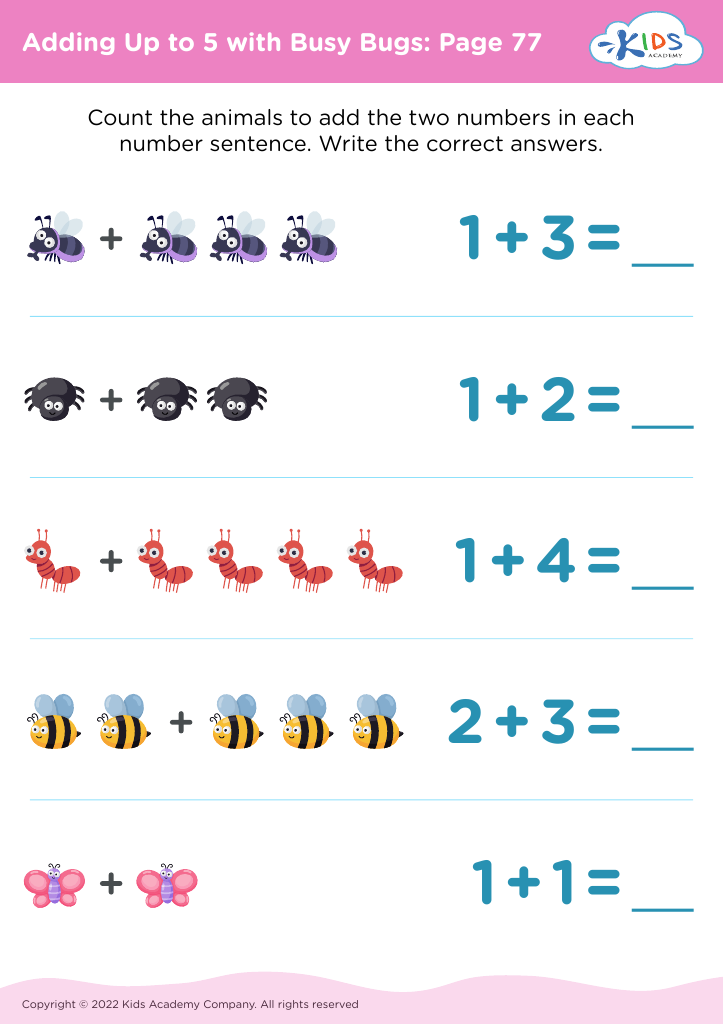
    Adding Up to 5 with Busy Bugs: Page 77
    Adding Up to 5 with Busy Bugs: Page 77
    Adding Up to 5 with Busy Bugs: Page 77
    Worksheet
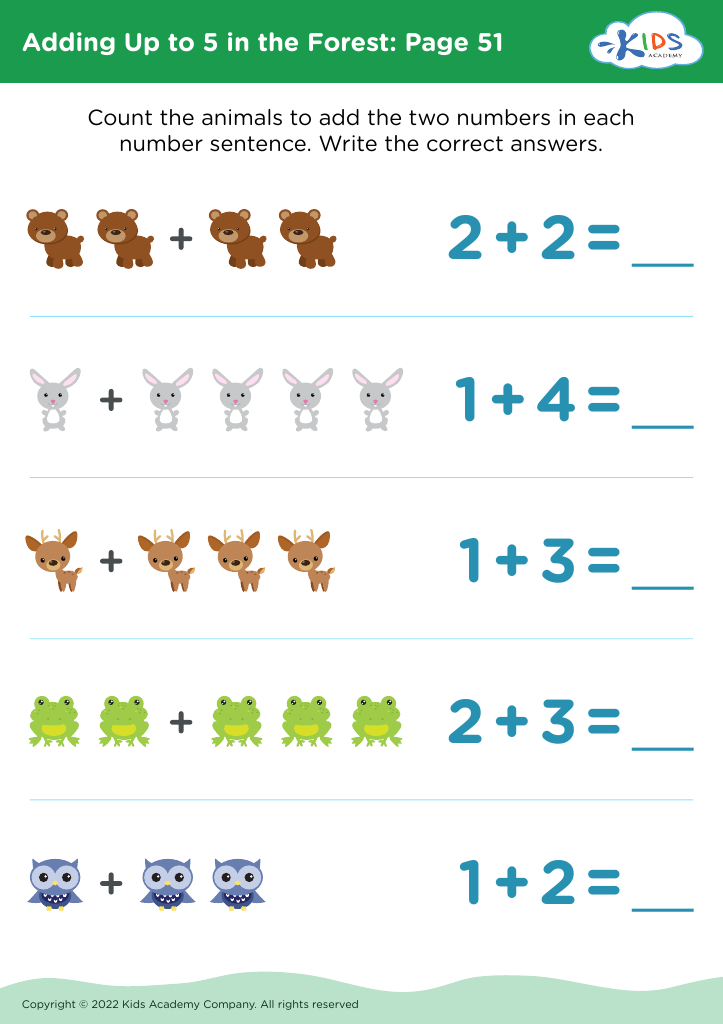
    Adding Up to 5 in the Forest: Page 51
    Adding Up to 5 in the Forest: Page 51
    Adding Up to 5 in the Forest: Page 51
    Worksheet
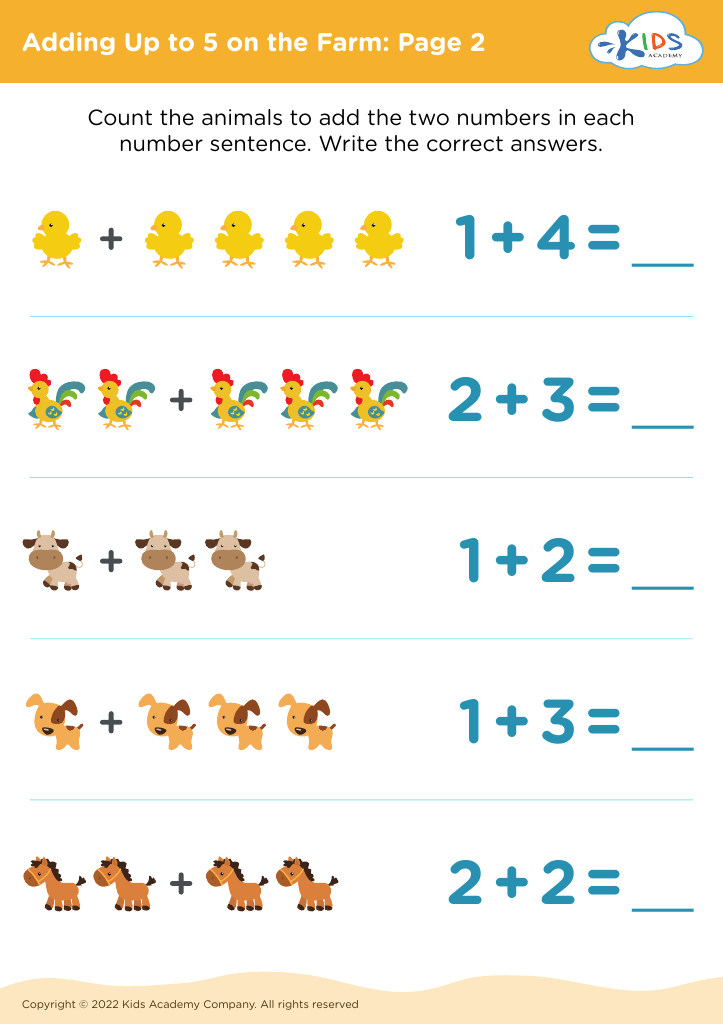
    Adding Up to 5 on the Farm: Page 2
    Adding Up to 5 on the Farm: Page 2
    Adding Up to 5 on the Farm: Page 2
    Worksheet
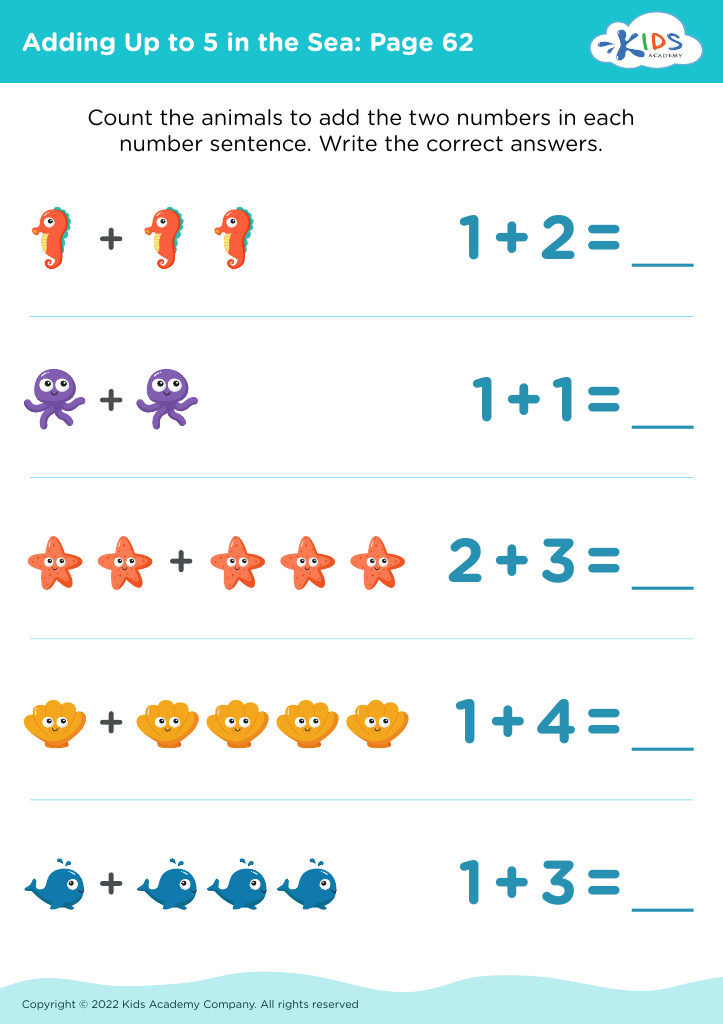
    Adding Up to 5 in the Sea: Page 62
    Adding Up to 5 in the Sea: Page 62
    Adding Up to 5 in the Sea: Page 62
    Worksheet
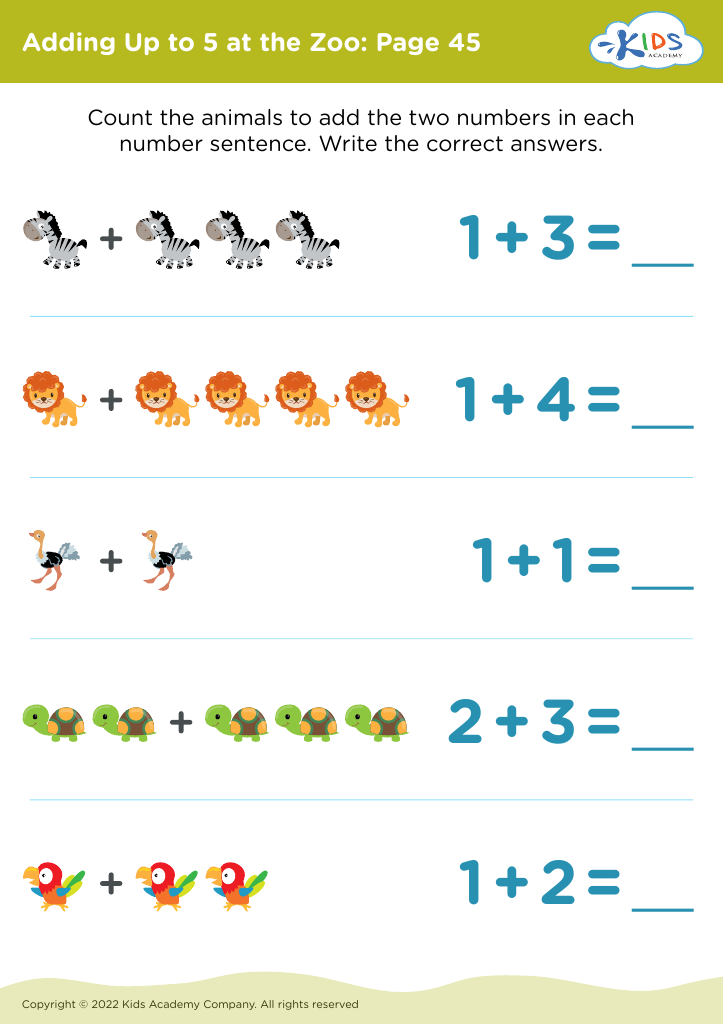
    Adding Up to 5 at the Zoo: Page 45
    Adding Up to 5 at the Zoo: Page 45
    Adding Up to 5 at the Zoo: Page 45
    Worksheet
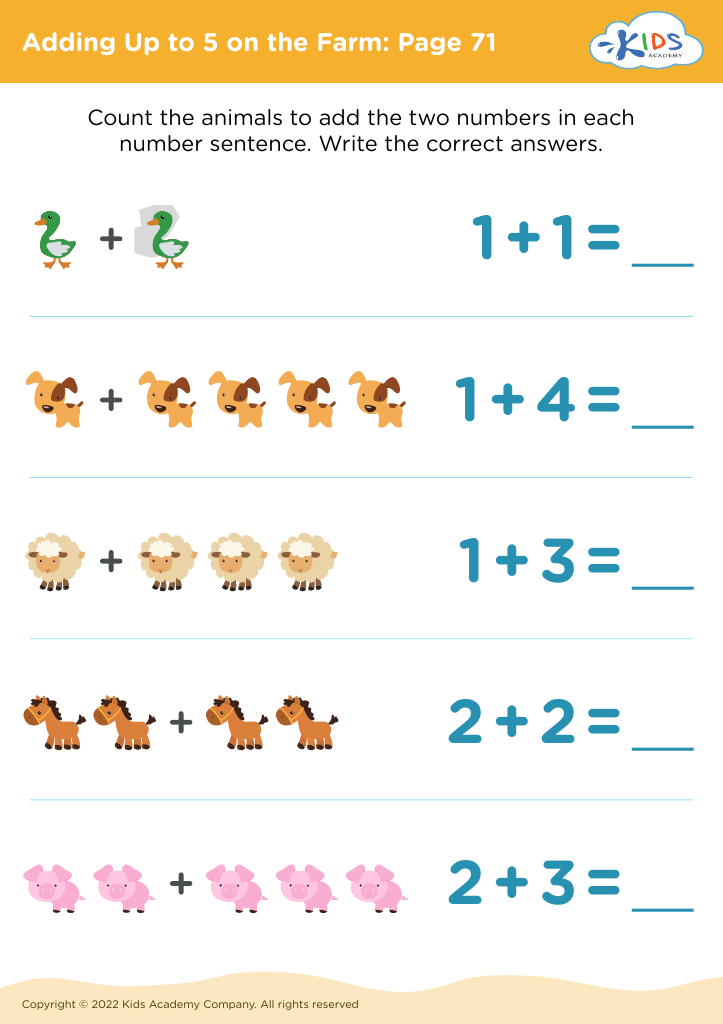
    Adding Up to 5 on the Farm: Page 71
    Adding Up to 5 on the Farm: Page 71
    Adding Up to 5 on the Farm: Page 71
    Worksheet
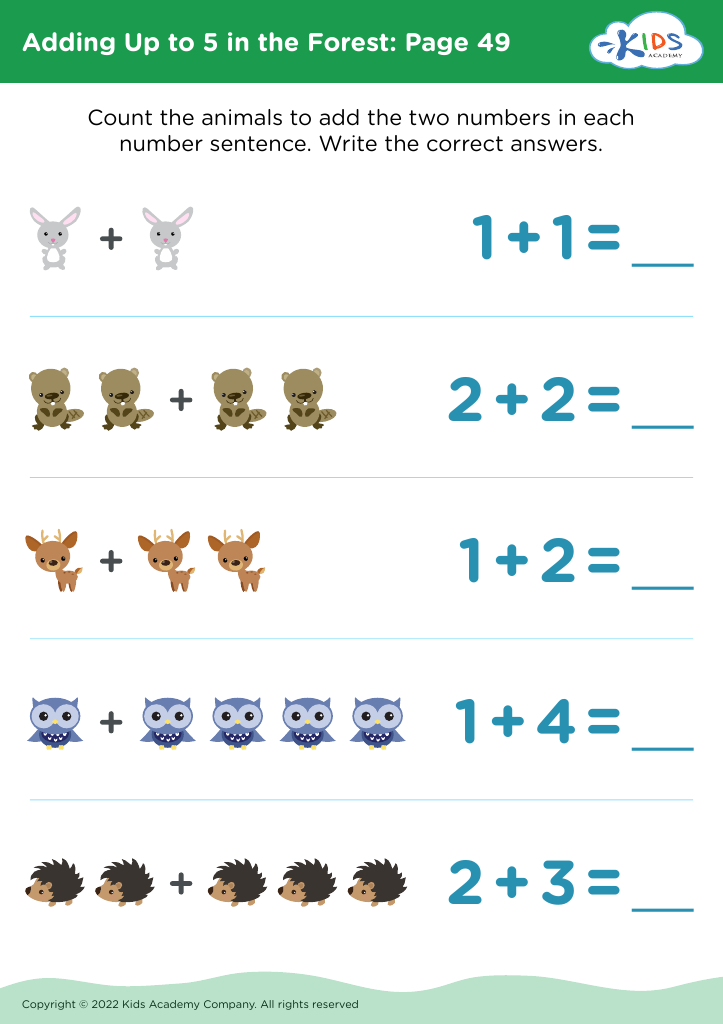
    Adding Up to 5 in the Forest: Page 49
    Adding Up to 5 in the Forest: Page 49
    Adding Up to 5 in the Forest: Page 49
    Worksheet
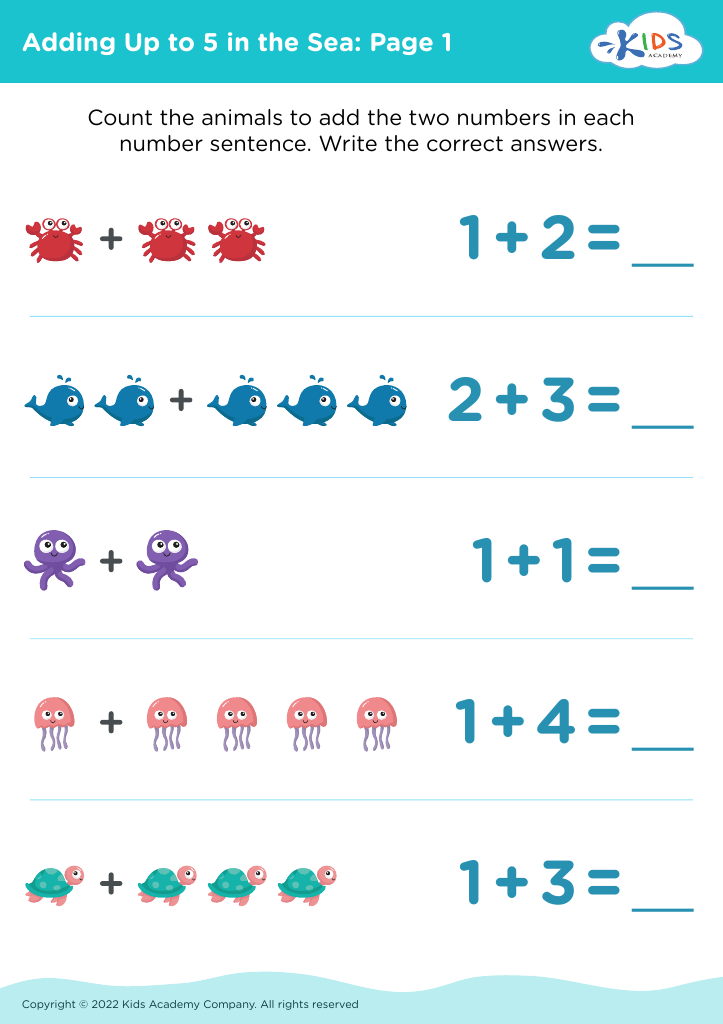
    Adding Up to 5 in the Sea: Page 1
    Adding Up to 5 in the Sea: Page 1

    Adding Up to 5 in the Sea: Page 1

    Adding Up to 5 in the Sea: Page 1
    Worksheet
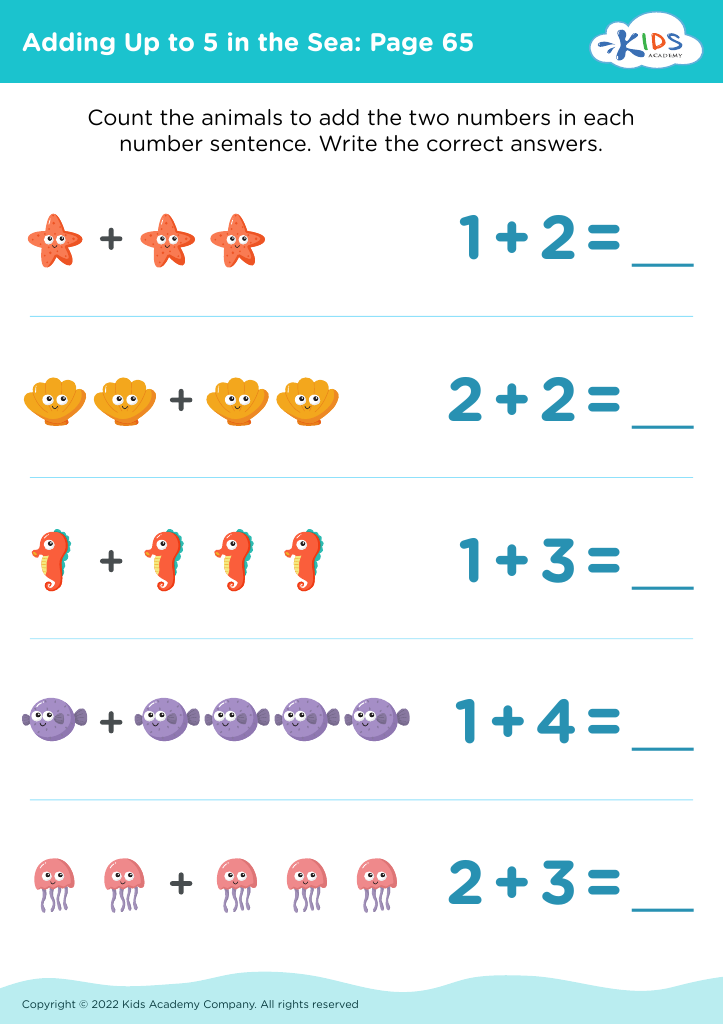
    Adding Up to 5 in the Sea: Page 65
    Adding Up to 5 in the Sea: Page 65
    Adding Up to 5 in the Sea: Page 65
    Worksheet
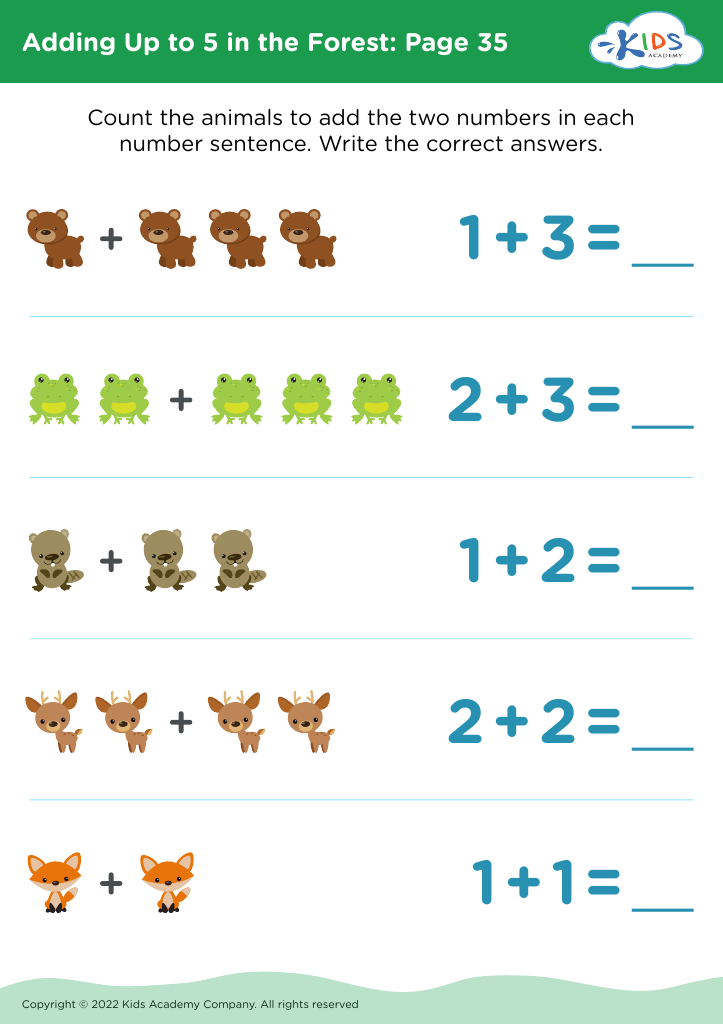
    Adding Up to 5 in the Forest: Page 35
    Adding Up to 5 in the Forest: Page 35
    Adding Up to 5 in the Forest: Page 35
    Worksheet
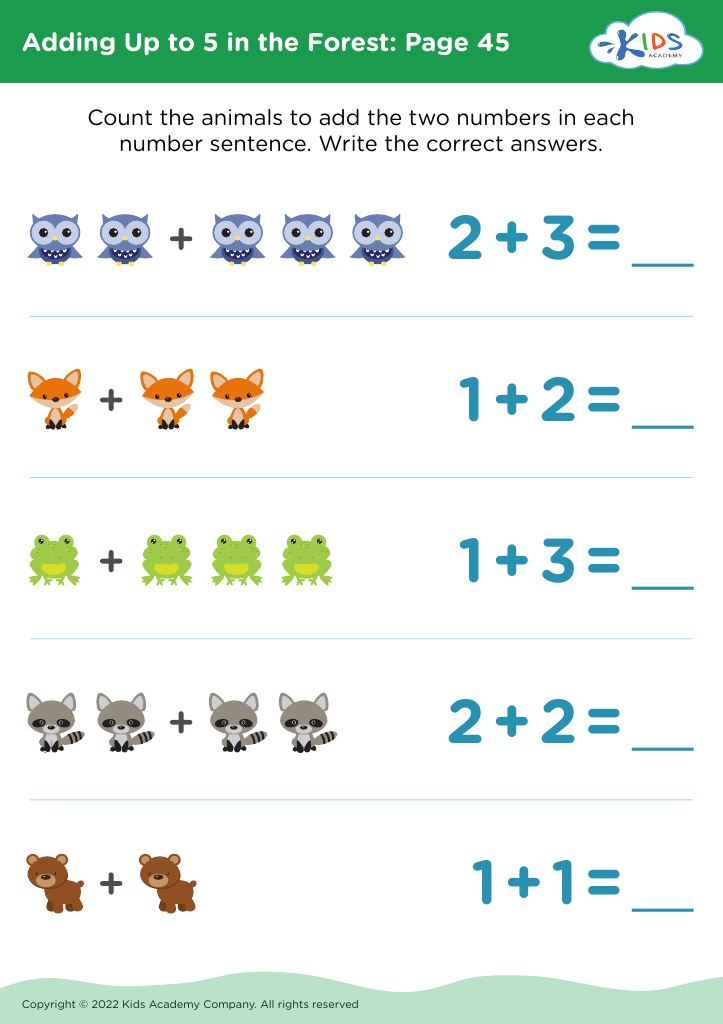
    Adding Up to 5 in the Forest: Page 45
    Adding Up to 5 in the Forest: Page 45
    Adding Up to 5 in the Forest: Page 45
    Worksheet
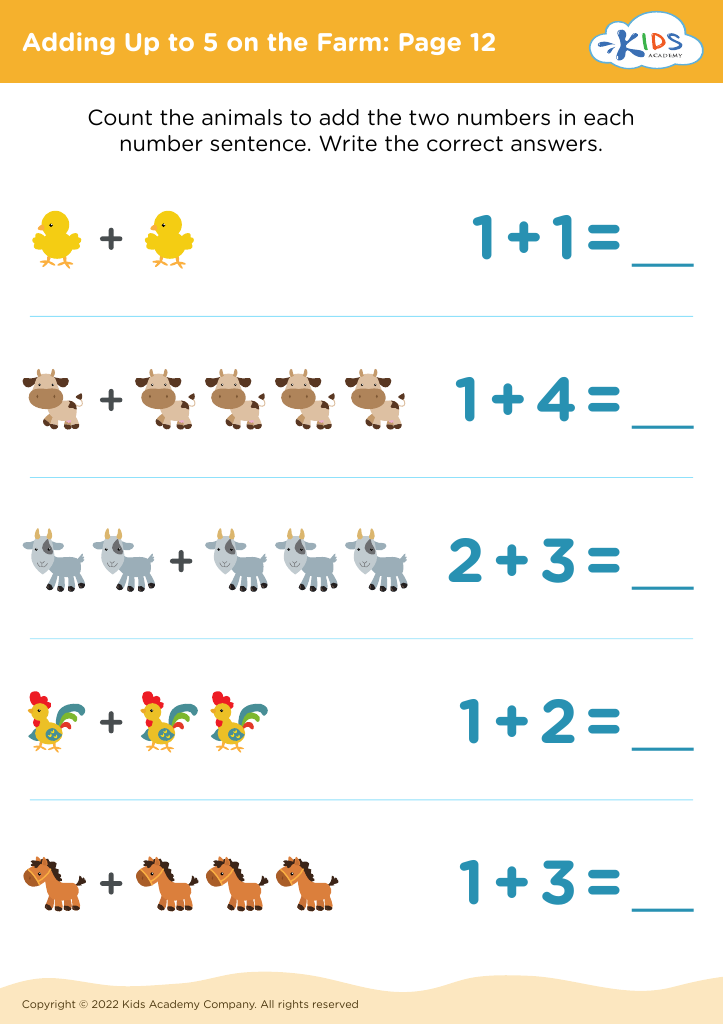
    Adding Up to 5 on the Farm: Page 12
    Adding Up to 5 on the Farm: Page 12
    Adding Up to 5 on the Farm: Page 12
    Worksheet
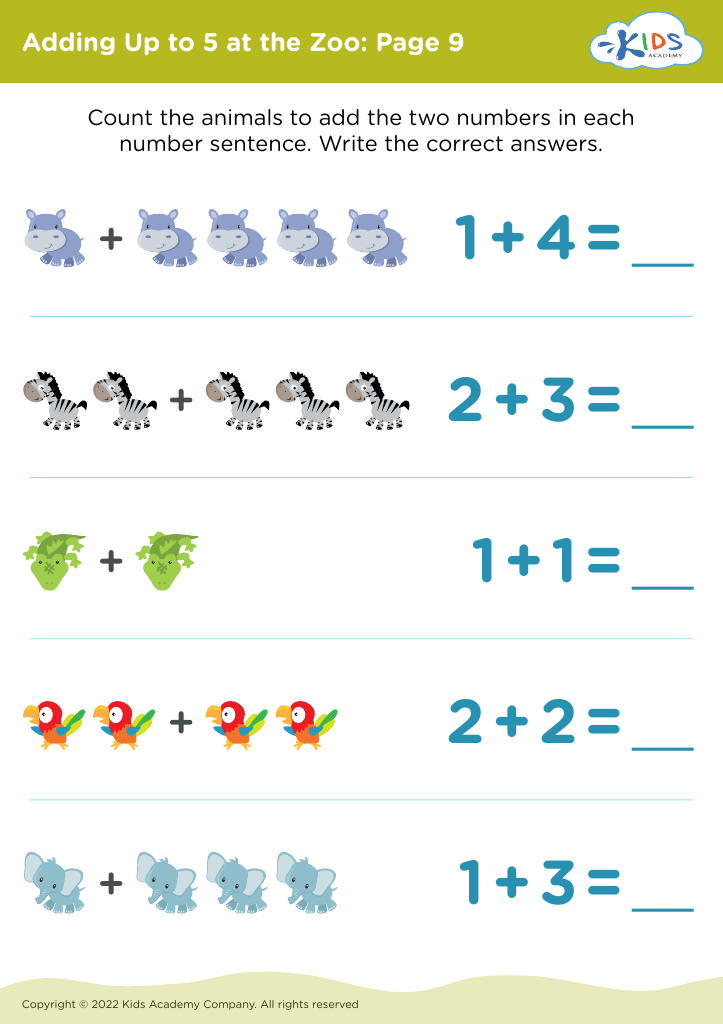
    Adding Up to 5 at the Zoo: Page 9
    Adding Up to 5 at the Zoo: Page 9

    Adding Up to 5 at the Zoo: Page 9

    Adding Up to 5 at the Zoo: Page 9
    Worksheet
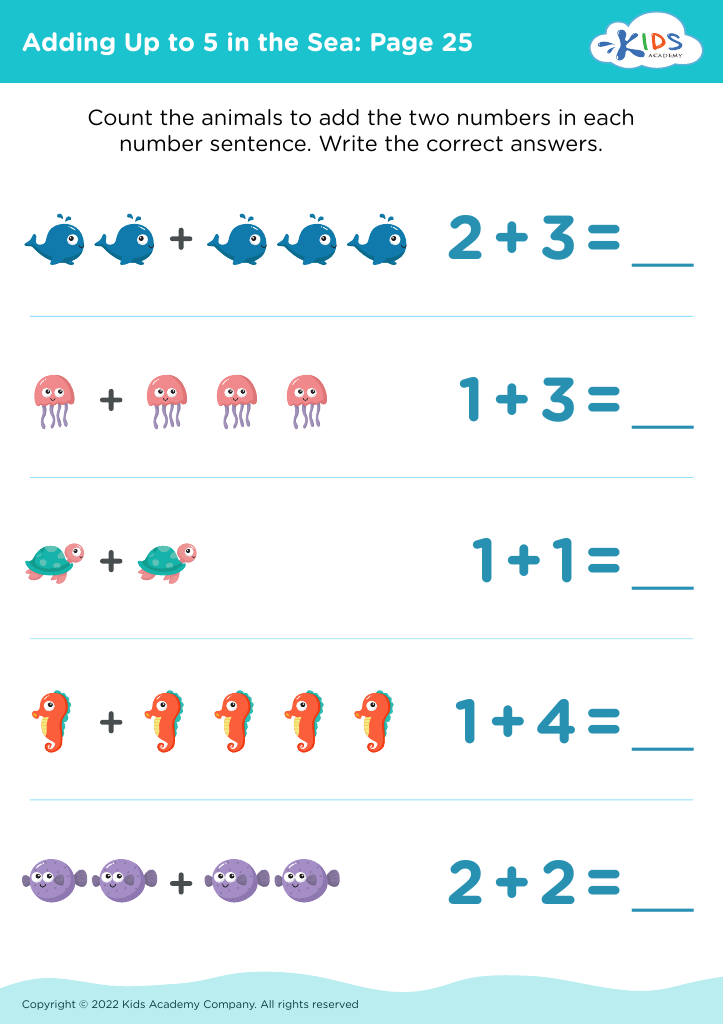
    Adding Up to 5 in the Sea: Page 25
    Adding Up to 5 in the Sea: Page 25
    Adding Up to 5 in the Sea: Page 25
    Worksheet
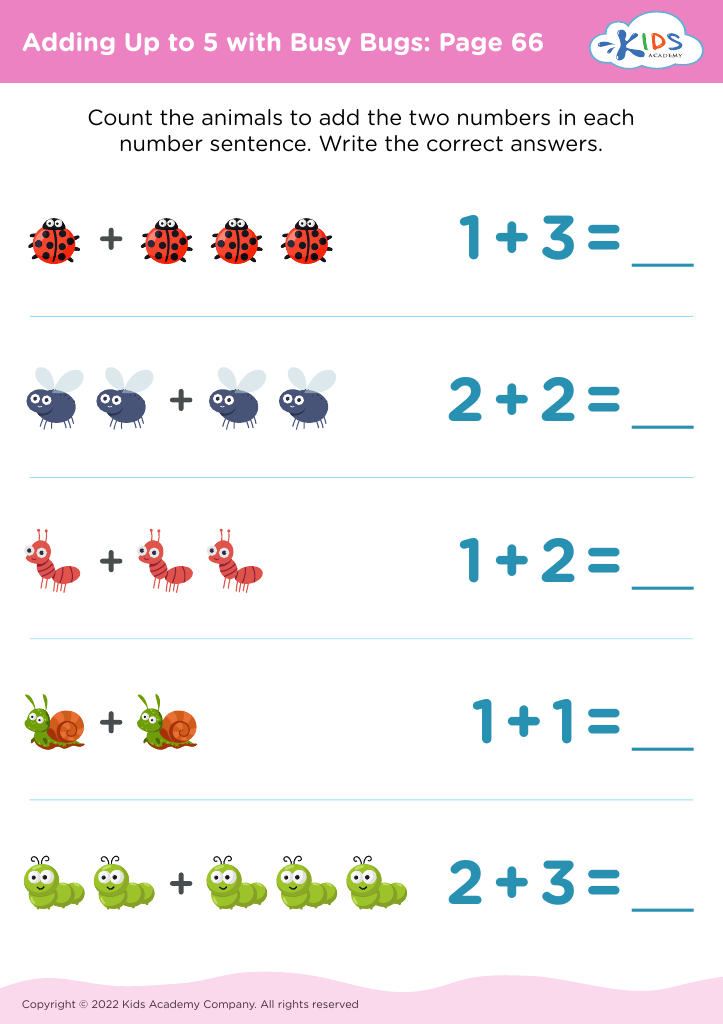
    Adding Up to 5 with Busy Bugs: Page 66
    Adding Up to 5 with Busy Bugs: Page 66
    Adding Up to 5 with Busy Bugs: Page 66
    Worksheet
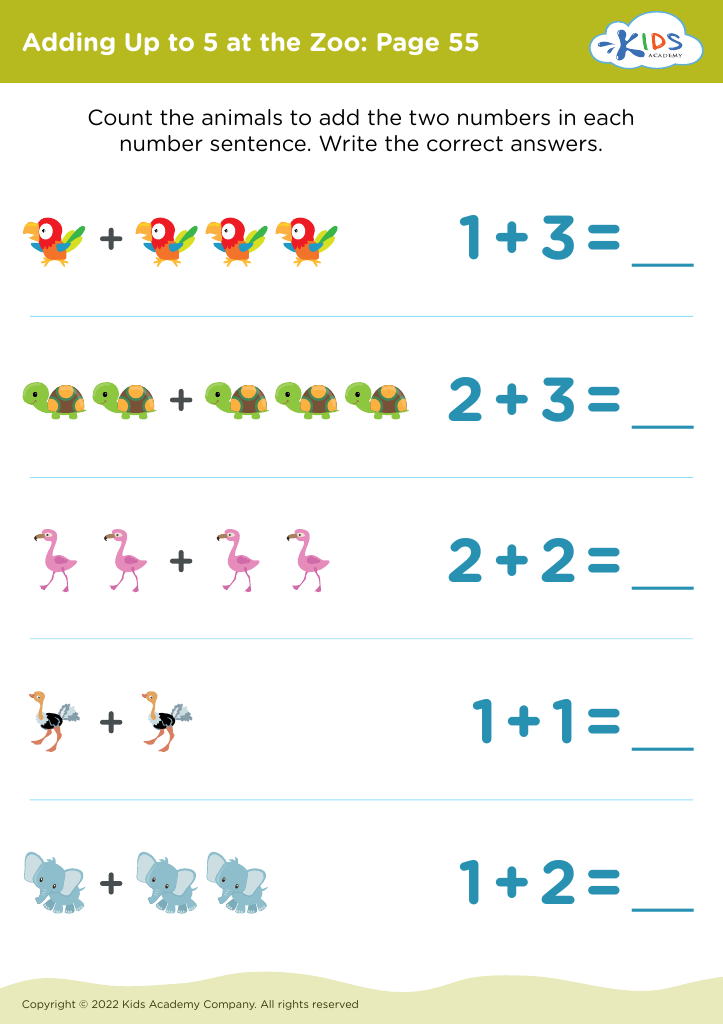
    Adding Up to 5 at the Zoo: Page 55
    Adding Up to 5 at the Zoo: Page 55
    Adding Up to 5 at the Zoo: Page 55
    Worksheet
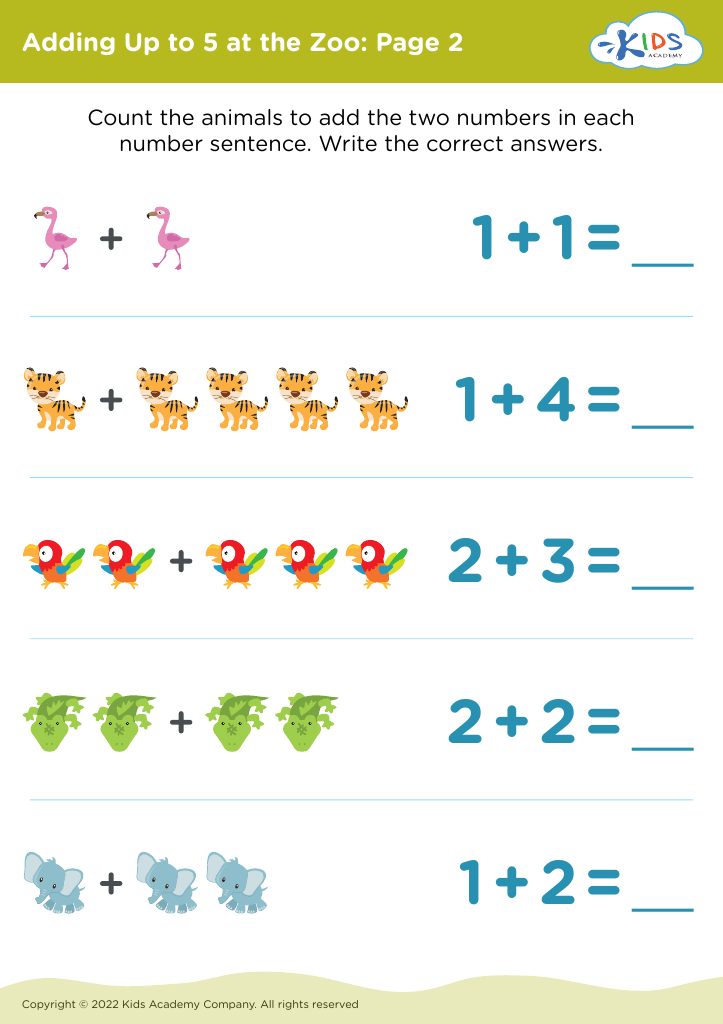
    Adding Up to 5 at the Zoo: Page 2
    Adding Up to 5 at the Zoo: Page 2

    Adding Up to 5 at the Zoo: Page 2

    Adding Up to 5 at the Zoo: Page 2
    Worksheet
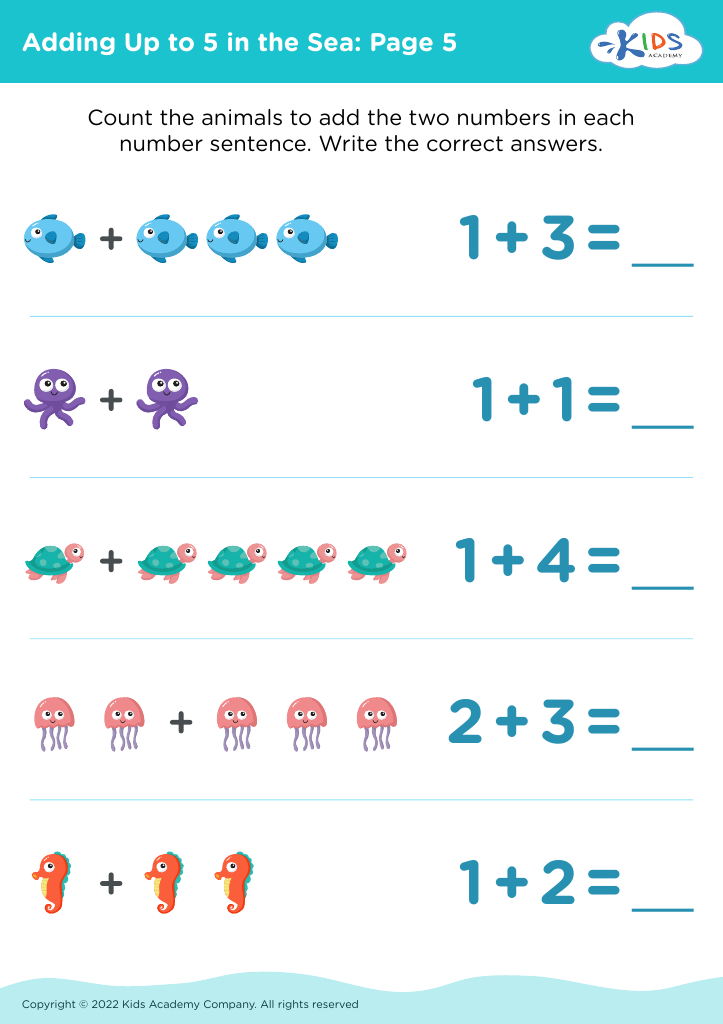
    Adding Up to 5 in the Sea: Page 5
    Adding Up to 5 in the Sea: Page 5

    Adding Up to 5 in the Sea: Page 5

    Adding Up to 5 in the Sea: Page 5
    Worksheet
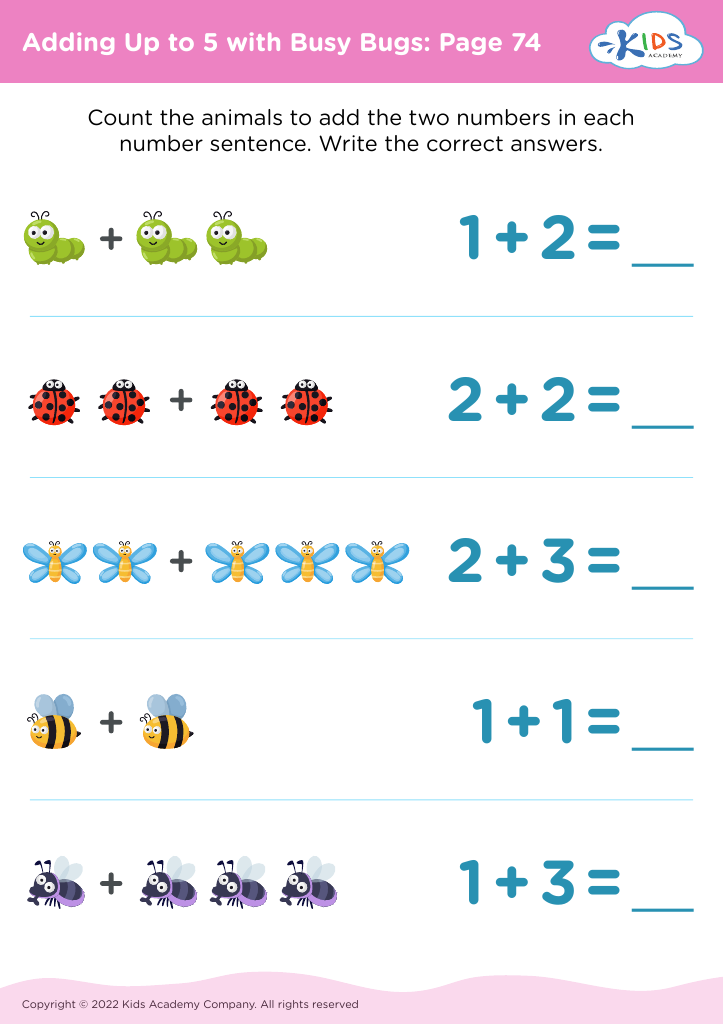
    Adding Up to 5 with Busy Bugs: Page 74
    Adding Up to 5 with Busy Bugs: Page 74
    Adding Up to 5 with Busy Bugs: Page 74
    Worksheet
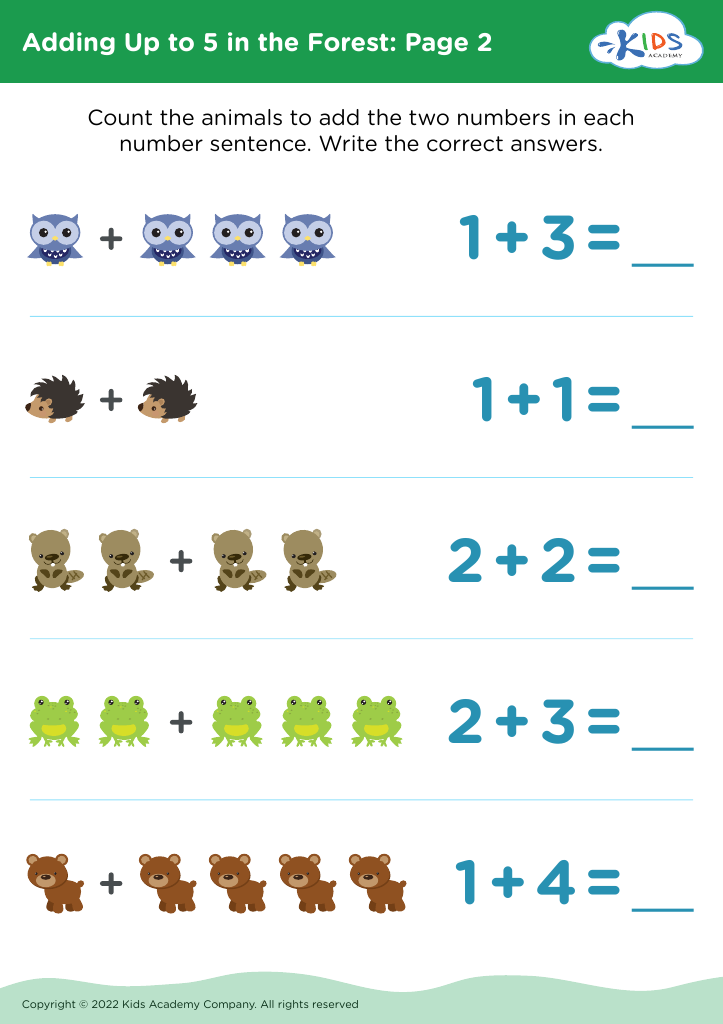
    Adding Up to 5 in the Forest: Page 2
    Adding Up to 5 in the Forest: Page 2
    Adding Up to 5 in the Forest: Page 2
    Worksheet


    Number recognition and the ability to add up to 5 are essential foundational skills for children ages 4-8. This phase of early development is critical, as children are beginning to make sense of the world around them through numbers and their associations.

    Understanding number recognition helps children identify, read, and comprehend numbers, which is vital for everyday life. It paves the way for more complex math concepts later on. Additionally, adding up to 5 introduces basic arithmetic, enabling them to understand composition and decomposition of numbers. This builds essential problem-solving skills and enhances their ability to tackle more challenging math in the future.

    Furthermore, these skills foster confidence and a positive attitude toward math. When children master these concepts early on, they are less likely to develop anxiety around numbers as they progress through grade school. Teachers and parents should invest their time in reinforcing these skills through games, interactive activities, and practical applications. Facilitation of such learning experiences is not only educational, but it nurtures critical thinking and helps children develop the ability to engage with new information actively and positively. Ultimately, fostering number recognition and basic addition sets a strong groundwork for lifelong learning in mathematics and beyond.