Problem-Solving Skills Adding Up to 5 Worksheets for Ages 4-8 - Page 2
37 filtered results
-
From - To
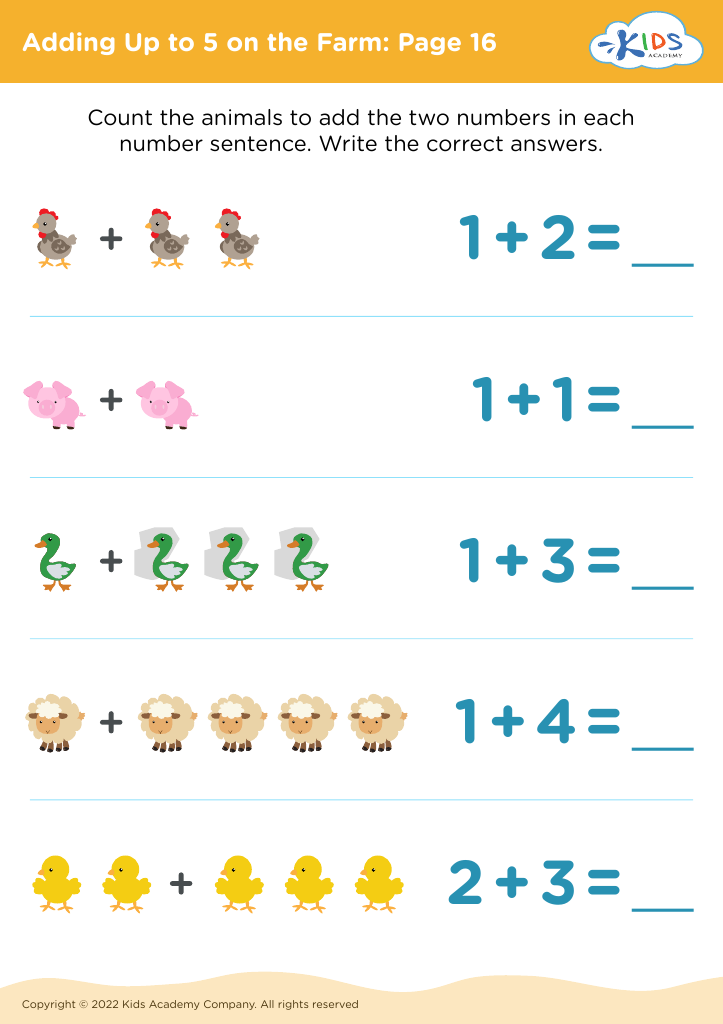
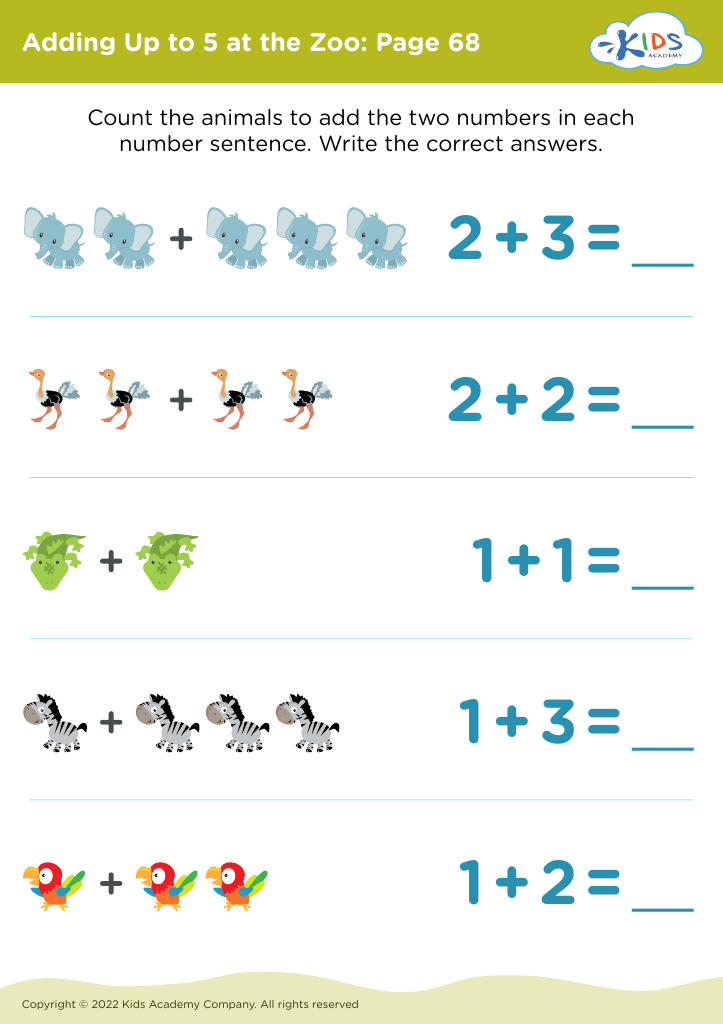
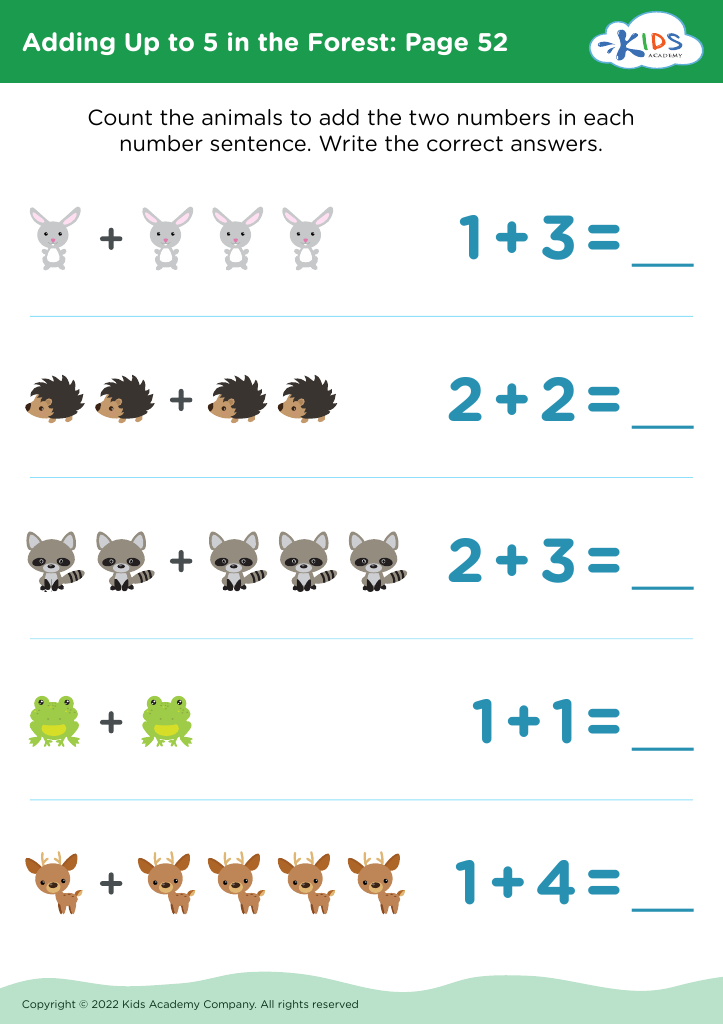
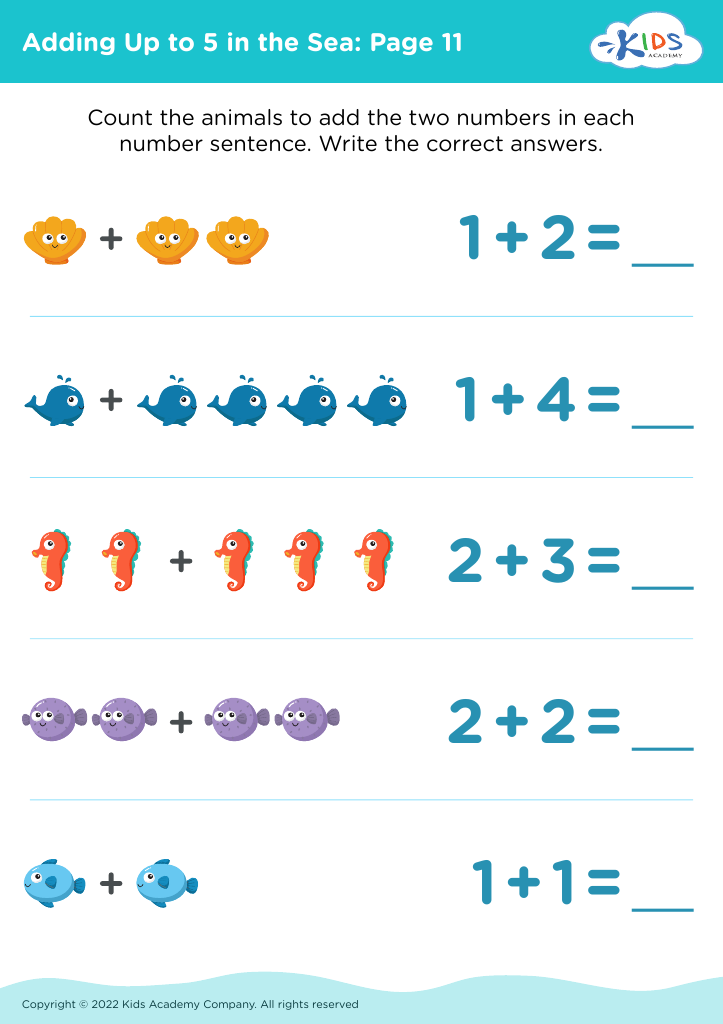
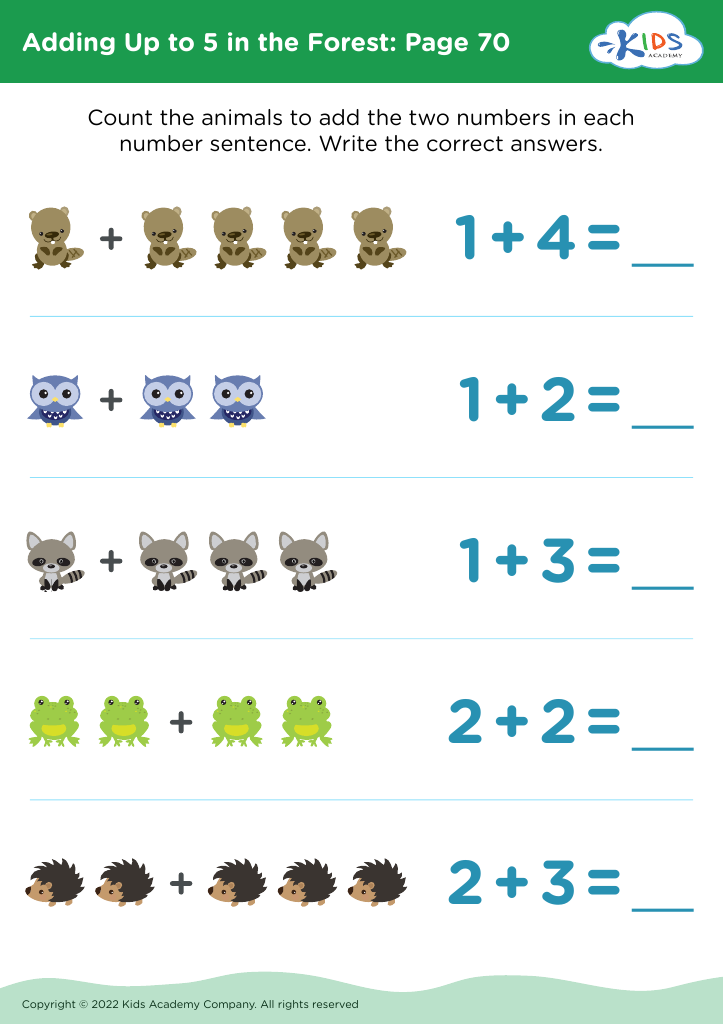
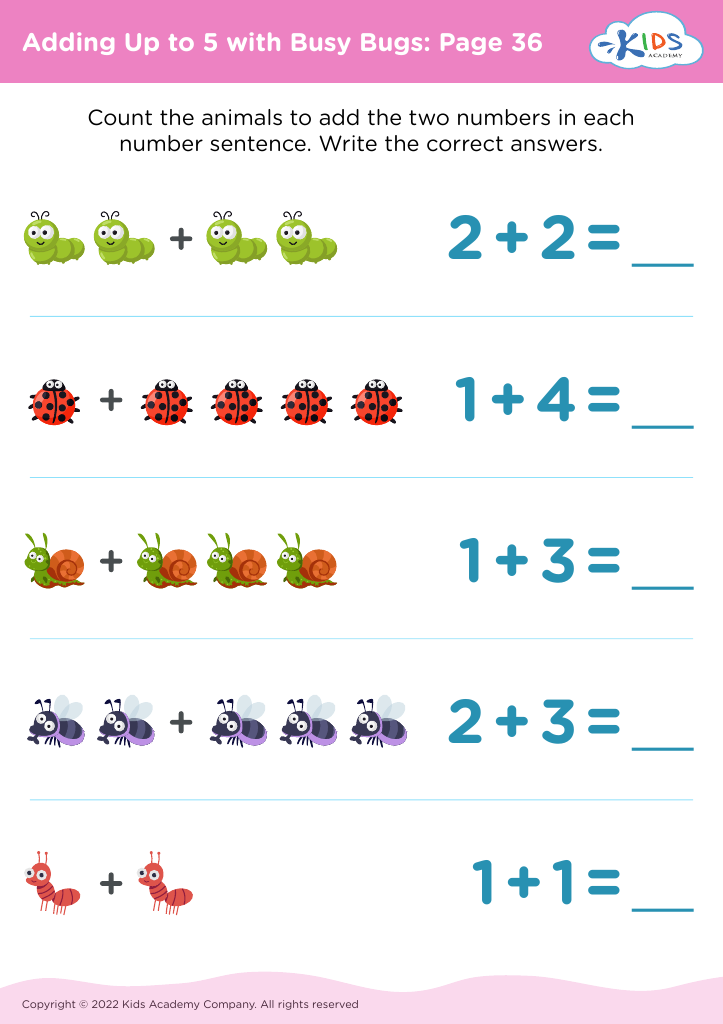
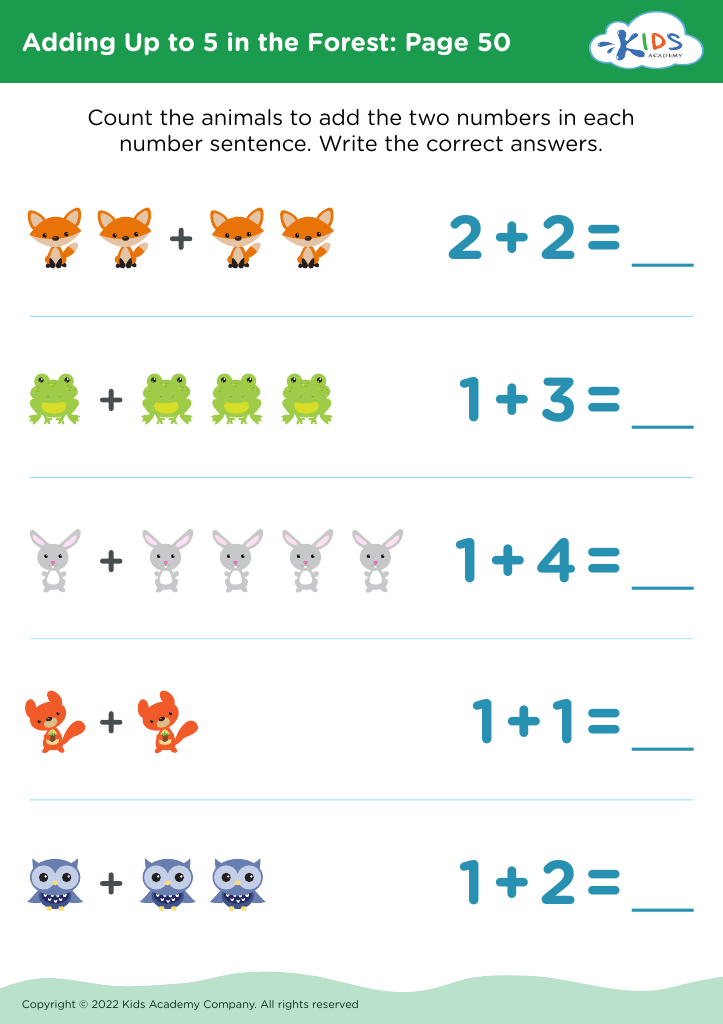
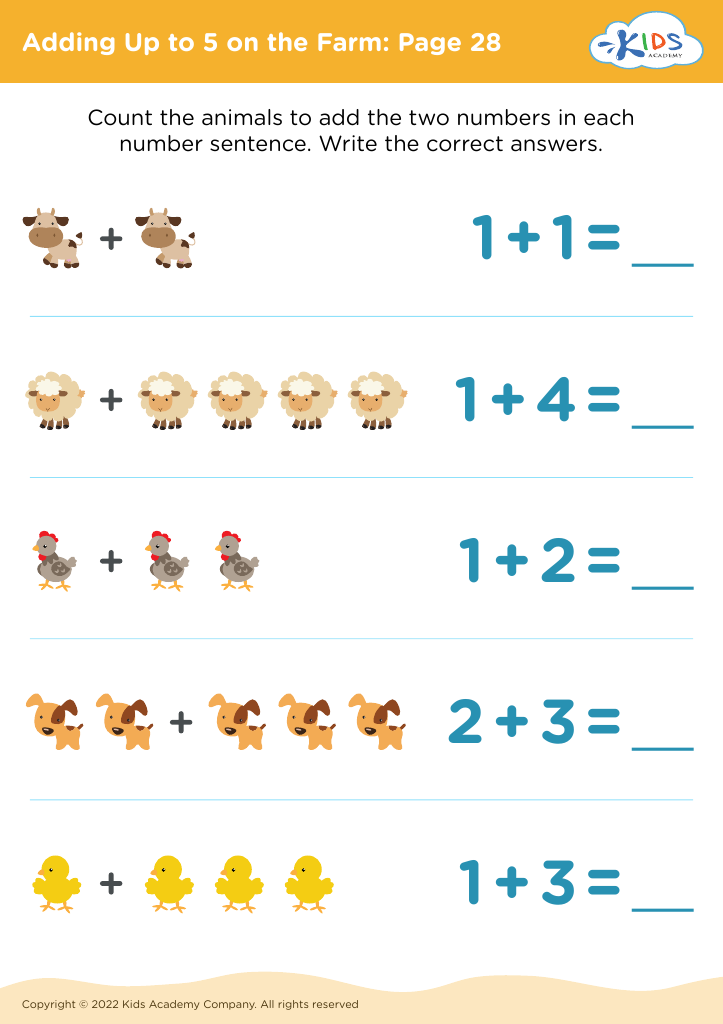
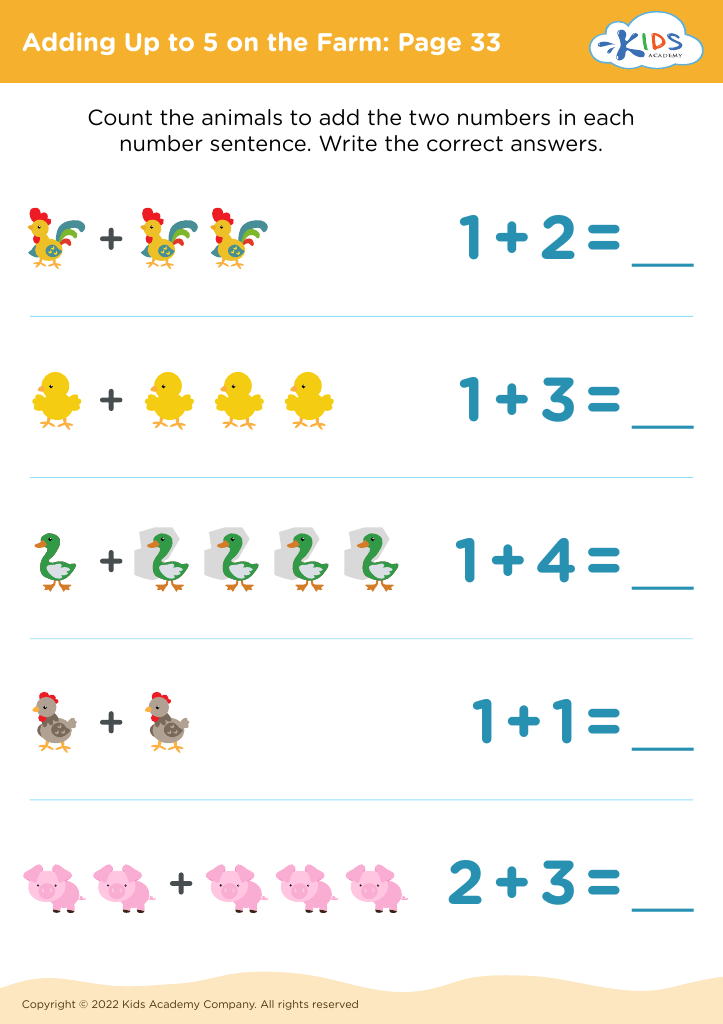
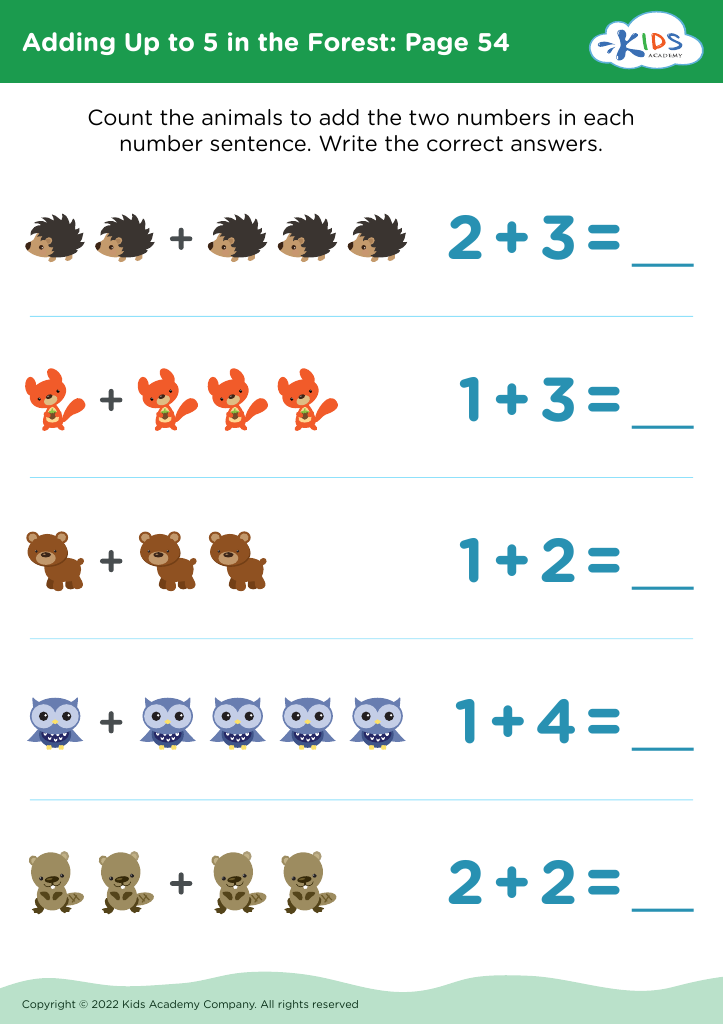
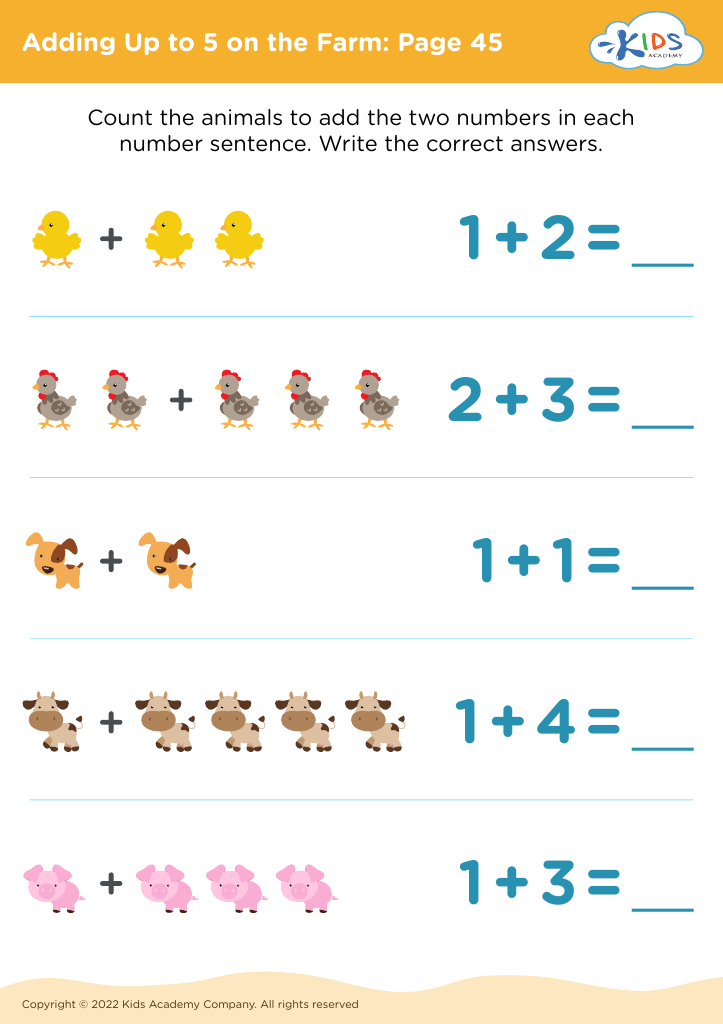
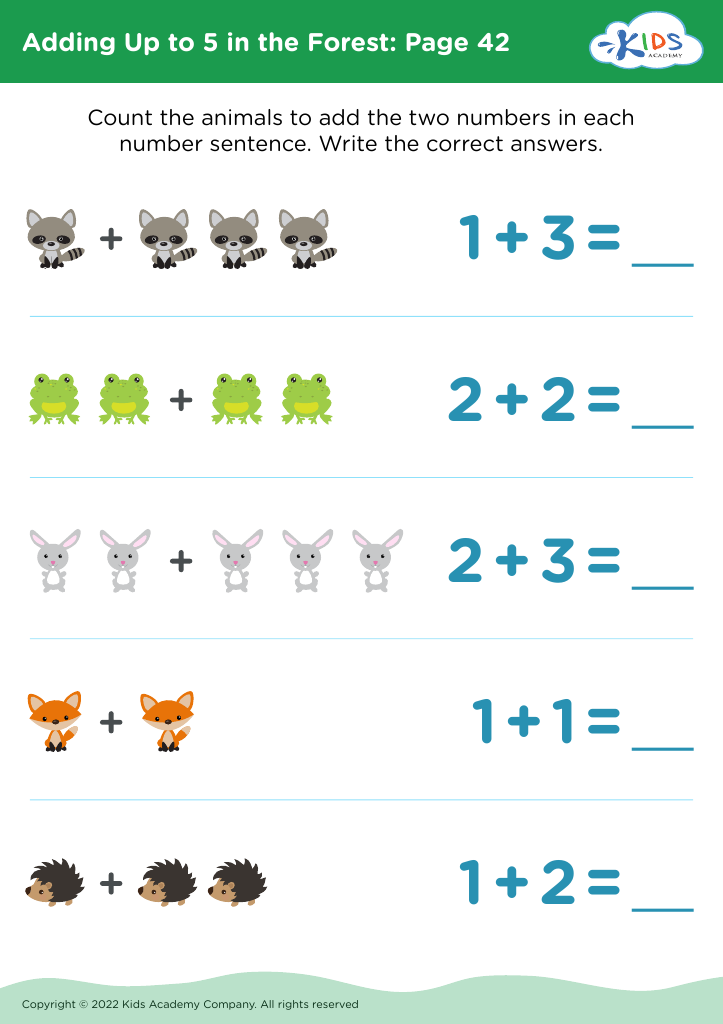
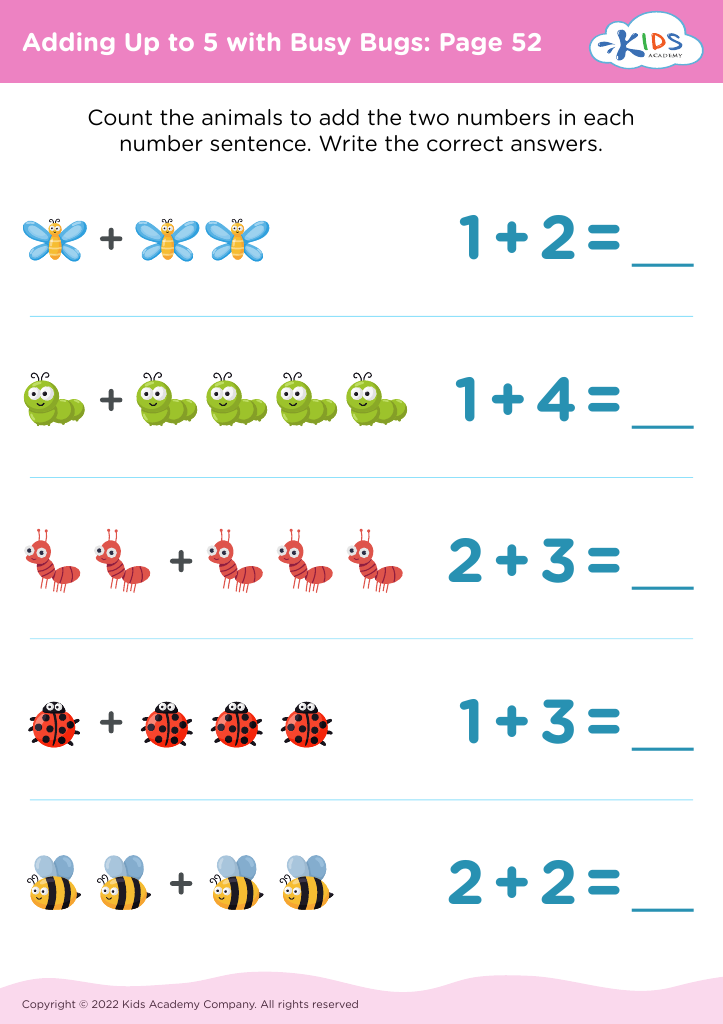








Problem-solving skills, especially in mathematics for ages 4-8, are vital for children's cognitive development and future success. When children learn to solve problems involving small numbers, such as adding up to 5, they are not just memorizing math but engaging in critical thinking. This early exposure helps them understand concepts of quantity, relationships, and basic arithmetic, forming a foundation for more complex maths later on.
Parents and teachers should care because these skills foster confidence and promote perseverance in learners. When children encounter a problem and work through it, they develop resilience, learning that mistakes are part of the learning process. Moreover, adding up to 5 provides a safe and manageable context in which young learners can practice reasoning and logic, laying groundwork for better comprehension of patterns and higher-level math.
Additionally, problem-solving encourages collaborative skills when children work together, enhancing social interactions and communication. For parents and teachers alike, nurturing these skills translates into greater academic achievement and equips children with essential tools for everyday life, preparing them not just for academic success but to become capable problem solvers as adults. Ultimately, fostering these skills contributes to holistic child development, ensuring well-rounded future citizens.








